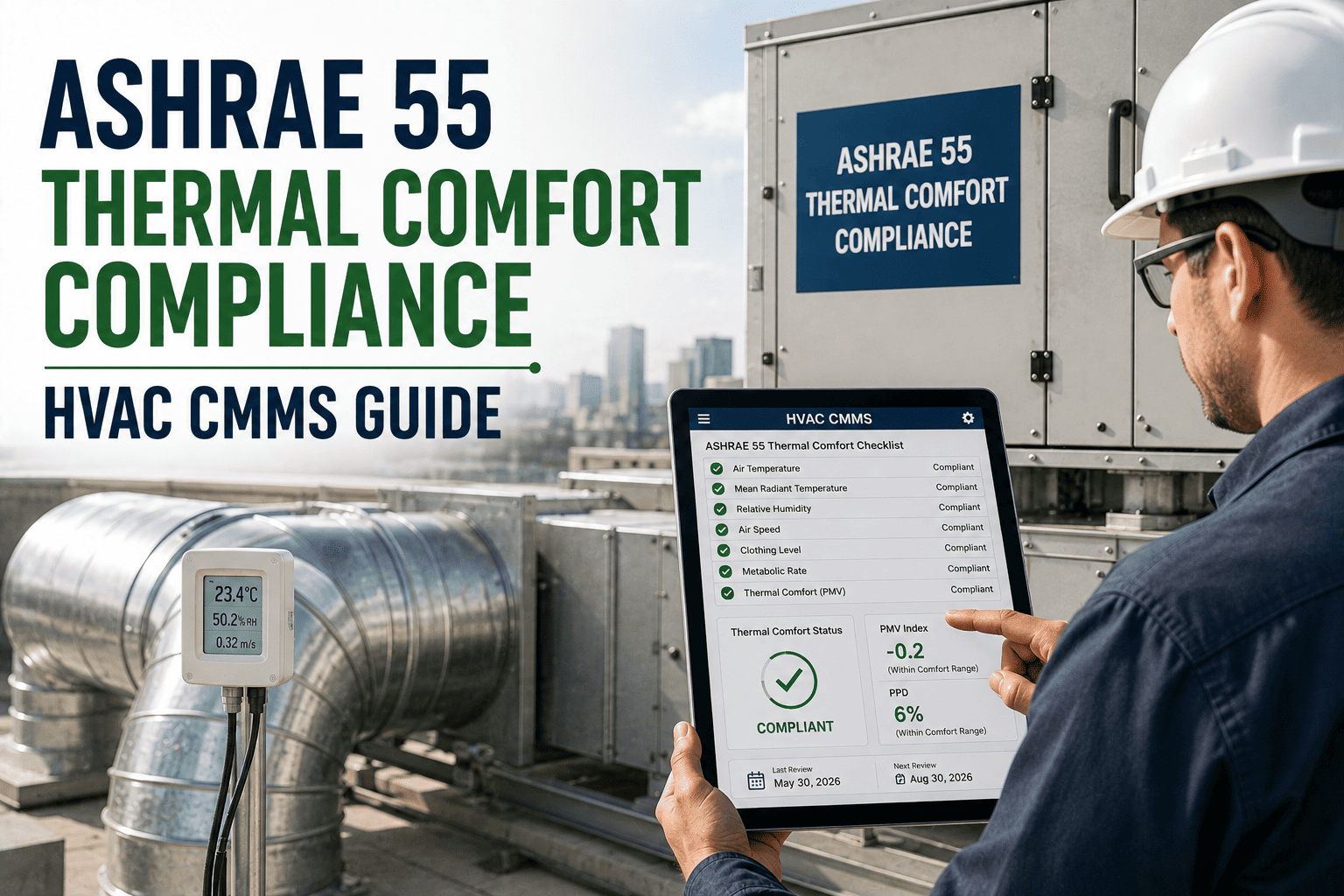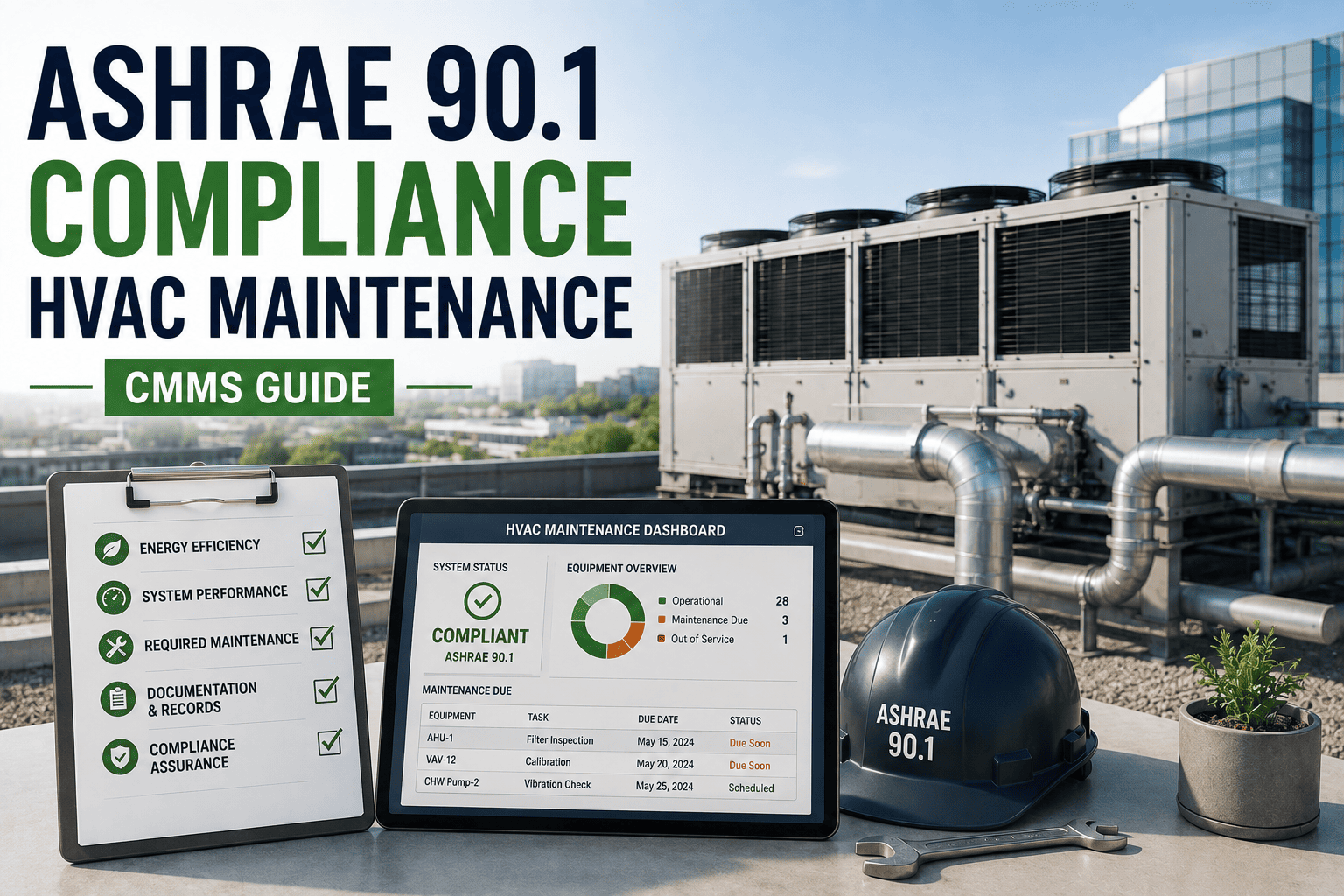
ASHRAE 90.1 compliance requires building owners and maintenance teams to meet strict HVAC energy management standards, including 15-minute interval monitoring, automated fault detection diagnostics, and documented preventive maintenance for all covered equipment. Section 8 of the energy management code mandates that energy-consuming systems—chillers, boilers, air handlers, and lighting controls—be maintained to their design efficiency, with records that prove ongoing compliance. A modern CMMS like OxMaint operationalizes every ASHRAE 90.1 maintenance requirement by automating work-order scheduling, interval data logging, and FDD alert routing, turning a manual audit scramble into a continuously compliant, audit-ready workflow. You can explore the platform with a Start Free Trial or book a guided walkthrough to see it mapped to your facility.
ASHRAE 90.1 Maintenance Guide
Is your HVAC maintenance program ready for ASHRAE 90.1 2026 enforcement?
Section 8 of the energy management code requires documented preventive maintenance, 15-minute interval monitoring, and automated fault detection for all covered HVAC equipment. Penalties for non-compliance and energy waste from unmaintained systems can cost a mid-sized facility $30K–$80K annually. OxMaint turns every requirement into an automated, audit-ready workflow.
Section 8 Requirements
What ASHRAE 90.1 HVAC maintenance actually requires
ASHRAE 90.1 Section 8 (Energy Management) defines mandatory operational practices for HVAC, lighting, and building envelope systems. Below are the four pillars every maintenance team must satisfy.
HVAC System Functional & Preventive Maintenance
Documented PM schedules for chillers, boilers, AHUs, RTUs, and heat-rejection equipment. Filter changes, coil cleaning, belt tension, and refrigerant-charge checks must occur at code-specified intervals with signed records.
15-Minute Interval Energy Monitoring
Energy consumption data for each fuel type must be recorded at intervals no longer than 15 minutes. Systems over 50 kVA or 25 hp require sub-metering with timestamped logs retained for a minimum of 36 months.
Automated Fault Detection & Diagnostics (FDD)
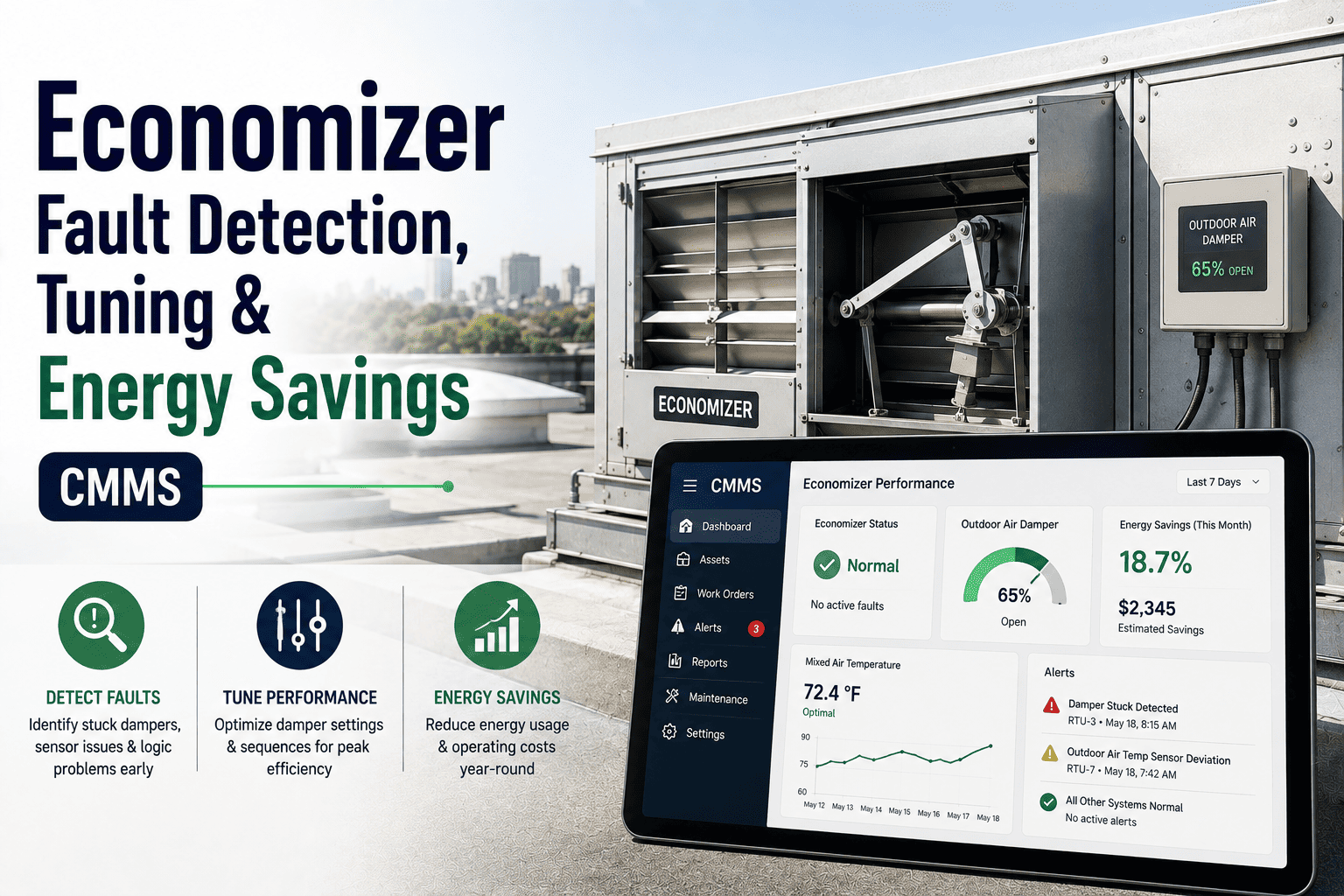
Air-handling units and zone controls must generate automated alarms for simultaneous heating/cooling, economizer failure, sensor drift, and damper stuck-open faults — not periodic manual inspection.
Audit-Ready Documentation & Reporting
On demand, produce maintenance logs, calibration certificates, FDD alert histories, and energy-trend reports for the authority having jurisdiction (AHJ). Missing or paper-based records trigger violations.
Compliance Checklist
ASHRAE 90.1 HVAC maintenance checklist for facility teams
Use this tiered checklist to map your current program against the code. Every item below can be automated as a triggered work order in OxMaint.
Quarterly PM Tasks
Annual PM Tasks
Continuous Monitoring & FDD
Cost of Non-Compliance
The real cost of manual HVAC compliance tracking
Spreadsheets and clipboards are the single biggest reason facilities fail ASHRAE 90.1 audits — and bleed energy dollars between inspections.
A 180-asset manufacturing plant spending $42K/yr on reactive HVAC repairs and paper-based logbooks deployed OxMaint's automated PM scheduling and FDD integration. Within 90 days, the team eliminated 12 simultaneous heating/cooling faults, improved chiller efficiency by 18%, and produced a complete 36-month audit trail on demand. Estimated annual savings: $61,400 in energy and avoided penalty exposure.
How OxMaint Helps
How OxMaint delivers ASHRAE 90.1 CMMS compliance
OxMaint maps directly to each Section 8 requirement, replacing paper logs and disconnected spreadsheets with a single AI-powered maintenance platform.
Automated PM Scheduling by Code Interval
Pre-built ASHRAE 90.1 maintenance templates trigger quarterly, semi-annual, and annual work orders automatically. Every task carries the required checklist, parts, and documentation fields — zero manual calendar management.
Outcome: 100% on-time PM completion, zero missed filter or coil-cleaning cycles.
FDD Alert Integration & Auto-Work-Orders
OxMaint ingests real-time FDD signals from your BMS/BAS — simultaneous heating/cooling, economizer failure, sensor drift — and auto-generates priority work orders assigned to the right technician with diagnostic context attached.
Outcome: Cut fault-to-repair time by 60–80%, catch energy waste before it shows on the utility bill.
Asset & Equipment Registry with Energy Tags
Track every covered asset — chillers, boilers, AHUs, pumps — with nameplate data, design efficiency baselines, and sub-meter IDs. Know instantly which equipment falls under ASHRAE 90.1 jurisdiction and what its code-mandated interval is.
Outcome: Eliminate "orphan assets" that fail audit because nobody owned the PM schedule.
One-Click Audit-Ready Reporting
Generate a complete ASHRAE 90.1 compliance packet — PM logs, FDD histories, calibration certificates, energy-trend charts — in seconds. Filter by asset, date range, or system type and export to PDF for the AHJ.
Outcome: Turn a 2-week audit-prep scramble into a 5-minute export.
Implementation Timeline
From spreadsheets to ASHRAE 90.1 compliance in 30 days
Most facilities go live with OxMaint in under a month. Here is the typical path from reactive maintenance to fully documented code compliance.
Asset Import & Baseline Mapping
Upload your existing equipment list via CSV or API. OxMaint tags each asset with its ASHRAE 90.1 category, design efficiency, and required PM interval. Identify coverage gaps on day one.
PM Template Deployment
Apply pre-built ASHRAE 90.1 maintenance templates — quarterly filters, annual coil cleaning, sensor calibration — to every covered asset. Assign technicians and set auto-trigger rules.
FDD & BMS Integration
Connect OxMaint to your building automation system via REST API or BACnet gateway. FDD alarms for simultaneous heating/cooling and economizer faults begin auto-generating work orders immediately.
Audit-Ready Go-Live
Generate your first compliance report. Every work order, FDD alert, and energy-trend log is timestamped and archived. Your facility is now audit-ready 365 days a year — not just the week before inspection.
Comparison
Manual tracking vs. OxMaint CMMS for ASHRAE 90.1
The gap between spreadsheet-based compliance and a purpose-built CMMS is measured in audit failures, energy waste, and manager hours.
| Compliance Requirement | Spreadsheets & Paper Logs | OxMaint CMMS |
|---|---|---|
| PM Scheduling | Manual calendar reminders; 30–40% missed or late tasks | Auto-triggered by code interval; 100% on-time tracking |
| 15-Minute Data Logging | Not possible; manual meter reads are weekly at best | API/BACne integration; automatic gap-detection alerts |
| FDD Response | Technician discovers fault during rounds; days of delay | Auto work-order on FDD alarm; mean-time-to-repair cut 60–80% |
| Audit Documentation | 2-week scramble; missing logs common; high violation risk | One-click compliance packet; 36-month retention automatic |
| Energy Cost Impact | $50K–$80K annual waste from undetected degradation | Predictive analytics flag efficiency drift before it compounds |
| Manager Time | 14+ hrs/week building reports and chasing paperwork | Under 1 hr/week; dashboards auto-populate for review |
See OxMaint configured for your HVAC assets
Book a 30-minute demo and we will map every ASHRAE 90.1 requirement to your specific equipment list, FDD points, and reporting needs — live.
FAQ
ASHRAE 90.1 compliance FAQ
Does ASHRAE 90.1 require a CMMS for HVAC maintenance?
ASHRAE 90.1 does not mandate a specific software tool, but Section 8 requires documented preventive maintenance at defined intervals, 15-minute energy monitoring, automated FDD, and multi-year record retention. A CMMS like OxMaint is the most reliable way to meet all four requirements simultaneously and survive an audit. Manual logs and spreadsheets rarely satisfy the documentation depth and timestamp accuracy that code officials expect.
What HVAC equipment is covered under ASHRAE 90.1 Section 8?
Section 8 covers mechanical and service water-heating equipment including chillers, boilers, furnaces, air handlers, rooftop units, heat-rejection equipment (cooling towers), pumps, fans, and associated controls. Any system contributing to the building's energy use and over specified capacity thresholds falls under the maintenance, monitoring, and FDD requirements.
How often must HVAC maintenance be performed under ASHRAE 90.1?
ASHRAE 90.1 requires inspection and maintenance at intervals defined by the equipment manufacturer and the code's operational requirements — typically quarterly for filters and economizer function, semi-annually for belts and sensors, and annually for coils, refrigerant charge, combustion efficiency, and chiller tube cleaning. OxMaint comes with pre-built templates mapped to each interval so nothing is missed. You can see the full template library when you Start Free Trial.
What is the 15-minute interval monitoring requirement?
ASHRAE 90.1 requires that energy consumption for each fuel type be recorded at intervals no longer than 15 minutes, with data retained for at least 36 months. Systems over 50 kVA or driving loads above 25 hp typically require sub-metering. OxMaint integrates with your BMS or metering infrastructure via API to capture, store, and flag gaps in this data automatically.
How does fault detection and diagnostics (FDD) work under ASHRAE 90.1?
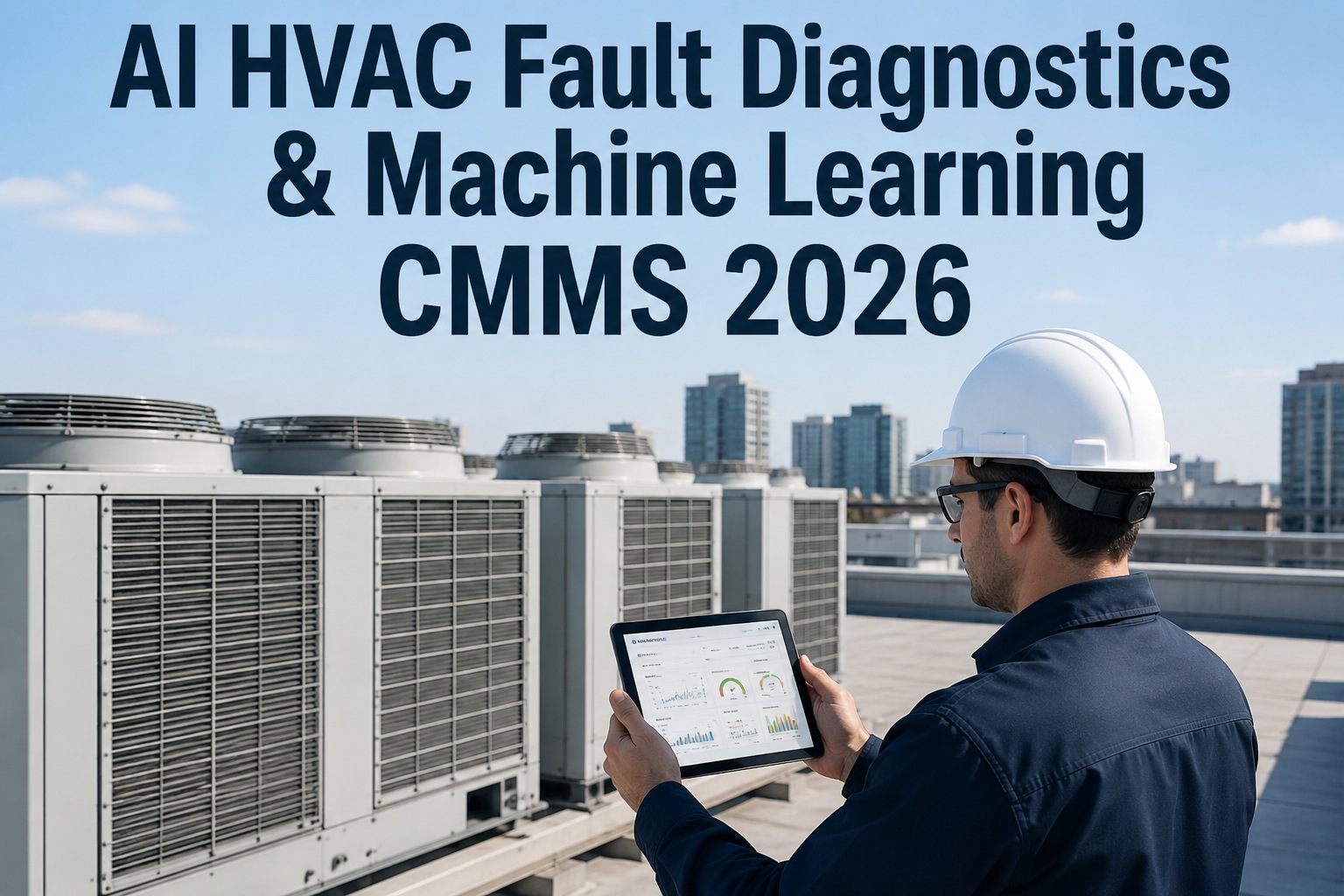
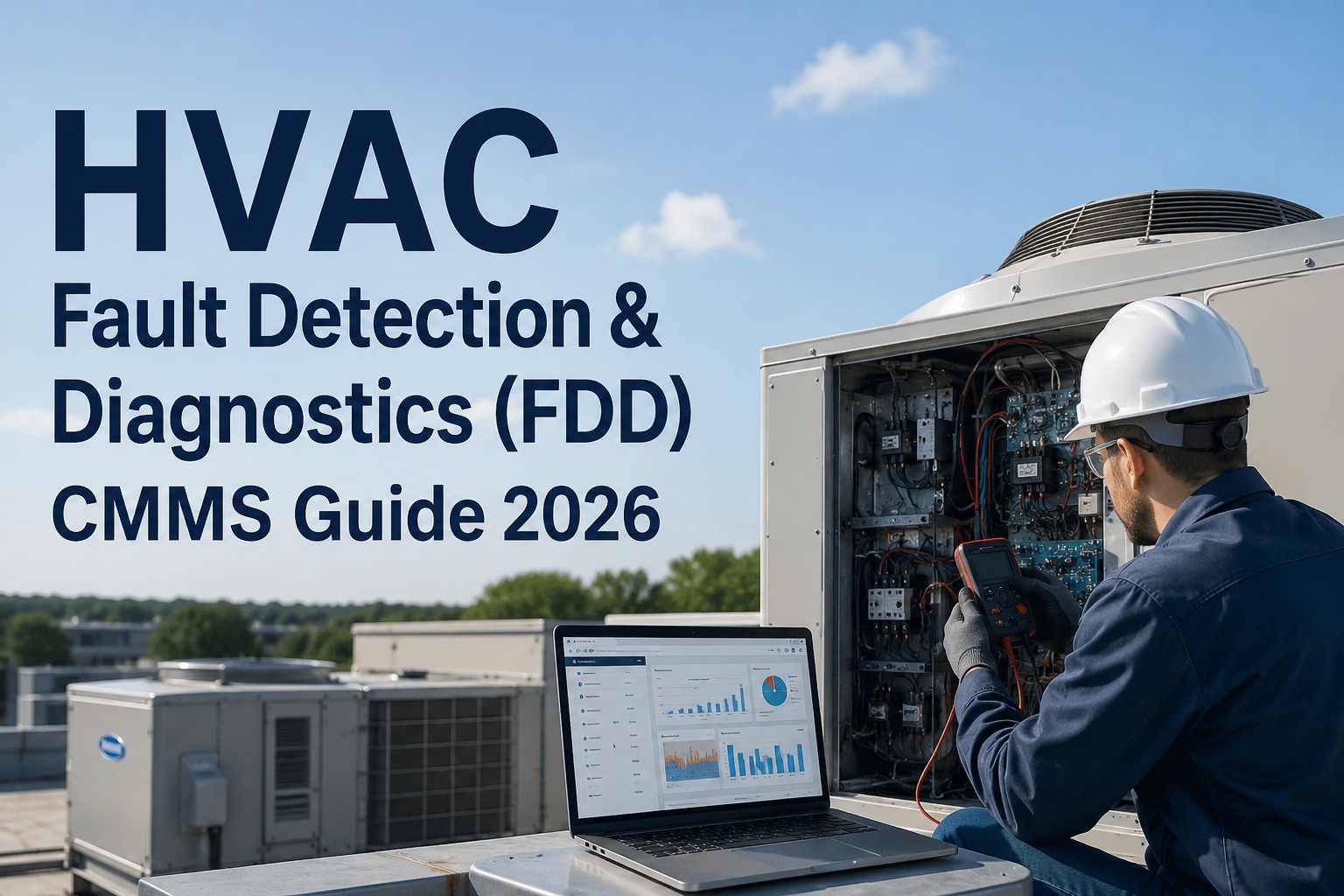
The code requires automated alarms — not manual inspection — for common HVAC faults including simultaneous heating and cooling, economizer lockout failure, sensor drift, and stuck dampper or valve actuators. OxMaint ingests FDD signals from your BAS and auto-generates priority work orders with diagnostic context, cutting fault-to-repair time by 60–80%. To see this workflow on your actual equipment, Book a Demo.
Make ASHRAE 90.1 compliance automatic
Join the maintenance teams who replaced clipboards and spreadsheets with OxMaint — and turned code compliance from a liability into measurable energy savings.
Free 14-day trial · No credit card