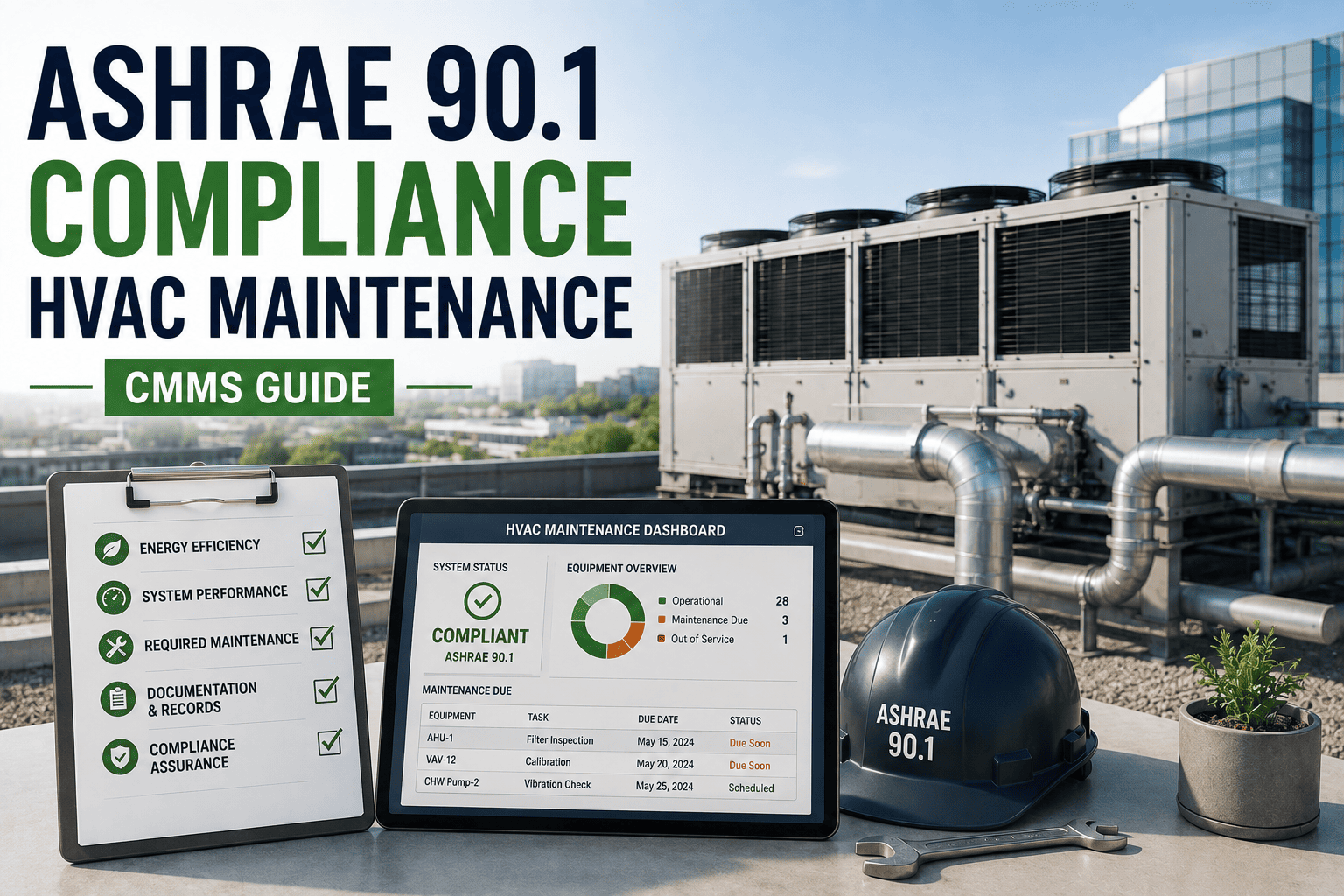
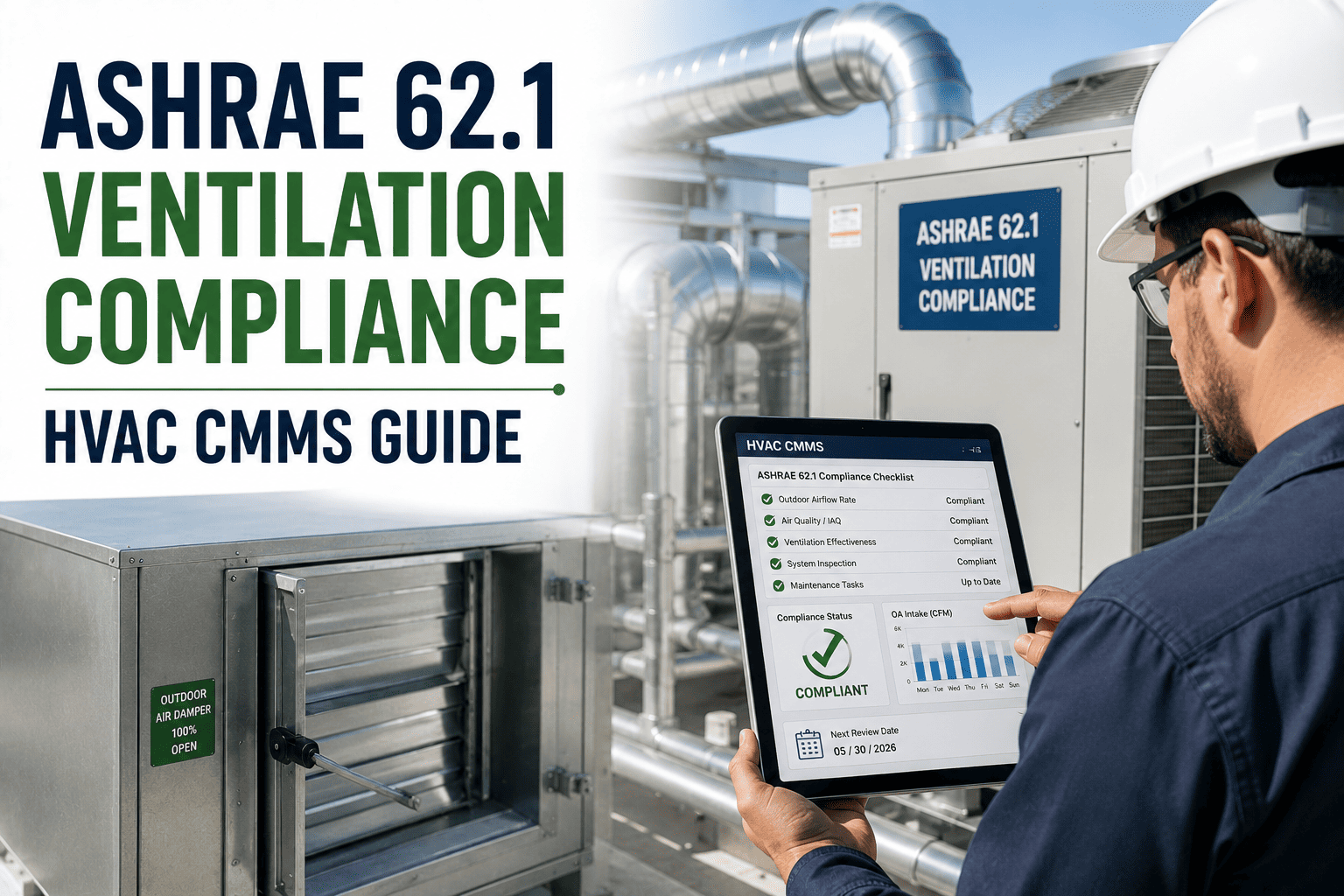
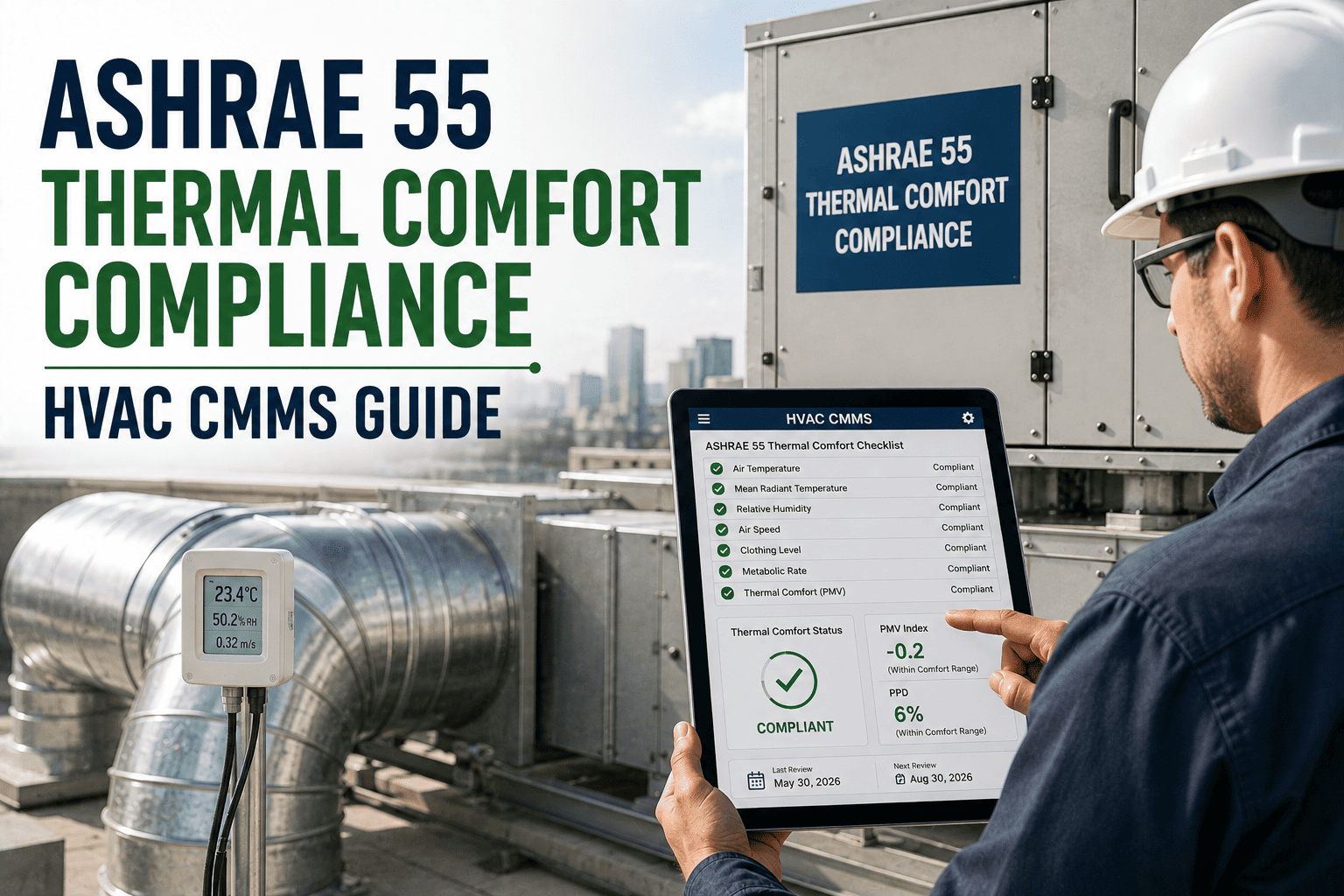
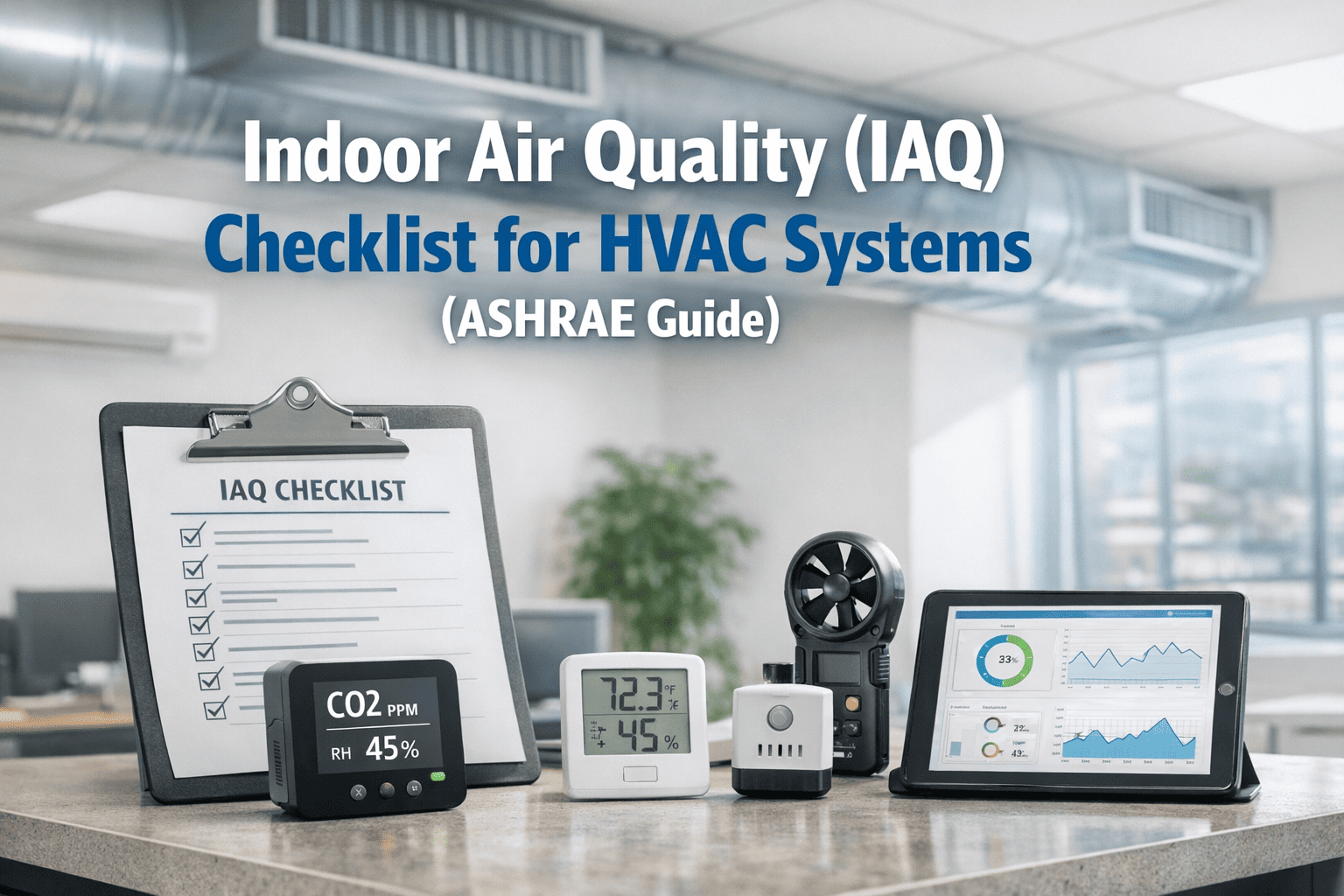
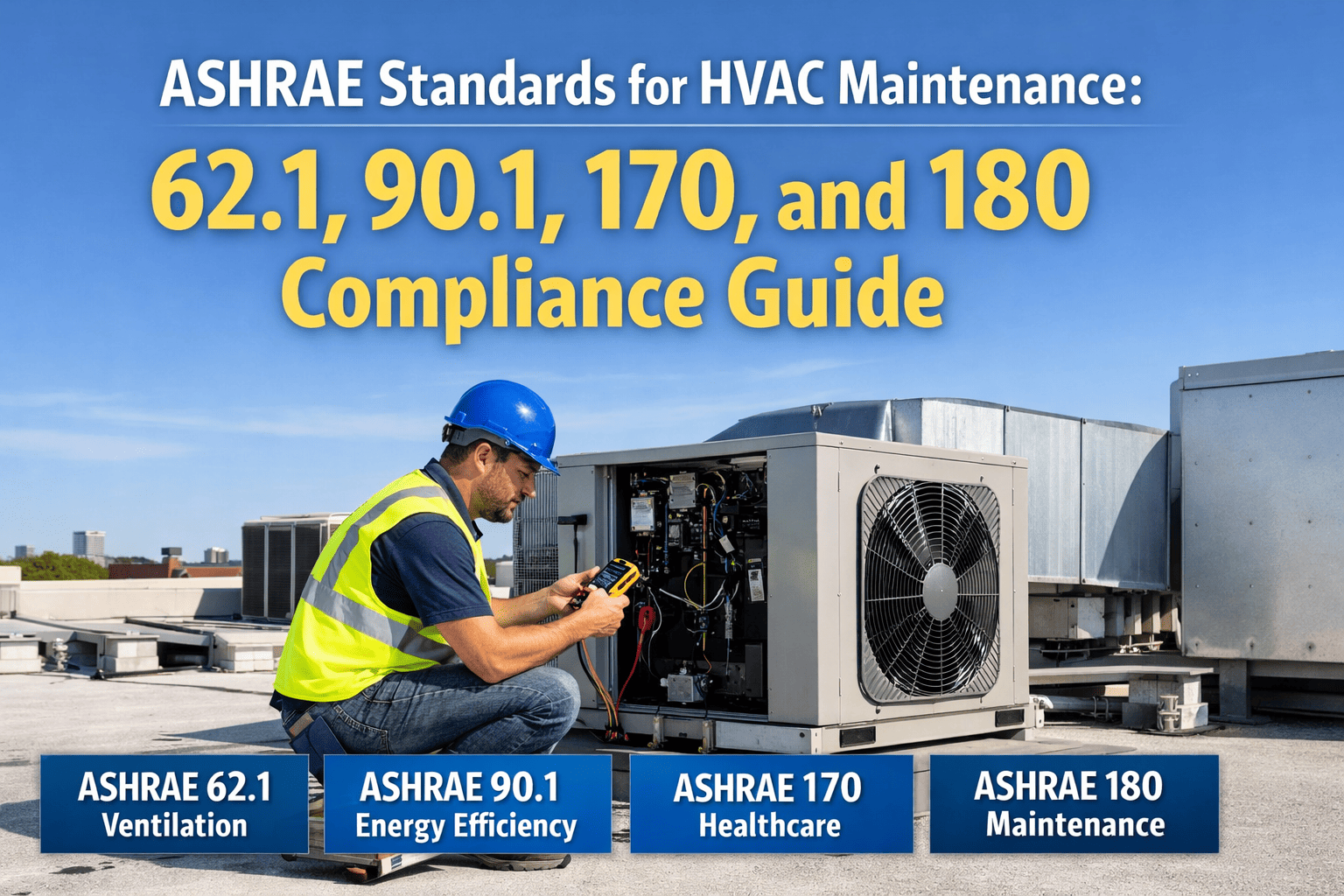
Staying compliant with ASHRAE standards isn't just about checking boxes—it's about creating healthier, more efficient buildings while avoiding costly penalties. For facility managers and maintenance teams, navigating the complex web of ASHRAE 62.1 (ventilation), 90.1 (energy efficiency), and 55 (thermal comfort) can feel overwhelming. But what if compliance could be automated, tracked digitally, and integrated seamlessly into your daily workflow? This guide breaks down exactly what you need to know about these critical standards and how modern digital solutions are transforming HVAC maintenance compliance from a reactive headache into a proactive competitive advantage.
The ASHRAE Compliance Trinity
Three standards govern modern HVAC maintenance. Understanding their intersection is crucial for operational excellence and regulatory adherence.
Ventilation & Indoor Air Quality
Specifies minimum ventilation rates and air quality requirements to ensure occupant health and comfort. Critical for post-pandemic building operations.
- Minimum outdoor air requirements
- Air filtration standards
- Contaminant control measures
Energy Efficiency
The energy standard for buildings except low-rise residential. Sets minimum efficiency requirements for HVAC systems, controls, and building envelopes.
- Equipment efficiency ratings
- Building automation requirements
- Energy recovery mandates
Thermal Comfort
Defines the ranges of indoor thermal environmental conditions acceptable to building occupants. Directly impacts productivity and satisfaction.
- Temperature and humidity ranges
- Air speed limitations
- Adaptive comfort models
The Digital Compliance Lifecycle
Traditional paper-based compliance tracking is obsolete. Modern facilities require real-time monitoring and automated documentation. Sign up to transform your compliance workflow.
Assessment
Baseline current system performance against ASHRAE requirements using IoT sensors and automated audits.
Implementation
Deploy corrective actions and system upgrades with digital work orders and compliance checklists.
Monitoring
Continuous real-time tracking of ventilation rates, energy consumption, and comfort parameters.
Documentation
Automated reporting and audit trails for regulatory inspections and certification maintenance.
Critical Insights for ASHRAE 62.1 Ventilation Compliance
ASHRAE 62.1 has evolved significantly since the pandemic, with the 2022 and 2024 versions placing greater emphasis on infection risk management and enhanced filtration. Facility managers must understand that compliance is not a one-time achievement but a continuous operational requirement.
The Ventilation Rate Procedure vs. IAQ Procedure
Most facilities follow the Ventilation Rate Procedure, which prescribes specific outdoor air quantities per occupant and per unit area. However, the IAQ Procedure offers flexibility by allowing you to demonstrate that your air cleaning strategies achieve equivalent indoor air quality with potentially lower outdoor air volumes—critical for energy conservation in extreme climates. Book a demo to explore which procedure optimizes your facility.
Demand-Controlled Ventilation Reality
DCV systems using CO2 sensors can reduce outdoor air heating and cooling costs by 10-30% in spaces with variable occupancy. However, sensors require quarterly calibration to maintain ASHRAE compliance. Drifting sensors not only waste energy but create liability risks if they fail to detect inadequate ventilation during high-occupancy periods.
Filtration has become a frontline defense strategy. ASHRAE 62.1-2022 recommends MERV 13 filters where feasible, but pressure drop increases must be calculated against fan energy consumption to maintain 90.1 compliance. This intersection of standards requires sophisticated balancing that digital monitoring platforms handle automatically.
Navigating ASHRAE 90.1 Energy Efficiency Mandates
ASHRAE 90.1 serves as the backbone of the International Energy Conservation Code. Compliance isn't merely about purchasing efficient equipment—it's about how systems operate together throughout the building lifecycle.
The Economizer Dilemma
Air-side economizers remain one of the most cost-effective energy conservation measures, yet improper maintenance causes 40% of installed economizers to underperform or fail. Stuck dampers, broken linkages, and faulty enthalpy sensors not only waste energy but can cause humidity control issues that violate ASHRAE 55 comfort standards.
Energy Recovery Ventilation
As outdoor air requirements increase under 62.1, 90.1 mandates energy recovery for larger systems. Sensible and latent heat recovery wheels can recover 70-80% of conditioning energy from exhaust air. However, frost control strategies and wheel maintenance significantly impact actual performance versus designed efficiency.
Building Automation Integration
90.1-2022 requires fault detection and diagnostics (FDD) for larger systems. This isn't just a code requirement—it's an operational imperative. Automated FDD can identify issues like simultaneous heating and cooling, suboptimal start times, and equipment short-cycling before they impact energy bills or comfort.
The standard's performance path offers flexibility but requires rigorous energy modeling. Many facilities find the prescriptive path simpler initially, but the performance path often reveals cost-effective strategies that prescriptive compliance misses. Sign up to access modeling tools that simplify this decision.
ASHRAE 55: Beyond Temperature Setpoints
Thermal comfort complaints represent the highest category of building operation grievances, yet many facilities address them reactively rather than systematically. ASHRAE 55 provides the framework for predictive comfort management.
Six Primary Comfort Parameters
Comfort standards recognize that 80% occupant satisfaction is the practical target—not 100%. This statistical reality helps facility managers set realistic expectations while identifying when conditions truly deviate from acceptable ranges. The Predicted Mean Vote (PMV) index predicts the average thermal sensation of a large group, while the Predicted Percentage of Dissatisfied (PPD) estimates complaints.
Local discomfort factors often trump general thermal conditions. Drafts from poorly diffused supply air, asymmetric radiation from cold windows in winter, and vertical temperature stratification in atrium spaces create "comfort violations" even when thermostat readings appear normal. Addressing these requires understanding air distribution patterns and surface temperatures, not just dry-bulb readings.
The adaptive comfort model recognizes that occupants in naturally ventilated buildings accept wider temperature ranges than those in air-conditioned spaces. This has profound implications for mixed-mode buildings and facilities considering operable window strategies for energy savings. Book a demo to implement adaptive comfort controls.
Stop Guessing, Start Complying
Join hundreds of facilities using Oxmaint to automate ASHRAE compliance tracking, reduce energy costs by up to 30%, and ensure optimal indoor environmental quality 24/7.
Where Standards Intersect: The Compliance Challenge
The true complexity emerges where ASHRAE standards overlap. Increasing ventilation rates for 62.1 compliance directly impacts 90.1 energy budgets. Maintaining tight temperature control for 55 comfort conflicts with 90.1 setback requirements. Resolving these conflicts requires system-level thinking.
Ventilation vs. Energy
Higher outdoor air volumes improve indoor air quality but increase heating and cooling loads. The solution lies in advanced heat recovery, demand-controlled ventilation, and smart scheduling. Digital twins can model these interactions to find optimal setpoints that satisfy both standards without excessive energy penalty.
Comfort vs. Efficiency
Expanding temperature deadbands saves energy but risks comfort complaints. The key is understanding your specific occupancy patterns—office buildings tolerate wider swings during unoccupied hours, while healthcare facilities require tight control 24/7. Zone-level control strategies allow different spaces to prioritize differently.
Filtration vs. Fan Energy
Higher MERV ratings improve air quality but increase pressure drop, requiring more fan energy. Variable frequency drives and premium efficiency motors help, but filter loading monitoring becomes essential. Predictive filter replacement based on pressure drop rather than schedule maintains both air quality and energy efficiency.
Integrated building management platforms track all three standards simultaneously, alerting operators when adjustments to one system threaten compliance with another. This holistic approach prevents the "whack-a-mole" problem of solving one issue while creating another. Sign up to experience integrated compliance management.
The Digital Compliance Advantage
Manual compliance management costs facilities an average of 40 hours monthly while introducing human error risks. Digital transformation reduces this to 4 hours while improving accuracy and creating defensible audit trails.
Continuous Monitoring
IoT sensors track temperature, humidity, CO2, occupancy, and energy consumption in real-time. Cloud analytics compare actual performance against ASHRAE requirements continuously, not just during annual audits. This prevents violations before they occur rather than documenting them after the fact.
Predictive Maintenance
Machine learning algorithms analyze equipment performance trends to predict failures before they impact compliance. A fouled cooling coil, for instance, reduces both energy efficiency and dehumidification capacity, potentially violating 90.1 and 55 simultaneously. Early intervention maintains both standards.
Automated Documentation
Regulatory inspections require extensive documentation. Digital platforms generate compliance reports automatically, timestamped and tamper-proof. When jurisdictions adopt new ASHRAE versions, cloud-based systems update calculation engines immediately, ensuring continuous compliance with current standards.
Occupant Engagement
Modern systems include occupant feedback apps that correlate comfort complaints with actual environmental data. This distinguishes between legitimate comfort violations and individual preferences, allowing targeted adjustments that improve satisfaction without energy waste.
Implementation Strategies for Multi-Standard Compliance
Transitioning to comprehensive ASHRAE compliance requires strategic planning. The goal isn't just meeting minimums but optimizing the intersection of health, efficiency, and comfort.
Baseline Assessment
Conduct simultaneous audits against all three standards. Many facilities discover they're inadvertently violating one standard while over-complying with another. Energy modeling software identifies the most cost-effective improvement opportunities across all three domains.
Sensor Infrastructure
Deploy comprehensive sensing networks. Temperature and humidity sensors must meet ASHRAE 55 accuracy requirements (±0.5°C for temperature). CO2 sensors for 62.1 compliance require ±50ppm accuracy. Quality instrumentation is non-negotiable for defensible compliance data.
Control Optimization
Implement advanced control sequences that balance competing requirements. Reset strategies for supply air temperature, static pressure, and minimum outdoor air based on actual zone demands rather than worst-case design assumptions. This dynamic optimization maintains compliance during part-load conditions where most buildings operate 90% of the time.
Continuous Commissioning
Traditional commissioning validates performance at a single point in time. Continuous commissioning through building analytics ensures standards compliance persists as equipment ages, occupancy changes, and weather varies. Automated fault detection identifies "energy drift" and "comfort drift" before they become violations.
Book a demo to develop a customized implementation roadmap for your facility type and climate zone.
Frequently Asked Questions
What happens if my building doesn't comply with ASHRAE 62.1 ventilation requirements?
Non-compliance with ASHRAE 62.1 can result in failed building inspections, occupancy permit issues, increased liability for sick building syndrome claims, and potential fines in jurisdictions where the standard is adopted by reference into local codes. More importantly, poor ventilation correlates with decreased cognitive function among occupants and higher transmission rates of airborne pathogens. Digital monitoring ensures continuous compliance rather than periodic snapshots.
How often should ASHRAE 90.1 energy compliance be verified?
While ASHRAE 90.1 is primarily a design standard, ongoing compliance requires continuous monitoring. Equipment efficiency should be verified annually through maintenance checks, building automation systems should be recommissioned every 3-5 years, and major renovations must meet the current standard version. Digital monitoring platforms can track compliance in real-time rather than relying on periodic audits, catching efficiency degradation immediately.
Can ASHRAE 55 thermal comfort standards vary by building type?
Yes, ASHRAE 55 provides different compliance paths including the PMV-PPD method (Predicted Mean Vote - Predicted Percentage of Dissatisfied) and the Adaptive Model. The Adaptive Model is particularly relevant for naturally ventilated spaces or buildings where occupants have control over their environment. Commercial office buildings typically target 80% occupant satisfaction, while healthcare facilities may require tighter control ranges. The standard also recognizes that metabolic rates differ between office work (1.0-1.2 met) and more active spaces like gymnasiums (3.0+ met).
What is the relationship between ASHRAE standards and local building codes?
Many jurisdictions adopt ASHRAE standards by reference into their building codes. ASHRAE 90.1 forms the basis for the International Energy Conservation Code (IECC), while ASHRAE 62.1 is referenced in the International Mechanical Code (IMC). When adopted by reference, these standards become legally enforceable. Always check your local amendments, as some jurisdictions modify specific requirements. Digital compliance platforms update automatically when jurisdictions adopt new code cycles.
How does digital compliance tracking reduce maintenance costs?
Digital tracking eliminates manual documentation (saving 20-30 hours monthly), prevents compliance violations (avoiding fines up to $50,000+), optimizes energy consumption (reducing utility bills by 15-30%), and extends equipment lifespan through predictive maintenance. The ROI typically realizes within 6-12 months of implementation. Additionally, automated systems reduce emergency repair calls by identifying degradation trends before catastrophic failure occurs.
Which ASHRAE standard version applies to my building?
The applicable version depends on your jurisdiction's code adoption cycle and your building's construction or major renovation date. Most jurisdictions lag 3-6 years behind current ASHRAE versions. However, many building owners voluntarily adopt newer versions to access improved efficiency and health provisions. Digital platforms can track compliance against multiple standard versions simultaneously, useful for portfolios spanning different jurisdictions or construction eras.
Ready to Automate Your ASHRAE Compliance?
Don't let manual tracking put your facility at risk. Join the digital transformation and ensure continuous compliance with 62.1, 90.1, and 55 standards.