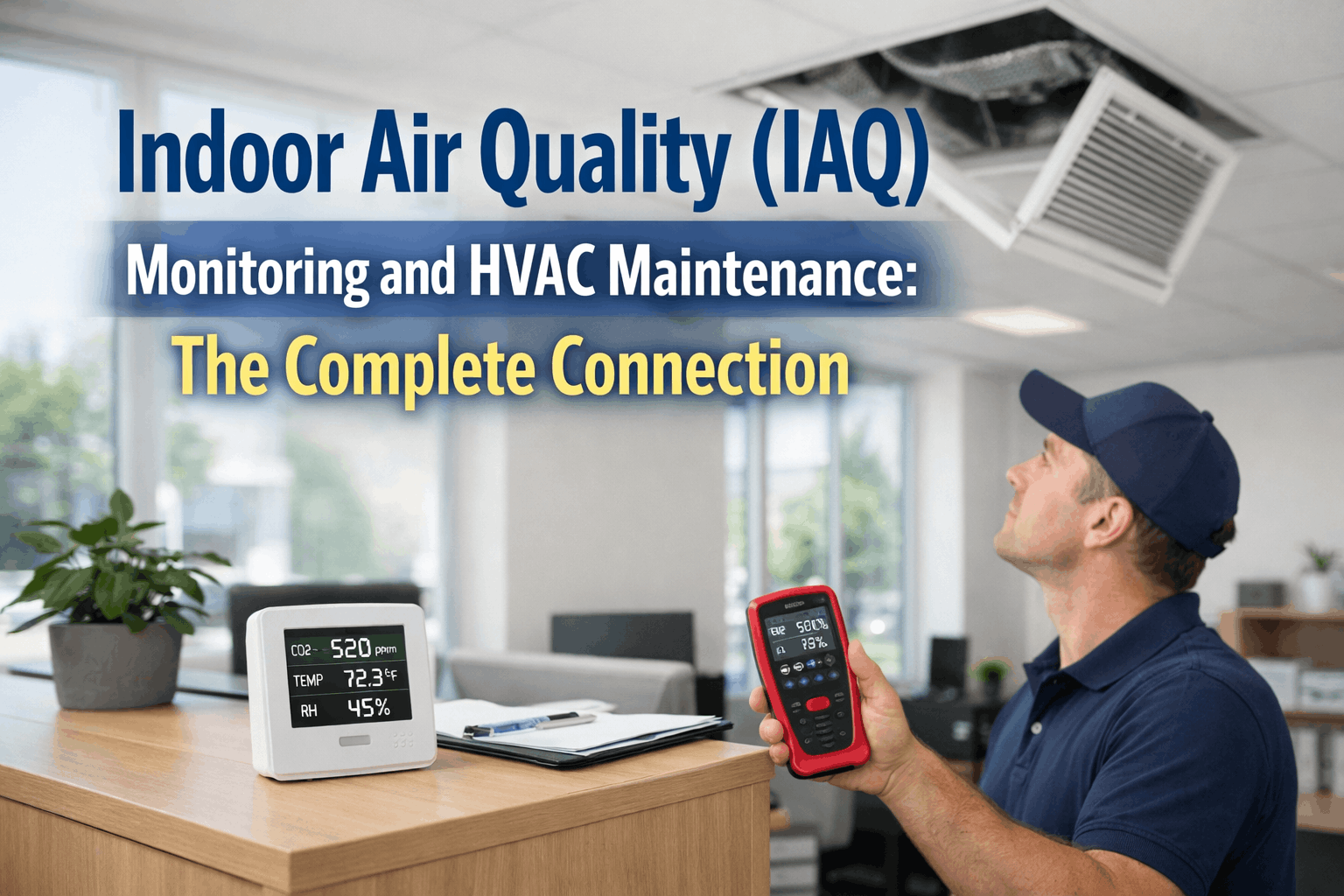
Indoor air quality failures don't announce themselves with alarms — they accumulate silently through rising CO2 levels, humidity exceedances, and inadequate ventilation rates until occupants report headaches, fatigue, and poor concentration. Studies consistently show that CO2 above 1,000 ppm reduces cognitive performance by up to 15%, and ASHRAE Standard 62.1 establishes minimum ventilation requirements specifically because poor IAQ is a measurable productivity and health risk. Oxmaint's compliance tracking and IoT sensor integration continuously monitors CO2, humidity, temperature, and particulate levels across all zones, flagging exceedances against ASHRAE 62.1 limits and auto-generating corrective work orders before occupant impact occurs.
ASHRAE 62.1 Aligned · LEED IAQ Compliant
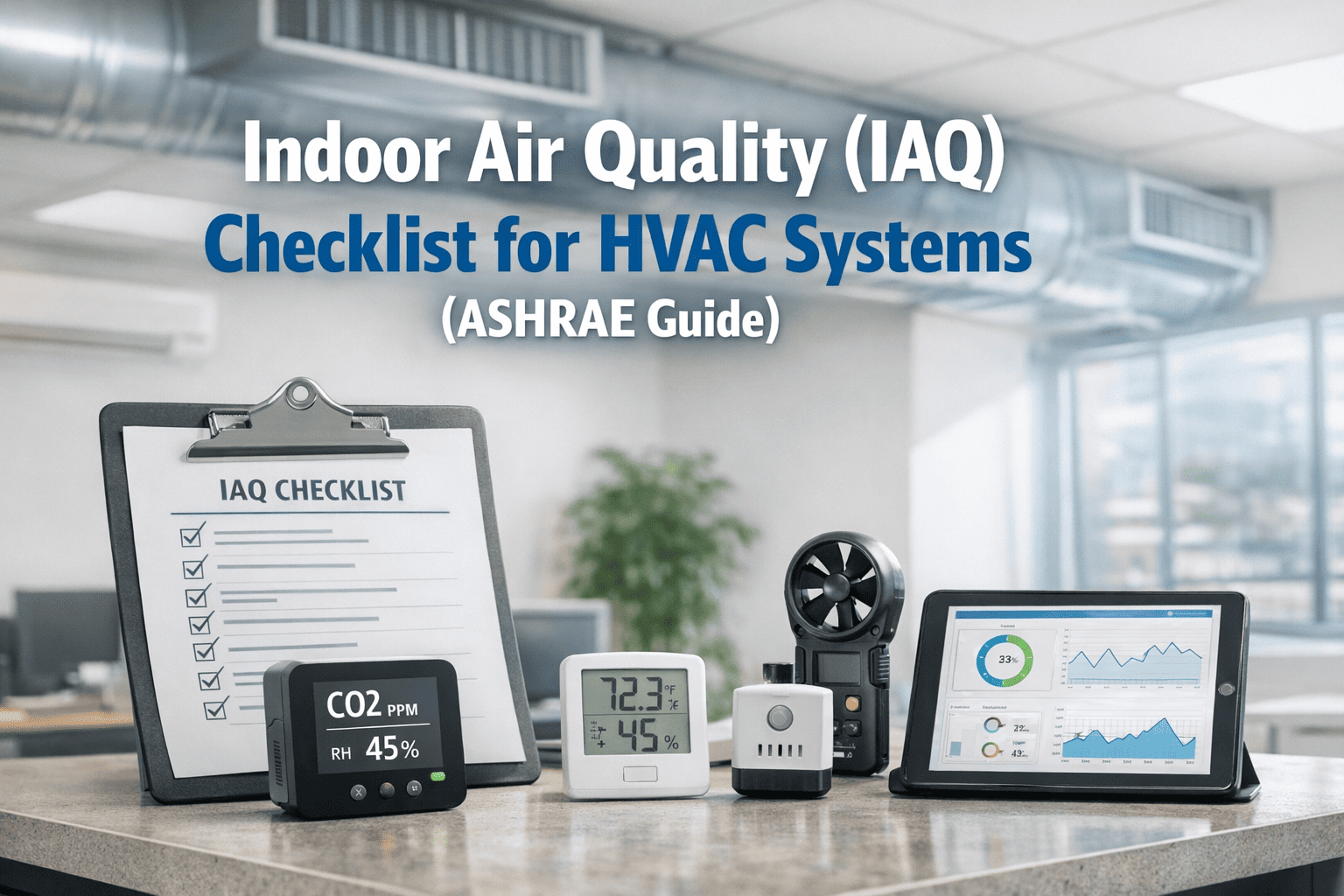
Indoor Air Quality (IAQ) Checklist for HVAC Systems
Complete CO2, humidity, ventilation, and particulate monitoring framework — verified against ASHRAE 62.1 requirements and supported by real-time IoT sensor tracking across all occupied zones.
15%
Cognitive performance drop at CO2 above 1,000 ppm
ASHRAE 62.1
Minimum ventilation standard for commercial buildings
35%
Occupant complaints reduced with structured IAQ monitoring
Floor 1 — Conference Rooms
CO2: 680 ppm
RH: 48%
Temp: 71°F
Good
Floor 3 — Open Office
CO2: 1,180 ppm
RH: 52%
Temp: 74°F
Alert
Floor 5 — Executive Suite
CO2: 540 ppm
RH: 44%
Temp: 72°F
Good
Floor 7 — Training Center
CO2: 1,640 ppm
RH: 68%
Temp: 76°F
Work Order
ASHRAE Reference Standards
IAQ Parameter Limits — What ASHRAE 62.1 Requires
| IAQ Parameter |
ASHRAE / Standard |
Alert Limit |
Action Limit |
Health Impact if Exceeded |
Monitoring Frequency |
| CO2 Concentration |
ASHRAE 62.1 |
900 ppm |
1,000 ppm |
Reduced cognition, fatigue, headaches |
Continuous |
| Relative Humidity |
ASHRAE 55 |
55% RH |
60% RH / below 30% |
Mold growth, dry air discomfort, static |
Continuous |
| PM2.5 Particulates |
EPA / ASHRAE 145.2 |
12 µg/m³ |
35 µg/m³ (24hr avg) |
Respiratory irritation, long-term lung risk |
Hourly |
| Total VOCs (TVOC) |
ASHRAE 62.1 |
300 µg/m³ |
500 µg/m³ |
Eye/nose irritation, headache, nausea |
Continuous |
| Outdoor Air Ventilation |
ASHRAE 62.1-2022 |
Below design CFM |
Below minimum per person |
CO2 buildup, pathogen concentration |
Weekly verification |
| Temperature (Thermal Comfort) |
ASHRAE 55 |
75°F occupied |
Outside 68–76°F range |
Productivity drop, occupant dissatisfaction |
Continuous |
| Formaldehyde |
OSHA PEL / LEED |
0.05 ppm |
0.10 ppm |
Eye/respiratory irritation, suspected carcinogen |
Semi-annual |
Structured IAQ Verification
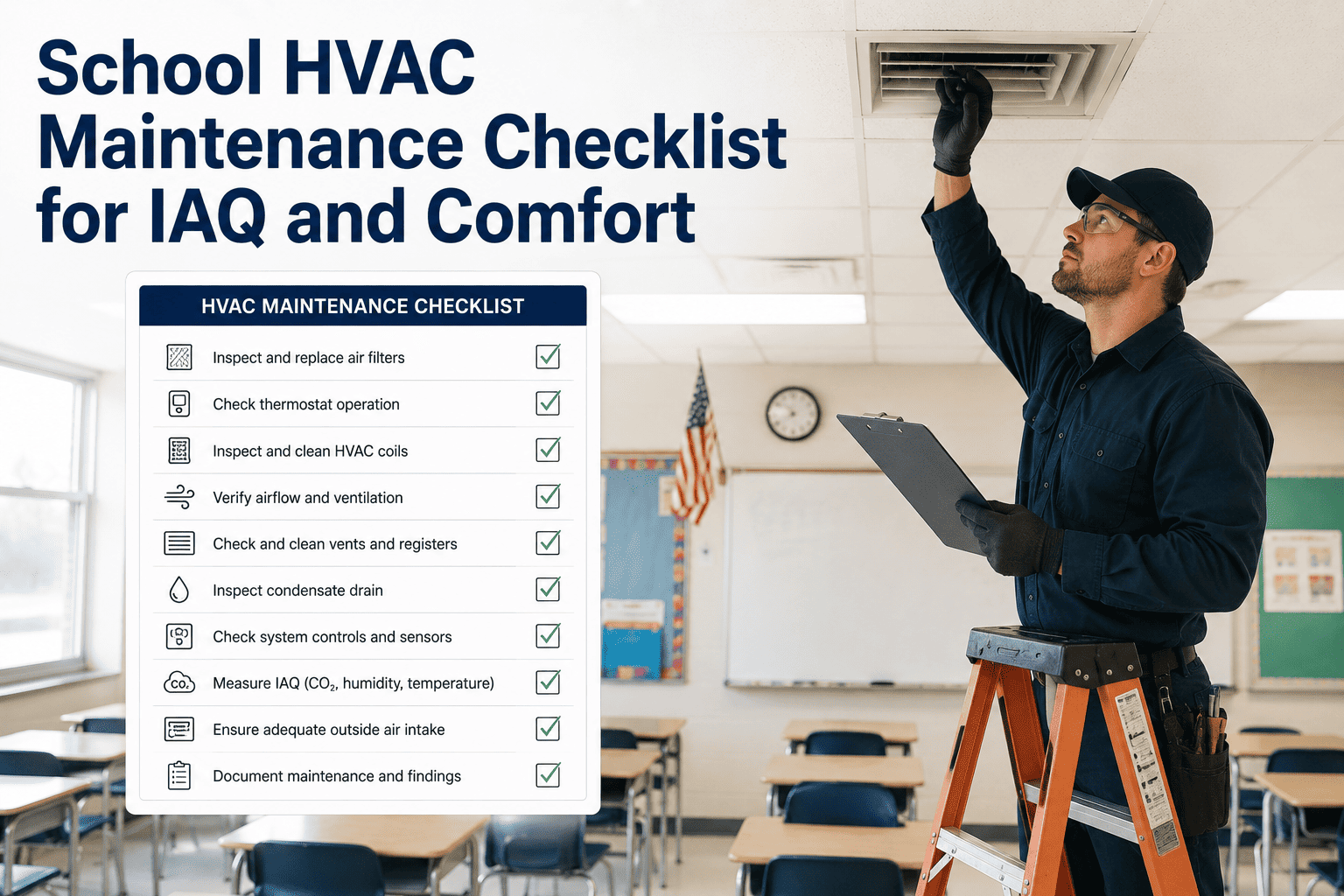
Complete IAQ Maintenance Checklist by System & Frequency
01
Ventilation System Verification
Outdoor air damper position — verify at minimum ASHRAE 62.1 design percentage
OA flow measurement with balometer at each AHU — log against design CFM
Demand-controlled ventilation (DCV) — CO2 sensor triggers damper open above 900 ppm
Transfer air paths — verify no obstruction between supply and return in each zone
Exhaust air system — CFM matches design, no recirculation from exhaust to intake
Weekly + Semi-Annual Measurement
02
Filtration & Air Cleaning
Filter MERV rating — verify installed filter matches design specification (minimum MERV 8 per ASHRAE)
Filter differential pressure — verify within manufacturer limits; replace if above threshold
Filter bypass gaps — inspect housing seal integrity, no air bypass paths around filter media
HEPA/ULPA filters (where installed) — integrity test quarterly per IEST-RP-CC001
UV-C germicidal systems — lamp intensity verification quarterly, replacement at 8,000 hrs
Monthly Filter / Quarterly HEPA
03
IAQ Sensor Calibration
CO2 sensors — zero-span calibration with reference gas, tolerance ±50 ppm
Humidity sensors — calibrate against psychrometer, tolerance ±3% RH
PM2.5 sensors — colocation test with reference monitor every 6 months
TVOC sensors — response test with reference compound; replace sensing element at 2 years
Temperature probes — calibrate against NIST-traceable reference, tolerance ±0.5°F
Semi-Annual Calibration Cycle
04
Moisture & Mold Control
Condensate drain pans — clear, no standing water, biocide treatment quarterly
Cooling coil surface — no visible microbial growth; clean annually per ASHRAE 180
Humidifier system — drain, clean, and disinfect per manufacturer schedule
RH control range — maintain 30–60% per ASHRAE 55 thermal comfort standard
Ductwork interior — visual inspection for microbial growth at access points annually
Monthly + Annual Deep Inspection
Compliance + IoT Sensors
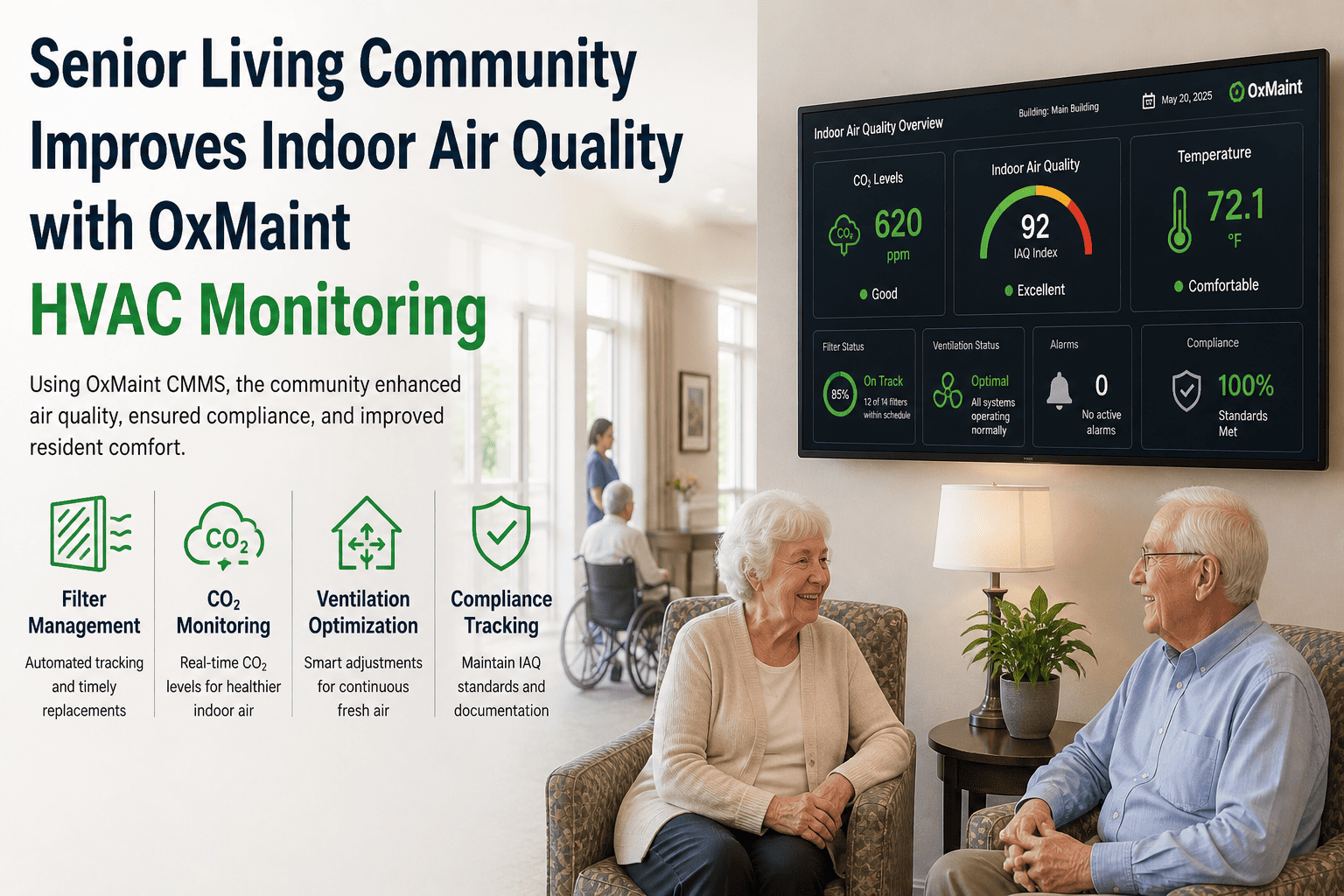
Monitor Every IAQ Parameter Automatically — ASHRAE Compliance Without Spreadsheets
Oxmaint's IoT sensor integration tracks CO2, humidity, PM2.5, and TVOC in real time across all zones, alerts against ASHRAE limits, and auto-generates corrective work orders when any parameter exceeds thresholds — with full audit-ready documentation for LEED and WELL certification.
IAQ Impact — Before vs. After Monitoring
What Structured IAQ Monitoring Delivers
CO2 Exceedance Events / Month
Occupant IAQ Complaints / Quarter
Expert Review
"
ASHRAE 62.1 sets the minimum ventilation rates, but meeting the minimum is not the same as maintaining good IAQ. CO2 is the most reliable proxy for overall ventilation adequacy — when CO2 rises above 1,000 ppm, you are telling occupants that ventilation is insufficient for the current occupancy load. The buildings I see with consistently good IAQ scores do not rely on quarterly manual measurements; they run continuous IoT sensor monitoring with alert limits set below the ASHRAE action thresholds, so they catch drift before it becomes a complaint. Coupling that sensor infrastructure with an automated work order system like Oxmaint means the corrective action happens before any occupant is affected — which is the only IAQ standard that actually matters to the people working in the building.
Dr. Karen Yuen, DAIKIN
IAQ Consultant — ASHRAE Member / LEED Fellow / 18 Years in Commercial HVAC Indoor Air Quality Programs
FAQs
IAQ Checklist — Frequently Asked Questions
What CO2 level is considered acceptable per ASHRAE standards?
ASHRAE Standard 62.1 does not specify a CO2 concentration limit directly, but the ventilation rates it prescribes typically maintain indoor CO2 at 700 ppm or less above outdoor levels — meaning approximately 1,100 ppm or lower in most commercial settings. The widely cited 1,000 ppm threshold comes from research showing measurable cognitive performance declines above this level. Oxmaint IoT sensors alert at 900 ppm (early warning) and generate work orders at 1,100 ppm, ensuring corrective ventilation action before occupants are impacted.
Configure your CO2 alert thresholds in Oxmaint's IoT dashboard.How often should HVAC filters be replaced to maintain acceptable IAQ?
ASHRAE Standard 180 recommends inspecting filters monthly and replacing based on differential pressure readings rather than fixed calendar intervals — a filter at 0.5 in. WG pressure drop may need replacement regardless of how many days it has been installed. Most commercial facilities should plan for quarterly filter replacement under normal occupancy and loading conditions, with monthly replacement in high-particulate environments such as manufacturing or heavy cooking areas. MERV 8 is the ASHRAE 62.1 minimum for most commercial applications; healthcare and lab spaces typically require MERV 13 or higher for adequate PM2.5 control.
Book a demo to see pressure-based filter replacement scheduling in Oxmaint.What documentation is required for LEED v4 IAQ compliance?
LEED v4 Enhanced Indoor Air Quality Strategies (EQ Credit) requires documentation of outdoor air delivery rates per ASHRAE 62.1, permanent CO2 monitoring in densely occupied spaces, and a post-occupancy IAQ testing report using EPA Compendium methods for selected contaminants. Records must include sensor calibration certificates, test methodology documentation, and measured results compared to ASHRAE and LEED thresholds. Oxmaint automatically stores all sensor readings, calibration events, and IAQ test outcomes in audit-ready format — accessible on demand for LEED certification review.
Oxmaint generates LEED-ready IAQ documentation automatically.What are the most commonly missed items in a standard IAQ inspection checklist?
The most frequently overlooked IAQ inspection items are condensate drain pan biological growth (causes musty odors and mold spore introduction into airstreams), outdoor air damper position verification under actual occupied load rather than design specification, CO2 sensor calibration drift (sensors reading low due to optical contamination — giving false comfort while actual CO2 is high), and transfer air path obstructions from furniture rearrangement that break the supply-to-return airflow path in open-plan offices. All four are preventable with a structured monthly checklist executed digitally with photographic evidence capture.
Book a demo to see Oxmaint's IAQ checklist workflow.Continuous IAQ Compliance
Your Occupants Deserve Air Quality You Can Prove — Not Guess
Oxmaint connects CO2, humidity, PM2.5, and TVOC sensors across every zone, alerts against ASHRAE limits before complaints occur, and delivers audit-ready compliance documentation for LEED, WELL, and ASHRAE 62.1 programs — automatically.