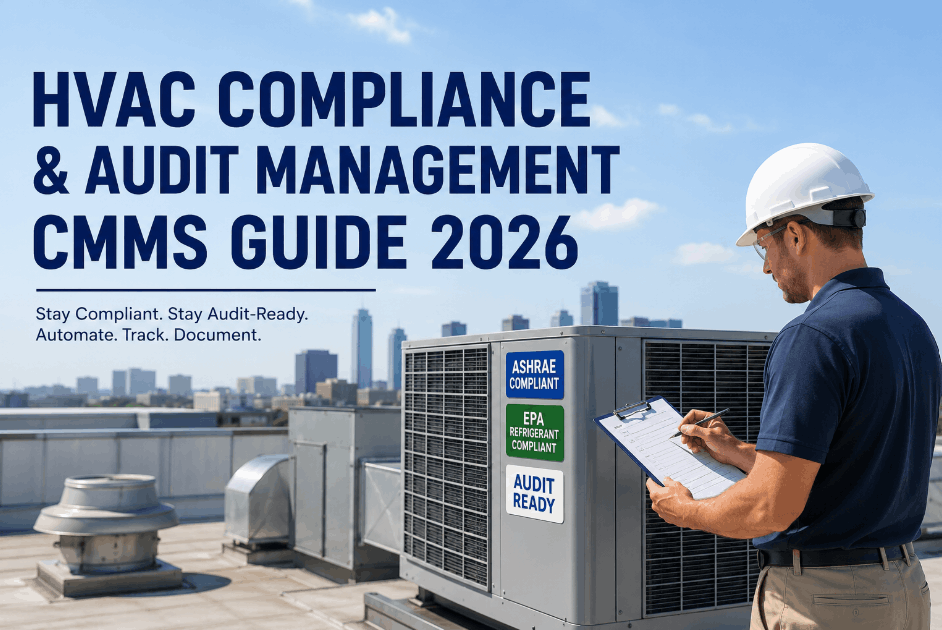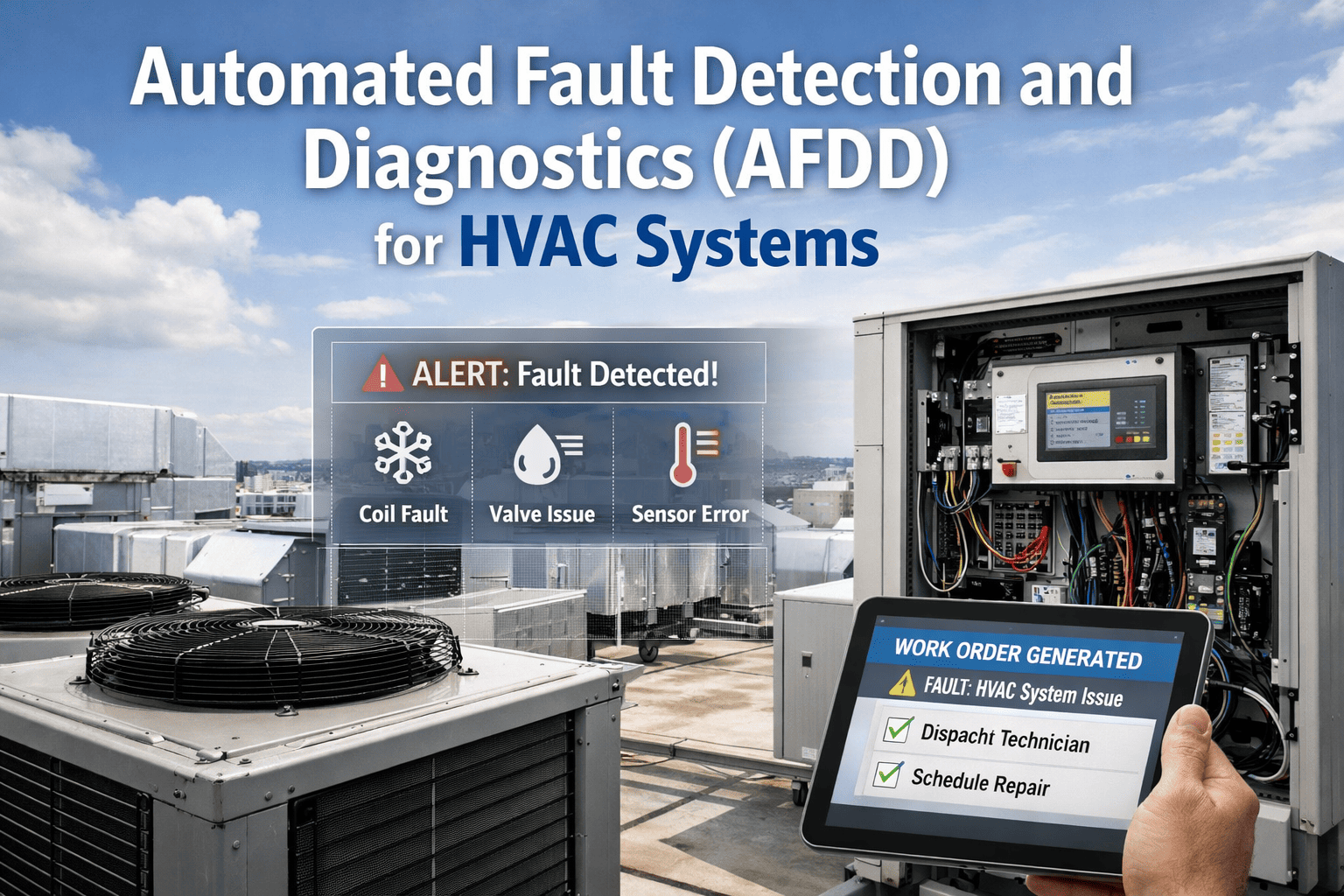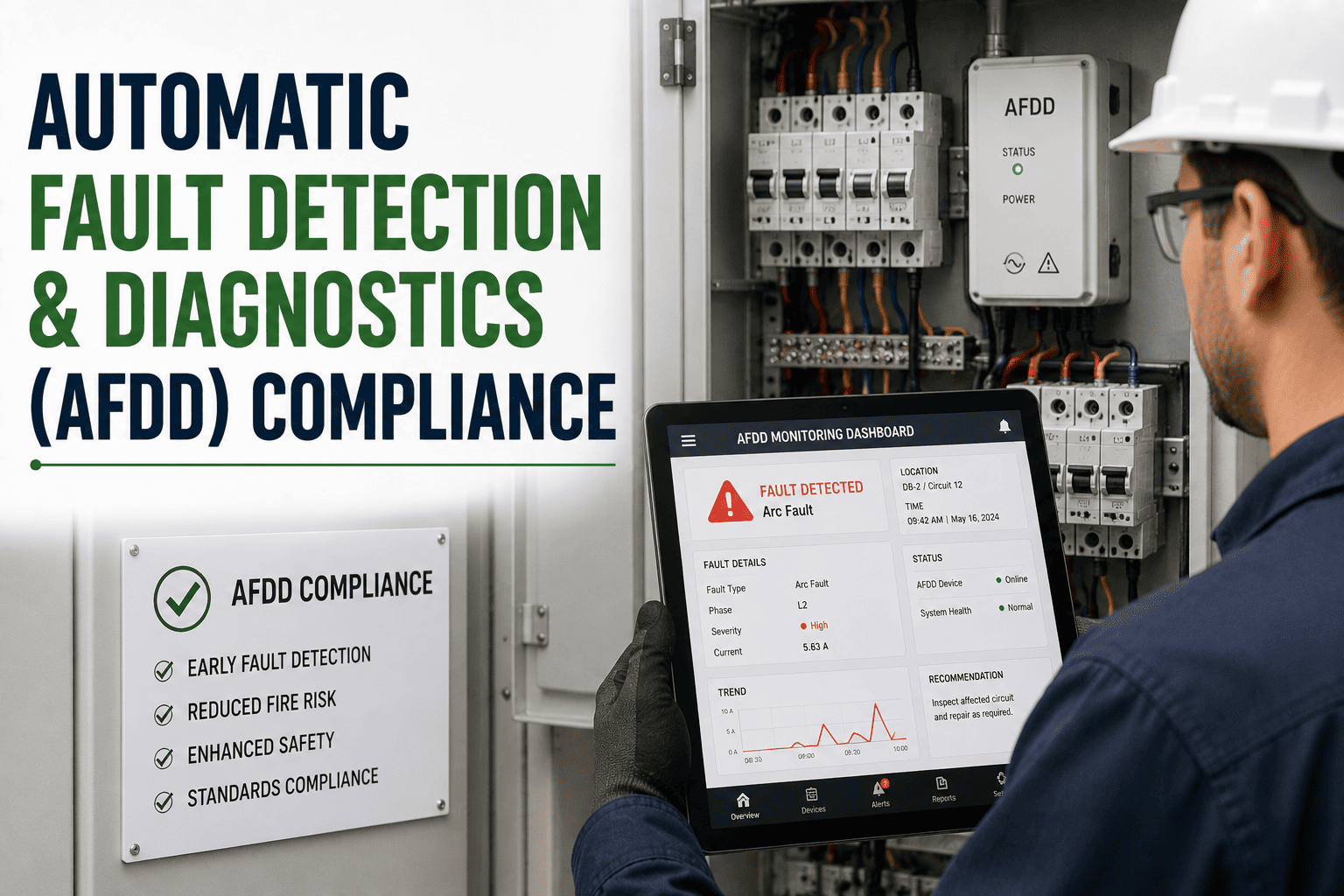
Automatic Fault Detection and Diagnostics (AFDD) compliance is rapidly becoming a mandatory requirement for commercial HVAC systems, driven by stringent energy codes like California Title 24 and ASHRAE Guideline 36. AFDD continuously monitors equipment performance, automatically identifying operational faults and degradation that waste energy and accelerate wear. For maintenance and reliability teams, achieving HVAC fault detection compliance means moving beyond reactive repairs to a data-driven strategy that catches deviations before they cause unplanned downtime. By integrating AFDD requirements directly into your CMMS, you can automate sequence verification, streamline compliance documentation, and cut energy waste by up to 15%—start your Start Free Trial to see how OxMaint automates this for your facility.
Is Your HVAC System Ready for Mandatory AFDD Compliance?
Title 24 and ASHRAE Guideline 36 are reshaping commercial maintenance. Manual fault tracking and spreadsheet-based compliance audits can no longer keep pace with automated fault detection capability requirements. Ensure your team meets HVAC AFDD standards without drowning in documentation.
What Are the Current AFDD Requirements for HVAC Systems?
Energy codes now mandate that commercial buildings deploy automatic fault detection diagnostics HVAC software to curb energy waste and improve grid reliability. Compliance is no longer optional for new constructions and major retrofits.
Title 24 AFDD Mandates
California's Title 24 requires AFDD on all new and retrofit air-handling units (AHUs) over 5 tons and rooftop units (RTUs) over 54,000 BTU/hr. The system must detect 7 specific fault types, including sensor failure, simultaneous heating/cooling, and outdoor air economizer faults.
ASHRAE Guideline 36 Compliance
Guideline 36 standardizes high-performance sequences of operation. It demands rigorous sequence verification and automated fault detection across HVAC zones. Compliance requires continuous monitoring software that can validate control logic against defined parameters in real-time.
AFDD Documentation & Audit
Passing an AFDD compliance audit requires verifiable logs. You must prove that the fault detection system is active, generating alerts, and that maintenance teams are resolving flagged faults within mandated timeframes. This is where most facilities fail the audit.
The Real Cost of Ignoring HVAC Fault Detection Compliance
A 180-asset commercial facility operating without integrated AFDD CMMS software typically loses $42,000 annually to hidden HVAC faults, energy penalties, and manual audit preparation. The cost of non-compliance extends far beyond regulatory fines.
A logistics distribution center running 14 rooftop units was flagged for Title 24 HVAC compliance. Their maintenance team relied on monthly Excel logs and physical inspections. During a surprise audit, they could not produce real-time fault alerts or proof of immediate remediation. The result: a $14,500 compliance penalty and a mandated 60-day system overhaul. By migrating to an AI-powered AFDD CMMS, they automated fault logging and passed their follow-up audit with zero deficiencies in just 3 weeks.
How to Achieve AFDD Compliance: A Maintenance Timeline
Transitioning from reactive HVAC maintenance to full fault diagnostics compliance requires a structured, phased approach. Here is the standard 4-phase timeline teams follow to meet Guideline 36 and Title 24 standards.
Map all HVAC assets subject to AFDD requirements. Verify existing control sequences against ASHRAE Guideline 36 parameters. Identify gaps in sensor coverage and data logging.
Connect Building Automation Systems (BAS) directly to your CMMS. OxMaint ingests real-time equipment data, enabling automatic fault detection capability without manual data entry.
When the AFDD system flags a deviation (e.g., simultaneous heating and cooling), OxMaint automatically generates a prioritized work order and routes it to the assigned technician with diagnostic context.
Generate compliance reports with one click. OxMaint maintains an immutable audit trail of every fault detected, work order executed, and sequence verification performed, proving continuous compliance.
Manual Tracking vs. AFDD CMMS Integration
Relying on spreadsheets and periodic physical inspections cannot satisfy modern automatic fault detection requirements. See how a connected CMMS transforms your compliance posture.
| Compliance Factor | Manual Tracking / Spreadsheets | OxMaint AFDD CMMS |
|---|---|---|
| Fault Detection Speed | Days to weeks (relies on scheduled rounds) | Real-time alerts (seconds after deviation) |
| Sequence Verification | Manual log review, highly error-prone | Automated continuous logic validation |
| Audit Documentation | Hours of compiling Excel logs and paper WOs | One-click compliance reports with immutable trail |
| Energy Waste Prevention | High (faults persist until manual discovery) | Minimized (instant work order generation) |
| Regulatory Penalty Risk | Severe (gaps in proof of remediation) | Eliminated (100% documented fault resolution) |
Simplify AFDD Compliance with OxMaint
OxMaint bridges the gap between your Building Automation System and your maintenance team. By embedding AFDD HVAC requirements into your daily workflows, we turn regulatory burdens into measurable operational gains.
Automated Fault-Triggered Work Orders
OxMaint listens to your BAS telemetry. The moment an HVAC fault is detected, the system auto-generates a work order pre-loaded with diagnostic data, priority level, and asset history—reducing response time by up to 60%.
Predictive Maintenance Analytics
Go beyond reactive fault detection. Our AI analyzes HVAC trends to predict impending failures before they trigger a compliance fault, cutting unplanned downtime by 30–50% and extending asset lifecycle.
One-Click Compliance Documentation
Pass any Title 24 or Guideline 36 audit effortlessly. OxMaint automatically logs every detected fault, assigned technician, and resolution timestamp into a tamper-proof audit trail ready for inspectors.
Spare Parts & Inventory Tracking
When AFDD flags a failing economizer or actuator, OxMaint instantly checks spare parts availability and reserves them for the work order, eliminating downtime spent waiting for components.
See How OxMaint Automates Your AFDD Compliance
Stop scrambling during audits and stop losing money to hidden HVAC faults. Book a 30-minute demo to see OxMaint map your assets, automate fault-triggered work orders, and generate compliance reports in real-time.
AFDD Compliance HVAC: Common Questions
What is AFDD compliance in HVAC systems?
AFDD compliance requires commercial HVAC systems to use Automatic Fault Detection and Diagnostics software that continuously monitors equipment for specific operational faults, such as sensor failures or simultaneous heating and cooling. Codes like Title 24 mandate this to ensure energy efficiency. Integrating an AFDD CMMS ensures faults are not only detected but automatically routed for repair.
Does Title 24 require AFDD for all HVAC equipment?
Title 24 requires AFDD for specific equipment, primarily new and retrofitted air-handling units (AHUs) over 5 tons and rooftop units (RTUs) over 54,000 BTU/hr. The system must be capable of detecting at least 7 standard fault types and logging the data for compliance verification. You can explore how OxMaint maps these requirements by setting up a workspace at app.oxmaint.ai.
How does ASHRAE Guideline 36 affect maintenance teams?
ASHRAE Guideline 36 standardizes high-performance HVAC sequences of operation, requiring rigorous sequence verification. Maintenance teams must ensure that control logic matches the guideline's parameters and automatically flag deviations. Using a CMMS like OxMaint automates this verification process and triggers instant work orders when sequences drift out of compliance.
Can a CMMS automatically document AFDD compliance?
Yes, an AI-powered CMMS like OxMaint integrates with your Building Automation System to automatically log every detected fault, work order generation, and resolution timestamp. This creates an immutable, audit-ready trail that proves continuous compliance to regulators, eliminating the need for manual spreadsheet tracking and physical paperwork.
How much does it cost to implement AFDD CMMS software?
Implementation costs vary based on facility size and asset count, but the ROI is typically rapid. By preventing a 15% energy waste penalty and eliminating $40K+ in annual manual audit and emergency repair costs, most facilities see a full return on their CMMS investment within 3 to 6 months. To get a custom quote, book a 30-min demo with our team.
Achieve Flawless AFDD Compliance in 14 Days
Join the maintenance teams using OxMaint to automate HVAC fault detection, eliminate manual audit prep, and cut energy waste. Start your free trial today or book a demo to see the platform live on your assets.
Free 14-day trial · No credit card required