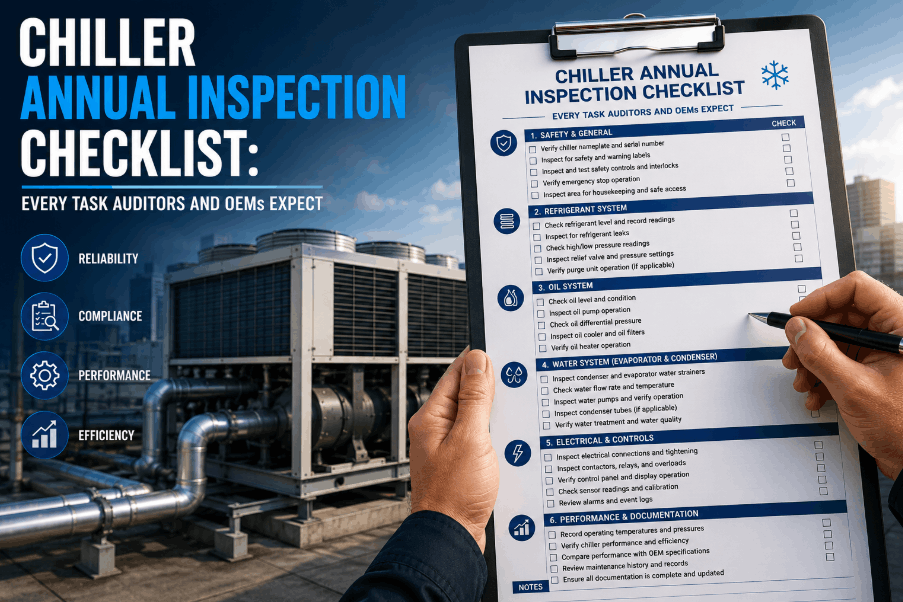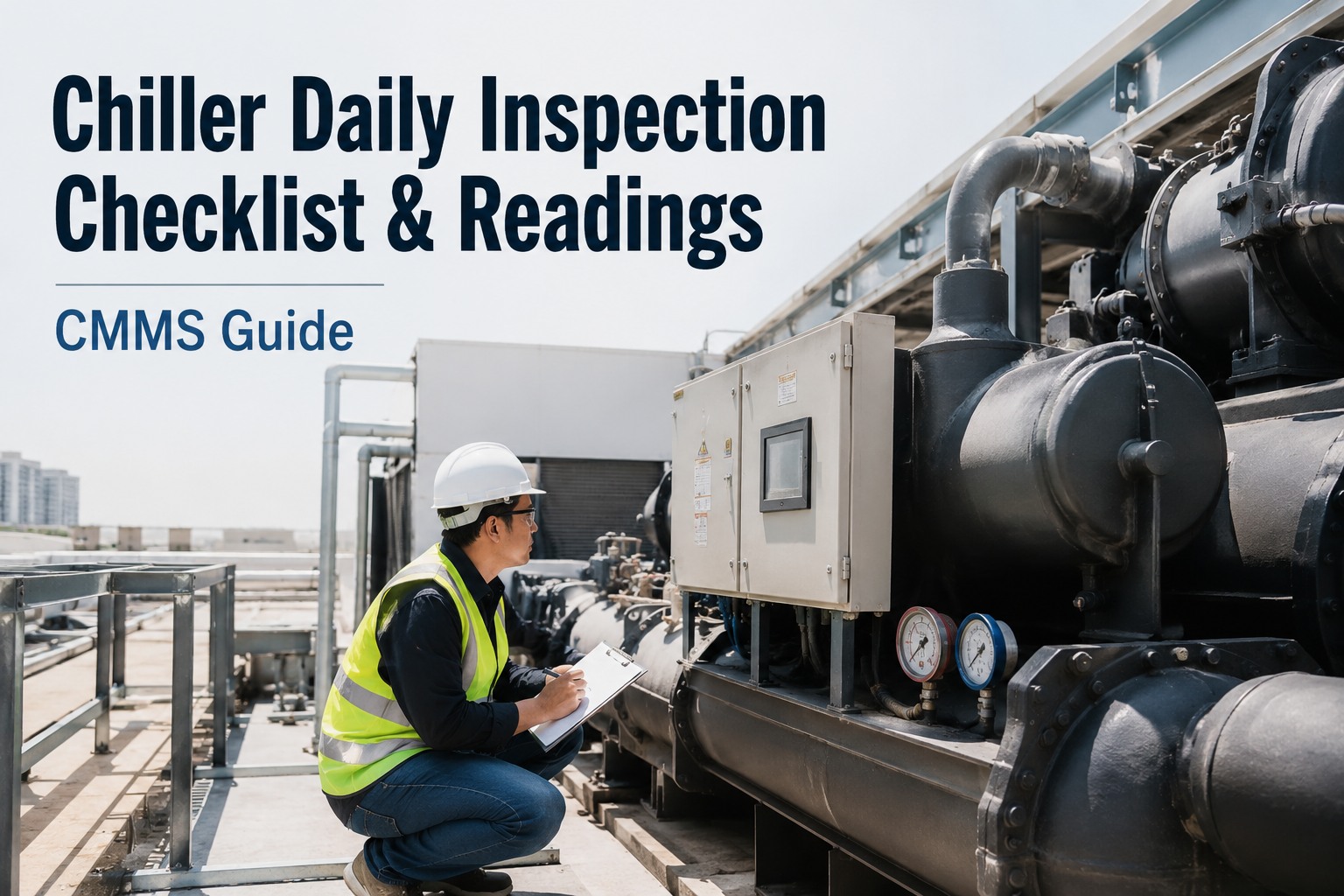
Daily chiller inspection is the single highest-leverage PM task in any plant — a 350-ton centrifugal chiller that drifts 2°F outside its approach temperature window silently burns $8,000–$14,000 per year in extra compressor kWh, and a low refrigerant charge caught at 5% loss costs roughly $400 to top off while the same loss found at 18% often means a $9,000+ compressor rebuild. A disciplined 12–18 minute walkdown, captured in a CMMS rather than a paper clipboard, converts those losses into controlled, trended, auditable data. This guide breaks down every reading, threshold, and inspection point operators and HVAC technicians should log daily, then shows how a digital chiller daily checklist in a CMMS like Oxmaint enforces it automatically. Start Free Trial to roll out the full template in under 20 minutes.
Stop missing the readings that quietly cost you $10K a year per chiller.
A complete walkdown takes 12–18 minutes on one machine. Done in a CMMS, those readings become trended approach temperatures, refrigerant-pressure baselines, and oil-level alerts — the early-warning data that prevents 70% of major chiller failures.
- Approach temperature — leaving chilled water vs. saturated refrigerant, log to 0.1°F.
- Refrigerant pressure — suction & discharge against OEM baseline chart.
- Oil level & temperature — sight glass at 1/2–3/4, oil temp 120–160°F.
- Condenser approach & superheat — flagged automatically by CMMS rules.
The four reading zones every daily chiller checklist must capture
Operators running 2+ chillers waste 40+ hours/month on clipboards that never get trended. Split the daily inspection into four zones, log each in the CMMS, and the trending happens automatically.
Refrigerant Circuit
Suction pressure, discharge pressure, saturated suction temp, saturated condensing temp. Compare each to the OEM baseline for the current entering condenser-water temperature.
- Log to ±2 psig
- Flag if >5% drift from baseline
- CMMS auto-trends 30-day slope
Oil System
Oil level at the sight glass (target 1/2–3/4), oil temperature (120–160°F on most centrifugals), oil-filter differential pressure. A rising oil-filter DP is the #1 early predictor of bearing wear.
- Photograph sight glass in CMMS
- Oil-filter DP > 12 psid → flag
- Oil sample every 90 days
Water-Side Temperatures
Entering & leaving chilled-water temp, entering & leaving condenser-water temp. These four numbers feed the approach calculation that catches fouling and charge loss weeks before a manual review would.
- Log to 0.1°F
- Approach = LCHW − SST
- Drift > 2°F → work order
Electrical & Vibration
Compressor running amps vs. RLA, voltage imbalance across phases (must be <2%), vibration at the motor and gear-case. Phase imbalance above 2% voids most compressor warranties.
- Amps ≤ 90% RLA
- Voltage imbalance < 2%
- Vibration < 0.15 in/s peak
Chiller approach temperature: the one number that catches fouling, charge loss & tube scaling early
Approach temperature is the difference between the leaving chilled-water temperature and the saturated suction refrigerant temperature. A clean 400-ton centrifugal typically runs a 0.8–1.5°F evaporator approach; when that number climbs past 3°F, you have a measurable, fixable problem — tube fouling, low charge, non-condensables, or a bad expansion device.
TLCHW = leaving chilled-water temp · TSST = saturated suction temp from the chiller controller. Clean baseline: 0.8–1.5°F. Action trigger: > 3.0°F or +2°F above baseline.
TSCT = saturated condensing temp · TECW = entering condenser-water temp. Clean baseline: 1.0–3.0°F. Action trigger: > 4.0°F → tube brushing / non-condensables purge.
Worked example — 350-ton centrifugal at a Dallas logistics campus
LCHW = 44.0°F · SST = 41.0°F → approach = 3.0°F (baseline was 1.2°F six months ago). A 1.8°F rise translates to roughly 4.5% extra compressor kWh. At $0.11/kWh and 4,200 run-hours/year, that single chiller is leaking $4,180/year. The CMMS rule flagged it on day 14 of the drift; tube brushing recovered full efficiency for $1,200 — a 3.4-month payback. Paper logs would not have surfaced the trend until quarterly review, six weeks later.
Daily chiller readings log — what to capture, baseline, and CMMS action trigger
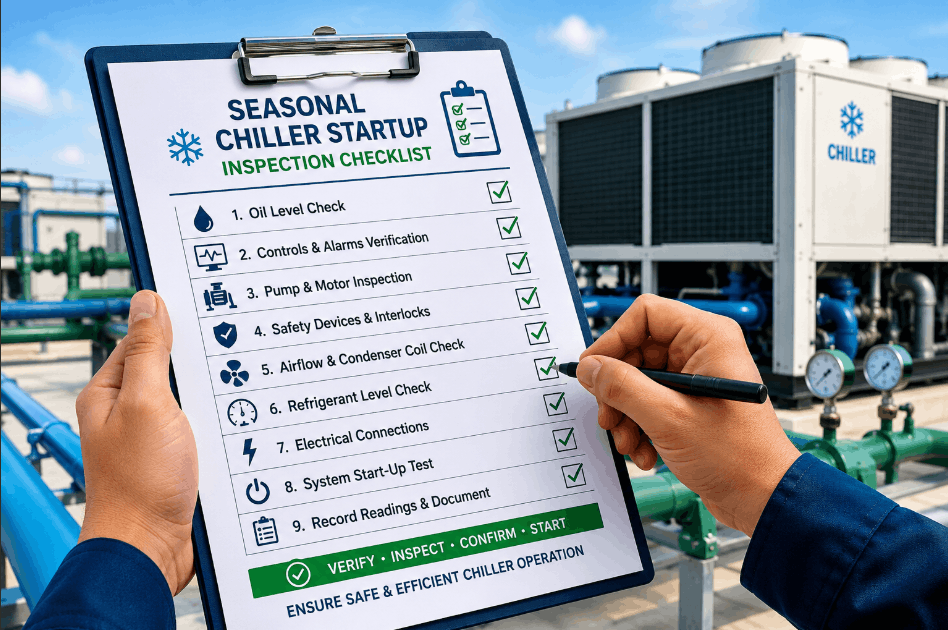
Roll this directly into your CMMS as a 12-field daily inspection form. Each reading gets a baseline and an auto-trigger so the system, not the operator, decides when to open a corrective work order.
| Reading | Typical baseline | Action trigger | CMMS behavior |
|---|---|---|---|
| Evaporator approach | 0.8–1.5°F | > 3.0°F or +2°F drift | Auto-WO: tube inspection |
| Condenser approach | 1.0–3.0°F | > 4.0°F | Auto-WO: brush tubes / purge |
| Suction pressure | ±2 psig of OEM chart | > 5% drift | Flag + trend alert |
| Discharge pressure | ±3 psig of OEM chart | > 5% drift | Flag + trend alert |
| Oil level (sight glass) | 1/2 to 3/4 | Below 1/4 or above full | Auto-WO: oil service |
| Oil temperature | 120–160°F | > 170°F or < 110°F | Auto-WO: heater/cooler check |
| Oil-filter DP | < 8 psid | > 12 psid | Auto-WO: filter change |
| Compressor amps | ≤ 90% RLA | > 100% RLA | Critical alarm + shutdown review |
| Voltage imbalance | < 1% | > 2% | Auto-WO: electrical PM |
| Vibration (motor) | < 0.10 in/s peak | > 0.15 in/s | Auto-WO: vibration analysis |
| Chilled-water ΔT | Design ±1°F | > ±2°F from design | Flag + flow verification |
| Run hours since last PM | Per OEM schedule | ≥ 2,000 hrs | Auto-WO: scheduled PM |
Paper chiller logs vs. CMMS-driven daily inspection — the real dollars
A 6-chiller campus running paper logs typically loses $28K–$52K per year to undetected efficiency drift and late-caught refrigerant leaks. The same campus on a CMMS catches the drift at day 3 instead of day 90.
The hidden cost of "the form was filled in"
On paper, an operator can tick every box for 90 days and still miss a 1.8°F approach drift because no one is trending the data — the readings live in a binder. The CMMS doesn't let drift hide: every reading is timestamped, baselined, and compared to the prior 30 days automatically. That single shift — from recorded to trended — is what turns daily inspection from a compliance ritual into a failure-prevention system.
Turn 12 minutes of daily readings into a full failure-prevention system.
Pre-built chiller daily inspection template, automatic approach-temperature trending, refrigerant-pressure baselines, and auto-triggered corrective work orders — live in Oxmaint the same afternoon.
How a CMMS chiller daily inspection actually runs — from walkdown to auto work order
The CMMS workflow replaces four manual steps (clipboard, data entry, spreadsheet trend, email) with one. Operators spend their time inspecting, not transcribing.
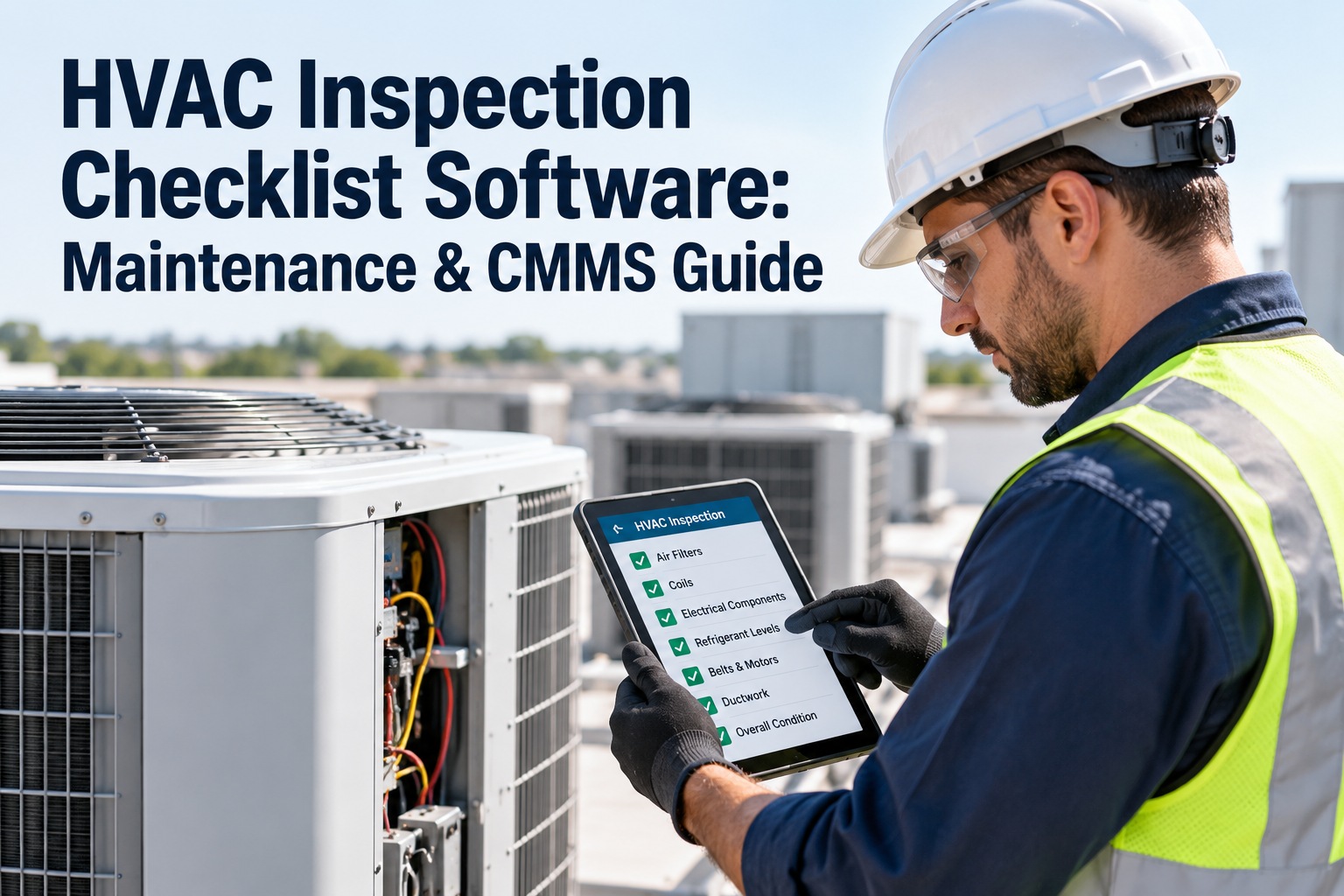
Technician opens the daily chiller form on mobile
The 12-field form is pre-assigned to the asset, pre-populated with the previous day's readings for delta comparison, and geo-stamped to the chiller room. No clipboards, no spreadsheets to retype later.
Readings are captured with baseline & tolerance visible
Each field shows the OEM baseline and the action threshold inline. If a technician enters a 3.4°F approach against a 1.5°F baseline, the field turns amber before submission — the operator sees the problem in real time, not next quarter.
CMMS rules evaluate the submission instantly
On submit, the system runs every rule: approach drift, refrigerant pressure delta, oil-filter DP, voltage imbalance. Out-of-tolerance readings auto-generate a corrective work order assigned to the chiller's lead tech, with the offending reading attached as evidence.
Trends feed the weekly reliability review
30-day, 90-day, and 12-month trend charts are generated automatically per chiller, per reading. The reliability engineer walks into Monday's review with the drift data already plotted — no spreadsheet crunching required.
Chiller daily inspection — what teams ask before rolling out the CMMS checklist
How long should a daily chiller inspection actually take?
A properly trained technician should complete a single chiller walkdown in 12–18 minutes, including the four temperature readings, refrigerant pressures, oil level and temperature, amps, and a visual leak check. With the form pre-built in the CMMS, that time drops to 10–14 minutes because the baseline and prior-day readings are already on screen — no flipping between OEM charts or yesterdays paper log.
Which readings matter most for catching failures early?
Evaporator approach temperature is the single most predictive reading — a 2°F rise over baseline correlates with tube fouling, low charge, or non-condensables weeks before amps spike or the chiller trips. Oil-filter differential pressure is second: a steady climb from 4 psid to 12 psid over a month is the earliest sign of bearing wear. Both should be trended, not just recorded. Book a Demo and we'll show you the auto-trend setup on your own chiller models.
Can the CMMS auto-generate work orders from out-of-tolerance readings?
Yes. Each of the 12 readings in the daily form has a configurable rule — for example, evaporator approach greater than 3.0°F or +2°F above baseline auto-creates a corrective WO assigned to the chiller's lead technician, with the reading, timestamp, and 30-day trend attached. No human review is required for the trigger; the reliability engineer only reviews the WO after it's created.
What if my chillers already have a BMS — do I still need a manual daily walkdown?
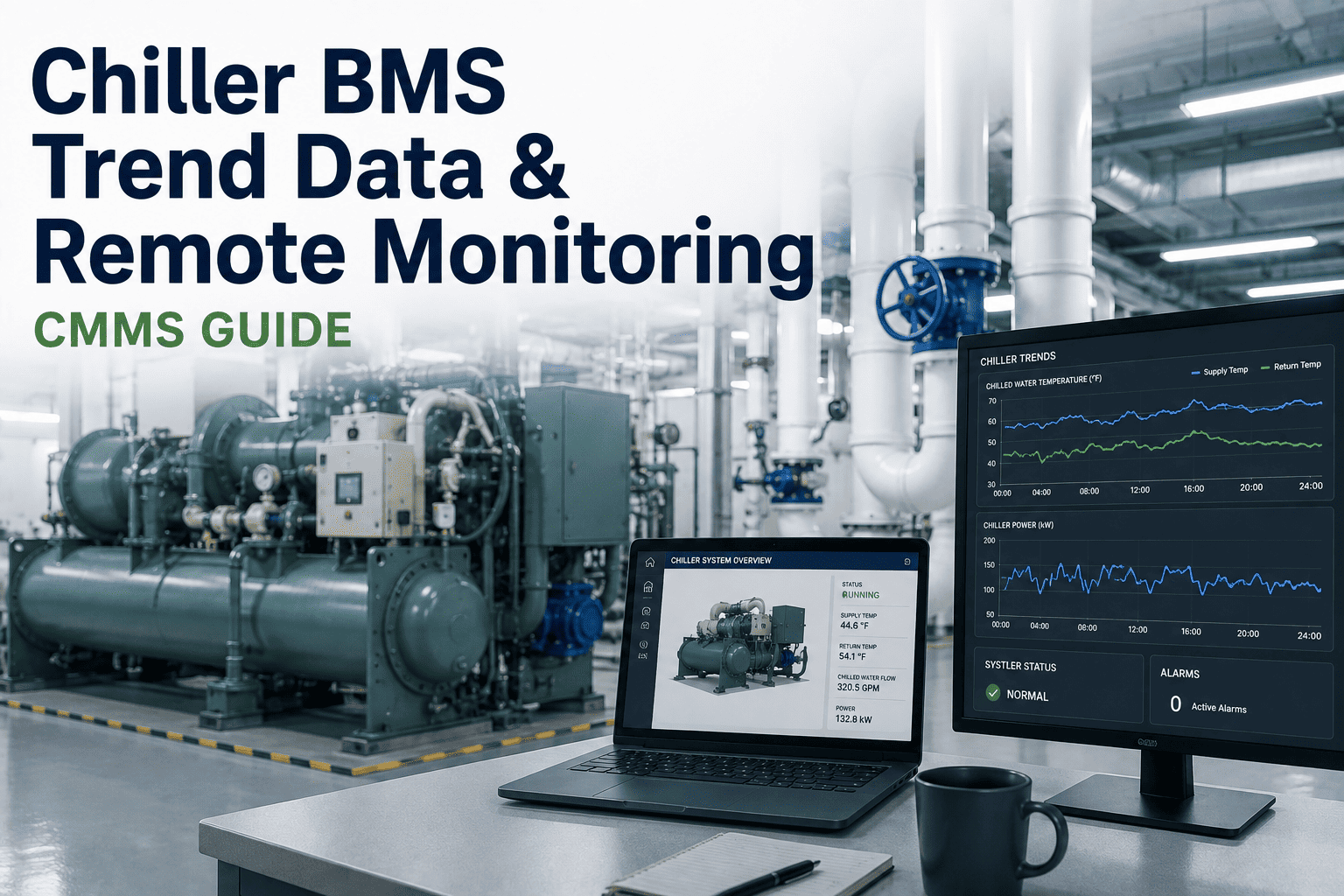
A BMS logs the controller's calculated values, but it does not verify oil sight-glass level, listen for bearing noise, check for refrigerant oil seepage at flanges, or confirm cooling-tower basin clarity. The daily walkdown captures the qualitative and physical-verification readings the BMS cannot — and the CMMS is where BMS trends and operator observations get unified into one reliability record per chiller.
How fast can we deploy a chiller daily inspection template in Oxmaint?
Most teams are live in under 20 minutes: import the chiller assets, apply the pre-built 12-field daily inspection template, assign it to the relevant technicians, and set the trigger rules for approach, refrigerant pressure, and oil-filter DP. The first trend charts populate after day one of readings. You can Start Free Trial and roll out the full template before lunch.
Deploy the chiller daily inspection template this week.
Pre-built 12-field checklist, automatic approach-temperature trending, refrigerant-pressure baselines, and auto-triggered corrective work orders. Live in Oxmaint before your next shift change.
Free 14-day trial · No credit card