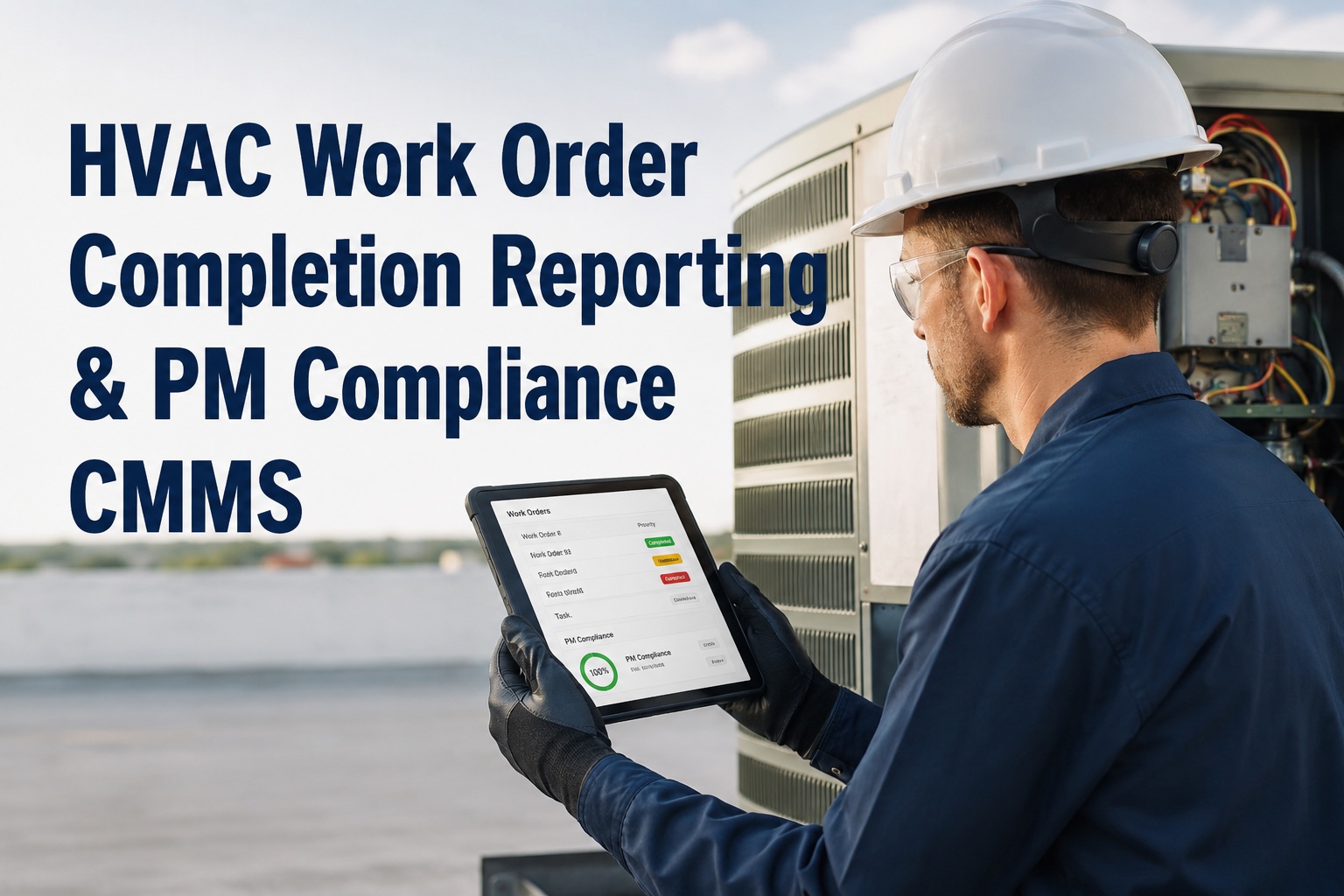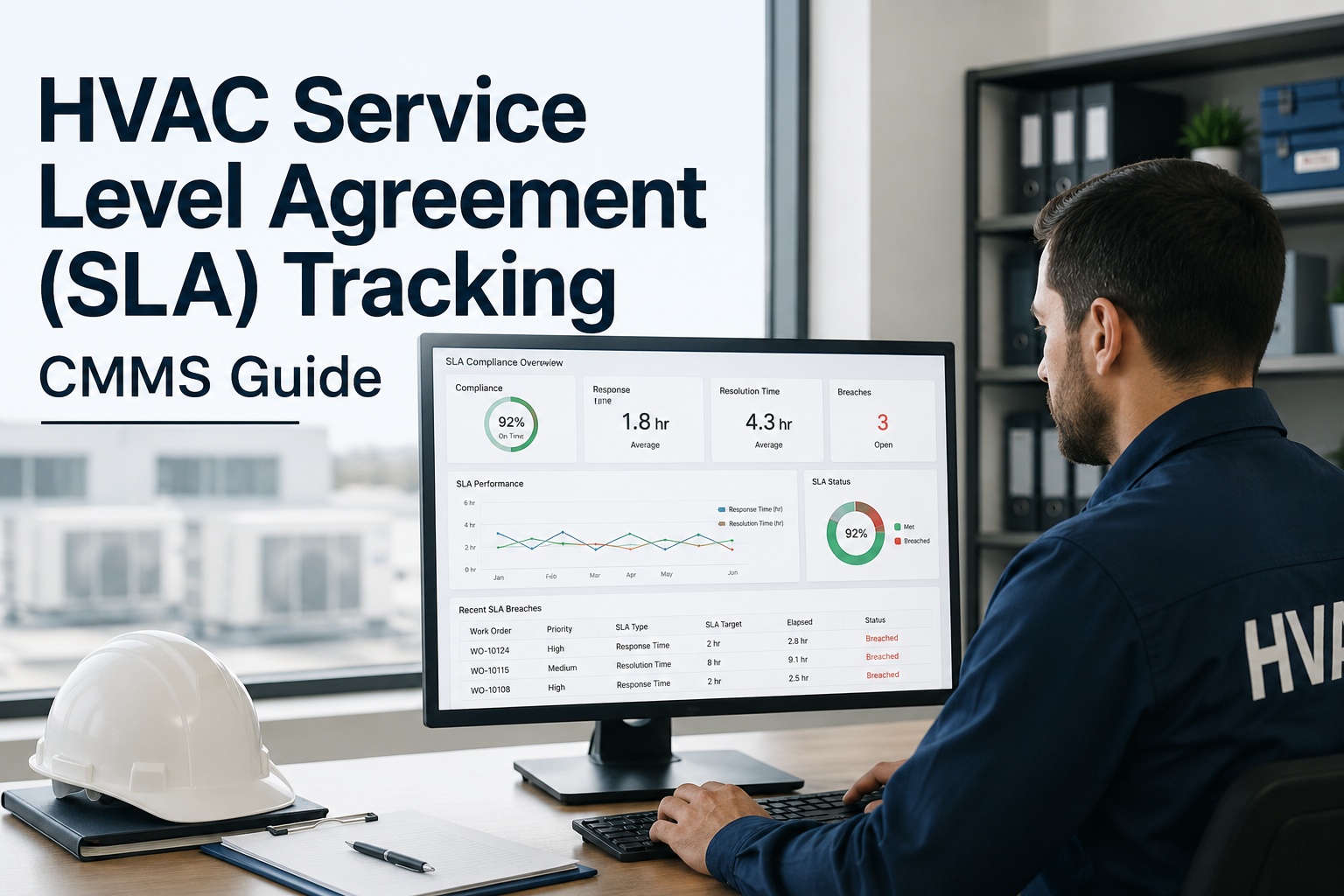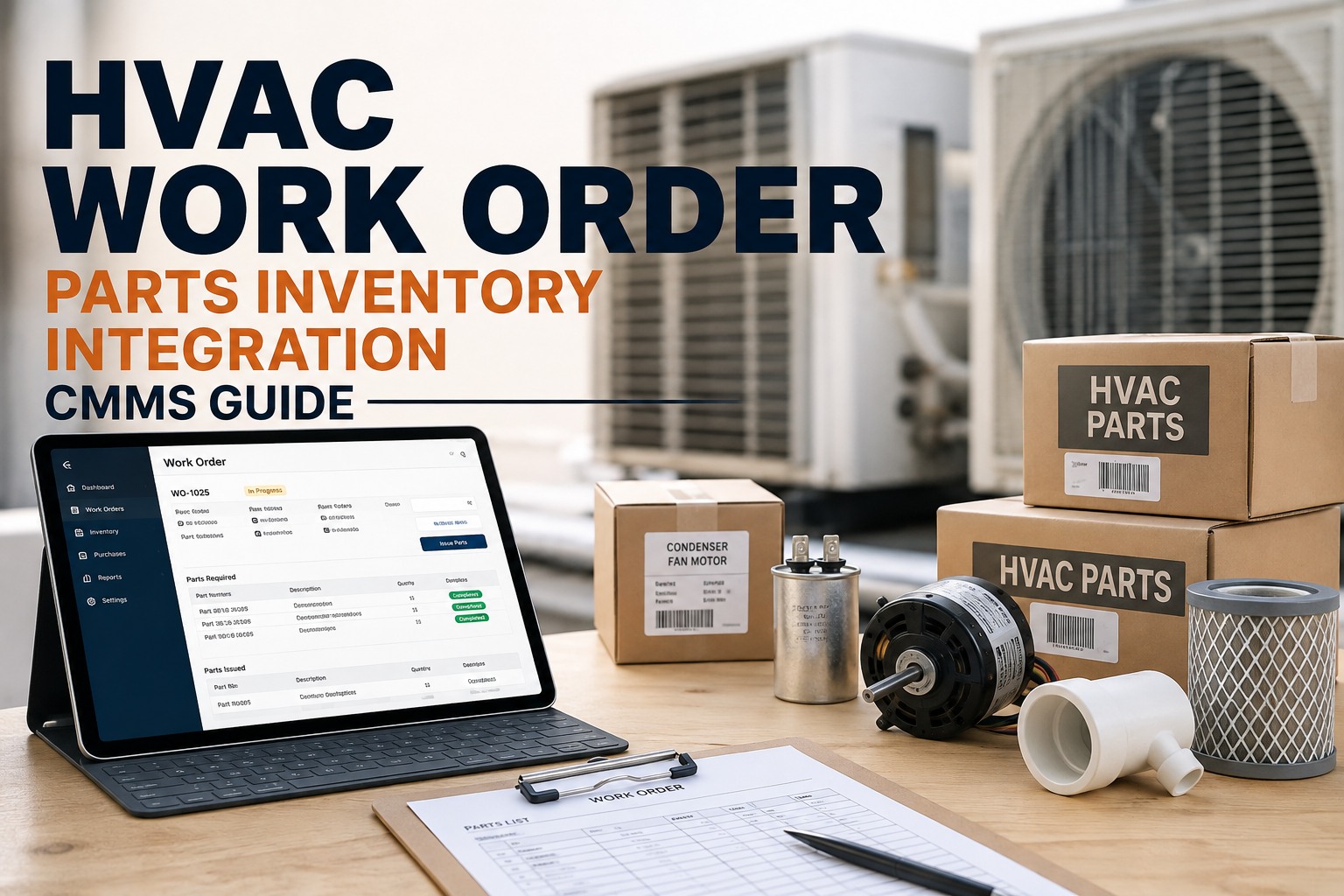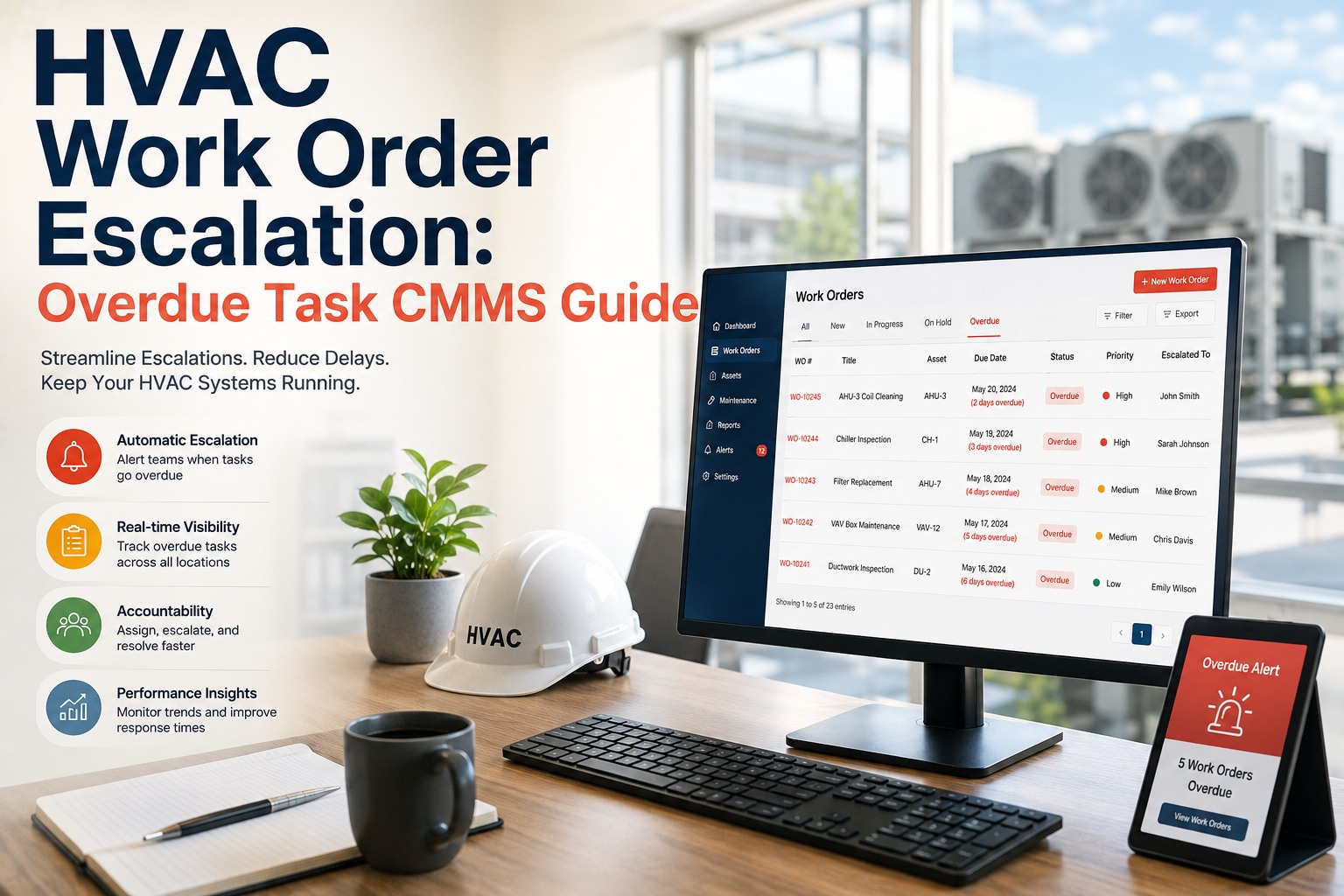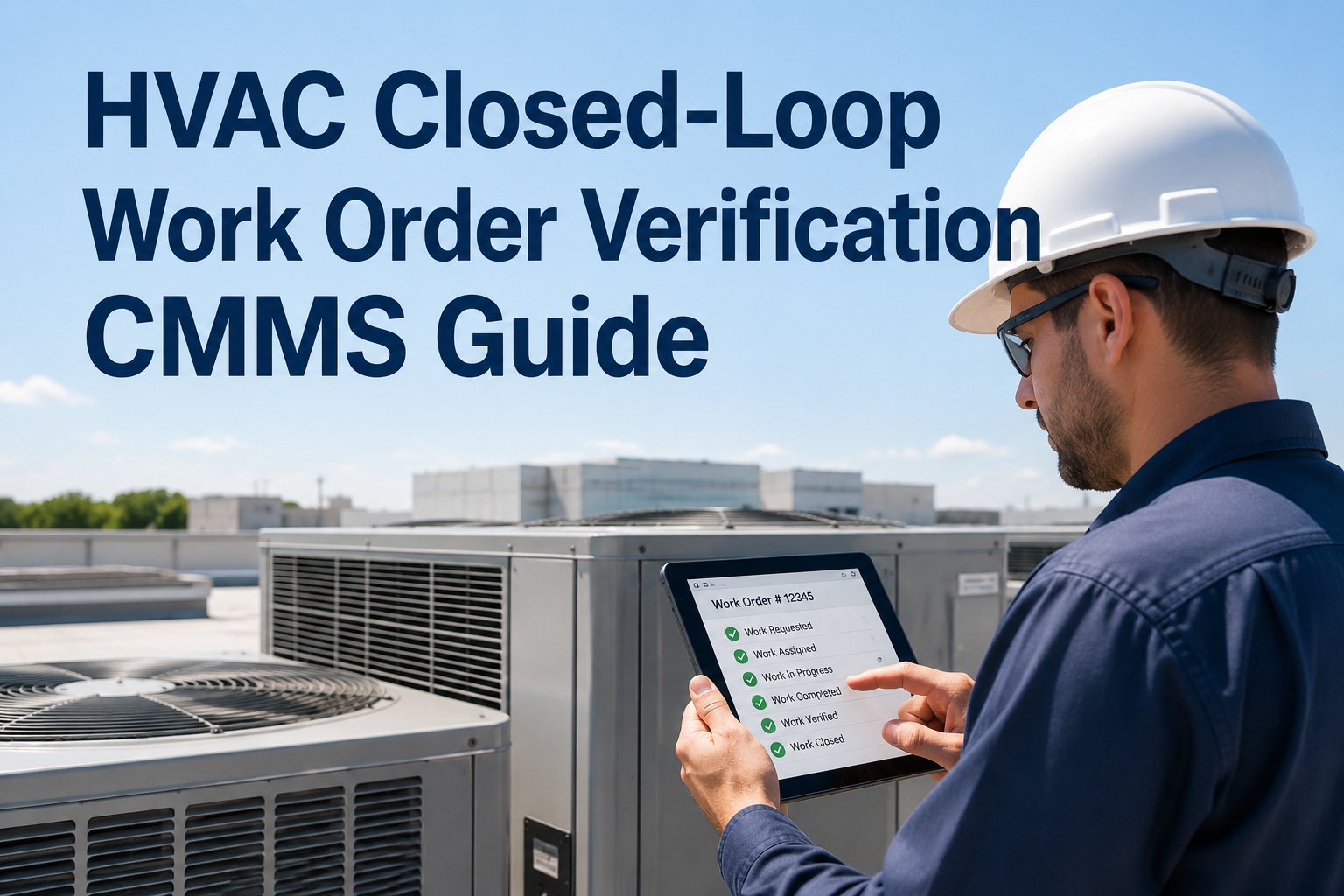
HVAC closed-loop work order verification is the process of confirming that a repair or maintenance task actually resolved the underlying fault before the work order is signed off and closed in the CMMS. For maintenance and reliability teams, closed-loop tracking means tying post-repair sensor confirmation, fault resolution validation, and technician sign-off into a single auditable workflow—so equipment is not returned to service with hidden defects. Skipping this verification step leads to repeat failures, callbacks, and compressed equipment lifespans. By implementing a closed-loop CMMS for HVAC assets, teams can cut repeat work orders by 25–40% and dramatically improve audit readiness. Explore how OxMaint automates this verification tracking, or Start Free Trial to see it on your assets today.
Is a repair truly finished if you never verified the fault was resolved?
Over 30% of HVAC work orders are closed without post-repair sensor confirmation—leading to repeat failures, energy waste, and premature equipment death. Closed-loop work order verification changes that by tying fault resolution validation directly into your CMMS workflow.
Why open-loop work order tracking fails HVAC teams
Most CMMS workflows treat "Completed" as the final step—but without fault resolution validation, that status is just a guess. Here is what that gap actually costs a typical commercial HVAC operation.
HVAC assets closed without post-repair verification fail again within 90 days at nearly three times the rate of verified assets.
Each unverified closure that results in a callback costs an average of $1,200 in labor, parts, and unplanned downtime per incident.
Improperly repaired HVAC units (e.g., undercharged compressors, uncalibrated dampers) consume up to 18% more energy than verified systems.
How to build a closed-loop HVAC work order workflow
A true closed-loop CMMS for HVAC doesn't just close tickets—it validates them. Here is the 5-step verification tracking workflow that eliminates callbacks and ensures ISO 55000 compliance.
Fault Detection & Work Order Trigger
A BMS alarm, sensor anomaly, or preventive maintenance schedule triggers a work order. The CMMS automatically logs the fault code, asset history, and initial sensor readings as the baseline for verification.
Repair Execution & Data Capture
Technician performs the repair and documents actions, parts consumed, and labor hours via mobile CMMS app. Photos, readings, and checklists are attached directly to the work order in real time.
Post-Repair Sensor Confirmation
Before closing, the system pulls live sensor data (temp differentials, pressure, amperage, vibration) and compares them against the asset's OEM baseline and pre-repair readings. If values fall outside tolerance, closure is blocked.
Fault Resolution Validation
A supervisor or automated AI check validates that the original fault code is resolved. The CMMS cross-references the repair action with the fault type to ensure the root cause—not just the symptom—was addressed.
Verified Closure & Analytics Feedback
The work order is marked "Verified Closed." MTTR, MTBF, and callback data feed back into the analytics engine to refine predictive maintenance models and update PM frequencies for that asset class.
Verification checklist: What to confirm before closing any HVAC work order
Use this HVAC closed-loop guide as a scannable checklist. Every item must be confirmed in the CMMS before a work order transitions from "Completed" to "Verified Closed."
Sensor & Baseline Confirmation
- Post-repair temperature differential within OEM spec (±2°F)
- Refrigerant pressures match baseline for current ambient conditions
- Amperage draw on compressors and fans within nominal range
- Vibration readings on motors below ISO 10816 alarm threshold
Fault Resolution Validation
- Original fault code confirmed cleared in BMS/SCADA for 30+ minutes
- Root cause documented and matched to corrective action taken
- No new or cascading alarms triggered since repair completion
- Technician notes include parts replaced with serial numbers tracked
Compliance & Audit Trail
- Digital sign-off captured from technician and reviewing supervisor
- Photos of repair before/after attached and time-stamped
- Spare parts inventory auto-deducted and reconciled in CMMS
- Work order history linked to asset record for ISO 55000 audit chain
The cost of unverified HVAC repairs vs. closed-loop tracking
Quantifying the gap between open-loop and closed-loop HVAC maintenance reveals a clear payback. Here is the formula and a breakdown of what a 180-asset facility saves.
| Metric | Open-Loop (No Verification) | Closed-Loop CMMS | Annual Impact |
|---|---|---|---|
| HVAC Callbacks / Year | 56 incidents | 12 incidents | −44 callbacks ($52,800 saved) |
| Repeat Failure Rate (90-day) | 31% | 6% | 81% reduction in repeat work |
| Energy Waste from Bad Repairs | 18% efficiency loss | Under 3% loss | $8,736 energy recovered |
| Unplanned Downtime Hours | 68 hrs/year | 40 hrs/year | 28 hrs avoided ($23,800) |
| Audit Preparation Time | 40+ hours/quarter | 2 hours/quarter | 152 hours of labor freed |
OxMaint: The closed-loop CMMS built for HVAC verification
OxMaint closes the loop automatically—turning every work order into a verified, sensor-confirmed, audit-ready record. Here is how our AI-powered CMMS maps directly to your HVAC verification workflow.
IoT Sensor Integration
OxMaint ingests live data from your BMS, IoT sensors, and SCADA systems. Post-repair sensor confirmation is automatically compared against OEM baselines—blocking work order closure if temp, pressure, or vibration are out of tolerance.
Automated Fault Resolution Validation
AI cross-references the original fault code with the technician's corrective action and live asset data. If the root cause isn't matched, the system flags the work order for supervisor review before it can be closed.
Full Audit Trail & Compliance
Every verification step—sensor readings, photos, digital sign-offs, parts used—is time-stamped and linked to the asset record. Generate ISO 55000 and ASHRAE compliance reports in one click, not one week.
Predictive Feedback Loop
Verified closure data (MTTR, MTBF, callback rates) feeds back into OxMaint's AI engine. The system continuously refines PM schedules and predictive alerts for each HVAC asset class based on real outcomes.
Stop closing work orders that aren't actually fixed
See how OxMaint's closed-loop verification tracking eliminates HVAC callbacks, cuts repeat failures by up to 50%, and gives you a bulletproof audit trail.
Closed-loop HVAC work order verification: Common questions
What is closed-loop work order verification in HVAC maintenance?
Closed-loop work order verification is the process of confirming that an HVAC repair actually resolved the original fault—using post-repair sensor confirmation and fault resolution validation—before the work order is closed in the CMMS. Unlike open-loop systems that close tickets when a technician marks them "done," closed-loop tracking requires objective evidence (temperature, pressure, vibration data) that the asset is operating within OEM spec, ensuring the root cause was fixed and preventing repeat failures.
How does a CMMS support post-repair verification for HVAC systems?
A closed-loop CMMS like OxMaint integrates with BMS, IoT sensors, and SCADA to automatically pull post-repair readings and compare them against asset baselines. The CMMS can block work order closure if values are out of tolerance, attach sensor data and photos to the work order record, and feed verified outcomes into analytics—creating a complete, auditable chain from fault detection to confirmed resolution.
What sensors are used for HVAC repair validation?
Common sensors for post-repair verification include temperature differential sensors (supply vs. return air), refrigerant pressure transducers, electrical amperage meters on compressors and fan motors, vibration sensors on rotating equipment (measured against ISO 10816 thresholds), and airflow sensors. OxMaint's CMMS can ingest data from all of these sources to confirm a repair restored the HVAC unit to proper operating condition before closing the work order. Book a Demo to see live sensor integration.
How much can closed-loop verification reduce HVAC callbacks?
Facilities that implement closed-loop work order verification typically see a 70–80% reduction in HVAC callbacks within the first 6 months. By catching incomplete repairs, uncalibrated controls, and unresolved root causes before the work order closes, teams eliminate the repeat failures that drive costly emergency callouts. A 180-asset facility can save $50K+ annually in labor, parts, and downtime costs.
Is closed-loop verification required for HVAC compliance and audits?
While not explicitly mandated by a single standard, closed-loop verification directly supports ISO 55000 asset management requirements, ASHRAE Guideline 36 for HVAC commissioning, and FMCSA/CIBSE maintenance documentation expectations. It creates the auditable, evidence-based trail that inspectors and insurance providers look for—proving that repairs were not just performed, but validated. You can Start Free Trial and generate compliance-ready records in minutes.
Ready to close the loop on your HVAC work orders?
Join maintenance teams using OxMaint to verify every repair, eliminate callbacks, and build an audit trail that speaks for itself. Get a personalized demo on your assets in 30 minutes.
Free 14-day trial · No credit card