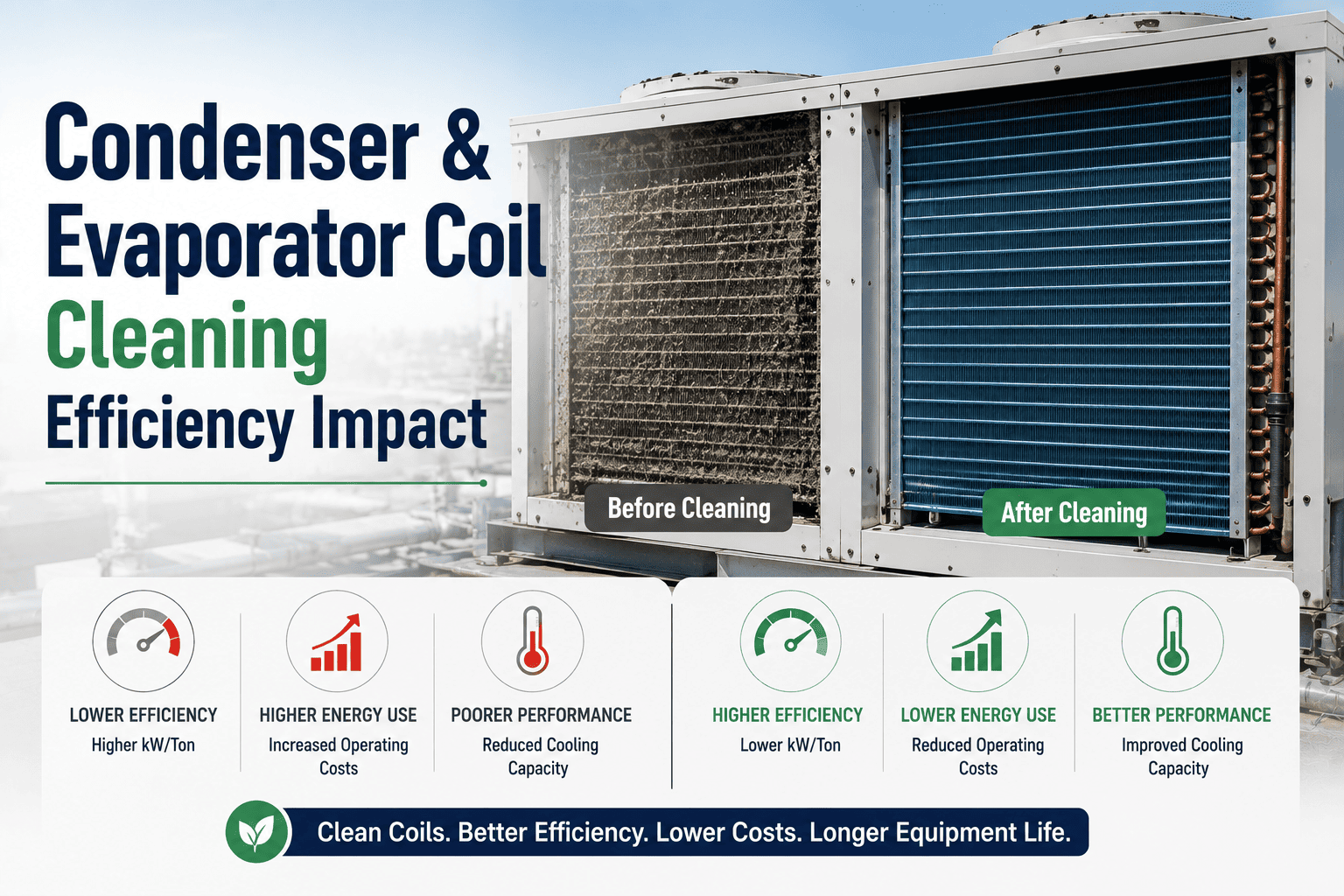
A fouled condenser coil adds 15–20% to chiller energy consumption before anyone notices the electricity bill has moved. A blocked evaporator coil on an AHU reduces cooling capacity until the zone it serves overheats, occupants complain, and the reactive call-out costs five times more than the cleaning event would have. Coil fouling is the single most common and most economically significant form of HVAC degradation in commercial and industrial buildings — and it is entirely preventable with a structured cleaning schedule. OxMaint's preventive maintenance platform auto-schedules coil cleaning by asset type, season, and environment, tracks performance readings before and after each clean, and flags energy deviation between scheduled cleans so the maintenance team responds to fouling when it costs money — not after it has been costing money for months.
Checklist · Coils & Heat Exchange · Preventive Maintenance
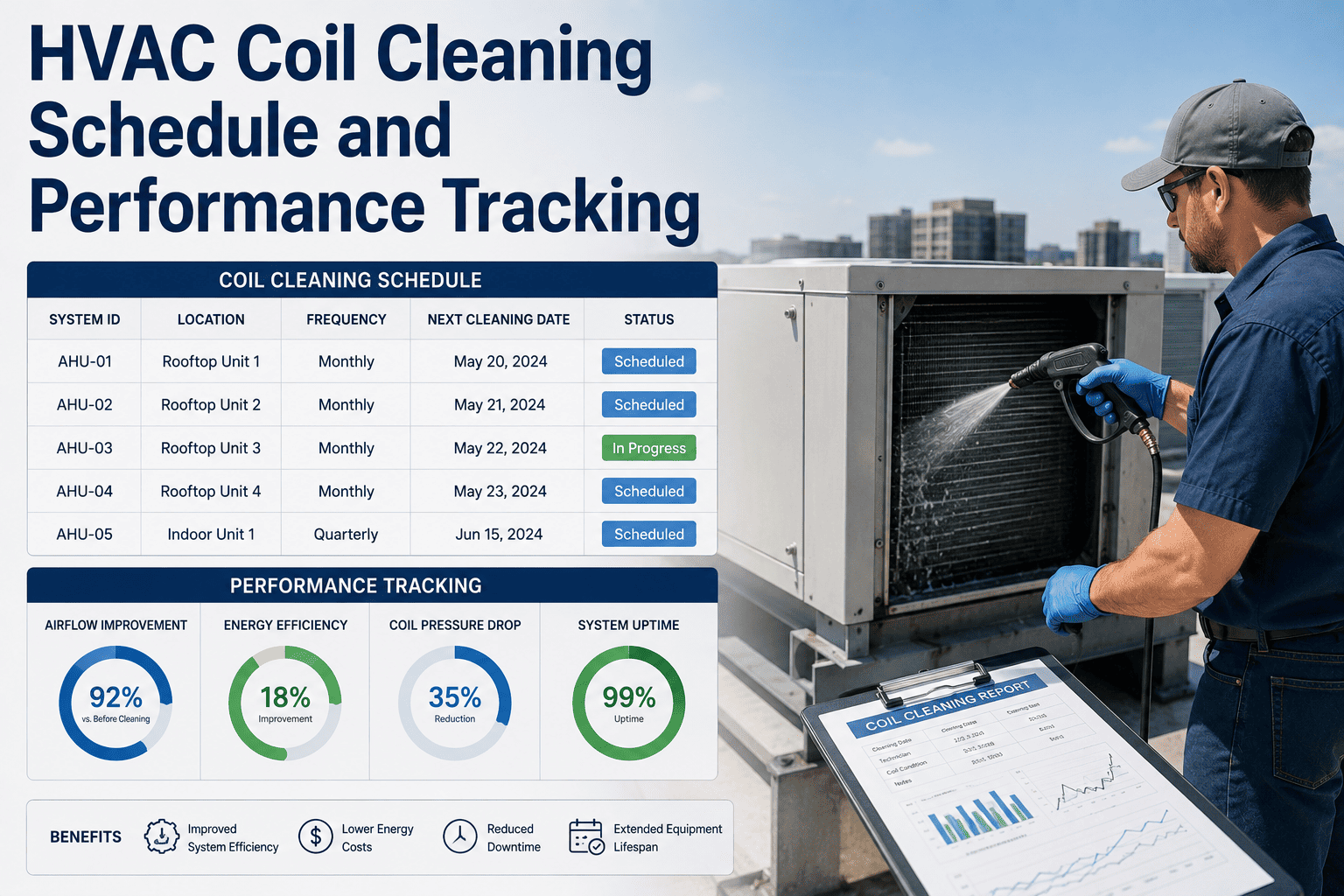
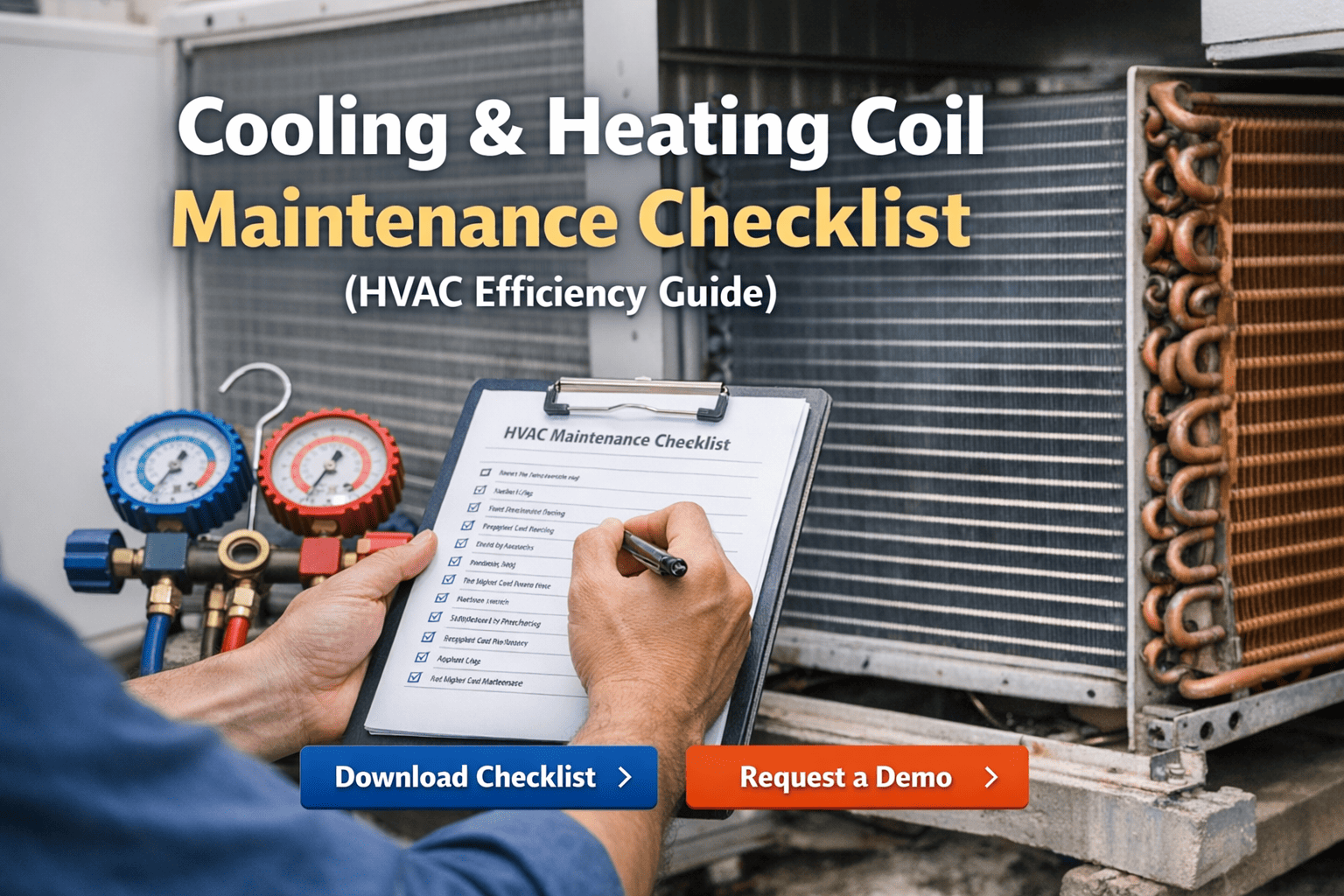
HVAC Coil Cleaning Checklist and Performance Tracking
Condenser Coil · Evaporator Coil · AHU Heating & Cooling Coils · Performance Readings · Energy Loss Tracking
Coil Performance Dashboard · Chiller Plant
Chiller-1 Condenser0.58 kW/tonClean · On Schedule
Chiller-2 Condenser0.74 kW/ton+28% · Clean Overdue
AHU-04 Cooling CoilΔT: 9.2°CPerformance Good
AHU-07 Cooling CoilΔT: 5.1°CWO Raised · Fouled
$1,840Est. monthly energy waste from Chiller-2 fouling · Clean overdue 8 weeks
20%
Chiller energy penalty from a condenser coil fouled to 40% blockage — measurable in the monthly bill
3°C
Drop in AHU cooling coil ΔT that reliably indicates fouling requiring a cleaning intervention
2–4x
Cost difference between planned coil cleaning and reactive coil replacement from long-term fouling damage
Auto
OxMaint generates coil cleaning work orders on schedule and flags performance deviation between cleans
Energy Impact of Coil Fouling — What It Costs Before You Notice
Chiller Condenser Coil
40% fouled0.74 kW/ton (+35%) 35% energy penalty = $2,400/month on a 500-ton chiller at $0.12/kWh
AHU Cooling Coil ΔT
Heavy fouling4.7°C ΔT (−55%) 55% capacity loss drives zone overheating, complaint calls, and emergency reactive work
The Complete HVAC Coil Cleaning Checklist
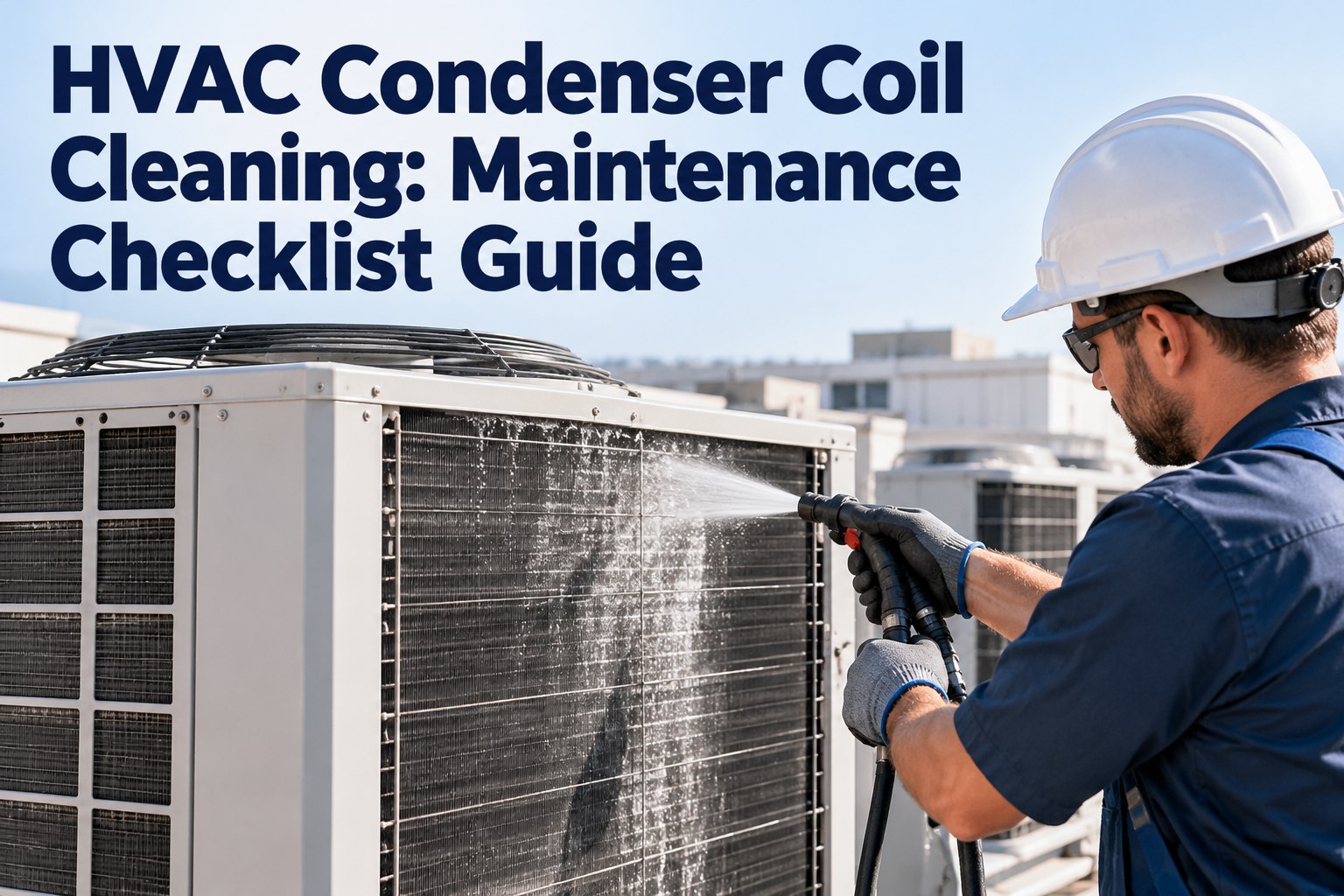
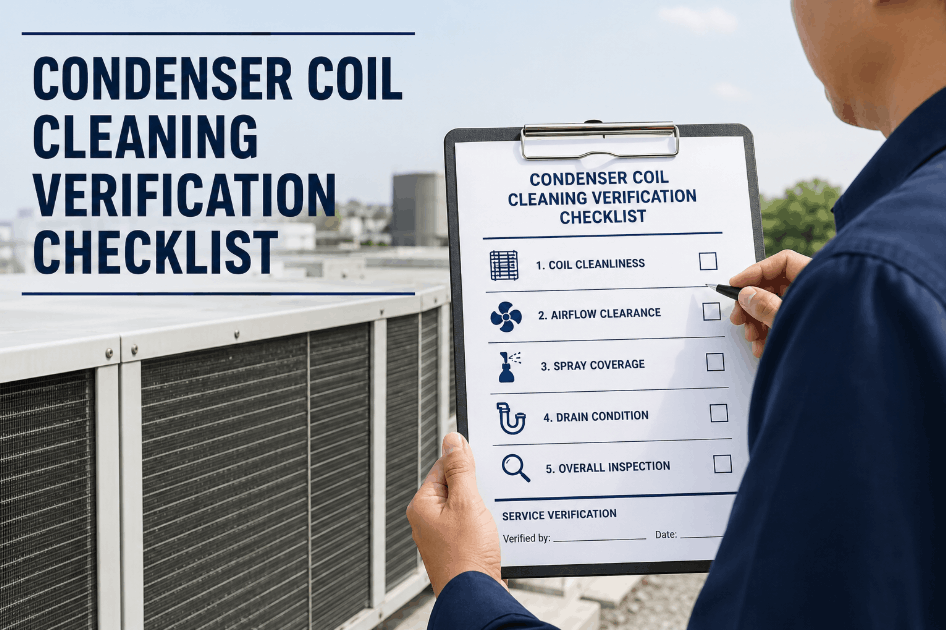
SECTION 1: Condenser Coil Checklist
Condenser Coil (Chiller / Condensing Unit)
Visual fin condition — Torch and mirror inspection. Pass: less than 10% fin blockage. Frequency: Monthly. Record: photo before clean.
kW/ton or EER reading — Power meter + load calculation. Pass: within 10% of post-commissioning baseline. Frequency: Monthly. Record: numerical reading + trend flag.
Condenser fan operation — Listen and check amp draw. Pass: all fans running, amps within spec. Frequency: Monthly.
Chemical coil clean — Alkaline detergent spray, low-pressure rinse. Pass: fins clear, rinse water runs clear. Frequency: Quarterly or on condition. Record: photo after clean, chemicals used.
Fin straightening — Fin comb. Pass: no bent fins restricting airflow. Frequency: at each cleaning event. Record: area treated noted.
Post-clean performance check — kW/ton or EER repeat measurement. Pass: return to within 5% of baseline. Frequency: after every clean. Record: before/after reading pair.
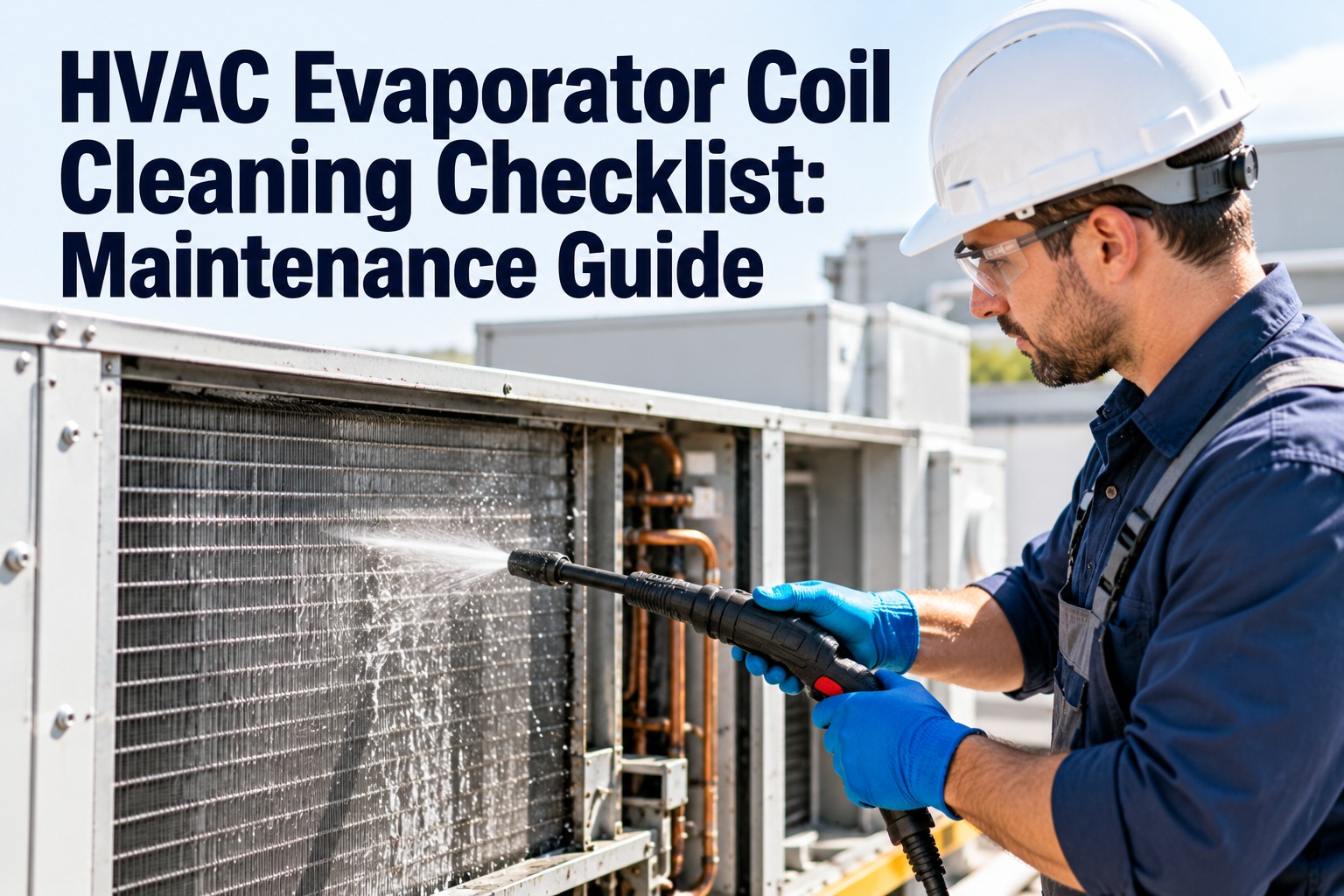
SECTION 2: Evaporator Coil Checklist
Evaporator Coil (AHU / FCU Cooling Coil)
Cooling coil ΔT measurement — Supply and return air temp at coil face. Pass: ΔT within 1.5°C of design value. Frequency: Monthly. Record: supply, return, ΔT reading.
Coil face visual inspection — Torch for lint, mould, scale. Pass: coil face clear. Frequency: Quarterly. Record: photo before/after clean.
Drain pan inspection — Check drain outlet and pan base. Pass: drain clear, no standing water, no mould. Frequency: Monthly. Record: drain condition, photo if issue.
Foaming coil clean — No-rinse coil cleaner or low-pressure wash. Pass: coil face clear, drain water runs clean. Frequency: Annually or on condition. Record: product used, technician, date, post-clean ΔT.
Mould / biofilm check — UV torch on coil and drain pan. Pass: no biofilm visible — treat if present. Frequency: Quarterly. Record: biofilm noted and treatment applied.
Static pressure check — Manometer coil differential pressure. Pass: below OEM maximum dirty DP. Frequency: Monthly. Record: DP reading before and after clean.
SECTION 3: Heating Coil Checklist
AHU Heating Coil (LTHW / Steam)
Heating coil ΔT pre-season — Air temp across coil at design flow. Pass: ΔT within 10% of design. Frequency: Pre-heating season. Record: measured ΔT vs design.
Coil external clean — Compressed air blow-down + vacuum. Pass: fins clear, no dust loading. Frequency: Annually. Record: photo before/after, cleaning method.
Valve and actuator check — Valve stroke and modulation. Pass: full stroke 0–100%, no hunting. Frequency: Pre-season. Record: valve response, actuator condition.
Frost protection test — Simulate low leaving air temp, check frost stat. Pass: trips within 1°C of setpoint. Frequency: Pre-heating season. Record: trip setpoint, response time.
Auto-Schedule Every Coil Clean. Track Performance Before and After.
OxMaint generates coil cleaning work orders by asset type and environment, logs before/after performance readings, and flags energy deviation between scheduled cleans — so fouling never silently costs money for months.
Recommended Coil Cleaning Schedule by Asset and Environment
| Asset / Coil Type | Standard Environment | Coastal / Industrial | High-Lint / Kitchen | Performance Check |
|---|
| Chiller condenser coil | Quarterly | Monthly | Monthly | kW/ton monthly |
| AHU cooling coil | Annually (+ condition check monthly) | 6-monthly | Quarterly | ΔT monthly |
| FCU cooling coil | Annually | 6-monthly | 6-monthly | ΔT quarterly |
| PTAC cooling coil | Quarterly (with filter) | Quarterly | Monthly | Amp draw quarterly |
| AHU heating coil | Annually (pre-season) | Annually | 6-monthly | ΔT pre-season |
| VRF outdoor unit coil | 6-monthly | Quarterly | 6-monthly | EER quarterly |
"
Coil fouling is the slow leak in every HVAC maintenance programme — it costs money every month, and because the degradation is gradual, it never triggers the urgency that a hard failure would. The only management approach that reliably catches coil fouling before it becomes expensive is scheduled performance tracking — measuring kW/ton or coil ΔT on a consistent monthly cycle and comparing against a post-clean baseline. OxMaint makes that process systematic: the performance check is built into the monthly PM work order, the before and after readings are stored against the asset, and the system flags the deviation so someone acts on it before the next energy bill arrives.
Fiona Hartley, CEng MCIBSE
Principal Energy and Maintenance Consultant · 22 Years HVAC Coil Performance, Energy Efficiency, and Preventive Maintenance Programme Design
Frequently Asked Questions
How does OxMaint track coil performance trends between scheduled cleaning events?
OxMaint stores every coil performance reading — kW/ton for condenser coils, ΔT for evaporator and AHU cooling coils — against the asset record with a timestamp, building a trend dataset visible in the asset dashboard. When a monthly reading deviates beyond a configured threshold from the post-clean baseline, OxMaint automatically generates a condition alert and can create an unscheduled cleaning work order ahead of the next planned clean.
Start a free trial and configure coil performance tracking. Can OxMaint calculate the energy saving delivered by each coil cleaning event?
Yes. OxMaint uses a before/after methodology anchored to the work order completion timestamp. For each coil with an energy meter or power reading, the platform captures the performance reading immediately before cleaning (fouled state) and after cleaning (restored state). The difference in energy consumption — for example, chiller kW/ton dropping from 0.74 to 0.57 — is multiplied by operating hours and utility rate to produce a monthly energy saving figure attached to the completed work order.
Book a demo to see OxMaint's coil cleaning energy ROI calculation. How does OxMaint handle coil cleaning schedules for assets in different environments?
OxMaint's asset register allows each coil asset to be tagged with an environment classification — standard, coastal/saline, high-lint, industrial, or kitchen-adjacent — and each classification drives a different PM schedule frequency. A coastal chiller condenser generates monthly cleaning work orders rather than quarterly. Environment tags can be applied at asset registration or updated when conditions change. The environment classification is visible to the technician on the mobile work order to select the correct cleaning agent and pressure.
Explore environment-driven PM scheduling with a free trial.
OxMaint · HVAC Coil Cleaning & Performance
Clean Coils. Proven Savings. Every Asset. Every Schedule.
OxMaint auto-schedules coil cleaning by environment, tracks before/after performance, and quantifies the energy saving of every clean — turning your coil maintenance programme into a documented, measurable financial return.