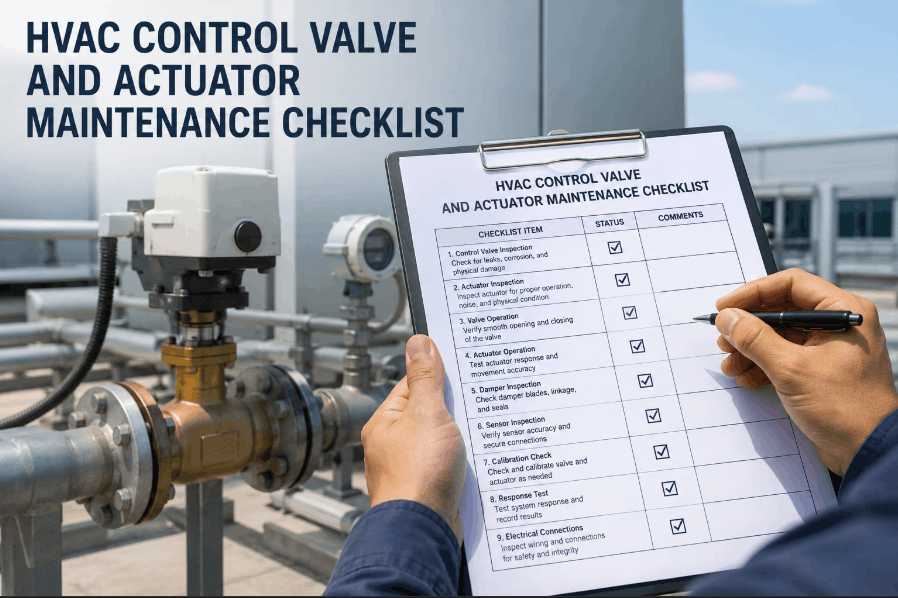
HVAC Control Valve and Actuator Maintenance Checklist
By Josh Turly on June 4, 2026
An HVAC control valve and actuator maintenance checklist is the operational backbone for facility managers and building engineers responsible for ensuring HVAC systems deliver precise temperature control, energy efficiency, and occupant comfort — a poorly calibrated actuator, a sticking control valve, or an unresponsive damper can trigger cascading failures across an entire building automation system, driving up energy costs and triggering comfort complaints before any fault alert fires. Facilities managing multi-zone HVAC systems, BMS-integrated controls, variable air volume boxes, and hydronic heating or cooling loops face inspection complexity that informal paper rounds cannot safely handle. This HVAC control valve and actuator maintenance checklist covers valve body and seat condition, actuator response and torque testing, damper linkage and calibration, sensor and feedback signal verification, BMS integration checks, and corrective action documentation — organized in inspection sequence so your maintenance team can Sign Up Free and execute structured PM rounds in Oxmaint without missing a single control point or leaving a calibration deviation unresolved. Book a Demo to see how Oxmaint's preventive maintenance module supports HVAC control system inspections with mobile checklists, asset-linked work orders, and calibration record tracking across every zone in your facility.
HVAC CONTROLS MAINTENANCE — OXMAINT
Your HVAC Control Valves and Actuators Are Running. Are They Running Correctly?
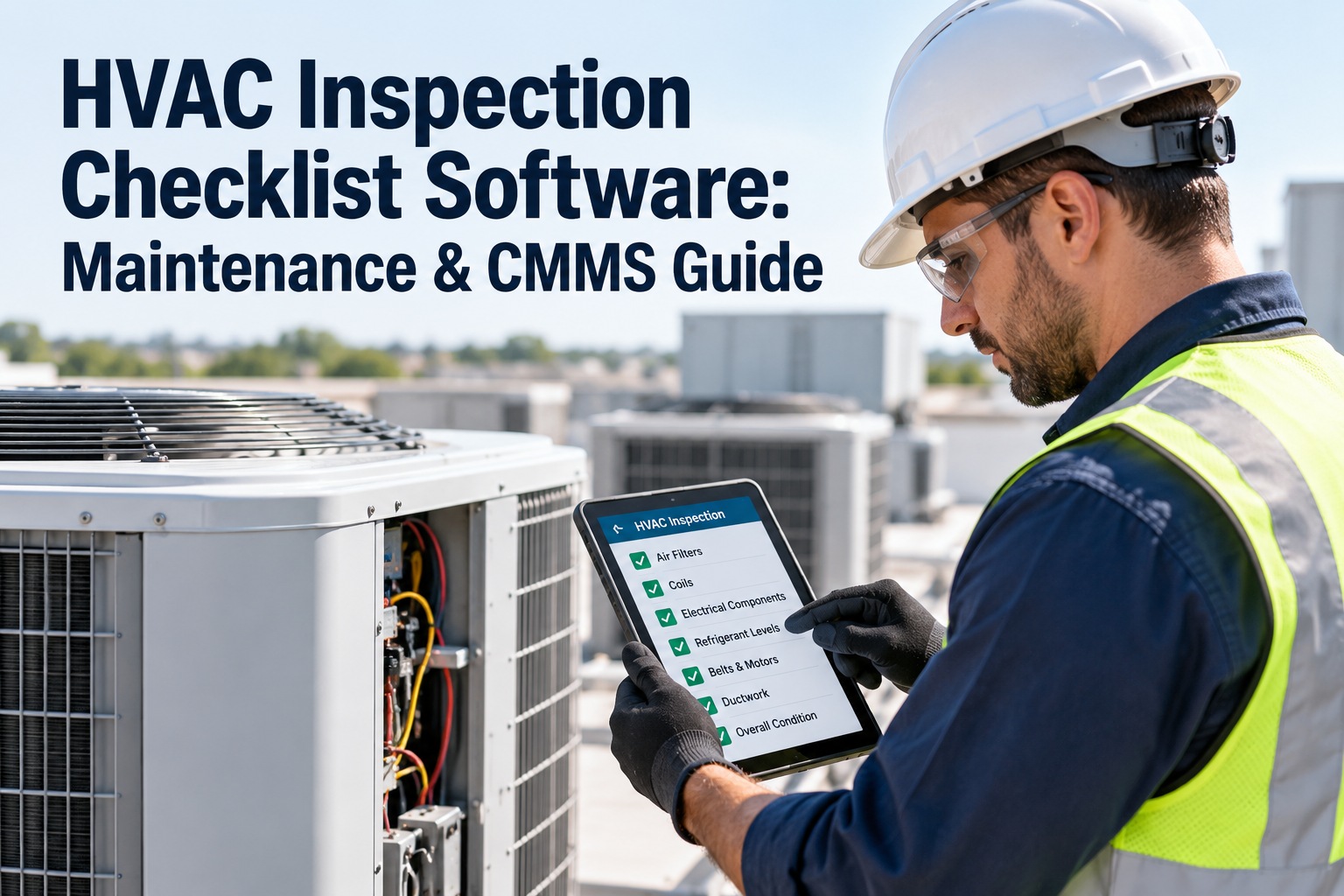
Oxmaint's preventive maintenance module lets facility teams schedule, assign, and document HVAC control valve and actuator inspections with structured checklists, mobile field completion, and automatic work order generation — so calibration issues get caught before they become comfort or energy efficiency incidents.
HVAC Control Valve Body, Seat, and Packing Inspection Checklist
Control valve body condition directly determines whether HVAC hydronic systems can modulate flow with the precision that BMS setpoints require — a valve seat with erosion, a stem with packing leakage, or a body with internal bypass will cause hunting, loss of authority, and energy waste that dashboards cannot distinguish from normal zone load variation. Book a Demo to see how Oxmaint structures HVAC asset inspection records for control valves, links inspection findings to corrective work orders, and maintains a full service history tied to each valve asset ID.
Control Valve Body and Seat InspectionASHRAE / BMS Maintenance Standard
Inspection Phase 02 — Actuator Operation and Torque
HVAC Actuator Response, Torque, and Travel Inspection Checklist
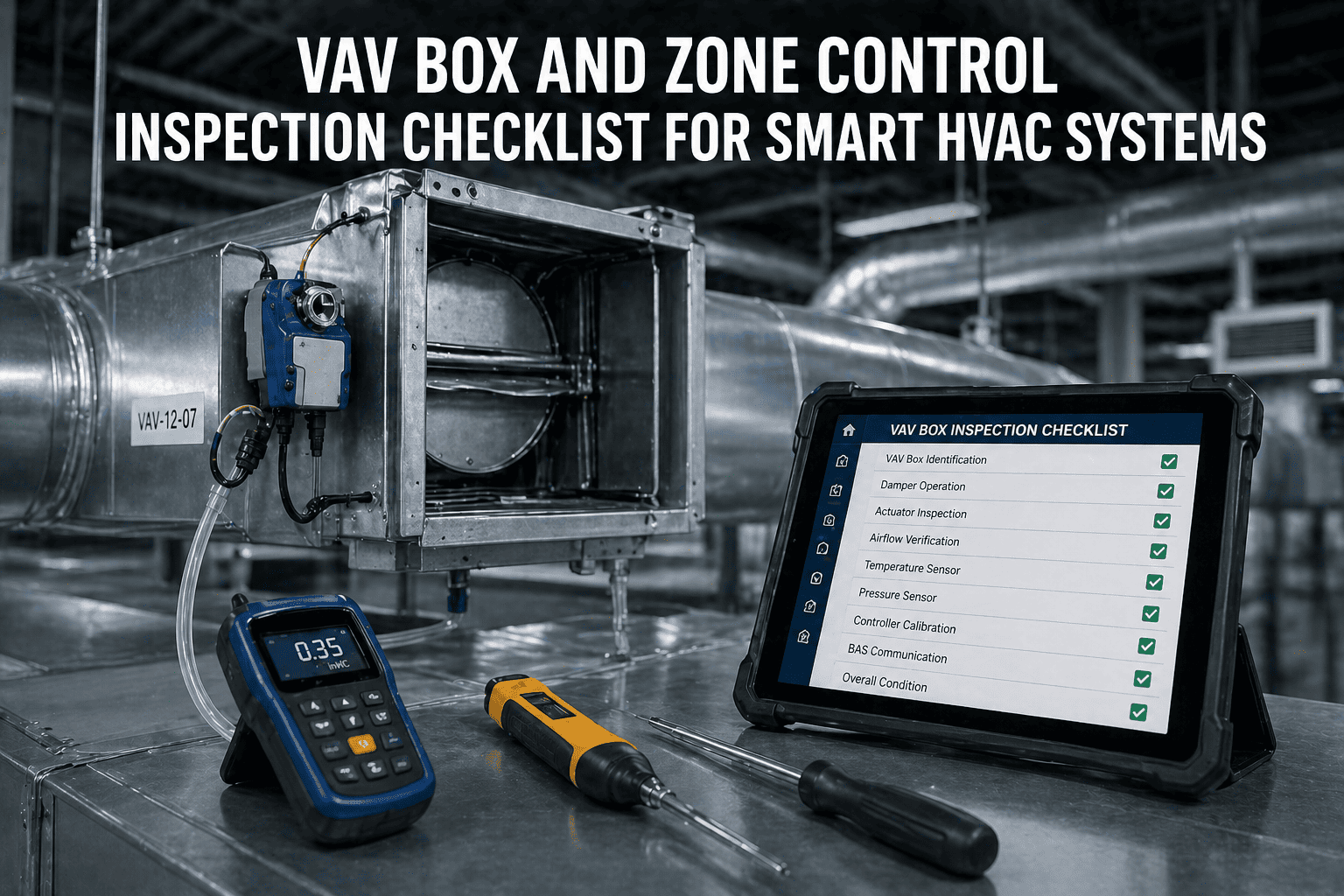
Actuator performance inspection is the highest-priority mechanical check in any HVAC control maintenance round — an actuator that responds slowly, stalls mid-travel, applies insufficient torque to seat the valve, or drifts from its commanded position will prevent the BMS from maintaining zone conditions regardless of how well-tuned the control loop is. Sign Up Free to configure Oxmaint PM schedules for actuator inspections with structured pass/fail fields for travel time, torque adequacy, and position feedback accuracy linked to each actuator asset record.
Actuator Response and Travel TestingHVAC Controls / BAS Maintenance
Inspection Phase 03 — Damper and Linkage Systems
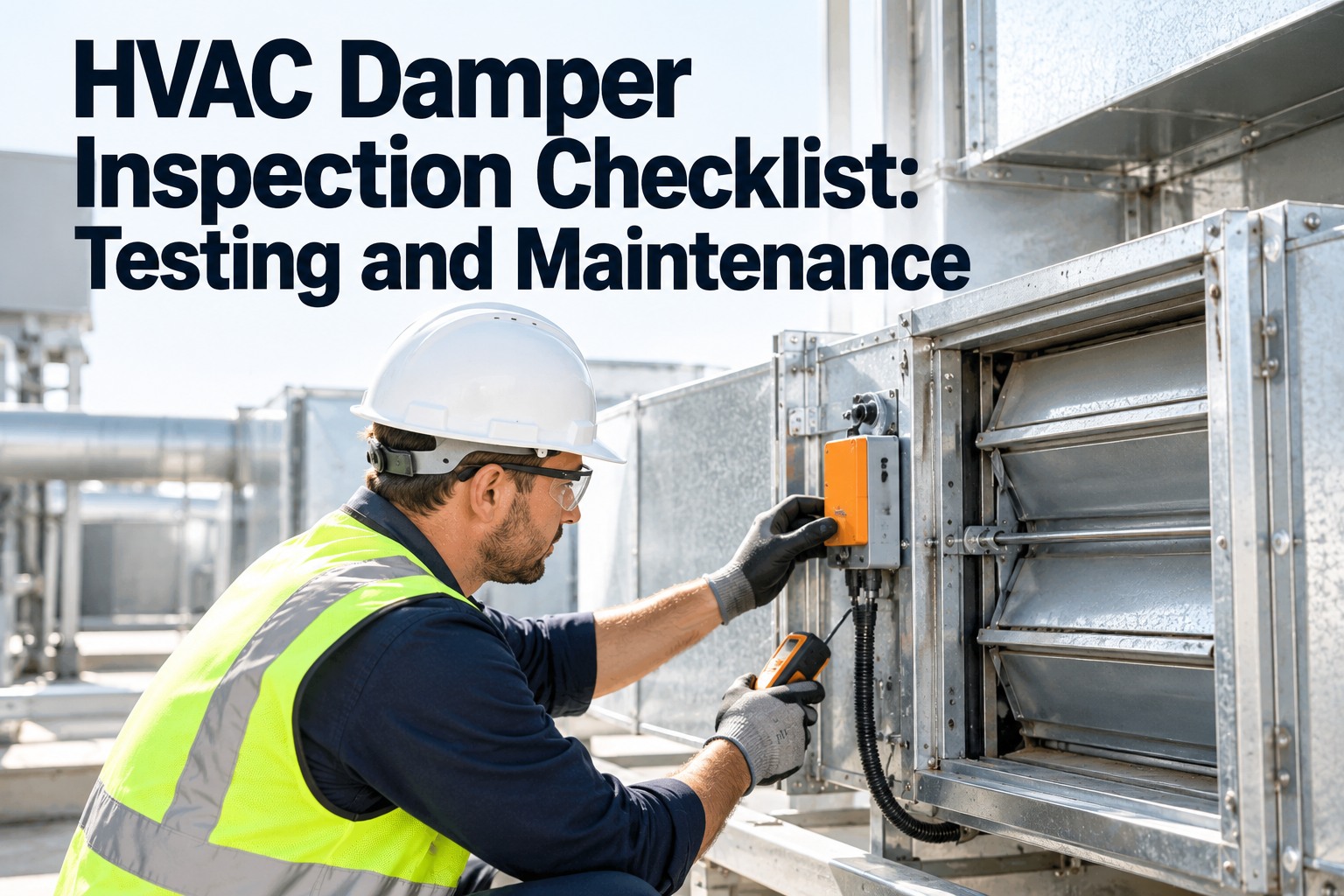
HVAC Damper Actuator, Blade, and Linkage Inspection Checklist
Damper and linkage inspection covers the mechanical interface between actuator torque and actual airflow control — a seized damper blade, a worn linkage clevis pin, or a blade that has shifted off its closed stop can defeat the actuator's commanded position and cause outside air, exhaust, or supply air quantities to deviate from design in ways that increase HVAC energy consumption and affect indoor air quality compliance. Book a Demo to see how Oxmaint's mobile inspection app guides technicians through damper inspection steps with photo capture and condition scoring linked to the damper asset record.
Damper Blade and Linkage InspectionASHRAE 90.1 / IAQ Compliance
Inspection Phase 04 — Sensor and Feedback Signal Verification
Position Feedback, Temperature Sensor, and Control Signal Verification Checklist
Sensor and feedback verification ensures the BMS receives accurate data to modulate control valves and dampers — a position sensor with drift, a room temperature sensor with calibration error, or a differential pressure transmitter with an offset will cause the BMS to make incorrect modulation decisions that waste energy and fail to meet zone setpoints regardless of how well the mechanical components are maintained. Sign Up Free to track sensor calibration records, schedule calibration PMs, and generate automatic corrective work orders when sensor readings fall outside acceptable tolerance in Oxmaint.
Sensor Calibration and Feedback VerificationBMS / Controls Calibration Standard
Inspection Phase 05 — BMS Integration and Control Loop
BMS Control Loop, Alarm Configuration, and Trend Data Checklist
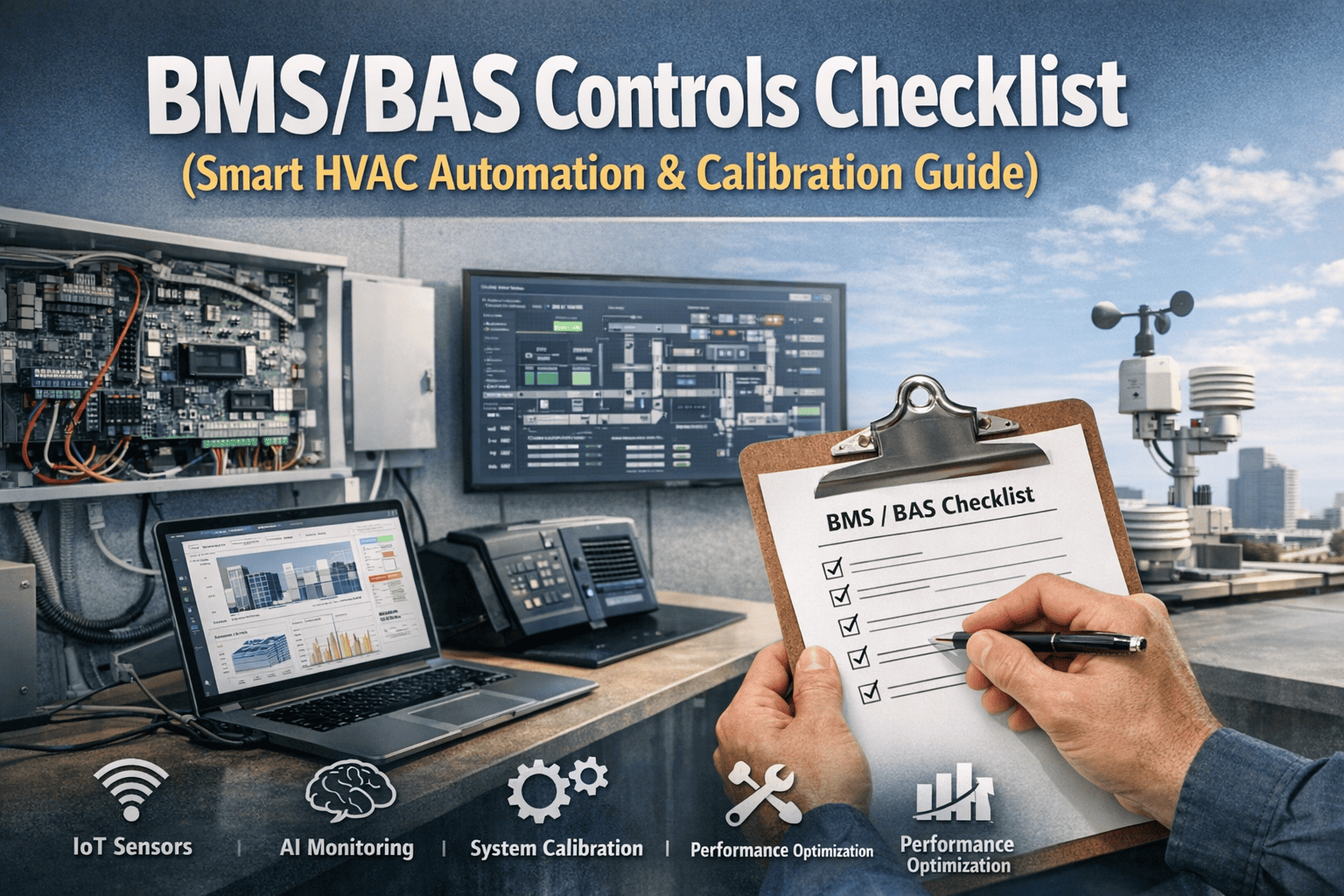
BMS integration checks confirm that control loop tuning, alarm setpoints, and trend logging are correctly configured to detect and respond to HVAC control valve and actuator performance degradation — a hunting control loop, a disabled alarm point, or a trend log with a missed gap will prevent facility teams from identifying deteriorating valve or actuator performance before it affects occupant comfort or triggers an energy penalty. Book a Demo to see how Oxmaint connects BMS fault conditions to automatic maintenance work orders, links alarm history to asset inspection records, and supports PM scheduling based on BMS-reported runtime or fault frequency.
BMS Control Loop and Alarm IntegrationSmart Building / BAS Maintenance
Inspection Phase 06 — Corrective Action and Documentation
HVAC Controls Maintenance Documentation and Corrective Work Order Checklist
Maintenance documentation and corrective action tracking close the loop between inspection findings and equipment reliability improvement — an inspection that identifies a stiff actuator, a drifted sensor, or a leaking valve packing but generates no corrective work order record creates a compliance gap and allows the fault to progress to failure before the next scheduled round. Sign Up Free to use Oxmaint's inspection-to-work-order workflow, which automatically generates corrective work orders from inspection findings, links them to the inspected asset, and tracks completion against the inspection event.
Corrective Action Documentation and ClosureCMMS Best Practice / Compliance Audit
HVAC PREVENTIVE MAINTENANCE — OXMAINT
Manage HVAC Control Valve and Actuator Inspections With Structured PM Schedules and Mobile Checklists.
Oxmaint gives facility maintenance teams a complete HVAC controls PM workflow — scheduled inspections, mobile checklist completion, calibration record tracking, and automatic corrective work order generation — so your building's control valves and actuators stay calibrated, compliant, and operational between full maintenance cycles.
Stroke timing, fail-safe test, signal verification
Incorrect positioning, stalled actuator, zone loss
Preventive Maintenance, Work Orders
Damper & Linkage
Blade condition, linkage wear, position alignment
Uncontrolled airflow, IAQ non-compliance
Inspection Checklists, Mobile App
Sensor Calibration
Position feedback, temperature, DP sensor cal
BMS modulation errors, energy waste
Calibration Records, Asset History
BMS Integration
Trend review, alarm verification, override test
Undetected faults, disabled alarms, override lock
Work Order Automation, Analytics
Documentation
Finding log, corrective WO, calibration update
Audit gaps, untracked defects, missed corrections
Inspection-to-WO Workflow, Reporting
Common Questions
Frequently Asked Questions — HVAC Control Valve and Actuator Maintenance
How often should HVAC control valves and actuators be inspected?
Most commercial and industrial facilities inspect control valves and actuators on a semi-annual basis, with full calibration verification annually. High-cycle applications — chilled water valves in variable-flow systems or actuators serving critical process areas — benefit from quarterly inspection intervals to catch mechanical wear before it degrades control performance.
What is the most common cause of HVAC control valve failure in commercial buildings?
Seat and plug erosion from continuous partial-open operation is the most frequent cause of valve authority loss. Valves that spend extended periods at very low lift positions experience accelerated erosion that widens the control band until the valve cannot achieve full close-off. Proper system balancing to keep valves operating in the 20–80% position range extends seat life significantly.
How can Oxmaint help with HVAC control valve and actuator maintenance?
Oxmaint's PM module lets facility teams schedule and assign HVAC control inspections with structured checklists, capture field findings with photos on mobile, and automatically generate corrective work orders from inspection failures — all linked to the inspected asset record for full calibration and service history traceability.
What does HVAC actuator fail-safe testing involve and why is it critical?
Fail-safe testing interrupts the control signal to the actuator and confirms it moves to its designated fail position (open or closed) within the rated spring-return time. Actuators that fail to return to their safe position during a BMS fault or power event can cause uncontrolled heating, cooling, or outside air delivery that damages equipment or compromises building safety.
What is the difference between a control valve inspection and calibration for HVAC systems?
A control valve inspection covers mechanical condition — body integrity, stem packing, close-off authority, and actuator coupling. Calibration specifically verifies and adjusts the accuracy of position feedback sensors, temperature transmitters, and differential pressure sensors against certified reference instruments, and is required to maintain BMS control accuracy within design tolerance.
FACILITY MAINTENANCE — OXMAINT
Every Control Valve. Every Actuator. Every Calibration Record — Tracked, Scheduled, and Documented in Oxmaint.
Oxmaint makes HVAC control valve and actuator maintenance the most structured part of your facility PM program — inspection checklists, corrective work order tracking, calibration history, and BMS-linked fault documentation — so your building controls stay accurate, compliant, and reliable across every maintenance cycle.