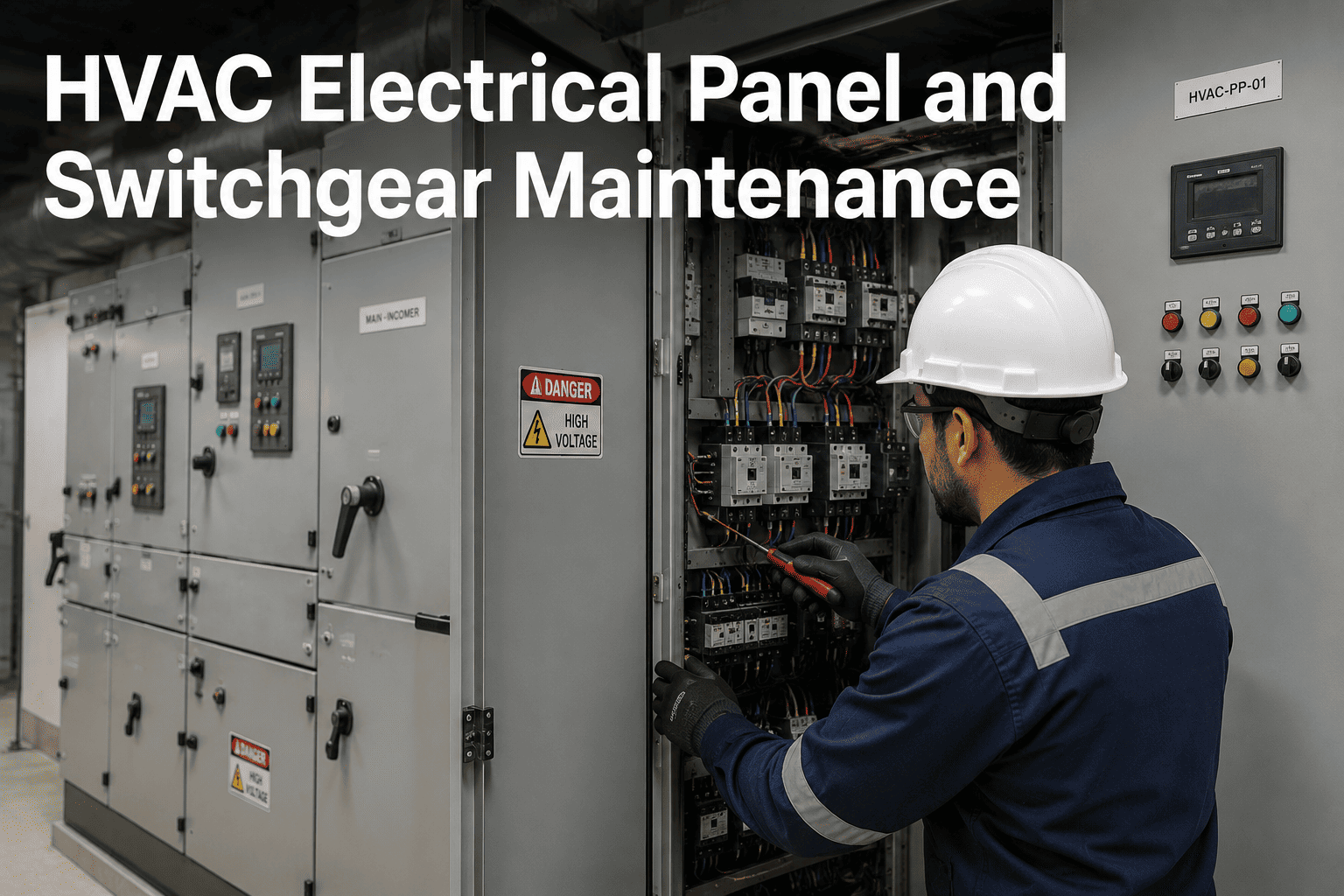
HVAC electrical failures — tripped breakers, overloaded starters, failed VFDs, and loose bus connections — are responsible for nearly 25% of all commercial building equipment downtime. Unlike mechanical failures, most electrical faults escalate silently through heat buildup and connection degradation until a protective device trips or a component fails entirely. Thermographic inspection, torque verification, and insulation testing catch these faults weeks before they cause outages. OxMaint's Preventive Maintenance platform schedules and tracks every HVAC electrical inspection with compliance-ready records that satisfy insurance, code, and audit requirements.
HVAC Electrical Inspection Scope: What to Inspect and When
Electrical PM for HVAC systems covers six component categories. Each has distinct inspection tasks, failure signatures, and required documentation for compliance.
Thermographic Inspection: Temperature Delta Standards
Infrared thermography is the most effective single tool for detecting HVAC electrical faults. These NETA-standard temperature rise classifications determine urgency of corrective action.
| Temperature Rise (Delta-T) | Classification | Required Action | Timeframe |
|---|---|---|---|
| 1 – 3°C above ambient | Normal variation | No action required — document baseline | Next scheduled inspection |
| 4 – 10°C above ambient | Possible deficiency | Monitor closely — recheck within 30 days | Within 30 days |
| 11 – 15°C above ambient | Deficiency — repair required | Schedule corrective maintenance at next opportunity | Within 7 days |
| 16 – 40°C above ambient | Serious deficiency | Immediate corrective action — reduce load or isolate | Within 24 hours |
| > 40°C above ambient | Critical — fire risk | De-energize immediately — repair before reenergizing | Immediate |
Automate Your HVAC Electrical Inspection Schedule
OxMaint schedules every electrical PM inspection, assigns work orders to qualified technicians, and stores thermographic reports in a compliance-ready audit trail. Book a demo to see it in action.
Expert Review
The single most neglected electrical maintenance task in commercial HVAC systems is torque verification on bus connections. Thermal cycling — the expansion and contraction that occurs every time a motor starts and stops — gradually loosens bolted connections over 2–3 years of operation. A connection that was torqued correctly at installation will measure 15–20% below specification torque after three years in service. That loose connection creates resistance, resistance creates heat, heat accelerates insulation degradation, and the cascade ends with a failed connection during peak summer cooling demand. An annual torque verification round combined with a thermographic scan catches this failure mode at the $200 labor cost stage instead of the $38,000 emergency repair stage. The facilities that treat electrical PM as optional are the facilities that buy replacement transformers in August.
Standards and Compliance References
Build an Audit-Ready Electrical Maintenance Record
OxMaint stores every inspection finding, thermographic report, and torque verification record in a searchable, exportable compliance archive. One click generates a full inspection history for any audit.
Frequently Asked Questions
How often should HVAC electrical panels be inspected in commercial buildings?
NFPA 70B recommends annual thermographic inspection for all energized HVAC electrical equipment in commercial buildings, with a full mechanical inspection — torque verification, cleaning, and insulation testing — on the same annual cycle. High-criticality systems such as chiller plant switchgear and data center HVAC panels should receive semi-annual inspection given the cost of downtime. OxMaint schedules these inspections automatically and escalates overdue inspections before they create compliance gaps. Most commercial insurance policies also require documented annual electrical inspection to maintain coverage terms.
What qualifications are required to inspect HVAC electrical panels?
Inspection of energized electrical equipment above 50V requires trained qualified personnel as defined by NFPA 70E, including documented arc flash training, appropriate PPE, and a completed energized electrical work permit for any work inside a live panel. Thermographic inspection requires a Level I or Level II certified thermographer for results that are accepted by insurance carriers. Routine inspections of de-energized equipment may be performed by licensed electricians, but OSHA lockout/tagout procedures must be followed in all cases. OxMaint's work order system includes built-in safety checklist prompts for electrical inspection tasks. Book a demo to see how compliance documentation is managed.
What is a thermographic inspection and why is it required for HVAC electrical maintenance?
Thermographic inspection uses an infrared camera to detect heat signatures in electrical equipment that indicate resistance from loose connections, overloaded circuits, or degraded components — faults that are invisible to visual inspection but measurable as temperature rises above ambient. According to NETA standards, a temperature rise above 15°C at any connection point requires immediate corrective action. Annual IR scanning is required by most commercial property insurance policies and is increasingly mandated in lease agreements for Class A office buildings. The cost of an annual IR scan across an HVAC electrical distribution system is typically $800–$2,500, compared to an average $38,000 cost for an unplanned electrical failure event.
Can OxMaint store thermographic inspection reports and photos as part of the work order record?
Yes. OxMaint work orders support photo attachments, PDF reports, and measurement data entry directly from the mobile app. Technicians performing thermographic inspections can photograph hotspots and attach them to the work order at the time of inspection, creating an immediate compliance record with GPS timestamp and asset linkage. All attached records are stored in the asset history and are accessible in the compliance audit export. Reports can be filtered by asset, date range, inspector, or inspection type and exported as a complete PDF audit package in under two minutes.