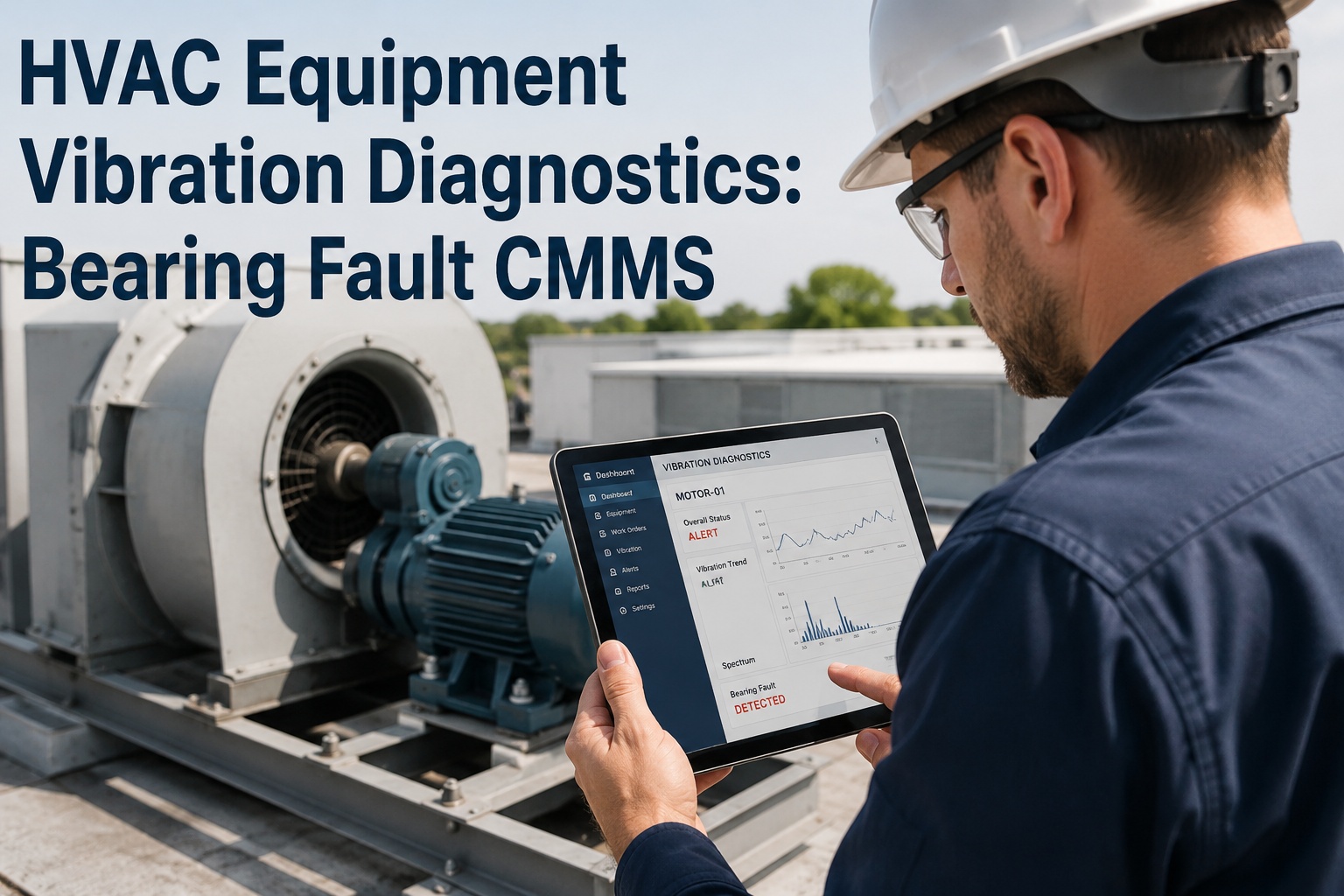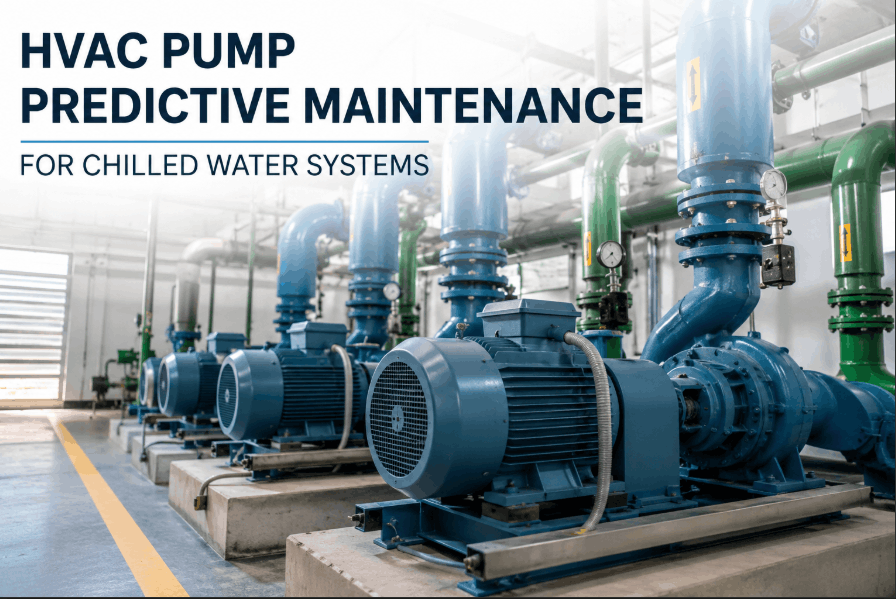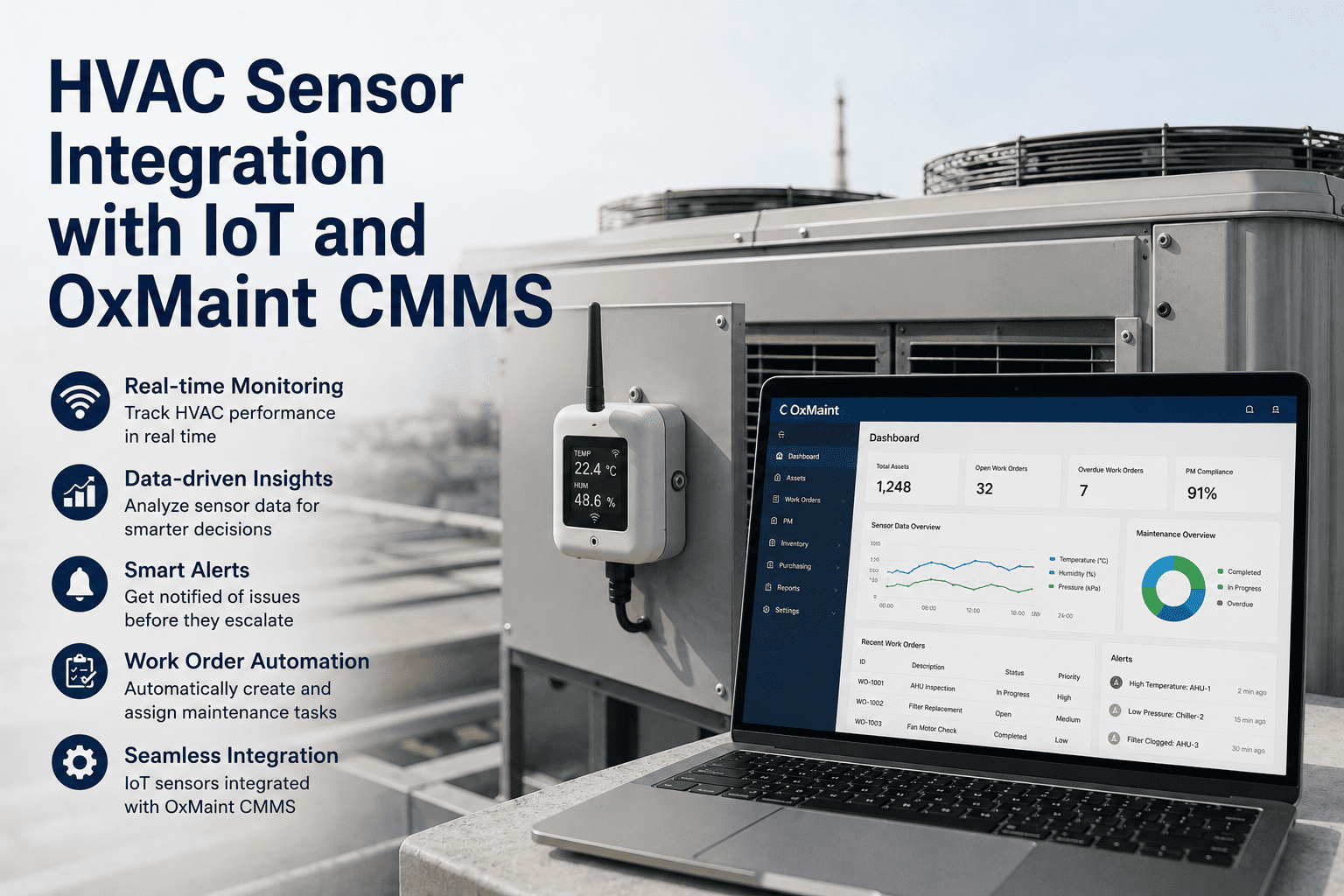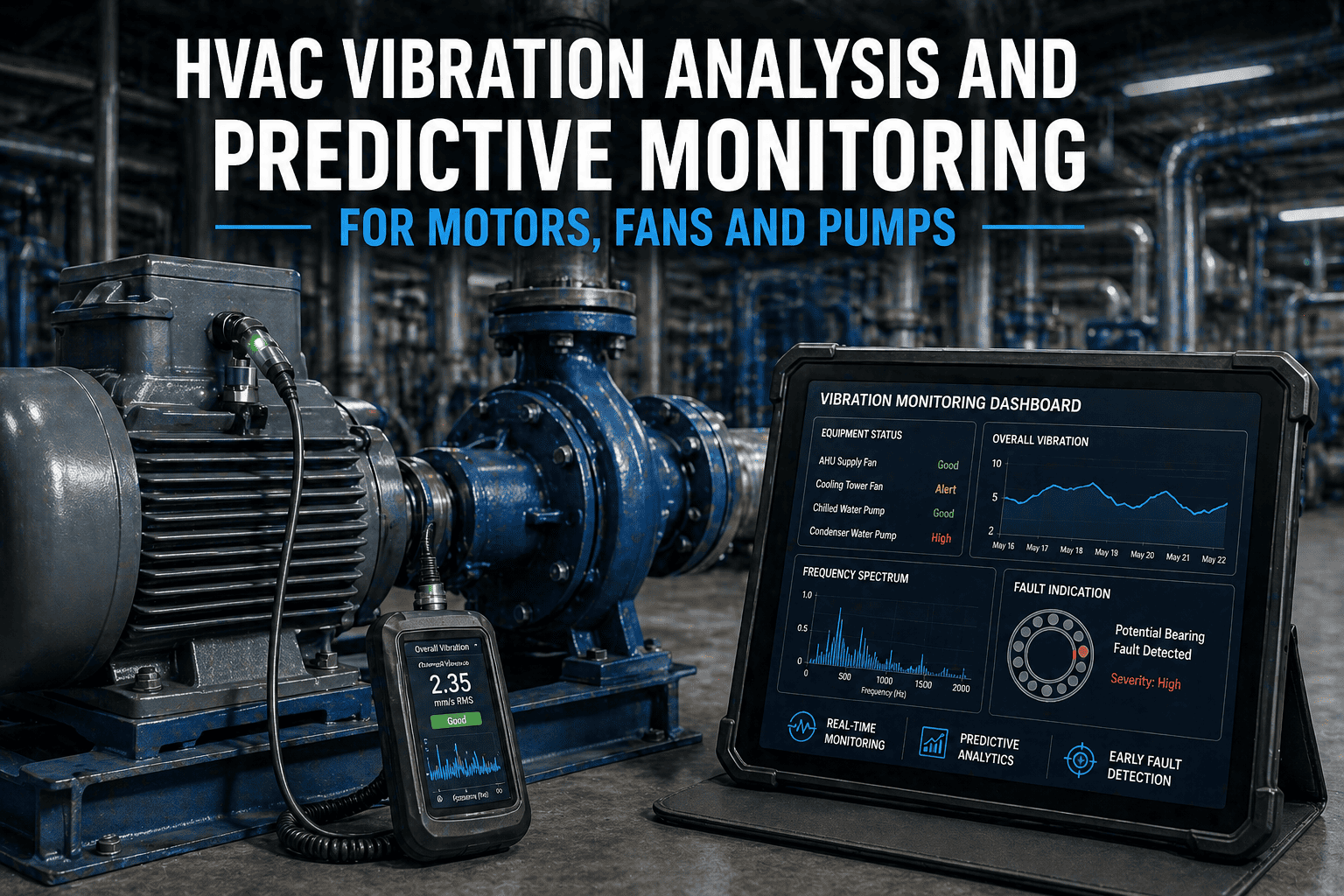
HVAC motors are the most failure-prone mechanical components in any commercial building — and the most predictable. Bearing degradation, winding insulation breakdown, and rotor imbalance all follow measurable progression curves that give maintenance teams weeks of warning before a motor fails. Yet most facilities still replace motors reactively, after the failure has already disrupted operations and triggered emergency service calls. OxMaint's Predictive Maintenance AI tracks the five leading indicators of motor health in real time, turning sensor data into scheduled maintenance actions before the failure ever happens.
The 5 Motor Health Signals OxMaint Tracks
Each signal below maps to a specific failure mode. Together they give facility teams a complete picture of motor health without manual inspection.
Motor Failure Modes: Detection Lead Time by Signal Type
| Failure Mode | Primary Signal | Detection Lead Time | Avg. Repair Cost (Reactive) | Avg. Cost (Predicted) |
|---|---|---|---|---|
| Bearing Failure | Vibration (RMS velocity) | 4 – 8 weeks | $4,200 – $8,500 | $280 – $600 |
| Winding Burnout | Winding temperature + current | 2 – 6 weeks | $6,000 – $18,000 | $400 – $900 |
| Rotor Imbalance | Vibration (frequency spectrum) | 3 – 10 weeks | $2,800 – $5,000 | $150 – $350 |
| Shaft Misalignment | Vibration + current draw | 2 – 5 weeks | $1,800 – $4,000 | $120 – $280 |
| Insulation Degradation | Insulation resistance (Megohm) | 6 – 18 months | $8,000 – $22,000 | $300 – $700 |
Start Predicting Motor Failures — Not Reacting to Them
OxMaint tracks every motor health signal in your facility and creates predictive work orders before failures happen. Book a demo to see the motor analytics dashboard with your asset data.
From Motor Alert to Resolved Work Order: OxMaint Workflow
Expert Review
The business case for motor health monitoring is straightforward once you run the numbers: a $400 vibration sensor and a $280 bearing replacement performed on schedule prevents a $6,000 to $18,000 motor burnout with associated downtime, overtime labor, and emergency procurement costs. What prevents facilities from making this investment is not cost — it is the absence of a system that connects sensor data to maintenance action without requiring a dedicated reliability engineer to interpret the readings. When OxMaint converts a vibration threshold breach into an assigned work order automatically, the facility gets the outcome of a reliability program without the staffing overhead. The most important shift is cultural: teams that use predictive motor data stop treating motor failure as inevitable and start treating it as a preventable management failure.
HVAC Motor Types Covered by OxMaint Monitoring
Your Motor Fleet Deserves More Than a Calendar-Based PM
OxMaint monitors every motor's actual health — not just its age. Connect your sensors and let predictive analytics tell your team exactly which motor needs attention and when.
Frequently Asked Questions
What is the most reliable early indicator of HVAC motor failure?
Vibration analysis — specifically RMS velocity measured at the motor bearing housing — is the most reliable early indicator of motor failure for most HVAC applications. Bearing degradation, which accounts for approximately 41% of motor failures, produces distinctive vibration frequency signatures detectable 4–8 weeks before the bearing fails mechanically. Combined with current draw monitoring, these two signals together identify over 85% of motor failures in their early stages. OxMaint's motor health dashboard displays both signals per asset with trend lines that show degradation trajectory over time, giving maintenance teams a clear window for scheduled intervention.
How does OxMaint calculate motor failure risk scores?
OxMaint's predictive AI calculates a motor health score by weighting five input signals — vibration, winding temperature, current draw, cumulative runtime, and insulation resistance — against the motor's baseline performance profile and manufacturer specifications. Each signal is normalized and scored relative to its critical threshold, then combined into a composite health index that ranges from 0 (imminent failure) to 100 (optimal health). When the health score drops below a configurable threshold, OxMaint automatically generates a prioritized work order with the contributing signal data attached so technicians understand exactly what condition triggered the alert. Book a demo to see the scoring model in action.
Does motor health monitoring require replacing existing HVAC controls?
No. OxMaint integrates with existing BAS systems, standalone IoT vibration sensors, and clamp-on current sensors — none of which require replacing existing motor controls or drives. Most facilities begin motor health monitoring by adding wireless vibration sensors to their highest-value motors (typically chillers and large AHU fans) and connecting to OxMaint via MQTT or direct API. Existing BAS current data can be ingested directly if available. The monitoring layer is additive, not a replacement for existing controls infrastructure.
How frequently should HVAC motor health data be recorded and reviewed?
For continuous IoT sensor monitoring, vibration and temperature readings should be sampled at minimum every 10–15 minutes for rotating equipment — often enough to catch rapid degradation events while avoiding storage overhead from second-by-second logging. Insulation resistance tests are performed manually during scheduled PM visits, typically annually for standard motors and semi-annually for high-criticality assets such as chiller compressor motors. OxMaint stores all historical readings and flags trend changes automatically, so managers do not need to review raw data manually — the system surfaces actionable deviations when they occur.