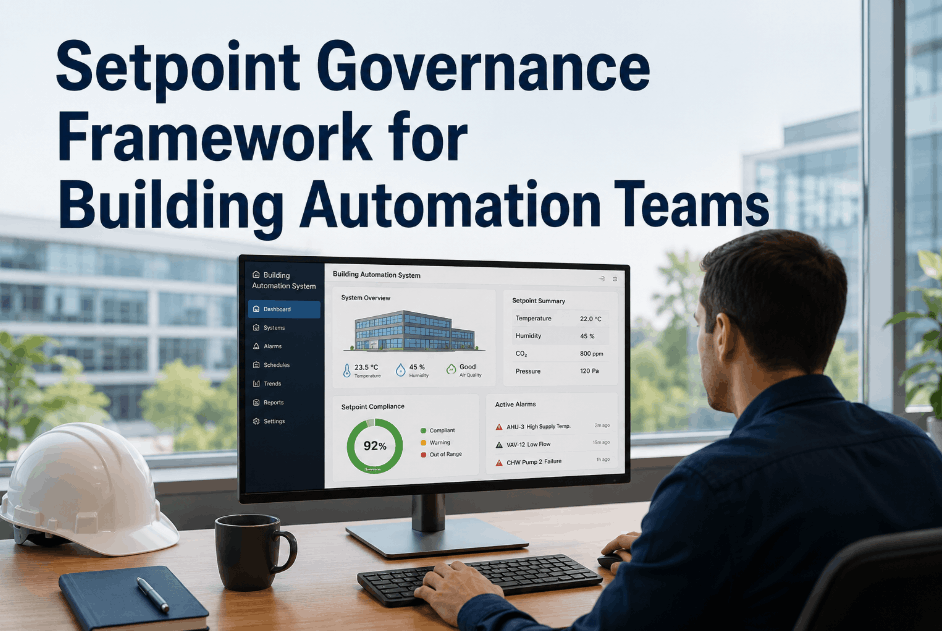
Setpoint governance becomes a real problem the moment a portfolio grows past a single building — one site running a chiller at a tighter supply target while another drifts off the original design intent isn't a technical mystery, it's a process gap. Building automation teams using Sign Up Free on Oxmaint can log standard setpoint ranges against asset records, schedule periodic setpoint verification checklists, and track changes through work order history instead of relying on memory. Getting setpoint governance right keeps control values consistent long after the original commissioning team has moved on.
Why Setpoint Drift Spreads Across Multi-Site Portfolios
Setpoints rarely drift all at once — a technician nudges a value during a service call, a vendor adjusts a default during commissioning, and within a year no two sites match the original design intent. Book a Demo to see how Oxmaint links setpoint verification tasks to asset records so drift gets caught before it becomes the new normal.
Five Pillars of a Setpoint Governance Framework
Reliable setpoint governance means applying the same review process to every site, not relying on individual operators to remember design intent. Sign Up Free to start logging standard setpoint ranges against your asset and site records in Oxmaint.
Documented Standard Setpoint Ranges by Asset Type
Every asset type should have a documented acceptable range tied to its record, so any operator can verify a current value against design intent.
Change Authorization and Approval Workflow
Setpoint changes outside the documented range should route through an approval step rather than being made unilaterally during a service visit.
Scheduled Setpoint Verification Checklists
Periodic verification tasks catch drift early, before a single overlooked adjustment compounds into a system-wide inconsistency.
Change History Linked to Work Orders
Every setpoint adjustment logged against a work order builds a record that survives staff turnover and vendor changeovers.
Variance Reporting Against Design Intent
Comparing current values against the original design baseline on a regular schedule keeps drift visible instead of buried in a controls front-end.
Setpoint Governance Risk by Building System Type
Governance risk isn't uniform across a building's systems — chilled water plants behave very differently from terminal zone controls spread across hundreds of VAV boxes. Book a Demo to see how Oxmaint maps setpoint governance to system type so review effort goes where drift risk is highest.
| System Type | Dominant Drift Risk | Governance Risk | Risk Level | Oxmaint Planning Lever |
|---|---|---|---|---|
| Chilled Water Plants | Manual override during service | Inconsistent supply temps across sites | High | Asset-linked setpoint records |
| Air Handling Units | Default resets during vendor visits | Undocumented schedule changes | Medium–High | Verification checklist scheduling |
| VAV Terminal Zones | High volume of individual zones | Hard to audit at scale | High | Zone-level inspection tracking |
| Hot Water / Boiler Plants | Seasonal reset adjustments | Missed seasonal changeover | Medium | Schedule-linked PM tasks |
| Building Automation Front-End | Multiple operator access levels | Unauthorized changes | Critical | Change history audit trail |
How Uncontrolled Setpoint Drift Drives Operational Costs
When setpoint changes go unlogged, the costs show up well beyond the original service call. Sign Up Free to connect setpoint records and verification history in Oxmaint and start closing the gap between design intent and actual operation.
Using Oxmaint to Operationalize Setpoint Governance
Governance improves once standard ranges, verification tasks, and change history live in one system instead of scattered commissioning documents. Book a Demo to walk through how this roadmap fits your automation team's review cycle.
Document Standard Setpoint Ranges on Asset Records
Attach acceptable setpoint ranges to each asset record in Oxmaint so design intent is referenceable by any operator, at any site.
Schedule Recurring Setpoint Verification Checklists
Use Oxmaint to schedule periodic checklist tasks that confirm current values match the documented standard range for each asset.
Route Setpoint Changes Through Work Order Approval
Require setpoint changes outside the standard range to be logged and approved through a work order rather than made informally.
Track Change History Against Original Design Intent
Keep a running record in Oxmaint of every setpoint adjustment so the original commissioning intent is never lost between staff or vendors.
Generate Variance Reports for Energy and Operations Review
Use Oxmaint reporting to surface assets drifting from their documented range, supporting energy review and retro-commissioning planning.
Frequently Asked Questions: Setpoint Governance
What is setpoint governance in building automation?
Setpoint governance is the process of documenting, approving, and tracking control values so they stay consistent with design intent across sites.
How does setpoint drift affect building energy use?
Drifted setpoints can cause systems to work against each other or run outside efficient ranges, quietly increasing energy consumption over time.
Who should be authorized to change building setpoints?
Changes outside the documented standard range should route through an approval step rather than being made unilaterally by any single operator.
How does Oxmaint support setpoint governance across sites?
Oxmaint attaches standard setpoint ranges to asset records, schedules verification checklists, and tracks every change through work order history.
Can setpoint history support energy audits and compliance review?
Yes — a logged change history in Oxmaint gives energy auditors and retro-commissioning teams a clear record of how values have shifted over time.