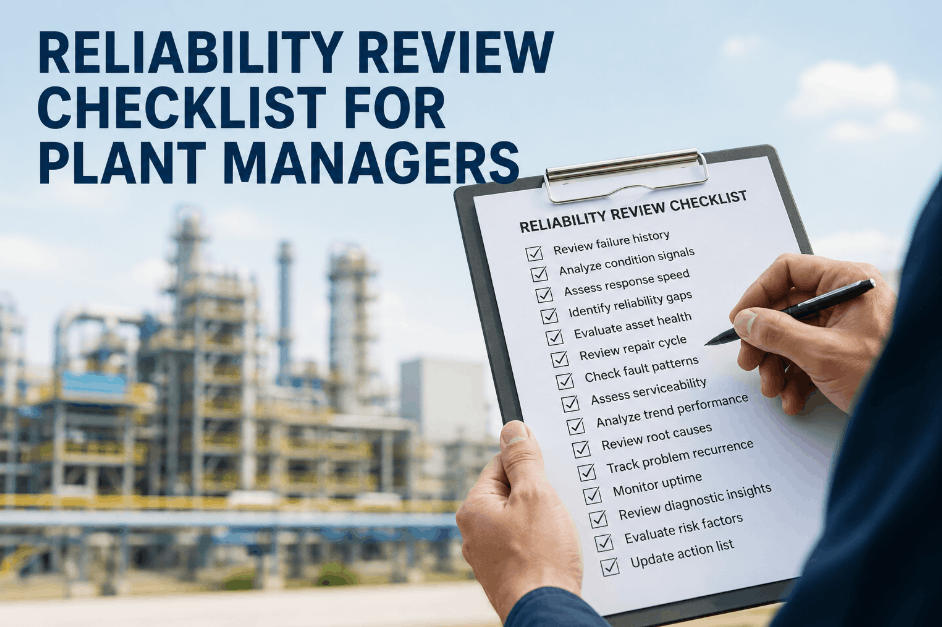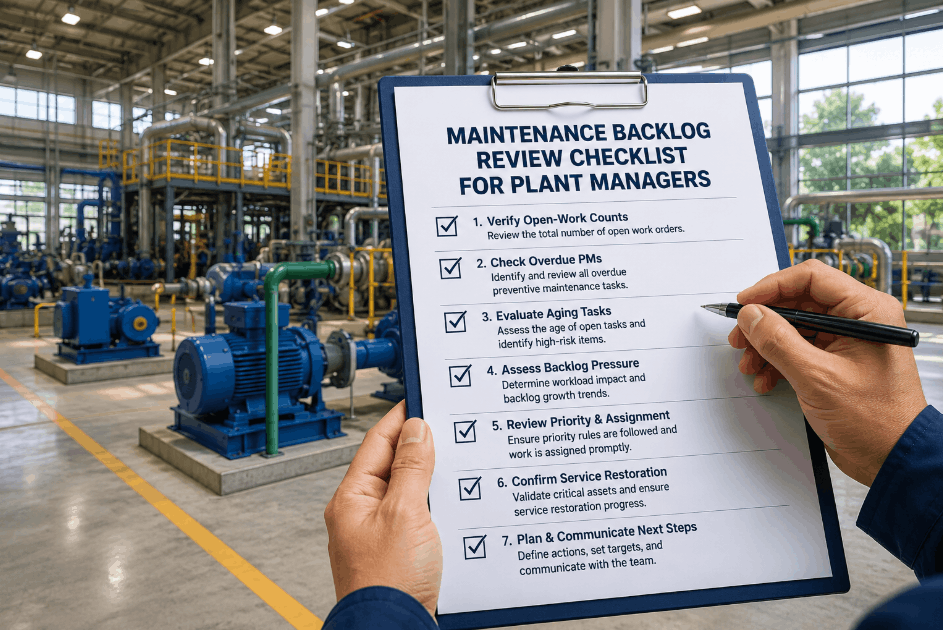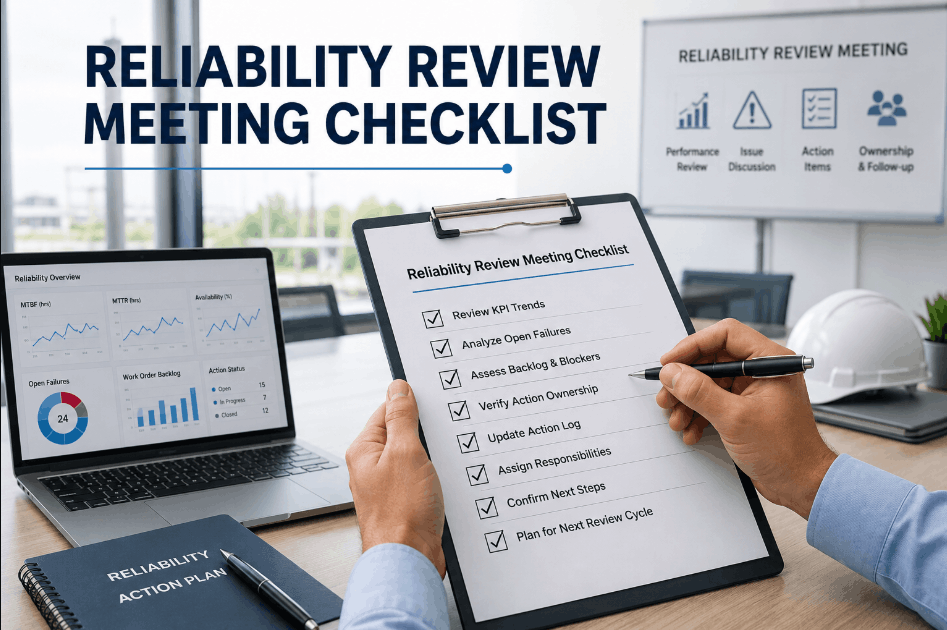
Reliability review meetings that happen without structure produce alignment but not accountability — teams leave with a shared understanding of what went wrong but no documented commitment to what changes before the next meeting. When KPI trends are presented without root cause linkage, failure reviews skip to solutions before causes are confirmed, and backlog discussion ends without ownership assigned, the meeting becomes a reporting exercise rather than a planning mechanism. The structural gap appears consistently: no standard agenda that forces cause analysis before action discussion, no backlog review that separates what is blocked from what is simply deprioritized, and no action log that survives past the meeting notes. This checklist helps reliability engineers, maintenance managers, and plant leadership confirm that every reliability review covers KPI trend analysis, open failure review, backlog blocker identification, and action ownership assignment — so the meeting produces decisions that change maintenance outcomes in the next planning cycle. Sign Up Free on Oxmaint to access real-time reliability KPIs, work order backlog dashboards, and failure history reports that give reliability review teams the data they need to move from discussion to decision in a single meeting. From MTBF trends to PM compliance rates, an underprepared reliability review wastes the one governance meeting where maintenance strategy should be adjusted. Book a Demo to see how Oxmaint connects live maintenance KPIs, failure records, backlog data, and action tracking in one platform — so reliability review meetings start from verified data and end with assigned, trackable commitments rather than informal agreements that dissolve before the next cycle. Use this checklist to structure your next reliability review so it produces decisions that change what happens in the maintenance shop, not just what gets reported at the next meeting.
1. KPI Trend Review and Performance Baseline Confirmation
KPI discussion without trend context produces reactive responses to individual data points rather than strategic responses to performance direction. Confirm that reliability KPIs are presented as trends over time — not single-period snapshots — and that the review team agrees on the baseline before discussing causes or actions.
2. Open Failure Review and Root Cause Confirmation
Failure review that jumps to solutions before root causes are confirmed produces actions that address symptoms rather than causes. Confirm that each open failure reviewed in the meeting has a documented probable cause, not just a failure description, before the team discusses corrective actions.
3. Backlog Review and Blocker Identification
Backlog review that reports total work order count without separating active work from blocked work creates the appearance of workload management without identifying what is actually preventing completion. Confirm that the review distinguishes between work that is in progress, work that is waiting on parts or resources, and work that is blocked by an organizational or scheduling constraint.
4. Action Ownership Assignment and Accountability Confirmation
Actions from reliability reviews that are recorded in meeting notes but not entered into a tracked system disappear between meetings. Confirm that every action produced by the review is entered into a system that assigns an owner, records a due date, and makes completion status visible before the next review cycle.
5. Planning Cycle Alignment and Next Review Preparation
A reliability review that produces good decisions but does not align those decisions with the upcoming planning cycle loses the window where they can affect resource allocation, scheduling, and PM frequency. Confirm that reliability review outputs are connected to the maintenance planning cycle before the meeting closes.