It's peak summer demand. Your 500-MW unit is running at full load when suddenly, ash slurry flow drops to zero. A blockage has formed in your pipeline—silently, without warning. Within minutes, ESP hoppers begin overflowing. Your only options: reduce load immediately or risk a forced trip. By the time maintenance clears the line, you've lost 6 hours of generation and ₹2.8 crore in revenue. What if you could see that blockage forming 4 hours before it happened? Our AI analyzes slurry velocity trends, pressure differentials, and historical patterns to flag high-risk conditions—giving your team time to intervene, not react. See how predictive ash handling intelligence works for your plant—book a demo.
200+ TPH
Ash generated by a 500 MW plant
30-40%
Coal converted to ash (Indian coal)
ESP
Most critical subsystem for failures
Research shows ESP (Electrostatic Precipitator) is the most failure-prone subsystem, while blocked conveying lines cause immediate load reductions
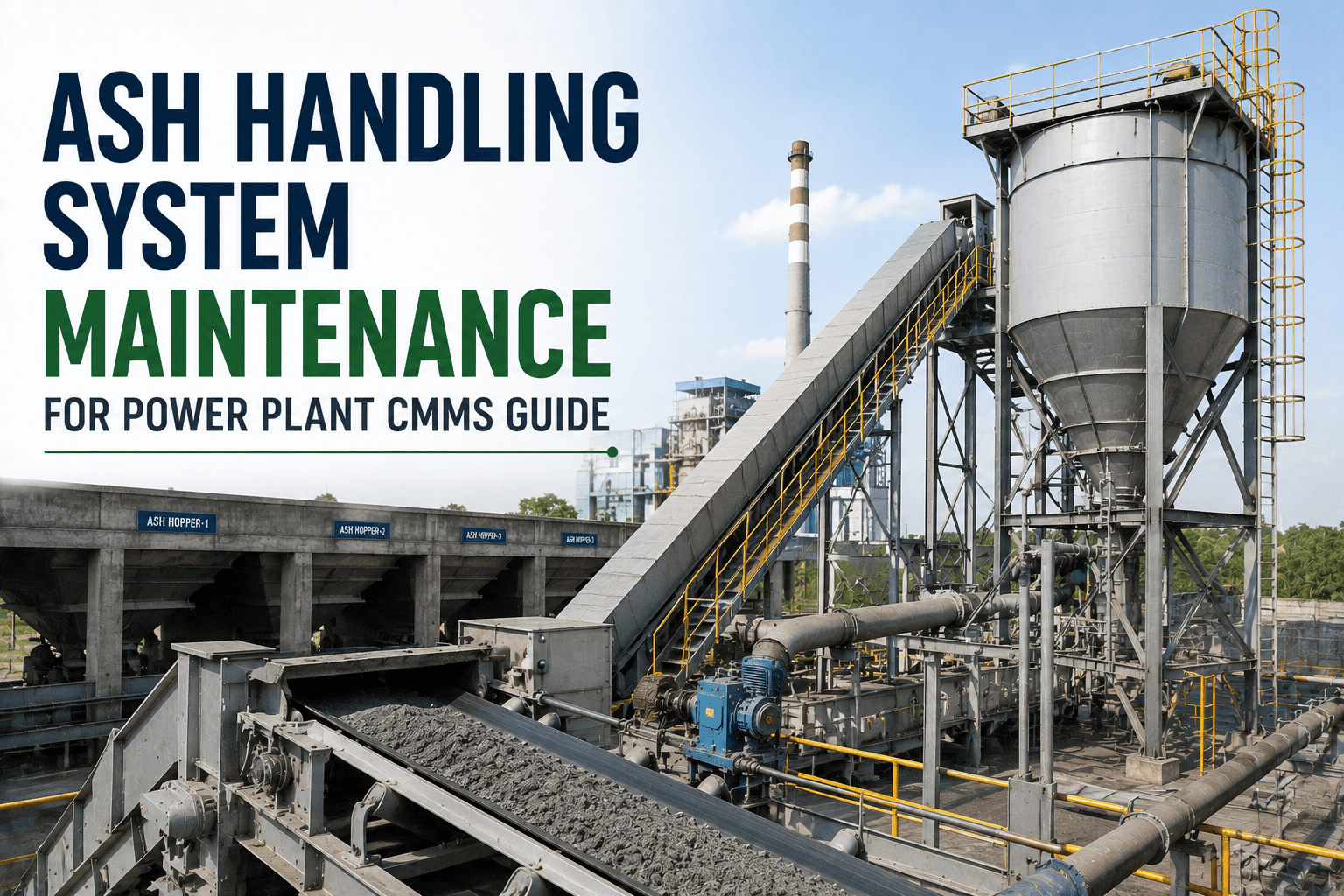
A 2×500 MW thermal power plant burning Indian coal generates 300-400 tonnes of ash every hour. This isn't optional waste—it's a continuous byproduct that must be evacuated without interruption. When ash handling systems fail, the consequences cascade rapidly: ESP hoppers overflow, boiler operations become unstable, and operators face an impossible choice between environmental violations and load curtailment. Research published in the International Journal of System Assurance Engineering and Management confirms that ash handling system failures directly reduce plant availability by 5-15%, with the Compressor Transportation Line being particularly vulnerable to blockages that cause complete system failure.
Where Blockages Actually Happen
Understanding your ash handling system's failure points is the first step toward preventing them. The system comprises multiple subsystems in series—and a blockage anywhere stops the entire chain.
Furnace
Bottom ash clinker formation
→
ESP Hoppers
Most critical failure point
→
Pressure Vessels
Dome seal failures
→
Conveying Lines
Blockage = total failure
→
Ash Silo
Overflow during blockages
Case studies from thermal power plants reveal a consistent pattern: during monsoon season, moisture condensation inside fly ash pipelines causes severe blockages. At a 600 MW plant in Telangana, high humidity combined with Transport Air Compressor outlet temperatures exceeding 175°C created conditions where moisture condensed inside the conveying lines—blocking ash flow entirely and forcing load reductions during peak demand periods.
How AI Predicts Blockages Before They Form
Traditional monitoring waits for pressure switches to activate after blockages occur. By then, you're already in emergency mode. AI-powered predictive systems analyze the subtle patterns that precede blockages—changes in motor current, gradual pressure buildups, flow rate deviations, and visual anomalies—often 24-48 hours before a blockage would form.
Predictive Analytics
PLC & Sensor Data Analysis
- Motor current trending
- Flow rate anomaly detection
- Pressure differential monitoring
- Moisture content correlation
- Cycle time deviation alerts
+
Computer Vision
Pipeline Camera Analysis
- Slurry flow visualization
- Buildup pattern recognition
- Valve position verification
- Hopper level monitoring
- Soot blower status check
Result: 24-48 hour advance warning of potential blockages with automatic line diversion or flushing recommendations
The hybrid approach combines time-series analysis from PLC motor currents and flow sensors with real-time computer vision from pipeline cameras. Machine learning models trained on historical blockage events learn to recognize the precursor patterns—a gradual 8-12% increase in pump motor current, subtle changes in slurry viscosity visible on camera, or pressure differentials that deviate from seasonal baselines. Research demonstrates that CNN-based pipeline monitoring systems achieve 93-97% accuracy in detecting blockages, debris, and corrosion patterns that precede failures.
01
Prevent Unit Derates
Stop load reductions caused by ash handling trips before they impact generation revenue
02
Reduce AHP Trips
Minimize forced outages of the Ash Handling Plant through early intervention
03
Improve Availability
Boost overall plant availability by eliminating ash system-related downtime
04
Automate Response
Trigger automatic line diversion or flushing based on AI-detected risk levels
On-Premises AI: Why Latency Matters for Ash Systems
Ash handling systems are distributed across the plant—ESP hoppers, multiple conveying lines, pressure vessels, and silos all controlled by separate PLCs. Cloud-based AI introduces network latency that's unacceptable when a blockage can escalate from minor buildup to complete line stoppage in minutes. On-premises GPU-accelerated inference delivers sub-second response times directly integrated with your existing PLC network.
Data Sources
PLC Motor Currents
Flow Sensors
Pressure Transmitters
Pipeline Cameras
Historian Data
NVIDIA Edge AI
Real-time Inference
Pattern Recognition
Anomaly Detection
Vision Processing
Automated Actions
Line Diversion
Auto Flushing
Severity Alarms
Work Orders
The edge AI system processes data from across your distributed PLC network, correlating motor currents from multiple conveying lines, pressure readings from vessels, and visual feeds from pipeline cameras. When the AI detects a developing blockage pattern, it can automatically initiate preventive flushing, divert ash flow to alternate lines, or generate maintenance work orders—all within milliseconds of detection, without waiting for cloud round-trips or operator intervention.
Prevent Ash Line Blockages Before They Cause Derates
If ash handling trips have ever forced your unit to reduce load, AI-powered early warning can pay for itself with a single prevented incident. See the system configured for your specific ash handling setup.
ROI: The Math Behind Blockage Prevention
Every ash handling trip carries quantifiable costs—lost generation during the blockage, maintenance labor to clear lines, potential ESP hopper cleanup, and the risk of environmental penalties if ash overflows. Predictive AI shifts these emergency costs to planned maintenance windows.
Without AI Prediction
Load reduction losses (6 events × 6 hrs)
₹16.8 Cr
Emergency maintenance labor
₹45 L
ESP hopper cleanup
₹30 L
Equipment wear from emergency ops
₹25 L
Annual Cost: ₹17.8 Crore
With AI Prediction
Planned maintenance (6 events × 1 hr)
₹2.8 Cr
Scheduled labor costs
₹15 L
Preventive flushing consumables
₹10 L
AI system investment (annual)
₹50 L
Annual Cost: ₹3.55 Crore
Net Annual Savings:
₹14.25 Crore
Industry research confirms these numbers: AI predictive maintenance delivers 35-45% reduction in downtime and 25-30% reduction in maintenance costs. For ash handling systems specifically, the ROI is even more compelling because blockage events cause immediate, measurable generation losses rather than gradual degradation. Plants implementing comprehensive predictive maintenance achieve 10:1 to 30:1 ROI ratios within 12-18 months—and ash handling is often the fastest-payback use case due to the direct link between system availability and generation revenue.
Transform Your Ash Handling from Liability to Reliability
Join thermal power plants that have eliminated ash-related derates through AI-powered blockage prediction. OxMaint delivers the hybrid AI platform that sees problems forming before they impact your bottom line.
Frequently Asked Questions
What causes ash handling system blockages in thermal power plants?
Blockages occur from multiple factors: moisture condensation in fly ash pipelines (especially during monsoon when TAC outlet temperatures exceed 150°C and external conditions cause condensation), ash particle agglomeration in slurry lines, valve failures, pump degradation, and clinker formation in bottom ash systems. Research shows the Compressor Transportation Line is particularly vulnerable—a single blockage causes complete system failure. High-ash Indian coal (30-40% ash content) generates 200+ tonnes per hour in a 500 MW unit, requiring continuous evacuation with zero tolerance for flow interruptions.
How does AI predict blockages before they form?
AI systems analyze multiple data streams simultaneously: PLC motor currents (gradual increases indicate developing resistance), flow and pressure sensor trends (deviations from baselines), pipeline camera feeds (visual buildup detection), and historian data correlations (seasonal patterns, coal quality impacts). Machine learning models trained on historical blockage events recognize precursor patterns 24-48 hours before traditional threshold-based alarms would trigger. CNN-based computer vision achieves 93-97% accuracy in detecting debris, buildup, and corrosion patterns that precede blockages.
Why is on-premises AI processing necessary for ash handling systems?
Ash handling systems are distributed across the plant with multiple PLCs controlling ESP hoppers, conveying lines, vessels, and silos. Cloud-based AI introduces 100-500ms network latency—unacceptable when blockages can escalate from buildup to complete line stoppage in minutes. On-premises GPU-accelerated inference delivers sub-second response times, enabling automated actions like line diversion or preventive flushing immediately upon detection. Additionally, keeping PLC and historian data on-premises maintains OT network security without exposing critical operational data to external networks.
What ROI can we expect from AI blockage prediction?
A 500 MW unit experiencing 6 ash handling trips annually typically loses ₹15-18 crore in generation revenue, emergency maintenance, and equipment stress. AI prediction converts 6-hour emergency outages into 1-hour planned maintenance windows, reducing annual costs to ₹3-4 crore—net savings of ₹14+ crore per year. Industry research shows predictive maintenance delivers 35-45% downtime reduction and 10:1 to 30:1 ROI within 12-18 months. Ash handling is particularly high-ROI because blockages cause immediate, measurable generation losses rather than gradual degradation.
How does the system integrate with existing DCS and PLC infrastructure?
The AI platform connects to your existing ash handling PLCs via Modbus or OPC-UA protocols, ingesting motor current, flow, pressure, and level data without requiring hardware modifications. Pipeline cameras interface through standard IP protocols. Severity-based alarms appear directly in your DCS operator screens, while automated actions (line diversion, flushing initiation) can be configured as closed-loop responses or operator-approval workflows. Maintenance work orders auto-generate in your CMMS with location data, predicted severity, and recommended actions.