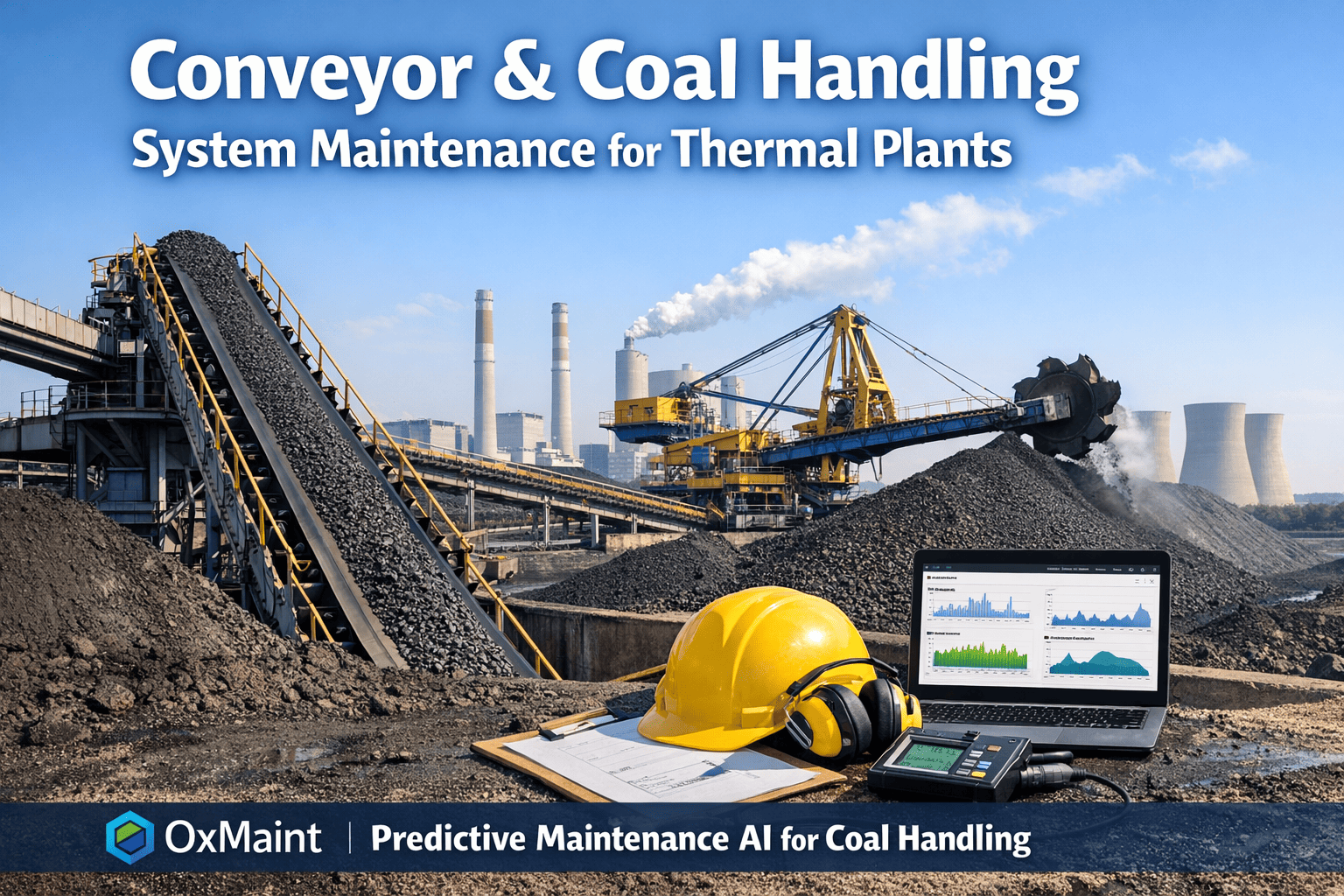
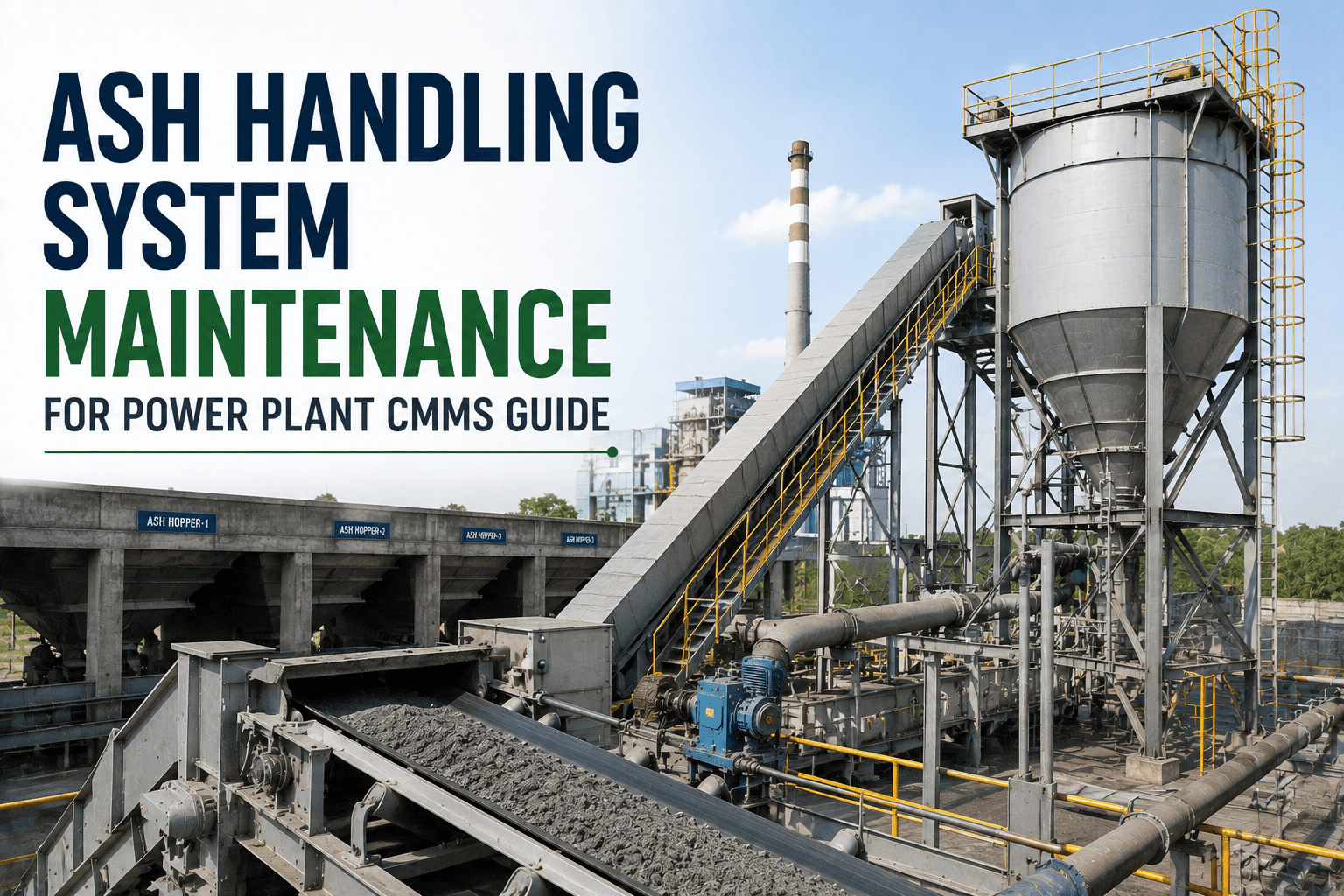
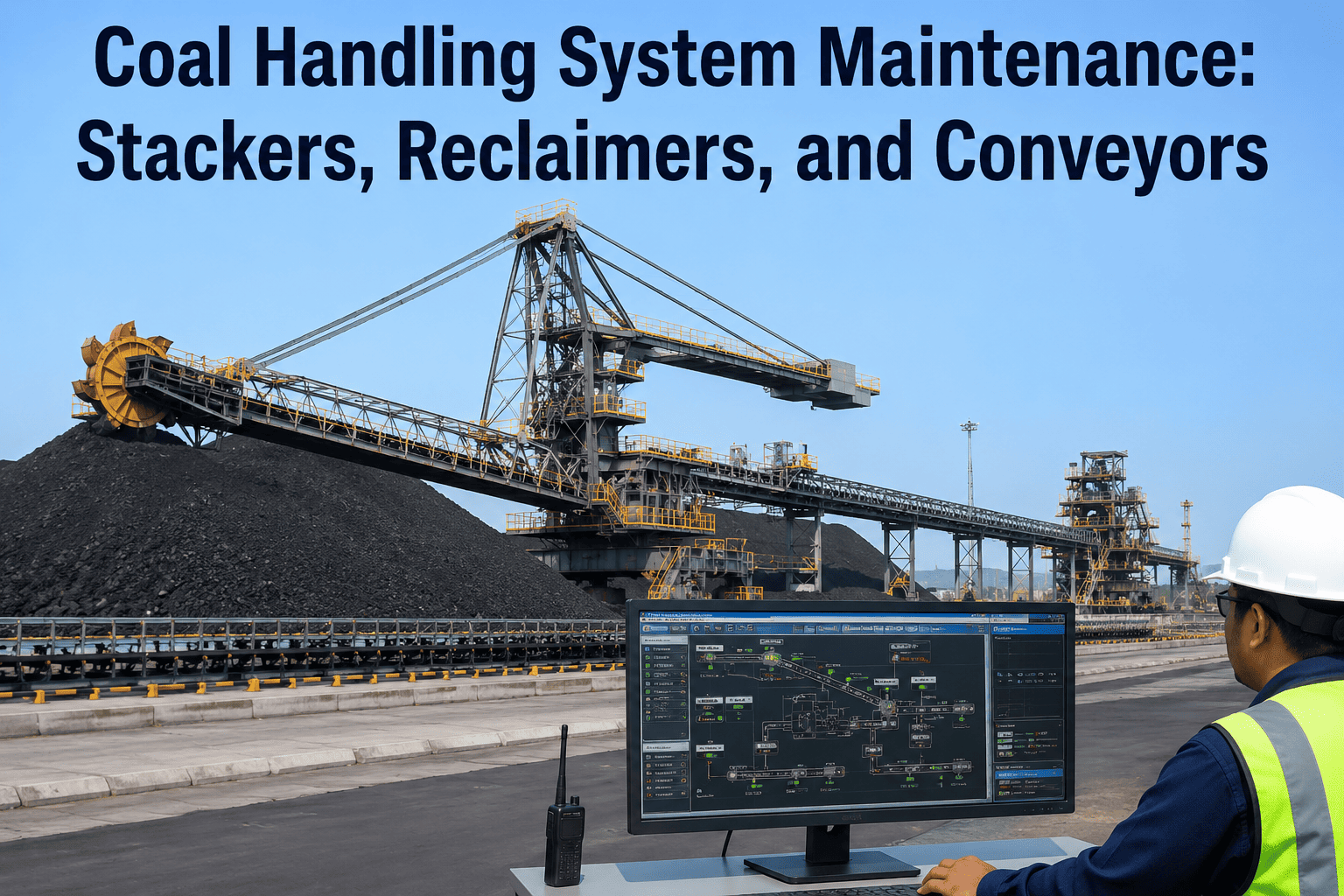
A single seized idler roller on a 1,200-metre conveyor belt does not just stop one belt — it tears through the belt fabric, trips the crusher feed, backs up the wagon tippler, and halts coal delivery to the bunkers that feed three generating units. In a thermal plant, coal handling is not a support system — it is the fuel supply chain, and every unplanned stoppage translates directly into forced generation loss, grid penalty charges, and emergency procurement costs that dwarf any maintenance saving. OxMaint deploys vibration analysis, thermal imaging integration, and AI-driven failure forecasting across conveyors, crushers, stackers, and reclaimers — giving your CHP team 7 to 30 days of advance warning before failures cascade into generation loss. Start your free trial to connect your coal handling assets today. Book a demo to see live CHP failure predictions on real plant data.
Coal Handling Plant — Predictive Maintenance AI
CHP Downtime Is Generation Loss. Predict It Before It Happens.
Every hour of unplanned coal handling stoppage costs a 500 MW thermal plant ₹18–35 lakhs in lost generation and grid penalties.
₹35L
Lost generation per hour of CHP stoppage
68%
Of failures begin with detectable vibration anomalies
30 Days
Advance warning for crusher bearing failures
9× ROI
First-year return on OxMaint deployment
Where CHP Failures Actually Originate
Most thermal plant maintenance budgets focus on turbines and boilers. But failure data across coal-fired plants consistently shows that coal handling stoppages trigger more generation loss events per year than any other system — because when coal stops moving, every downstream process stops with it.
CHP Failure Distribution — By System
Belt Conveyors
₹8–22L/event
Coal Crushers
₹18–45L/event
Stacker-Reclaimers
₹25–60L/event
Wagon Tipplers
₹12–30L/event
Vibrating Feeders
₹4–10L/event
Average thermal plant: 14–22 unplanned CHP events/year = ₹3.2 Cr – ₹8.8 Cr annual generation loss
5 Critical CHP Assets OxMaint Monitors
Each coal handling asset has a distinct failure signature and a different sensor strategy. OxMaint correlates signals across all five asset types to catch cascade failure chains before the first domino falls.
Key Failure Modes
Idler roller seizure and overheating
Belt misalignment and edge wear
Head and tail pulley bearing failure
Drive motor current anomalies
Sensors: Thermal imaging, vibration, belt sway switches, motor current
Warning window: 7–21 days
Key Failure Modes
Rotor bearing fatigue and spalling
Hammer and ring liner wear
Gearbox oil contamination
Unbalance from coal buildup
Sensors: High-freq vibration, oil particle counters, current signature
Warning window: 14–30 days
Key Failure Modes
Slew ring and travel gear wear
Boom conveyor belt and drive failure
Bucket wheel bearing degradation
Structural fatigue in boom sections
Sensors: Multi-axis vibration, strain gauges, thermal, oil analysis
Warning window: 10–25 days
Key Failure Modes
Trunnion bearing overheating
Hydraulic system pressure loss
Drive motor insulation breakdown
Wagon clamping cylinder wear
Sensors: Temperature, hydraulic pressure, vibration, motor current
Warning window: 7–18 days
Key Failure Modes
Exciter bearing and spring failure
Screen deck fatigue cracking
Liner wear and throughput loss
Sensors: Vibration, acceleration, temperature, current monitoring
Warning window: 5–14 days
OxMaint Predictive Maintenance AI
30-Day Warning Before Your Next Crusher Bearing Failure
OxMaint connects vibration sensors across your entire CHP to AI failure models — and auto-generates CMMS work orders before degradation becomes a generation stoppage.
How OxMaint Works in a CHP Environment
Coal handling plants run in harsh conditions — dust, moisture, vibration, and extreme ambient temperatures challenge every sensor and communication system. OxMaint is built for these environments, using sealed industrial-grade sensors with IP67 ratings and mesh radio communication that survives where standard IoT equipment fails.
01
Industrial Sensor Deployment
Wireless vibration, temperature, and current sensors mount directly on crusher housings, conveyor drive pulleys, and stacker-reclaimer gearboxes. No wiring required. IP67-rated for dust and moisture. 3–5 year battery life. Deployment during normal operations — zero downtime required.
02
Baseline Learning Per Asset
OxMaint's AI learns the unique vibration signature of each crusher rotor, each conveyor pulley bearing, and each stacker slew drive — accounting for coal type, load variation, and operational shifts. Anomalies are flagged against your equipment's normal, not a generic library threshold.
03
Cascade Failure Modelling
When a crusher vibration anomaly is detected, OxMaint models the downstream impact — identifying which conveyors, bunkers, and generating units will be affected if the failure is not addressed. Priority is set by generation impact, not just repair cost.
04
Automatic Work Order Generation
Predicted failures generate CMMS work orders with recommended intervention type, required spares, optimal repair window, and assigned technician — delivered to your team's mobile device before the failure window opens. Planned replacement during coal bunkering, not during peak generation hours.
Failure Warning Windows — CHP Asset Comparison
How far in advance OxMaint can predict failure depends on the failure mode's development rate and the sensor's sensitivity to early-stage degradation. Here is what each major CHP asset class delivers.
Crusher Rotor Bearings
Best window
Stacker-Reclaimer Slew
Long window
Conveyor Drive Pulleys
Good window
Wagon Tippler Trunnions
Good window
Conveyor Idler Rollers
Adequate
Vibrating Feeder Exciters
Adequate
Maintenance Comparison — Reactive vs Predictive
The performance gap in a CHP context is wider than in most industries because failures cascade across an entire generation unit's fuel supply — not just an isolated machine.
ROI for a 500 MW Thermal Plant CHP
The economics of predictive CHP maintenance are driven by generation impact, not just repair cost. Preventing one crusher failure that would have stopped coal delivery for 36 hours pays for an entire year of OxMaint deployment.
Annual Investment
₹45L – ₹85L
Full CHP coverage: sensors + platform + integration
Break-even: 1 prevented crusher failure
vs
Annual Value Delivered
₹6.8 Cr
Generation loss prevention
₹3.8 Cr
Emergency repair avoidance
₹1.4 Cr
Equipment life extension
₹86L
Spares inventory optimisation
₹62L
9 – 15× First-Year Return on Investment
Frequently Asked Questions
Can OxMaint sensors handle coal dust and high moisture in CHP environments?
Yes. OxMaint deploys IP67-rated industrial wireless sensors with sealed enclosures rated for the coal dust, moisture, and vibration environment of active CHP equipment. Sensors use LoRaWAN mesh communication that penetrates the concrete and steel structures common in coal handling plants. Battery life is 3–5 years under continuous monitoring.
Sign up free to review the hardware specifications for your specific site conditions.
How does OxMaint integrate with the existing CHP control room DCS?
OxMaint operates as a parallel monitoring layer — it does not require integration with your DCS or control system to deliver value. Sensor data flows to OxMaint's cloud platform via dedicated cellular or LoRaWAN gateways isolated from plant networks. For plants that want DCS integration, OxMaint offers read-only OPC-UA and Modbus interfaces. Work orders integrate via API with SAP PM, Maximo, and Oracle EAM.
Book a demo to discuss your integration architecture.
How many sensors are needed for a full CHP at a 500 MW plant?
A typical 500 MW CHP with 8–12 conveyors, 2–3 crushers, one stacker-reclaimer, and associated feeders requires 80–140 sensors for full coverage. A high-impact pilot covering the 3–4 highest-risk assets (typically the primary and secondary crushers plus the stacker-reclaimer) requires 18–28 sensors and typically delivers the first validated failure catch within 6–10 weeks.
What is OxMaint's false alarm rate for CHP assets?
After the 3–4 week baseline learning period, OxMaint's false positive rate stabilises below 5% for crusher and stacker-reclaimer monitoring. Conveyor idler monitoring, which involves high roller counts and variable loads, maintains an 8–12% false positive rate. All alerts are severity-ranked — only Priority 1 and Priority 2 alerts generate work orders automatically. Lower severity alerts appear on the dashboard for engineer review before escalation.
OxMaint — Coal Handling Plant Intelligence
Your CHP Is Generating Failure Signals Right Now. Is Anyone Reading Them?
30 Days
crusher failure advance warning
68%
unplanned stoppages eliminated
No credit card required. Trusted by maintenance engineers and plant managers across coal, lignite, and biomass thermal generation.