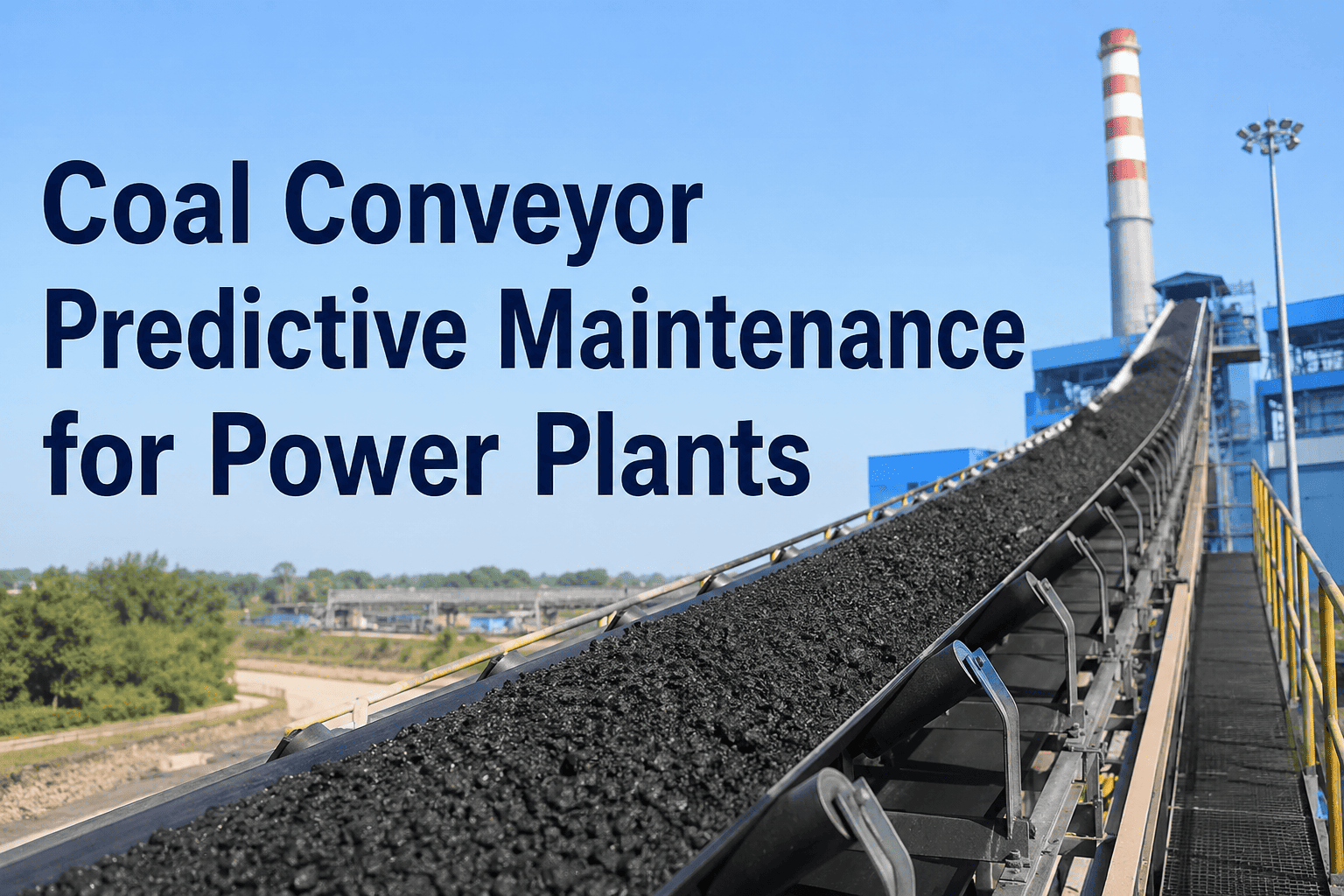
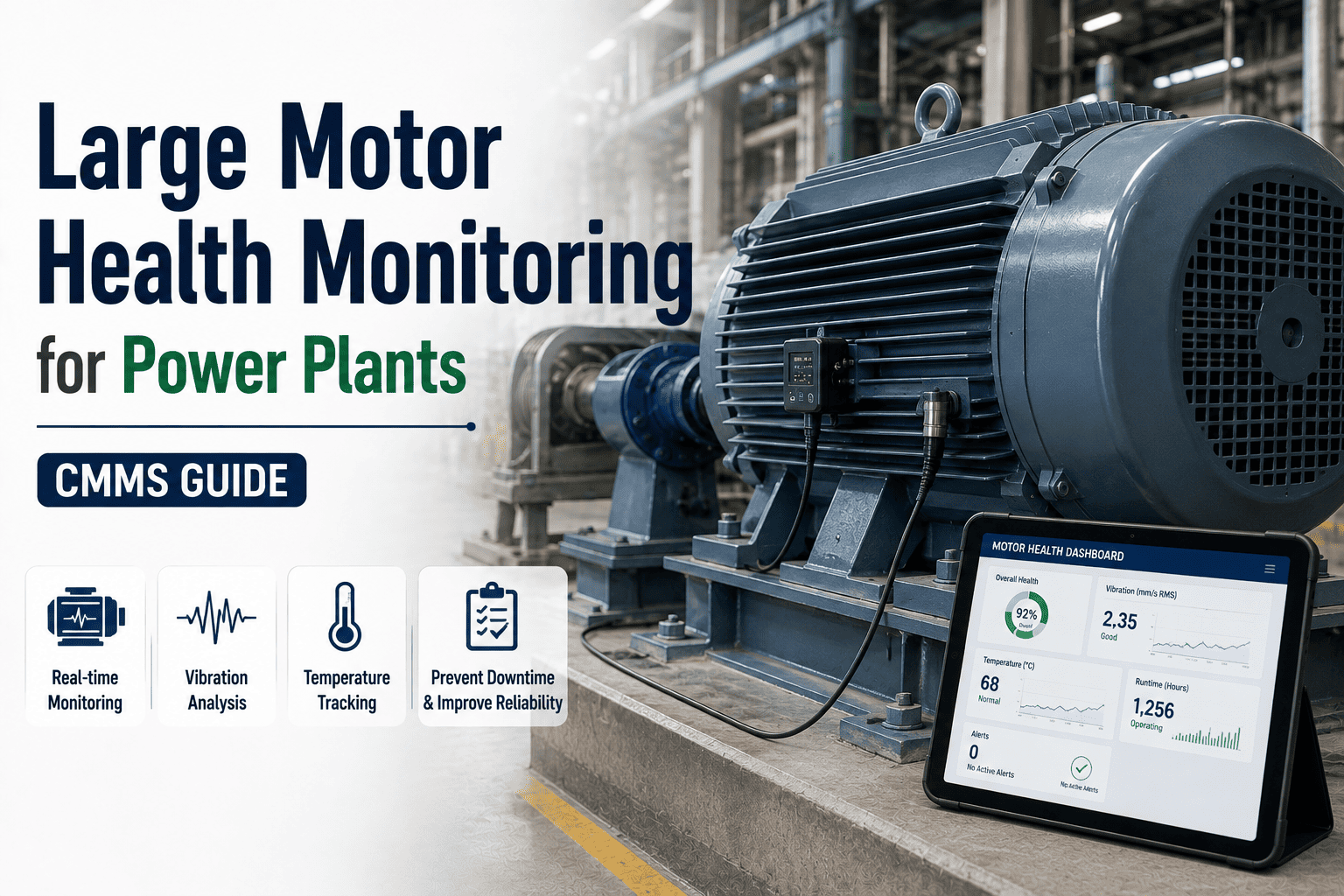
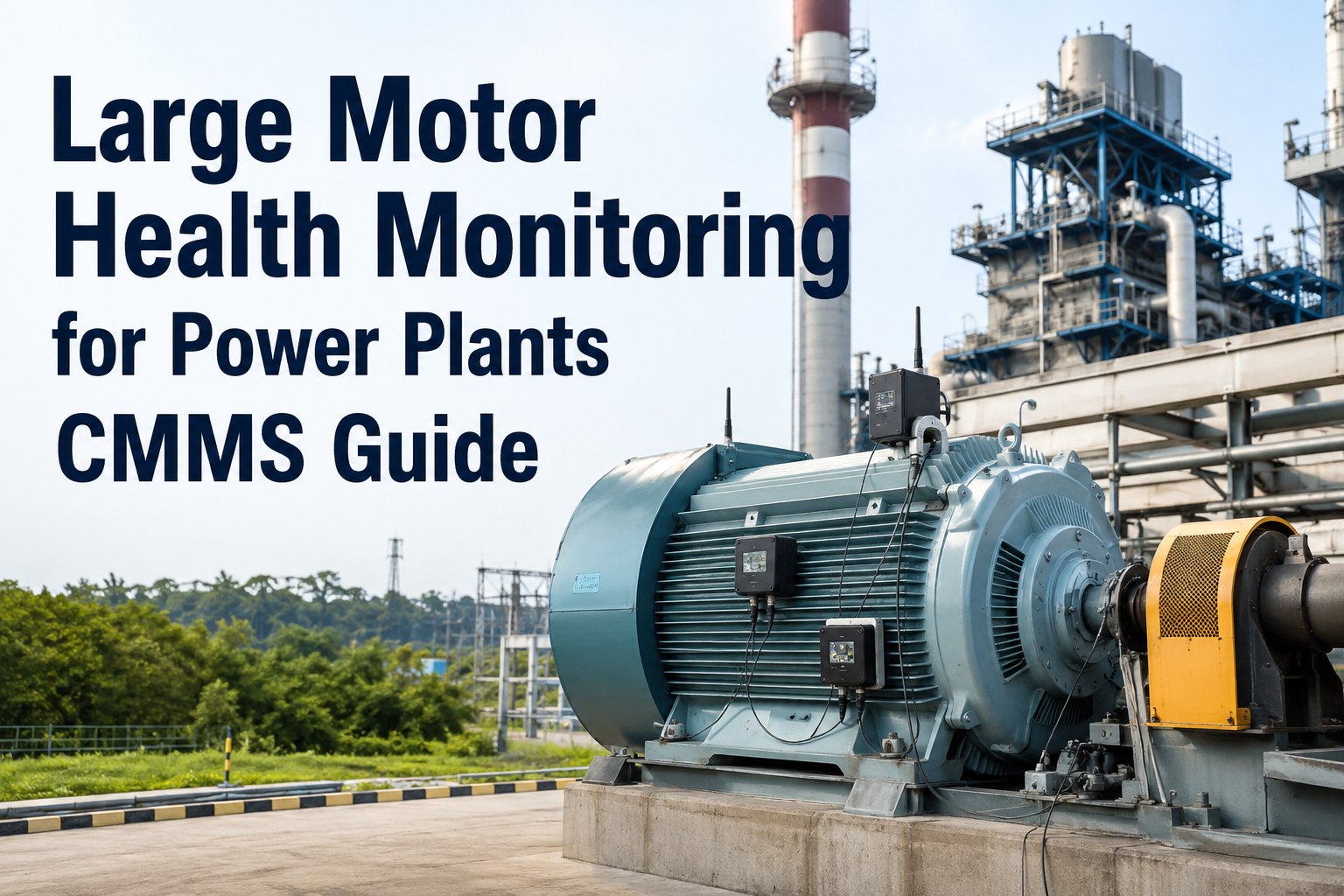
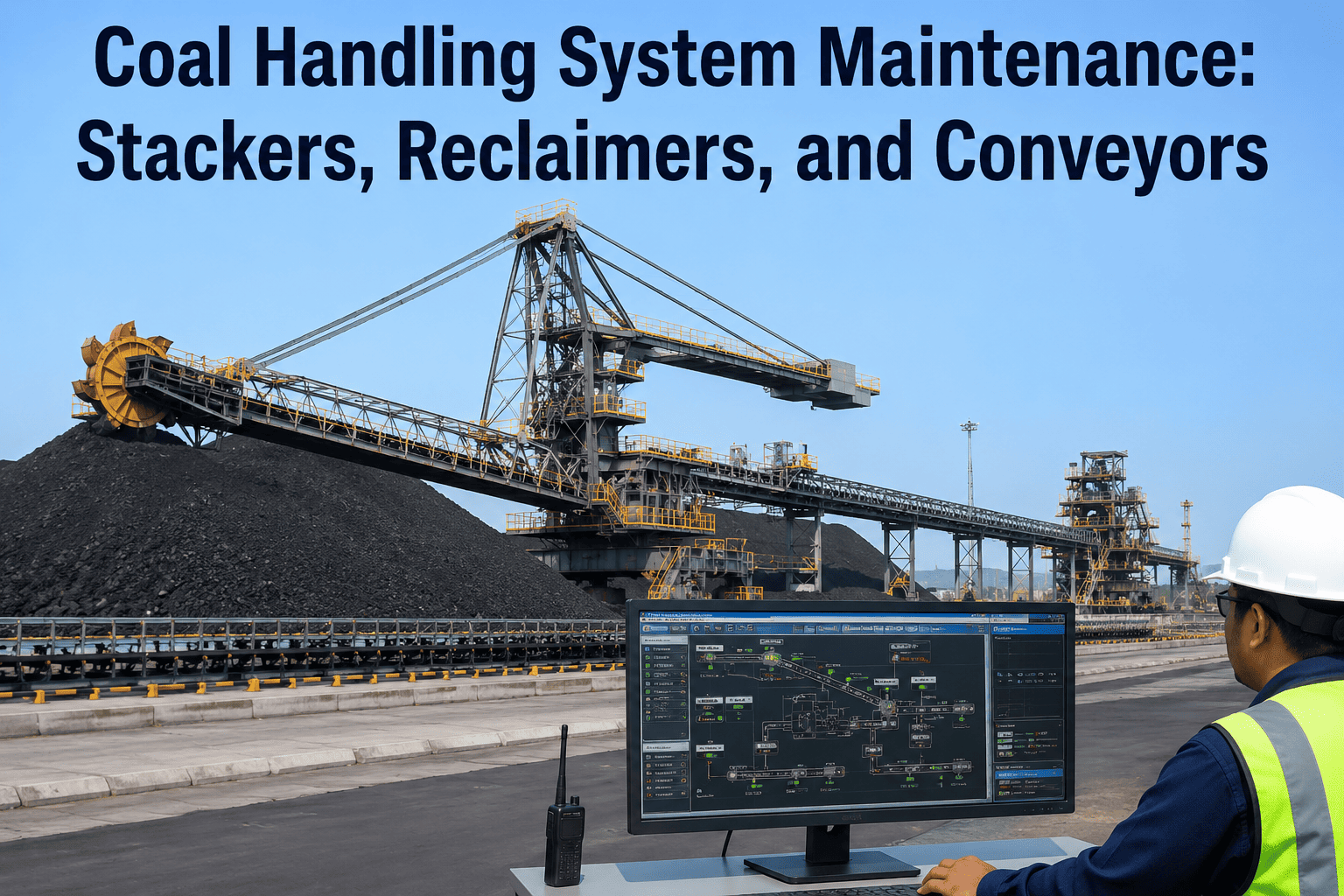
A coal conveyor stoppage at a thermal power plant is not a maintenance event — it is a fuel supply interruption that directly threatens generation output. Coal handling systems run continuously under high dust loading, variable tonnage, and extreme weather exposure, and the failure modes — belt mistracking, idler seizure, pulley lagging loss, drive motor overtemperature — give hours of warning, not minutes, if the right monitoring data is being collected and trended. Power plant coal handling teams managing kilometres of conveyor belts, dozens of drive motors, and hundreds of idler sets cannot spot those warning patterns in daily walkdown logs and paper work orders. OxMaint's CMMS connects belt condition monitoring, motor analytics, and idler inspection workflows into a predictive maintenance system that reduces coal handling downtime before it stops fuel flowing to the bunkers. See how OxMaint tracks coal handling assets across your plant.
Blog · Coal Handling · Predictive Maintenance
Coal Conveyor Predictive Maintenance for Power Plants
Belt Condition Monitoring · Motor Analytics · Idler Inspection · Pulley Wear Tracking · CMMS Work Orders · Downtime Reduction
Conveyor Status — Coal Yard to Bunker Floor
CV-01
Coal Yard → Crusher House
Running · Normal
CV-02
Crusher House → Transfer Tower
Motor Temp 82°C ↑
CV-03
Transfer Tower → Bunker Floor
Belt Mistracking — WO Open
CV-04
Stacker-Reclaimer → CV-01
Running · Normal
78%
Of coal conveyor failures are preceded by detectable warning signals 24–72 hours before stoppage
₹2.5Cr
Average cost per day of generation output loss at a 500 MW plant during coal supply disruption
4,000+
Idler rollers in a typical large thermal plant coal handling system — each a potential seizure point
3x
Higher belt replacement frequency in plants with reactive vs predictive conveyor maintenance programs
The Five Failure Modes That Stop Coal Flow — and the Predictive Signals OxMaint Tracks
01
Belt Mistracking
Warning Signal
Edge wear pattern on belt; repeated alignment switch activations; idler frame contact marks
Root causes: pulley misalignment, uneven belt splice, asymmetric loading, worn return idlers
OxMaint tracks alignment switch trip counts per shift and triggers investigation WO on threshold breach
02
Idler Seizure
Warning Signal
Roller not rotating during walkdown; heat signature on thermal imaging; belt wear mark at fixed point
Root causes: water ingress into bearing, dust contamination, lubrication failure, overloading
OxMaint scheduled idler walkdown checklists capture seized rollers before belt damage occurs
03
Drive Motor Overtemperature
Warning Signal
Rising RTD/thermocouple readings; elevated current draw vs baseline; increased bearing vibration
Root causes: overloading, cooling fan failure, winding insulation degradation, misalignment
OxMaint motor analytics trend temperature and current — flags deviation before thermal trip
04
Pulley Lagging Loss
Warning Signal
Belt slippage on drive pulley; drive motor current spikes; lagging chunks in coal stream
Root causes: lagging age, wet conditions, material buildup behind lagging, improper tension
OxMaint tracks lagging installation date per pulley and schedules visual inspection at defined intervals
05
Belt Splice Failure
Warning Signal
Splice bulge visible during walkdown; flexing noise at splice point; edge cracking at vulcanized joint
Root causes: splice age, overloading, improper vulcanization, repeated emergency stops
OxMaint tracks splice installation date, belt tension history, and emergency stop events per conveyor
Coal Conveyor PM Schedule — What OxMaint Auto-Generates by Conveyor ID
| Component |
PM Task |
Interval |
Predictive Indicator |
Downtime Risk if Missed |
| Drive Motor Bearings |
Vibration measurement + temperature log |
Weekly |
Bearing defect frequency in vibration spectrum |
HIGH — seized bearing → unplanned stoppage |
| Carrying Idlers |
Full walkdown — spinning check, heat gun |
Bi-weekly |
Seized roller count per section |
HIGH — belt longitudinal rip from seized idler |
| Drive Pulley Lagging |
Visual inspection — thickness, bonding, cracking |
Monthly |
Lagging age (months) vs slip event log |
MEDIUM — slippage → belt edge burn |
| Belt Tension (Take-Up) |
Counter-weight position check + tension calc |
Monthly |
Position deviation from baseline |
HIGH — under-tension → mistracking and splice stress |
| Belt Splices |
Visual — bulge, edge crack, vulcanize joint |
Monthly |
Splice age (months) + emergency stop count |
HIGH — splice failure → full belt replacement |
| Gearbox Oil |
Oil level, viscosity, metal particle check |
Quarterly |
Metal content in oil sample |
MEDIUM — gear wear → motor overload |
| Belt Cleaner Blades |
Blade wear measurement + spring tension |
Weekly |
Carryback material on return belt |
LOW — carryback → idler buildup → seizure chain |
Every Conveyor. Every Component. Every PM Due Date — Visible in One Screen.
OxMaint registers each conveyor as an individual asset, batches PM tasks by section for efficient technician routing, and tracks predictive indicators alongside maintenance history — so your coal handling team is always ahead of the failure, not recovering from it.
Motor Analytics — Connecting Electrical Data to Conveyor Health
Current Draw vs Baseline
A drive motor drawing more current than its baseline at the same throughput tonnage indicates mechanical resistance — idler seizures, belt mistracking friction, gearbox drag, or pulley misalignment. OxMaint logs motor current at each PM interval and trends deviation from the commissioning baseline.
Alert threshold: >8% deviation from baseline at same load
Winding Temperature (RTD/Thermocouple)
Motor winding temperature rising without a corresponding increase in ambient or load is a sign of cooling failure, insulation degradation, or bearing friction transferring heat into the motor body. OxMaint trends RTD readings and generates alerts before the motor protection relay trips the conveyor.
Alert threshold: >Class F motor rated temperature minus 15°C
Start Current Duration
A conveyor motor that takes longer to accelerate to running speed on each start is indicating increasing mechanical resistance — often from belt stiffness in cold weather, increasing belt tension, or drive pulley bearing friction. OxMaint logs start current profiles and flags extended acceleration times.
Alert threshold: acceleration time >20% above commissioning record
Bearing Vibration (RMS Velocity)
Motor drive-end bearing vibration rising in the 10–1000 Hz range indicates bearing inner or outer race defects that will progress to seizure within weeks. OxMaint's vibration route for coal handling motors is configured by conveyor section and generates PM work orders when velocity exceeds ISO 10816 alert levels.
Alert threshold: >4.5 mm/s RMS (ISO 10816 Zone C boundary)
Before vs After — What Predictive Conveyor Maintenance Changes
Conveyor trips on motor thermal protection — no warning given to operations team
Emergency belt replacement ordered — 48–72 hrs lead time while bunker levels drop
Idler seizure discovered only when belt rip occurs — 200m of belt damaged
Maintenance team cannot say which idler sections are at risk without a full walkdown
No record of how many emergency stops this belt has had — splice replacement deferred
Motor current trend alert generated 36 hrs before thermal trip — investigation WO raised
Belt inspection scheduled during the next planned shift change window — no emergency order
Bi-weekly idler walkdown flags three seized rollers — replaced before belt contact
OxMaint idler walkdown history shows section 4B has highest seizure rate — proactive replacement
Emergency stop count logged per conveyor — splice replacement scheduled at 15-stop threshold
Frequently Asked Questions
How does OxMaint manage PM work orders across a large number of conveyors with different sections?
Each conveyor is registered as an individual asset in OxMaint with its section breakdown — drive end, tail end, each carry idler zone, and transfer point. PM tasks are generated by section and batched for the technician's walkdown route, so a single work order covers a full conveyor inspection in one shift rather than creating separate tasks for each component. Completion is recorded at the section level, giving maintenance engineers visibility of which specific idler zones are most frequently finding seized rollers.
Configure your conveyor asset register in OxMaint free trial.
Can OxMaint track motor vibration and temperature data from existing plant instrumentation?
OxMaint supports manual data entry from handheld vibration meters and thermal guns via the mobile work order interface, as well as structured data import from plant historian systems via CSV or API. The technician records the vibration reading or temperature against the motor asset record, OxMaint stores it against the asset history, and the trend view shows the progression over time.
See a demo of OxMaint's motor condition data tracking.
How does OxMaint handle belt replacement tracking and splice life management?
Each belt in OxMaint has an asset record tracking installation date, splice date, emergency stop count (logged by the control room as a work event), and belt meter-hours. When any of these parameters exceed the configured threshold, OxMaint generates a splice inspection or belt replacement planning work order — giving the team 2–3 weeks of lead time rather than discovering a failed splice during production.
What reports does OxMaint generate for coal handling maintenance performance?
OxMaint generates conveyor-level reliability reports covering unplanned stoppage frequency, PM compliance rate, mean time between failures by conveyor ID, and idler seizure rate by section. These reports are used by plant maintenance managers to prioritize refurbishment spending and demonstrate coal handling reliability to plant operations leadership.
Start generating coal handling reliability reports in OxMaint.
Coal Handling Downtime Is Preventable. Predictive Maintenance with OxMaint Makes It Routine.
OxMaint gives coal handling teams per-conveyor asset tracking, motor analytics trending, idler inspection workflows, and belt life management — all in a CMMS built for the pace and complexity of thermal power plant operations.