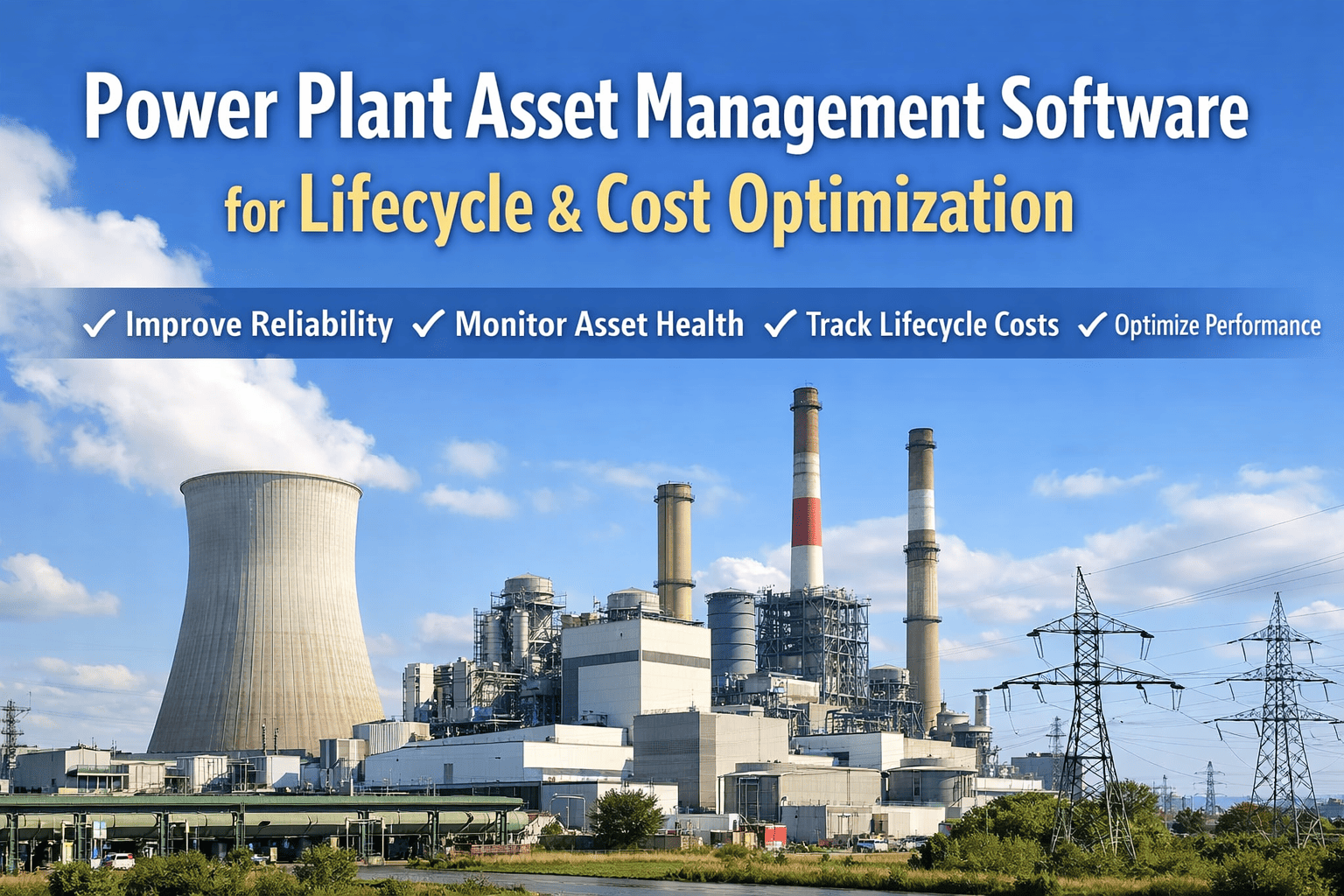
Power plants running on reactive maintenance lose an average of $1.4 million per unplanned outage event— yet most utility operators still manage thousands of rotating assets through disconnected spreadsheets and manual work orders. Asset performance management software changes that equation entirely: it gives plant engineers real-time asset health visibility, predictive failure alerts, and lifecycle cost intelligence — all in one platform. If your plant is chasing failures instead of preventing them, book a demo to see how APM delivers measurable reliability gains within your first quarter of deployment.
35%
Average reduction in unplanned downtime with APM
2.8×
ROI typical within the first 12 months of deployment
62%
Of power plant failures are predictable with condition monitoring
$1.4M
Average cost of a single unplanned outage event
What Is Asset Performance Management for Power Plants?
Asset performance management (APM) is a data-driven approach to monitoring, predicting, and optimizing the health and performance of physical assets throughout their operational lifecycle. For power generation facilities — thermal, hydro, nuclear, wind, or solar — APM software integrates sensor data, maintenance history, inspection records, and failure patterns into a single operational intelligence layer.
Unlike traditional CMMS platforms that track work orders reactively, APM platforms shift plant teams from fix-on-fail to predict-and-prevent. The result: longer asset life, fewer forced outages, and maintenance budgets directed at the right equipment at the right time.
01
Asset Health Monitoring
Continuous visibility into equipment condition using sensor data, vibration analysis, temperature trends, and oil diagnostics — across every critical asset class from turbines to transformers.
02
Predictive Failure Alerts
Machine learning models flag anomalies weeks before failure. Maintenance crews receive prioritized alerts — not alarm floods — so every intervention is scheduled, not scrambled.
03
Risk-Based Prioritization
Not every asset carries equal risk. APM scores each asset on criticality, failure probability, and consequence severity — so limited maintenance hours go to the equipment that matters most.
04
Lifecycle Cost Intelligence
APM tracks total cost of ownership across repair history, spare parts consumption, and energy efficiency degradation — giving leadership the data to decide repair versus replace with confidence.
The Real Cost of Not Having APM in Your Plant
Most power plant operators underestimate the compounding cost of deferred maintenance. It is not just the emergency repair bill — it is the cascading effect on generation capacity, regulatory penalties, and insurance exposure.
Unplanned Downtime
$500K–$1.4M
Per incident, including lost generation and emergency labor
Regulatory Fines
$250K+
Per compliance violation for missed inspection cycles
Premature Asset Replacement
15–22%
Of capital budget wasted on assets that could run longer
Maintenance Overspend
30–40%
Of PM budget spent on assets that did not need intervention
No Single Source of Truth
Asset data lives in ERP systems, maintenance logs, paper inspection sheets, and engineers' spreadsheets. When a turbine trips, nobody has a complete picture of its recent condition history — and every hour spent compiling data is an hour the plant is not generating.
Alarm Overload, Zero Context
Legacy DCS and SCADA systems generate hundreds of alarms daily. Without asset health context, operators cannot distinguish a nuisance alarm from an imminent failure signal. Critical warnings get buried — and when action is finally taken, it is too late.
Calendar-Driven PM That Misses Real Risk
Fixed-interval preventive maintenance either over-maintains healthy assets or under-maintains degrading ones. A pump running in a harsh environment may need attention at 60 days; one in a benign service condition may be fine at 180. Calendar-based schedules cannot make that distinction.
Compliance Gaps at Audit Time
NERC, OSHA, and EPA compliance documentation is only as good as the inspection records behind it. When auditors request inspection logs for 200 assets, paper-based operations scramble for days — and still produce incomplete records that expose the facility to findings and penalties.
See How Oxmaint APM Protects Your Plant's Reliability
Oxmaint deploys across your full asset inventory in under 12 weeks — connecting your field inspections, maintenance schedules, and compliance records into one live platform. No rip-and-replace. No lengthy IT projects.
Core APM Capabilities That Drive Plant Reliability
Modern APM platforms for power generation are built around five capability pillars. Each one addresses a specific failure mode in traditional maintenance operations.
Capability 01
Automated Inspection Scheduling
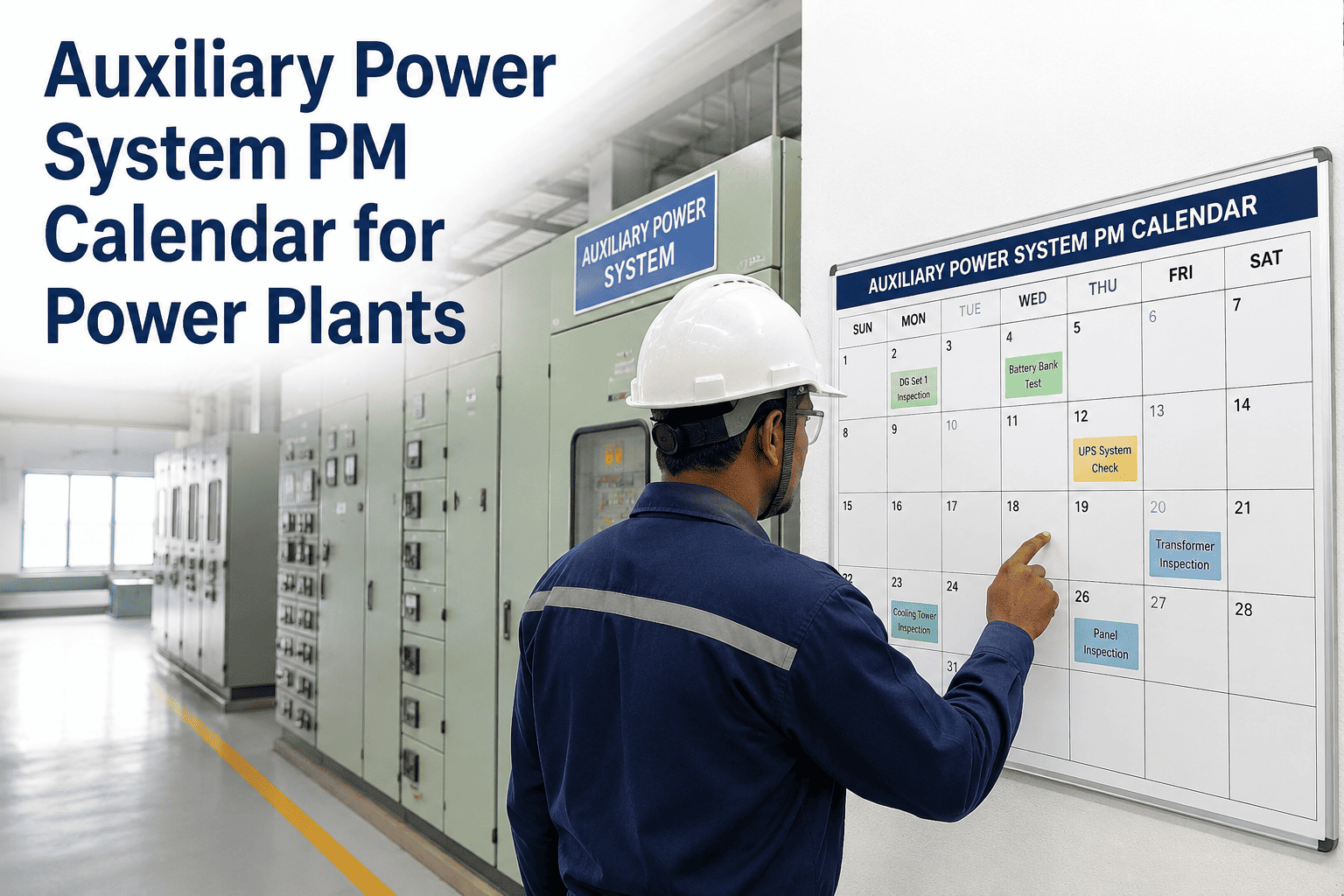
Work orders auto-generate based on asset criticality tiers, regulatory intervals, and condition-based triggers. Escalating alerts at 60, 30, and 7 days ensure zero inspections slip through the calendar. Every missed deadline becomes visible — before it becomes a compliance finding.
Capability 02
Mobile Field Data Capture
Field technicians capture inspection findings, equipment readings, photos, and GPS confirmation directly on mobile devices — with full offline capability in substation and switchyard environments with no connectivity. Data syncs to the central platform the moment a connection is restored, eliminating manual transcription entirely.
Capability 03
Asset Health Scoring
Each asset receives a live health score derived from inspection findings, work order history, sensor trends, and age-weighted degradation models. Plant managers see at a glance which assets are healthy, which are degrading, and which require immediate attention — without drilling through multiple systems.
Capability 04
Compliance Documentation Export
Timestamped, inspector-attributed records with GPS confirmation and photo evidence export in regulatory-ready formats for NERC, OSHA, and EPA audit requirements. What once took 20 staff-days to compile now takes under 4 hours — with complete records for every structure, every time.
Capability 05
Cross-Plant Reliability Dashboard
Real-time PM compliance, overdue asset counts, upcoming inspection density, and maintenance cost trends — visible across every generation unit, site, and asset tier from a single dashboard. Leadership gets operational intelligence without waiting for monthly reports that are already stale by the time they are read.
Capability 06
Failure Mode Libraries
Pre-built inspection templates organized by failure mode — including turbine blade erosion, generator winding degradation, transformer oil contamination, and cooling system fouling — ensure field crews capture the specific data points that matter for each asset class, not generic checklists that miss critical signals.
APM Across Power Generation Asset Classes
Every generation technology carries a unique set of critical assets and failure modes. Effective APM platforms are configured, not just deployed — with templates, intervals, and health metrics tailored to the asset class your plant operates.
| Asset Class |
Critical Failure Modes |
Recommended Interval |
APM Coverage |
| Steam Turbines |
Blade erosion, bearing wear, seal degradation, rotor imbalance |
Annual major; quarterly vibration |
Vibration trending, thermal imaging, oil analysis integration |
| Gas Turbines |
Compressor fouling, hot section oxidation, combustor liner cracking |
Per OEM cycles; borescope at 8,000 hrs |
Cycle-based scheduling, borescope checklist, EGT trend alerts |
| Transformers |
Oil contamination, winding insulation breakdown, partial discharge |
Biennial oil analysis; annual visual |
Oil test log integration, DGA trending, thermal alert thresholds |
| Cooling Towers |
Fill media fouling, fan blade erosion, structural corrosion |
Quarterly visual; annual structural |
Photo evidence capture, corrosion scoring, water chemistry logging |
| Generator Stators |
Winding insulation aging, end-winding vibration, coolant blockage |
Annual electrical test; biennial teardown |
PI test records, partial discharge trending, IR scan integration |
| HV Switchgear |
Contact erosion, insulation failure, mechanism corrosion |
Biennial; post-fault inspection |
Contact resistance logging, timing test records, post-fault workflow |
| Boiler Systems |
Tube thinning, refractory spalling, pressure part corrosion |
Statutory annual; UT scan per RBI |
Thickness measurement records, RBI-aligned intervals, HRSG templates |
Before APM vs. After APM — What Changes
| Metric |
Without APM |
With Oxmaint APM |
| Asset health visibility |
Monthly reports, 30 days stale |
Real-time dashboard, all assets |
| Inspection scheduling |
Manual calendar — overruns common |
Auto-generated with escalating alerts |
| Unplanned failure rate |
Industry avg: 42% of all failures |
Reduced to under 15% within 12 months |
| Compliance documentation |
20+ staff-days per audit cycle |
Under 4 hours — complete, auditor-ready |
| Field data capture |
Paper forms, manual re-entry |
Mobile capture, GPS-confirmed, zero transcription |
| Maintenance budget allocation |
Equal intervals regardless of condition |
Risk-prioritized, condition-triggered |
| Cross-site reliability view |
Not available — siloed by plant |
Portfolio-wide dashboard, instant drill-down |
ROI Drivers: Where APM Pays Back in Power Plants
APM investments in power generation deliver returns across three distinct channels. Understanding each channel is critical for building an internal business case for deployment.
Channel 01
Avoided Outage Costs
$500K–$1.4M per event
Every unplanned forced outage prevented by an APM early-warning alert eliminates emergency labor, expedited spare parts, and lost generation revenue simultaneously. A single avoided major outage typically recovers the full annual cost of an APM platform.
Channel 02
Maintenance Budget Optimization
15–25% labor savings
Eliminating time-based PM on healthy assets, reducing emergency callouts, and cutting documentation hours releases significant maintenance budget and labor hours. Plants consistently report 15–25% labor efficiency gains in the first year of APM operation.
Channel 03
Asset Life Extension
3–7 years per major asset
Early identification of degradation allows remediation before failure propagates. Steam turbines and generators maintained with APM-guided interventions routinely achieve 3–7 additional years of service life — deferring capital replacement programs worth tens of millions of dollars.
2.8×
Typical 12-month ROI
4.2 mo
Average payback period
35%
Reduction in unplanned downtime
74%
Faster compliance documentation
Who Uses APM in Power Generation Operations
Plant Reliability Engineers
Use APM health scores and failure trend data to build risk-ranked maintenance plans. Replace gut-feel prioritization with data-driven intervention timing that reduces both over- and under-maintenance.
Maintenance Managers
Manage work order queues, crew scheduling, and parts procurement from a single platform. Real-time compliance dashboards eliminate the end-of-month scramble to verify inspection status across every asset tier.
Plant Directors and Operations VPs
Track generation availability, forced outage rate, and maintenance cost trends across multiple units or facilities. Justify capital decisions — repair vs. replace — with asset lifecycle cost data, not engineering opinion.
Compliance and EHS Teams
Prepare NERC, OSHA, and EPA audit packages with complete inspection records, timestamped with inspector attribution and GPS evidence. No more assembling documentation from disconnected systems under audit pressure.
Start Protecting Your Generation Assets Today
Oxmaint APM deploys across your full plant asset inventory in under 12 weeks. Your field teams use mobile inspection tools from day one — no training programs, no IT projects, no disruption to existing operations. Start your free trial or schedule a 30-minute platform walkthrough with a power generation specialist.
Frequently Asked Questions
QHow is APM different from a CMMS for power plant maintenance?
A CMMS manages work orders and maintenance schedules reactively — it records what happened after a work order is closed. APM goes further by continuously monitoring asset health, predicting failure before it occurs, and prioritizing maintenance based on real-time condition data and risk scores. For power plants where a single turbine failure can cost over a million dollars, that predictive layer is the difference between planned maintenance and emergency response.
Oxmaint combines CMMS workflow management with APM intelligence in one platform — so you do not need two systems.
QHow long does APM deployment take for a power generation facility?
Most power plant deployments with Oxmaint reach full operational status — including asset registry, inspection templates, mobile field crew activation, and compliance dashboards — within 10 to 14 weeks. The asset import process uses existing equipment lists and NBI-style registries, so there is no manual data entry for each asset.
Book a scoping session to review your asset inventory and get a deployment timeline specific to your facility size and generation type.
QCan APM software work offline in remote plant areas with no connectivity?
Yes — the Oxmaint mobile app operates fully offline, which is critical for power plant environments where switchyards, substations, and remote turbine bays have no reliable network coverage. Field technicians capture inspection readings, photos, and GPS confirmation with no connectivity required. All data syncs automatically to the central platform when connectivity is restored. The offline capability has been validated across hundreds of remote generation and transmission sites.
Sign up to test offline functionality in your environment at no cost.
QHow does APM help with NERC and regulatory compliance documentation?
Oxmaint generates timestamped, inspector-attributed inspection records with GPS confirmation and photo evidence for every asset in your plant inventory. When NERC, OSHA, or EPA auditors request documentation, the compliance export produces a complete audit package in under 4 hours — compared to the 15–20 staff-days typically required with paper-based systems. Corrective action plans issued for documentation gaps are closed permanently because the records are complete, current, and verifiable.
Book a demo to review the compliance export format before your next audit cycle.
QHow do we justify the APM investment to leadership with constrained capital budgets?
The ROI case for APM in power generation is straightforward: a single avoided unplanned outage event typically recovers the full annual platform cost. Beyond outage avoidance, APM delivers documented savings in maintenance labor efficiency (15–25%), compliance documentation time (74% reduction), and capital deferral through extended asset life. Most plants see payback within 4 to 5 months.
Schedule a 30-minute ROI modeling session and we will quantify the business case using your plant's actual asset count, outage history, and maintenance spend.
Your Plant Assets Are Either Being Managed — Or Managing You
Power plants that deploy APM stop chasing failures and start preventing them. With Oxmaint, your team gets real-time asset health visibility, automated inspection scheduling, mobile field capture, and audit-ready compliance documentation — all live in under 12 weeks, without replacing your existing systems.