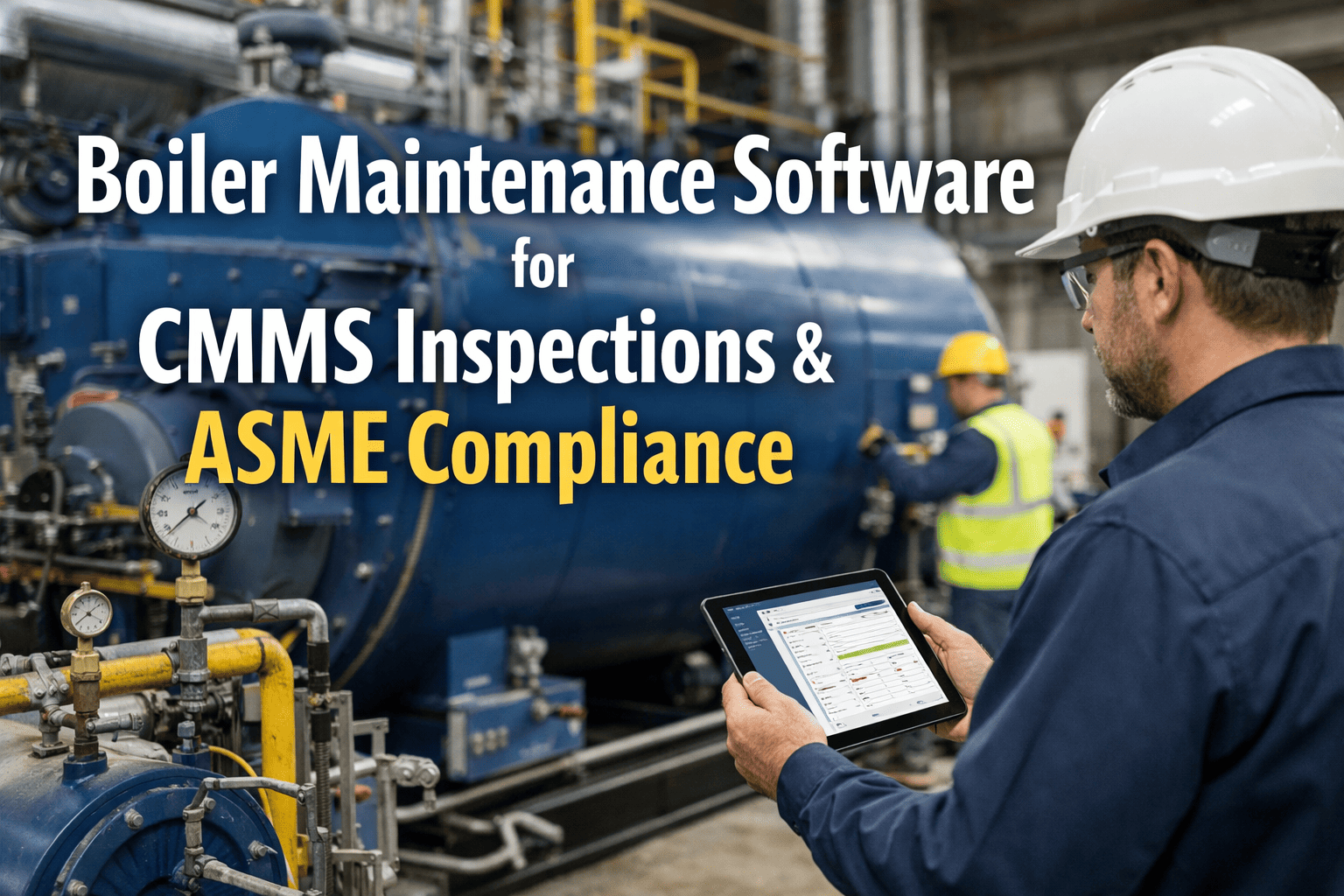
A boiler is one of the few assets in a plant that can fail catastrophically and one of the few whose inspection is mandated by law. Miss the jurisdictional inspection and the certificate lapses, which can shut the boiler down. Skip a safety-valve test or a low-water cutoff check and the consequence is far worse. And finding a defect isn't enough: if it isn't tracked to a corrective action and closed on record, the audit treats it as open. This checklist walks the inspection by system, the defect-to-closure discipline, and the records an auditor expects — tracked in OXMAINT AI or book a demo of boiler compliance tracking in OXMAINT AI.
BOILER INSPECTION · COMPLIANCE · DEFECTS · CORRECTIVE ACTIONS · 2026
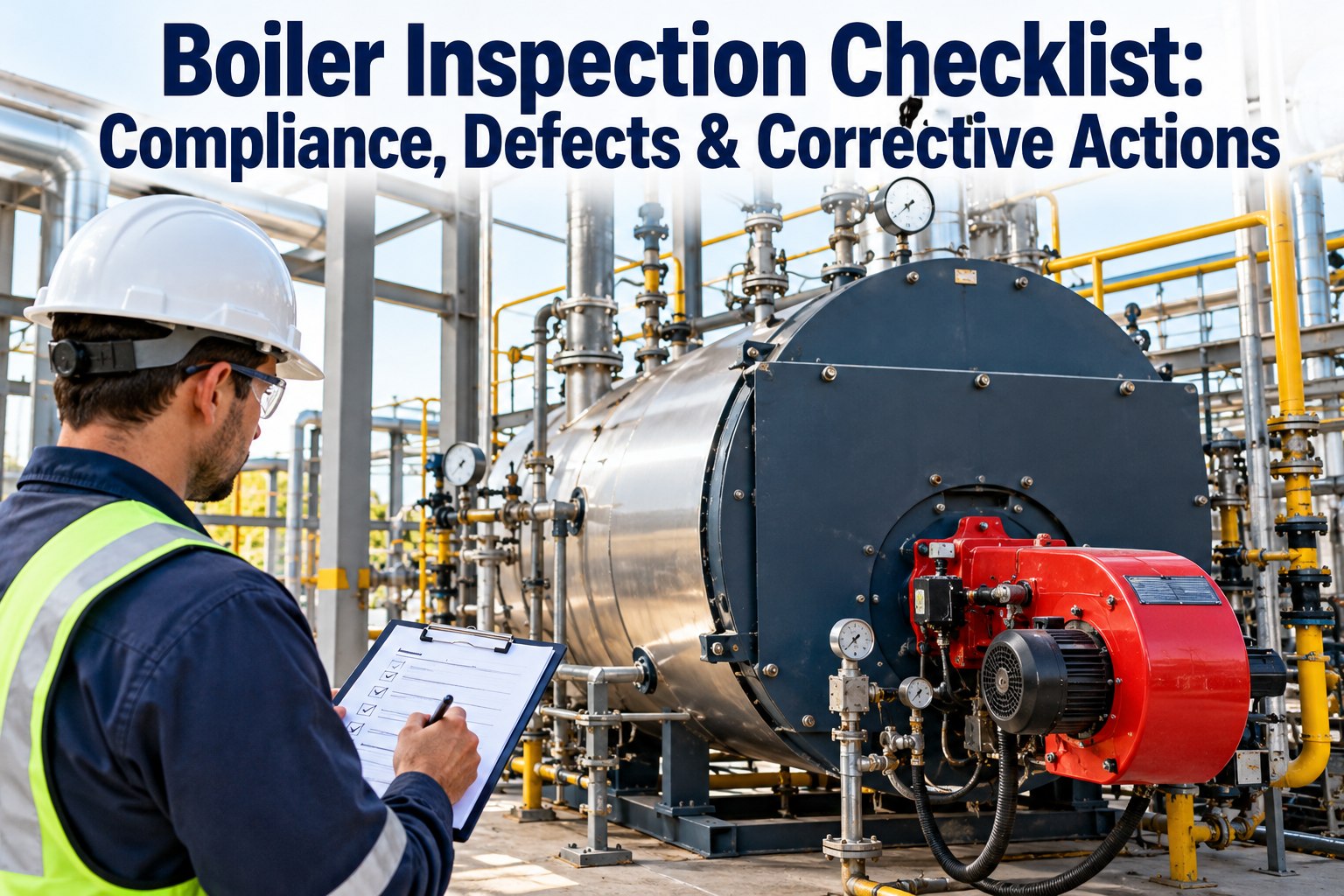
Boiler Inspection Checklist: Compliance, Defects & Corrective Actions
A lapsed certificate, a missed safety-control check, or a defect that was found but never closed — each is a compliance failure waiting to surface. OXMAINT AI is the AI-powered CMMS that schedules the inspections to their due dates, turns every defect into a tracked corrective action, and keeps the records audit-ready — so the boiler stays certified and the findings stay closed.
1 · Inspect
2 · Log defects
3 · Correct
4 · Certify
Cert
a valid inspection certificate is what keeps the boiler legal to run
Int + Ext
internal and external inspections on their jurisdictional schedule
LWCO
the low-water cutoff and relief valve are never-skip safety items
Closed
a defect only counts as handled once the corrective action is closed
The Inspections and When They're Due
Boiler inspection isn't one event — it's a program of inspection types on a jurisdictional schedule, carried out by a commissioned inspector. Knowing which is due when is the first half of compliance. Start free and put your boilers on an inspection calendar in OXMAINT AI.
Internal Inspection
Boiler shut down, opened and entered — pressure parts, water and fireside examined from the inside. The deepest look, on the longer cadence.
External Inspection
Carried out while the boiler operates — controls, safety valves, gauges, piping and general condition checked in service.
Certificate Inspection
The jurisdictional inspection that renews the certificate of operation — the one that keeps the boiler legal to run.
Inspection types, frequencies and who may perform them are set by your jurisdiction, the boiler class and your insurer — confirm the exact schedule for each boiler.
Never SkipThe Safety Items That Come Before Everything
Most inspection items are about condition. A few are about preventing a catastrophe — and these are verified every time, no exceptions. A boiler that runs with a defeated low-water cutoff or an untested relief valve is a hazard regardless of how good the rest of the inspection looks.
!
Low-water cutoff — tested to prove it shuts the burner before water drops too low.
!
Safety / relief valve — verified to lift at set pressure and reseat; never gagged or blocked.
!
Pressure & limit controls — operating and high-limit controls proven to cut off on demand.
!
Flame safeguard — the burner safety system confirmed to detect flame failure and lock out.
The Boiler Inspection Checklist
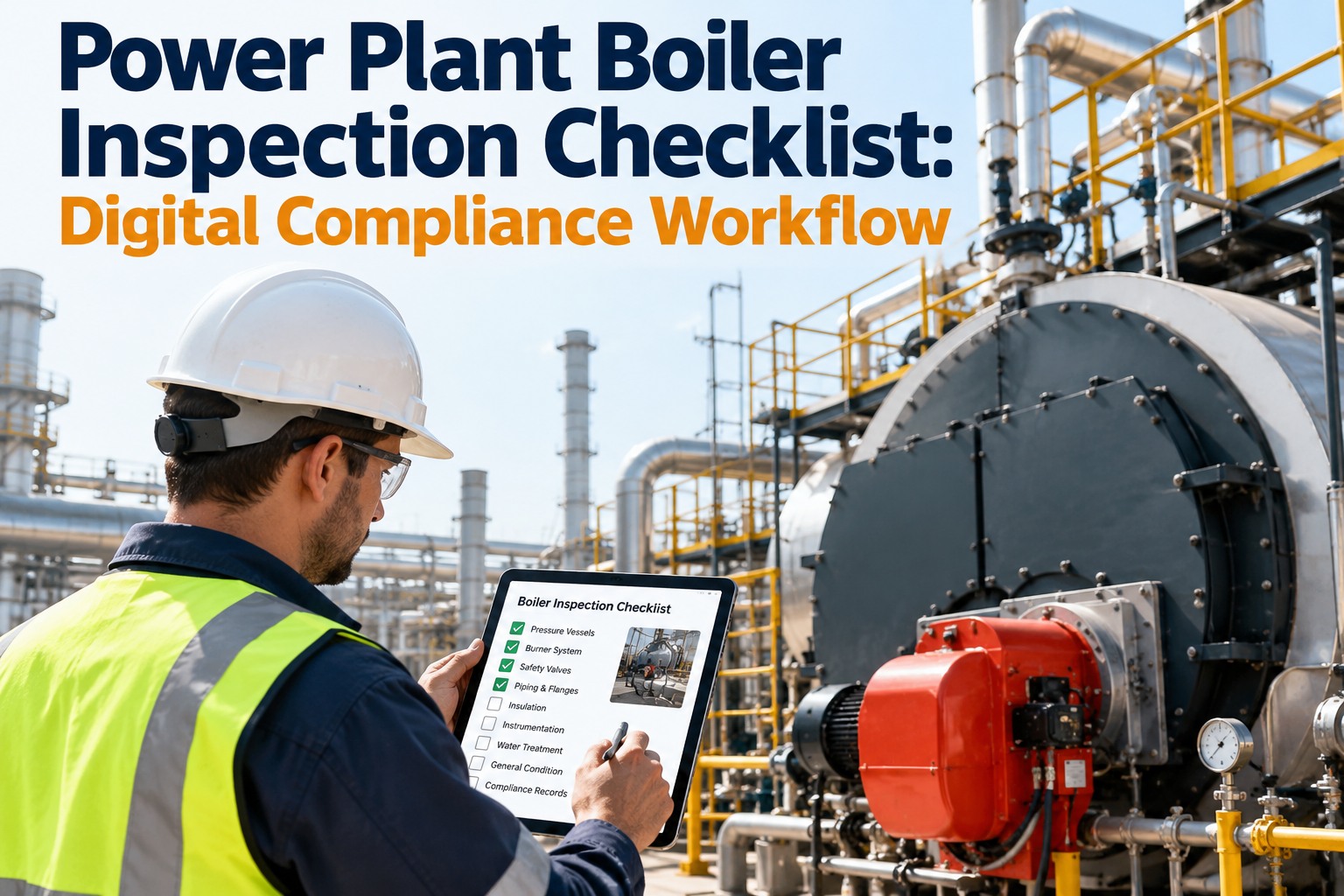
Work the five systems in turn — pressure parts, water and steam side, safety controls, combustion and fireside, then records. Tick each item as you confirm it; the whole row toggles. Book a demo and run this checklist from a tablet in OXMAINT AI.
From Defect to Closed Corrective Action
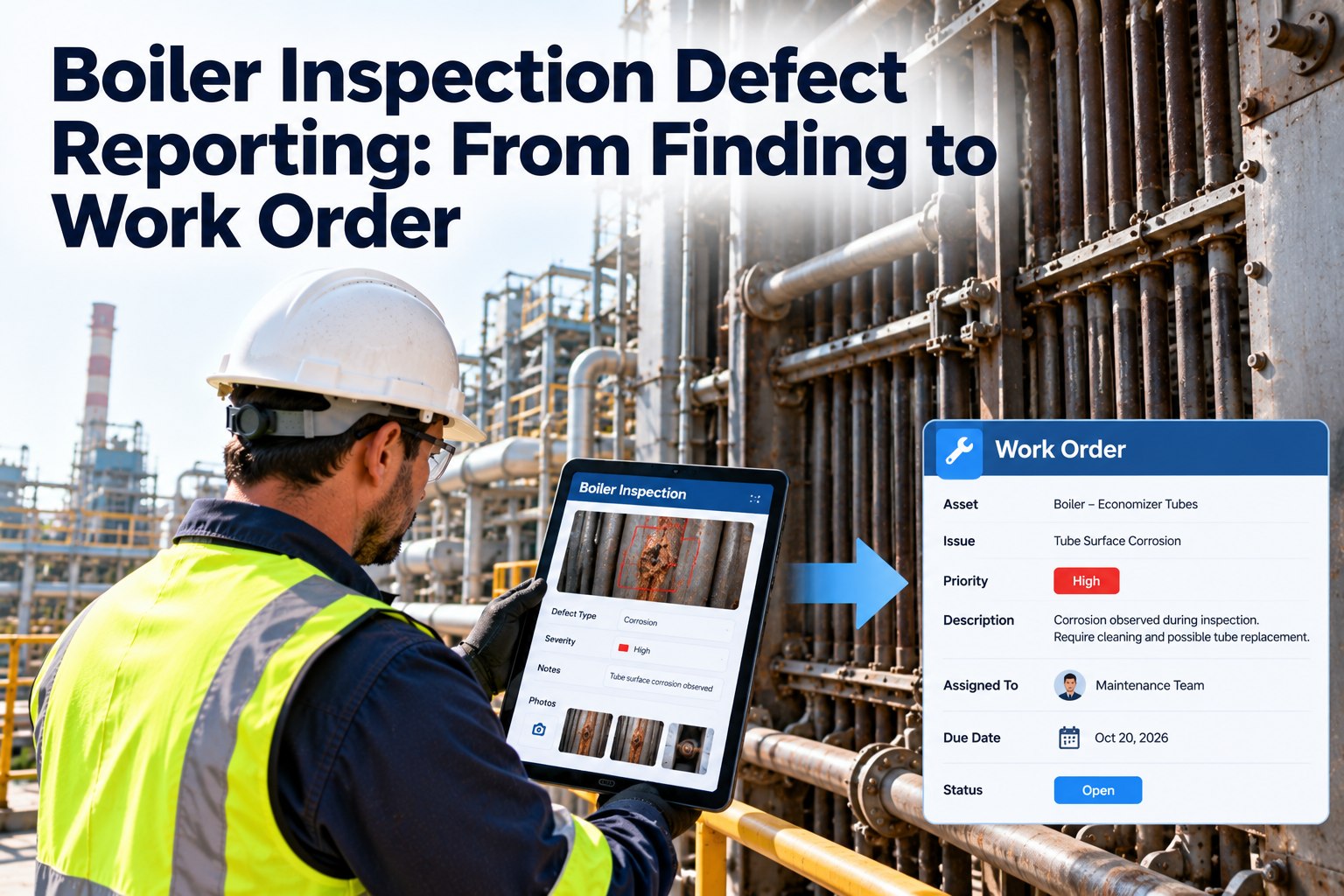
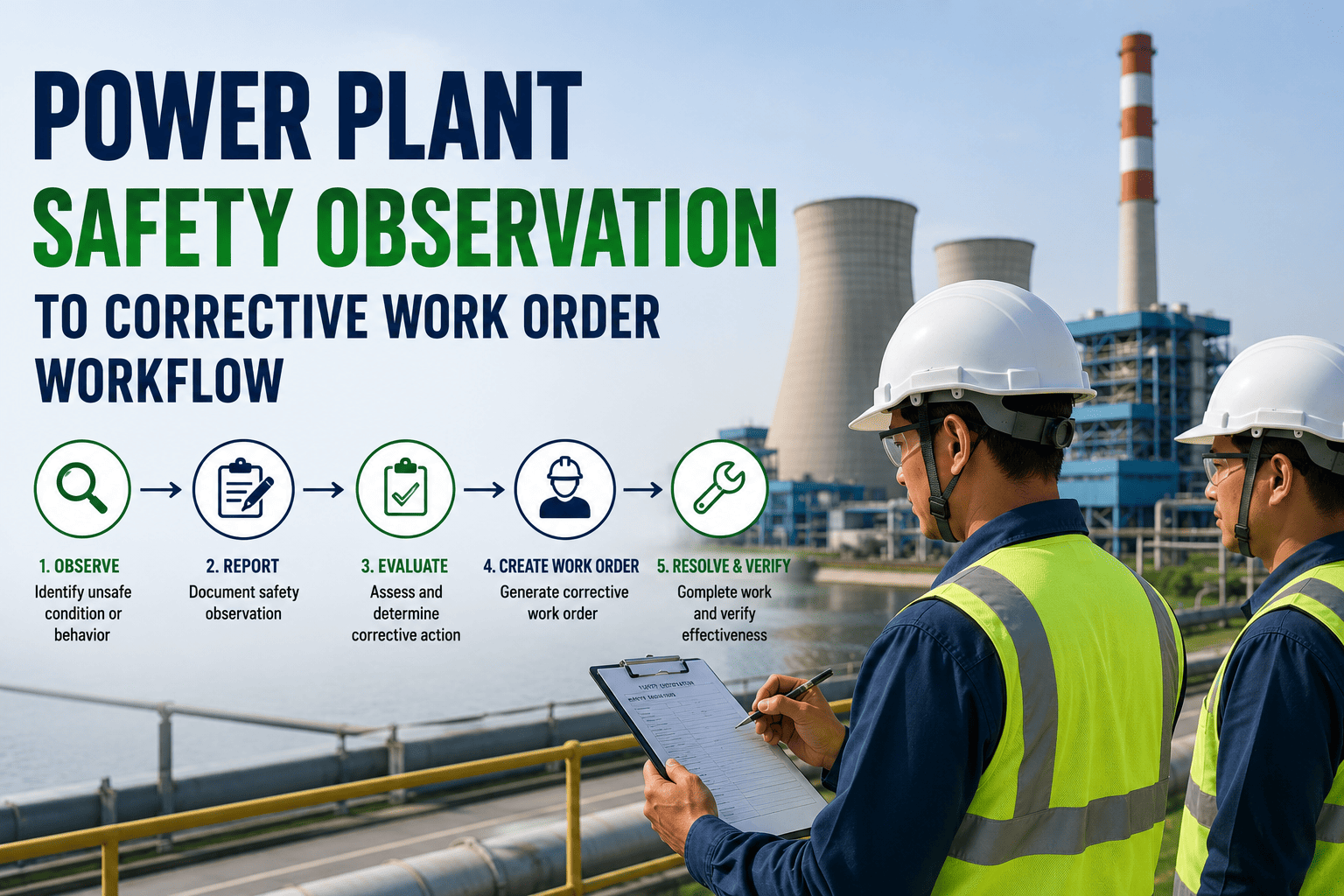
Finding a defect starts the clock, it doesn't stop it. Compliance is in the trail from finding to verified fix — and an open defect with no owner or due date is exactly what an auditor looks for. This is the discipline that closes the loop.
1
Log the Defect
Recorded against the boiler with location and detail.
→
2
Rank Severity
Safety-critical defects jump ahead of cosmetic ones.
→
3
Raise Corrective Action
A work order with an owner and a due date.
→
4
Verify & Close
The fix confirmed and the record closed.
→
5
Keep the Record
The closed trail retained for the audit.
Findings That Fail a Boiler Audit
Compliance problems come up in predictable ways — each one a place the paper and the practice didn't match.
×
Lapsed Certificate
The inspection due date passed and the certificate expired — the boiler is no longer legal to run.
×
Open Defects
Findings from a prior inspection with no corrective action and no closure.
×
Untested Safety Devices
A low-water cutoff or relief valve with no record it was tested.
×
Missing Records
Inspection or maintenance history that can't be produced on request.
×
Deferred PM
Preventive tasks skipped under production pressure until they became defects.
×
No Owner on Actions
Corrective actions logged but unassigned, so nothing moves to closure.
How OXMAINT AI Keeps Boilers Compliant
OXMAINT AI is the AI-powered maintenance management software that holds the whole boiler compliance program — the inspection calendar, the certificate due dates, the defect-to-corrective-action trail and the audit-ready records on one platform. Put your boilers on it when you start free and schedule boiler inspections in OXMAINT AI.
Inspection Calendar
Internal, external and certificate inspections scheduled to their due dates, with reminders before they lapse.
Certificate Tracking
Each boiler's certificate and expiry on file, so a renewal is never missed.
Defect → Corrective Action
Every finding raised as a work order with an owner, a due date and a closure check.
Safety-Device PMs
Low-water cutoff, relief-valve and control tests scheduled and recorded as proof.
Audit-Ready Records
Dated inspection, test and corrective-action records retrievable the moment they're asked for.
Compliance Dashboard
Which boilers are certified, which have open defects and which are coming due, at a glance.
A Defect Found Is Only Half the Job.
The inspection finds it; the corrective action fixes it; the record proves it. Miss any of the three and the boiler is non-compliant even if the metal is sound. OXMAINT AI keeps the inspection on schedule and every finding tracked to a closed, documented fix.
EXPERT REVIEW
Written for power-plant, facilities and industrial maintenance teams. Boiler inspection is governed by law and code — the ASME Boiler and Pressure Vessel Code, the National Board Inspection Code (NBIC), and state or provincial boiler regulations — and the statutory inspection that renews a certificate must be performed by a commissioned or authorised inspector, often through the jurisdiction or the insurer. The inspection types, frequencies and items here are a general framework; the exact requirements depend on the boiler class, its jurisdiction and its insurer, and those govern. Safety-device testing and internal inspection involve stored energy and confined-space entry and are done under the appropriate safety procedures by qualified personnel. OXMAINT AI is a maintenance management platform that schedules inspections, tracks certificates and corrective actions, and holds the records — it is not a substitute for the jurisdictional inspection, the inspector, or the governing code.
Frequently Asked Questions
How often does a boiler need to be inspected?
It depends on the boiler class and the jurisdiction — power boilers are commonly inspected internally and externally on a regular statutory cycle, while lower-risk heating boilers may be less frequent. The certificate inspection that keeps the boiler legal to operate is on its own schedule. The exact frequencies are set by your jurisdiction and insurer, so confirm them per boiler.
Start free and calendar your boiler inspections in OXMAINT AI.
What is the difference between an internal and external boiler inspection?
An external inspection is done while the boiler is operating — checking controls, safety valves, gauges and general condition in service. An internal inspection requires shutting the boiler down, opening it and examining the pressure parts, waterside and fireside from inside. The internal is the deeper examination and is done on a longer cadence than the external.
Why are the low-water cutoff and relief valve so important?
Because they're the last line of defence against a catastrophic failure. The low-water cutoff shuts the burner before the water level drops dangerously low; the relief valve releases pressure before it exceeds safe limits. A boiler running with either one defeated or untested is an acute hazard, which is why they're verified at every inspection and never skipped.
What happens to defects found during an inspection?
Each defect should be logged, ranked by severity, assigned a corrective action with an owner and a due date, fixed, and the fix verified and recorded. An inspection isn't truly complete until its findings are tracked to closure — an open defect from a previous inspection with no corrective action is a common and serious audit finding.
Who can perform a boiler compliance inspection?
The statutory inspection that renews the certificate must be carried out by a commissioned or authorised inspector — typically through the jurisdiction or an authorised insurance company, holding a National Board commission where applicable. In-house staff can run routine checks and preventive maintenance, but the certificate inspection itself requires the authorised inspector.
Book a demo of inspection recordkeeping in OXMAINT AI.
Keep the Boiler Certified and the Findings Closed.
Run boiler compliance on OXMAINT AI: internal, external and certificate inspections scheduled to their due dates, safety-device tests recorded, every defect tracked to a closed corrective action, and the records audit-ready — so the certificate stays valid and no finding is left open.