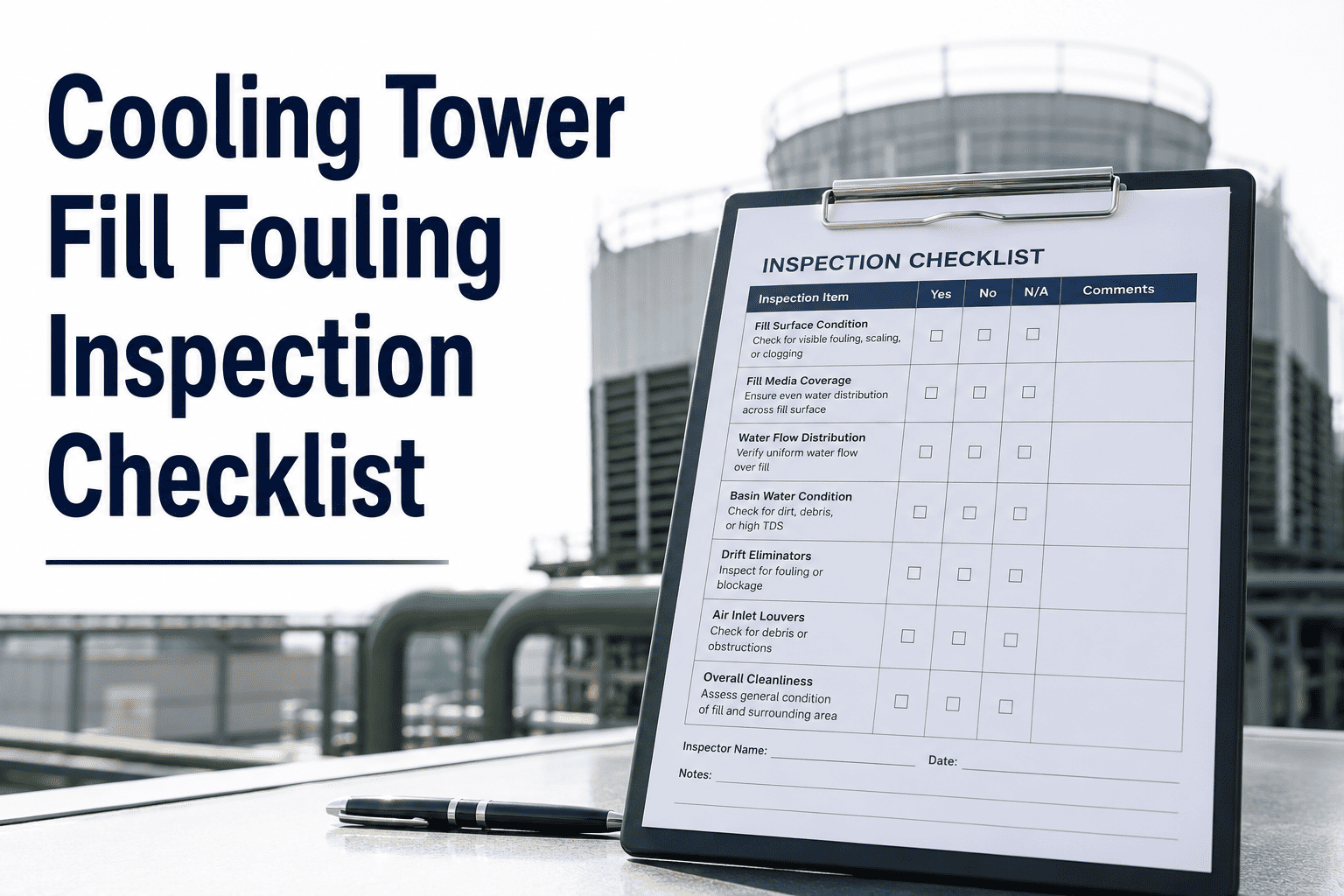
Condenser vacuum loss is one of the fastest ways to lose megawatts — and one of the hardest faults to isolate under pressure. In a steam power plant, back pressure rises, turbine efficiency collapses, and operators scramble through a half-dozen possible causes while generation targets slip. OxMaint gives maintenance and operations teams a structured digital checklist to work through every vacuum loss scenario systematically — logging findings, escalating work orders, and closing the loop before a derate becomes an unplanned shutdown.
CONDENSER MAINTENANCE · WORK ORDER MANAGEMENT
Vacuum Loss Is a Race Against Back Pressure
Every minute of elevated back pressure costs heat rate and capacity. OxMaint guides your team through air in-leakage, tube fouling, and cooling water checks — and converts findings into tracked work orders instantly.
1–3%
Turbine efficiency loss per inch of Hg back pressure increase
40%
of vacuum losses traced to air in-leakage at shaft seals and flanges
72 hrs
average delay when vacuum troubleshooting lacks a structured workflow
Why Vacuum Loss Is Hard to Diagnose Without a System
Condenser vacuum loss has overlapping root causes — air in-leakage, cooling water flow reduction, tube fouling, condenser hotwell level rise, and ejector or vacuum pump failure can all present with the same symptom: rising back pressure. Without a structured checklist, technicians often jump to the most familiar cause rather than the most likely one. OxMaint's digital checklist enforces sequence — so no check gets skipped under time pressure, and every finding is timestamped and attributed to a crew member.
AIR
Air In-Leakage
Non-condensable gases accumulate and displace steam. Common entry points: shaft seals, valve packing, expansion joints, and instrument connections.
Risk Level: HIGH
CW
Cooling Water Flow
Reduced CW flow from pump trips, valve throttling, or fouled screens reduces heat transfer capacity and raises condenser pressure directly.
Risk Level: HIGH
TF
Tube Fouling
Biofouling, scale, and debris reduce tube-side heat transfer. Gradual fouling often missed until vacuum has degraded measurably.
Risk Level: MEDIUM
VP
Vacuum Pump / Ejector
Steam jet ejector performance degraded by low motive steam pressure, worn nozzles, or intercondenser fouling. Vacuum pump failures are abrupt.
Risk Level: MEDIUM
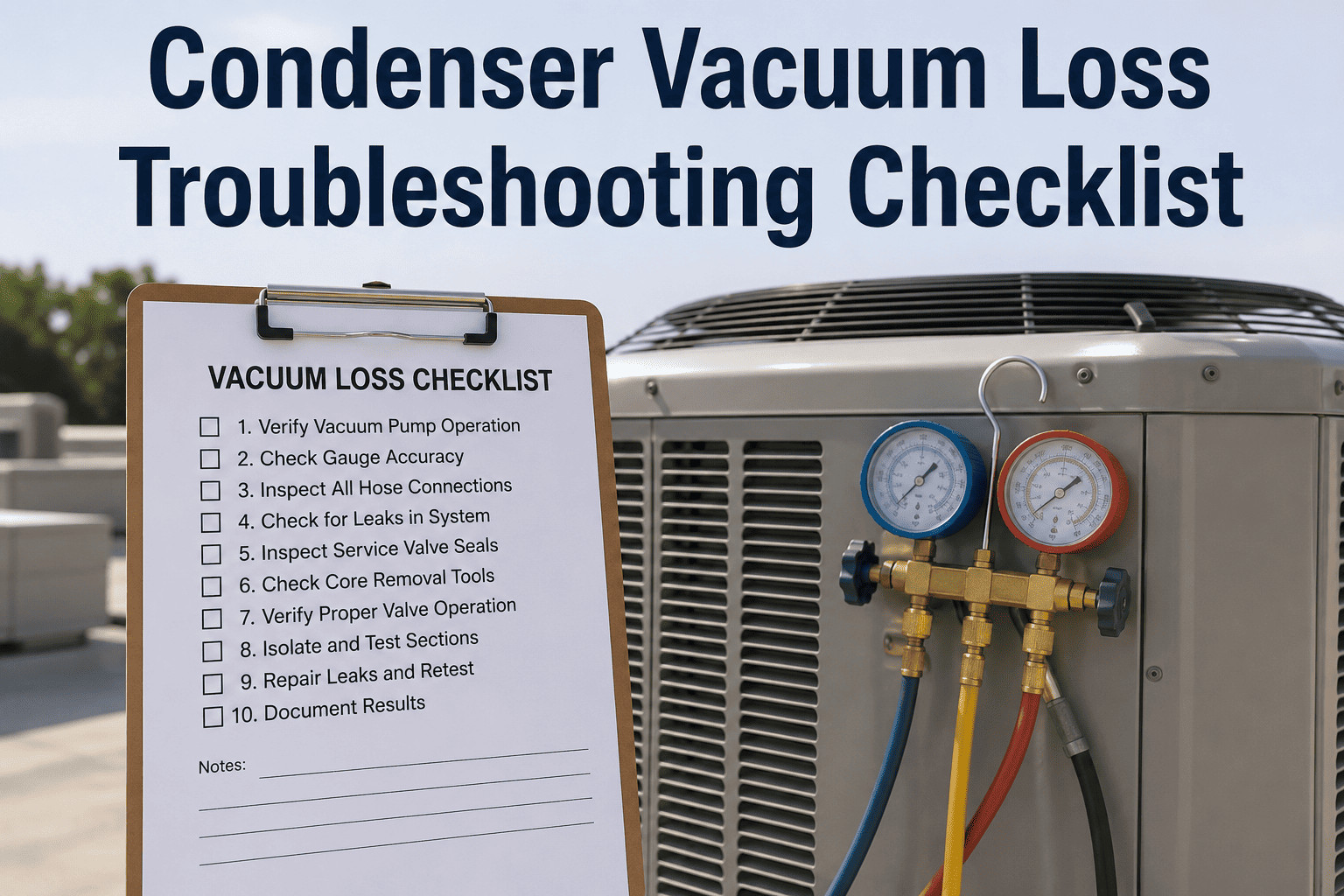
Condenser Vacuum Loss — Master Troubleshooting Checklist
This checklist follows the diagnostic sequence used by experienced plant engineers — moving from quick field checks to deeper system investigations. Each step in OxMaint captures the technician's name, timestamp, and supporting photos before the work order is closed.
PHASE 1 — IMMEDIATE RESPONSE (0–15 MIN)
Confirm vacuum reading on multiple gauges — rule out instrument fault
Cross-check CRT/DCS reading with local Bourdon gauge and redundant transmitter. A single instrument failure is the fastest resolution. Log all three readings in OxMaint with timestamps before proceeding.
OPS CHECK
Check cooling water pump status and CW flow rate on DCS
Verify all CW pumps are running at normal load. Check inlet flow transmitters and differential pressure across condenser. A pump trip or throttled valve produces immediate back pressure rise.
OPS CHECK
Check hotwell level — rising level indicates tube leak or drain valve issue
Elevated hotwell level reduces steam condensation space. If hotwell is rising unexpectedly, check tube leak indicators (conductivity in condensate) and log reading in OxMaint for trending.
OPS CHECK
Verify vacuum pump / steam jet ejector operation
Check vacuum pump amperage and suction pressure. For SJE systems, verify motive steam pressure and temperature at ejector inlet. Low motive steam is a frequent cause of gradual vacuum deterioration.
MAINT CHECK
PHASE 2 — AIR IN-LEAKAGE INSPECTION (15–60 MIN)
Perform ultrasonic leak detection on turbine LP exhaust area and LP shaft seals
LP turbine exhaust hood and shaft seals are the highest-probability air in-leakage points. Use ultrasonic detector systematically around all seal areas. Mark suspect locations with chalk and create a defect work order in OxMaint for each identified leak point.
MAINT CHECK
Inspect condenser shell, expansion joints, and manway gaskets
Walk the condenser shell exterior checking all penetration seals, expansion joint integrity, and manway cover gaskets. Photograph any visible corrosion, gap, or gasket deterioration and attach to the work order in OxMaint.
MAINT CHECK
Check all vacuum-side instrument and sample connections
Instrument impulse lines, transmitter body connections, and sample tubing on the vacuum side are common small-leak locations. Tighten and test each connection. Persistent leaks at instrument connections should be re-gasketed during the next outage.
MAINT CHECK
Measure non-condensable gas load at vacuum pump / ejector outlet
High gas flow at the vacuum pump outlet confirms significant air in-leakage is present. Compare measured flow against design NCG load. More than 2x design load warrants an accelerated leak hunt and load reduction consideration.
MAINT CHECK
PHASE 3 — TUBE FOULING AND CW SYSTEM (1–4 HRS)
Calculate terminal temperature difference (TTD) — compare to design baseline
TTD = saturation temperature at condenser pressure minus CW outlet temperature. Rising TTD over trend baseline is the primary fouling indicator. Log current TTD in OxMaint against the historical trend for this condenser to quantify fouling severity.
ENG ANALYSIS
Inspect CW inlet screens and traveling screens for fouling or debris
Reduced CW flow from fouled intake screens produces back pressure rise that exactly mimics tube fouling. Check differential pressure across traveling screens and inspect visually if DP is elevated. Schedule screen cleaning work order in OxMaint if DP exceeds threshold.
MAINT CHECK
Verify Amertap / tube cleaning ball system operation if installed
Online tube cleaning systems can fail silently — check ball collector screen, pump operation, and ball count. A failed cleaning system produces progressive fouling over weeks. Log system status and last successful cleaning cycle date in OxMaint.
MAINT CHECK
PHASE 4 — WORK ORDER AND ESCALATION
Create corrective work orders for all identified defects in OxMaint
Each identified fault — air leak location, fouling finding, pump defect — becomes a separate tracked work order with priority classification, assigned technician, and target completion date. Nothing leaves the checklist without a work order.
CMMS ACTION
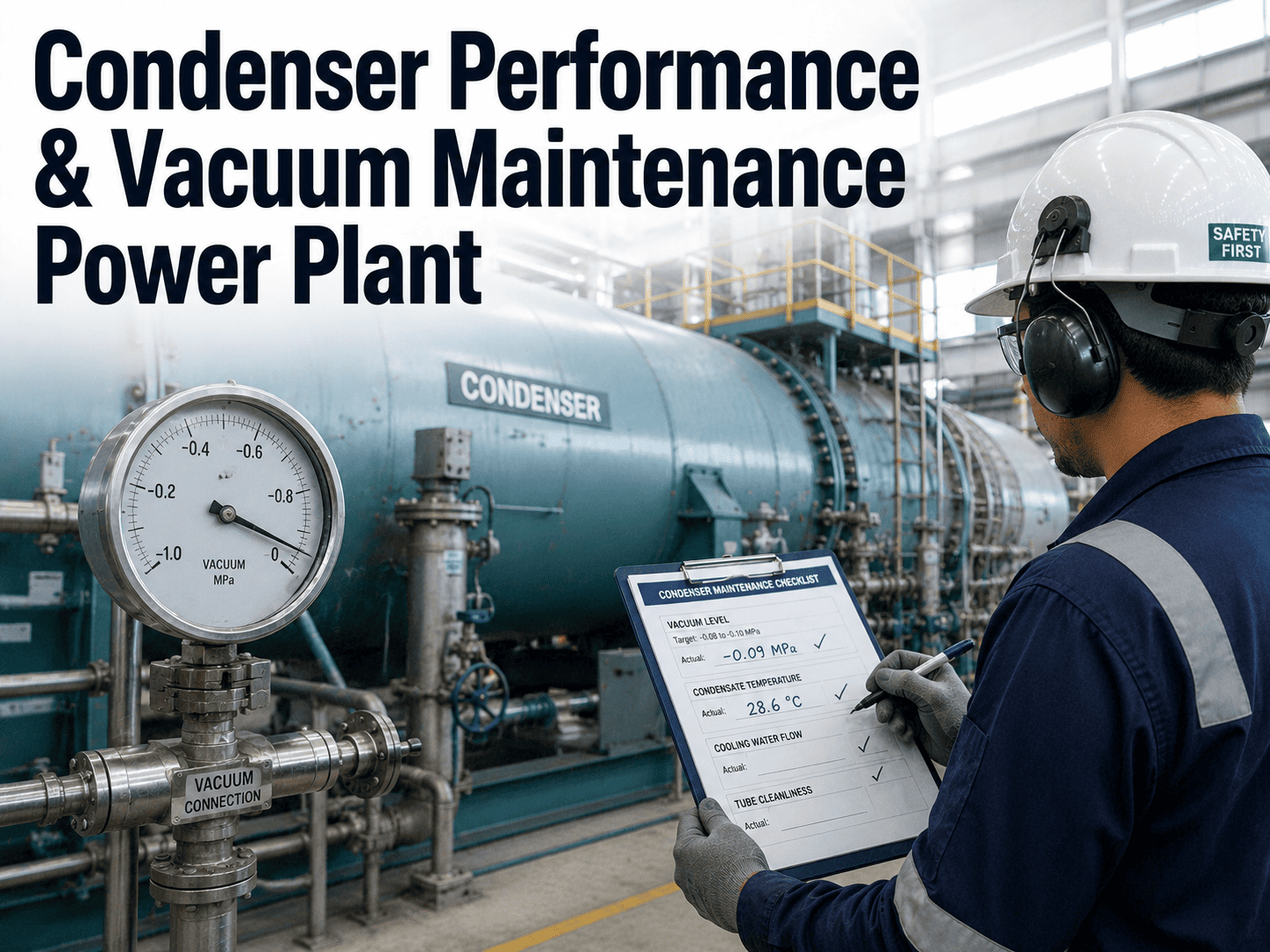
Log current vacuum performance data for trend analysis
Record back pressure, CW inlet/outlet temperatures, TTD, and NCG load as a performance snapshot in OxMaint. This baseline is critical for confirming that corrective actions have restored design vacuum after repairs are completed.
CMMS ACTION
Vacuum Loss Cause — Quick Reference Table
| Root Cause |
Key Symptom |
Primary Check |
Work Order Type |
| Air in-leakage |
High NCG flow, vacuum pump overloaded |
Ultrasonic leak survey |
Corrective — seal repair |
| CW pump trip |
Sudden back pressure rise |
DCS pump status, flow rate |
Emergency — pump restart |
| Tube fouling |
Rising TTD, gradual vacuum decline |
TTD calculation vs. baseline |
Planned — tube cleaning outage |
| Fouled intake screens |
Reduced CW flow, elevated screen DP |
Screen DP, visual inspection |
Corrective — screen cleaning |
| SJE / vacuum pump fault |
Gradual vacuum loss, high NCG outlet |
Motive steam pressure, pump amps |
Corrective — ejector service |
PLANT ENGINEER INSIGHT
James Holloway, PE — Senior Turbine Engineer, 22 Years Combined Cycle Operations
The biggest mistake I see during vacuum loss events is crews going straight to the condenser and ignoring the vacuum system itself. Half the time the condenser is fine — the SJE has low motive steam or the vacuum pump seal is worn. A structured checklist that starts with the vacuum equipment, then moves to air in-leakage, and only then investigates the condenser saves hours of misdirected work. The other thing digital systems do that paper never could: you build a vacuum performance trend over months, and you catch gradual fouling three weeks before it becomes a capacity problem.
How OxMaint Supports Condenser Troubleshooting
01
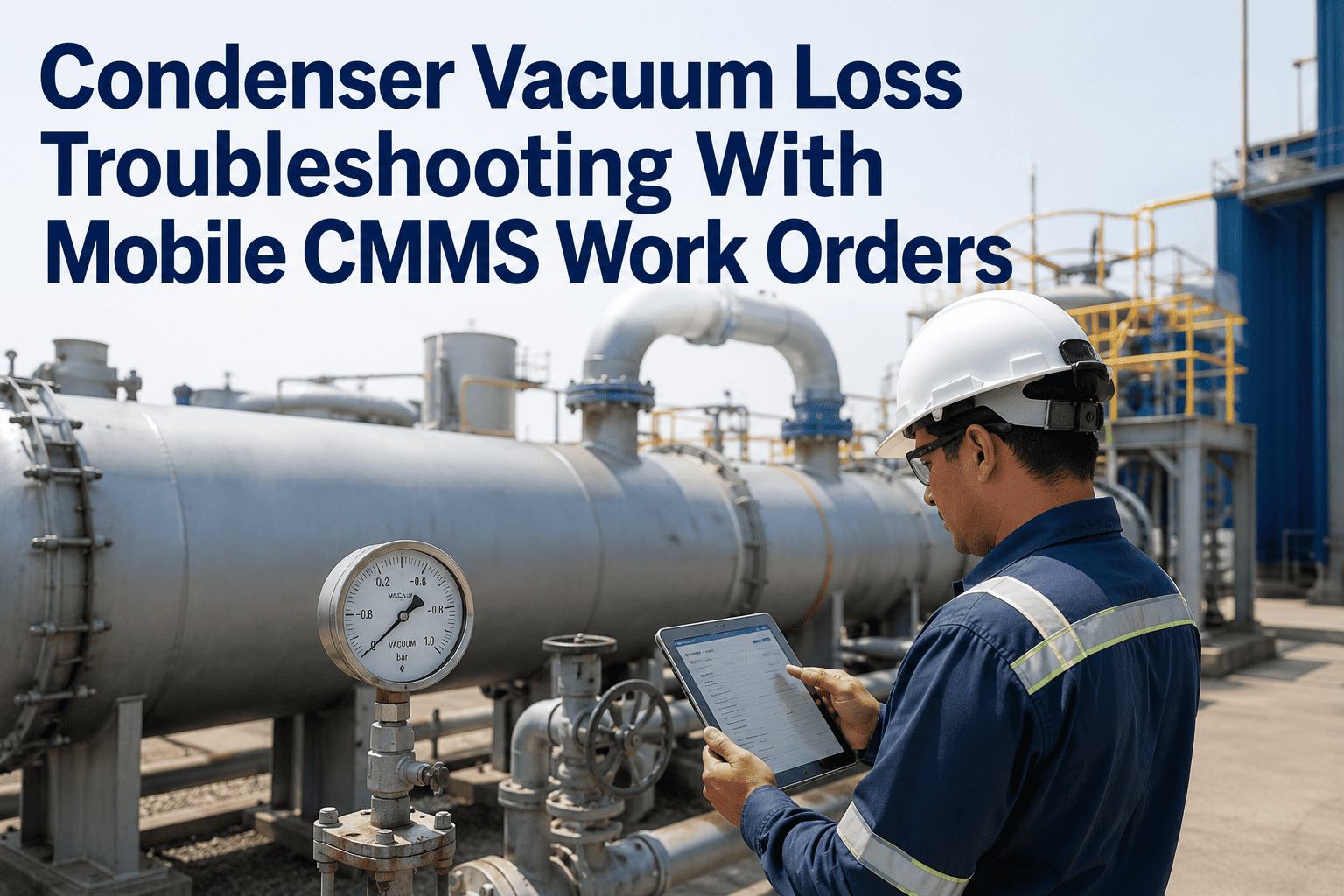
Guided Mobile Checklist
Technicians work through each phase in sequence on a mobile device — capturing readings, photos, and notes at each step without returning to a paper log.
02
Instant Work Order Generation
Any flagged finding — air leak location, fouled screen, pump fault — converts to a tracked corrective work order with one tap, assigned and prioritized automatically.
03
Vacuum Performance Trending
TTD, back pressure, and NCG load data logged after each event builds a performance trend that flags deterioration weeks before it impacts generation.
04
Outage Planning Integration
Defects that cannot be corrected online — tube bundle cleaning, major seal repairs — are queued in the outage scope automatically from the corrective work order.
STOP LOSING MEGAWATTS TO UNSTRUCTURED TROUBLESHOOTING
Give Your Team a Smarter Vacuum Loss Response
OxMaint digitizes your condenser troubleshooting checklist, tracks every finding as a work order, and builds the performance trend data you need to predict the next event before it happens.
Frequently Asked Questions
Can OxMaint track vacuum performance trends over time, not just individual events?
Yes. Every vacuum loss event logged through OxMaint captures back pressure, TTD, and NCG load readings as structured data points attached to the condenser asset record. Your engineering team can view the full performance trend over months or years, which is essential for identifying gradual fouling and planning tube cleaning outages before capacity is impacted.
Sign up free to see asset trending in action.
How does OxMaint handle corrective work orders generated during a live vacuum loss event?
When a technician flags a defect during the checklist — an air leak point, a fouled screen, a pump fault — OxMaint creates a corrective work order instantly, routes it to the appropriate team based on trade and priority, and notifies the supervisor. The troubleshooting checklist and the corrective work orders are linked, so the full diagnostic history is preserved in one place.
Book a demo to see the workflow.
Does OxMaint support condenser tube cleaning outage planning?
Yes. When a condenser tube cleaning scope is identified through the troubleshooting checklist, OxMaint queues it as a planned work order in the outage scope. The system tracks tube cleaning history, last cleaning date, and TTD trend so your outage planning team has the data to justify and scope the cleaning work order.
Sign up free to configure your condenser asset.
What data should we record after a vacuum loss event is resolved?
After resolution, record the final back pressure, TTD, CW flow, and NCG load as the post-repair baseline in OxMaint. Document the root cause, corrective action taken, and technician sign-off. This data becomes the benchmark for the next performance review and provides evidence of corrective action for O&M compliance reporting.
Can the vacuum loss checklist be customized for our specific condenser type?
Yes. OxMaint allows maintenance engineers to configure checklist steps, acceptance criteria, and escalation rules specific to each condenser asset — single-pass or two-pass, surface or air-cooled, SJE or vacuum pump equipped.
Book a demo to review the configuration options for your plant.