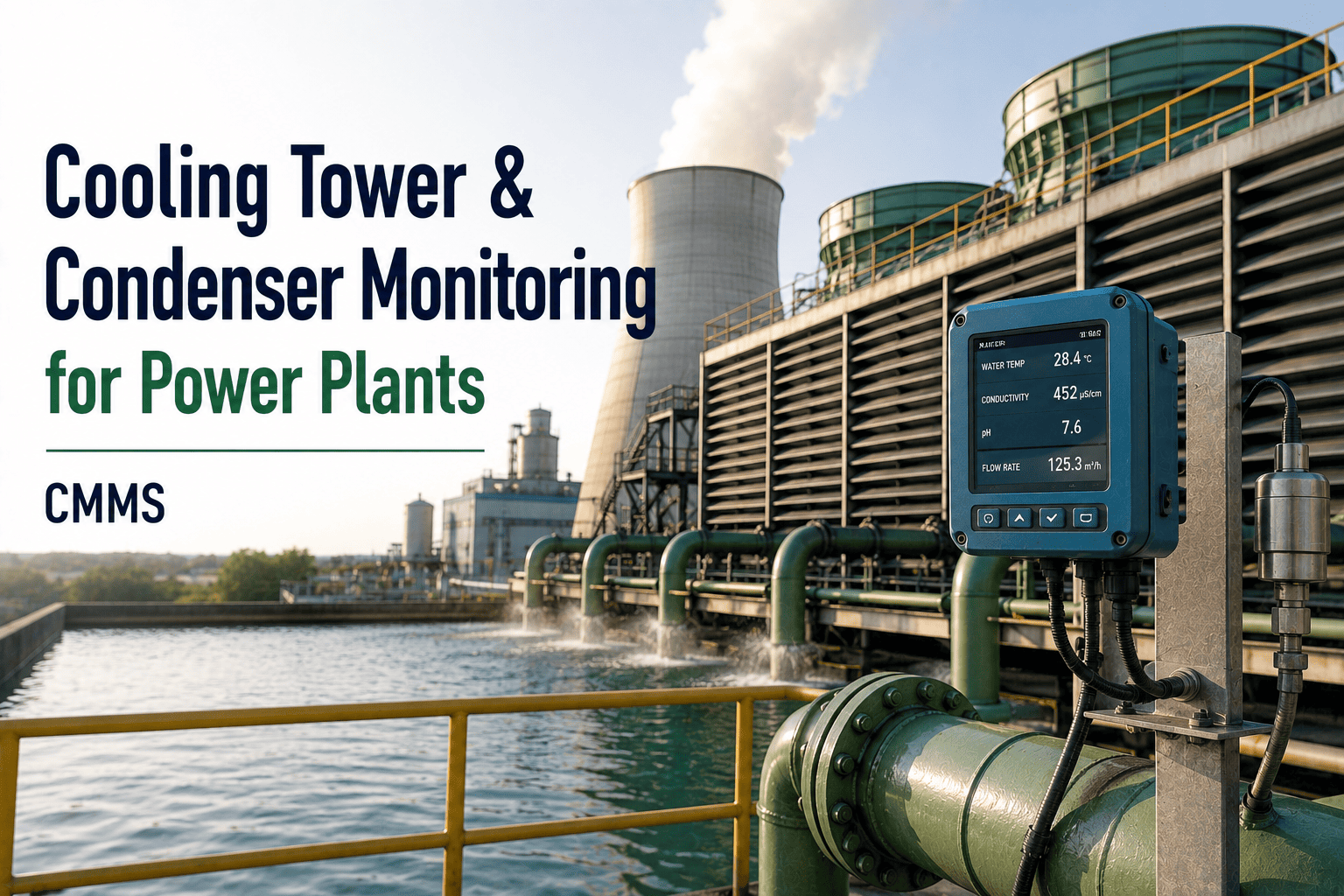
Cooling tower fill media is the silent performance engine of every industrial cooling system — and when it fouls, your entire plant pays the price. Scale deposits, biological slime, and sediment buildup inside the fill pack can cut heat transfer efficiency by 30–50%, spike energy costs, and create the warm, stagnant harborage conditions that enable Legionella biofilm to establish. Because fouling develops gradually and out of sight, most facilities discover the problem through rising condenser pressure or a regulatory audit rather than a routine inspection. A structured fill fouling inspection checklist gives maintenance teams a repeatable method to catch scaling, biological growth, and structural collapse before they escalate into unplanned shutdowns or public health incidents. OxMaint CMMS automates inspection scheduling, captures water chemistry readings with trend analysis, and stores compliance records that satisfy both ASHRAE 188 water management requirements and insurance auditors — get started at app.oxmaint.ai.
Cooling Systems · Water Quality · Plant Reliability
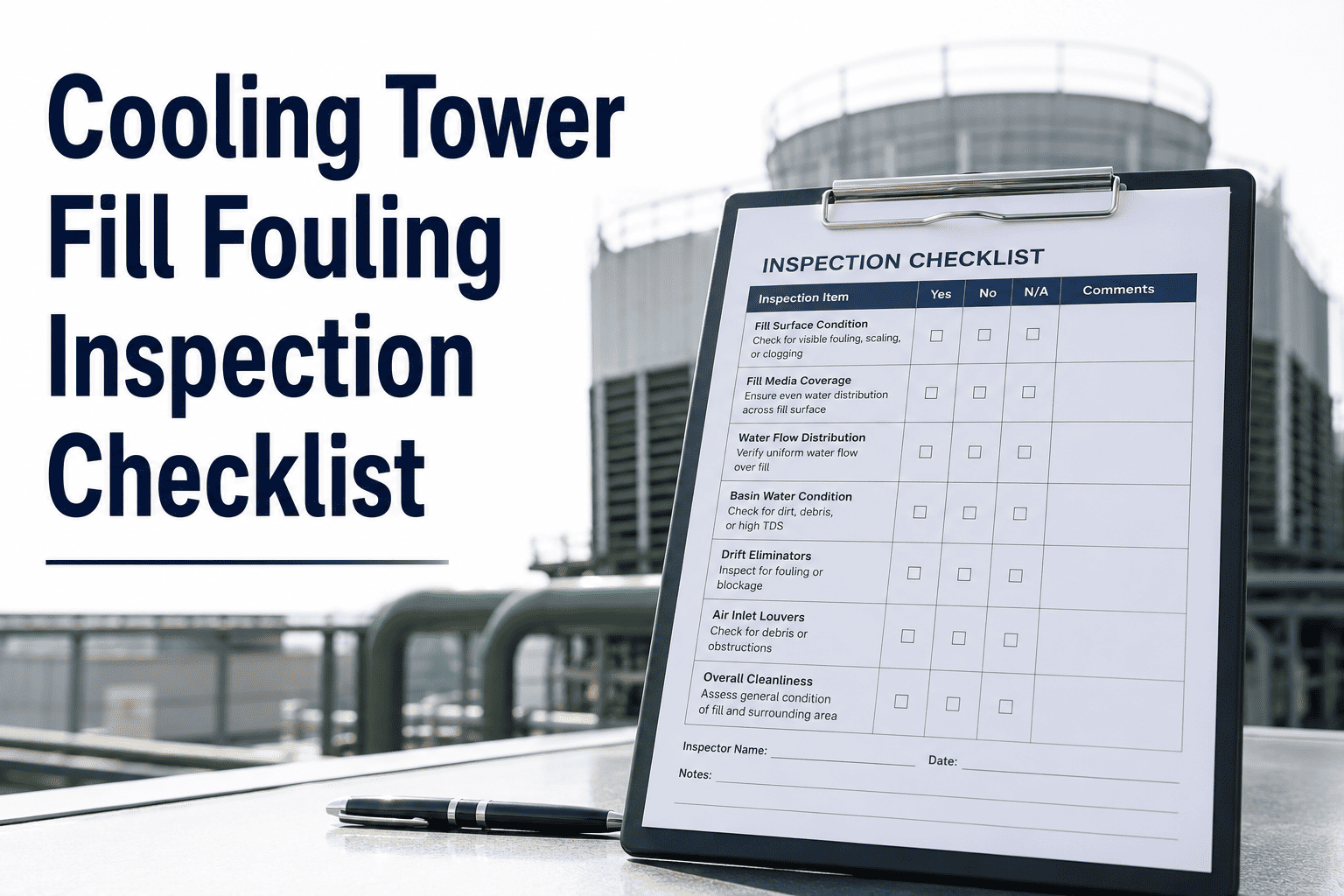
Cooling Tower Fill Fouling Inspection Checklist
Visual checks, thermal trends, water quality data, and cleaning tasks to protect heat transfer efficiency and prevent Legionella risk in industrial cooling towers.
30–50%
Heat transfer loss from heavy fill fouling
ASHRAE 188
Water management plan standard for Legionella control
Monthly
Minimum fill inspection frequency recommended by CTI
2–5×
Energy cost increase from severely fouled fill packs
Why Fill Fouling Destroys Cooling Performance
The Hidden Cost of a Fouled Fill Pack
Cooling tower fill media — whether PVC film fill or splash fill — provides the massive surface area needed for water-to-air heat transfer. When deposits coat that surface, every downstream system pays: chillers run hotter, compressors consume more power, and condenser pressure climbs. The three fouling mechanisms that maintenance teams must track are:
01
Scale Deposition
Calcium carbonate and silica scale builds up when cycles of concentration exceed water treatment targets. Scale reduces water flow channels, restricts airflow, and acts as thermal insulation that blocks heat exchange. Langelier Saturation Index above +0.5 indicates active scaling risk.
02
Biological Slime
Bacterial biofilm coats fill flutes with a gelatinous layer that dramatically reduces heat transfer and shelters Legionella from biocide contact. Biofilm slime can collapse PVC fill under its own weight in severe infestations, requiring complete fill replacement.
03
Particulate Plugging
Airborne dust, process contaminants, and silt entering through air intakes collect in the fill media and basin. Particulates increase pressure drop across the fill pack, starve lower sections of water flow, and create dry zones where chemical treatment cannot reach.
Monthly Visual Inspection
Fill Pack and Basin Condition Checks
Monthly fill inspection is the foundation of cooling tower maintenance. These checks require access to the fill section with appropriate PPE and respiratory protection due to bioaerosol risk.
Fill Media Assessment
Access fill pack and inspect PVC or splash fill for scale deposits, biological slime coating, or physical collapse — fouled fill has a visibly slick or crusty appearance and restricted channel spacing
Frequency: Monthly · Record: Fill inspection log · PPE: Full respiratory protection, chemical-resistant gloves
Check fill pack for structural collapse or sagging sections — PVC film fill can deform under weight of scale or slime, collapsing channels and blocking water distribution
Frequency: Monthly · Record: Structural condition form · Technician: Cooling Tower Specialist
Inspect fill hold-down clips and support bars — loose or broken retention hardware allows fill sections to shift during operation, creating bypass channels that reduce thermal performance
Frequency: Monthly · Record: Hardware inspection log · Technician: Mechanical Maintenance
Document fouling severity using a 1–4 scale: 1 = clean, 2 = light scale or slime, 3 = moderate restriction, 4 = severe — record rating for each fill section to track progression between inspections
Frequency: Monthly · Record: Fouling severity log · Technician: Maintenance Supervisor
Water Basin Condition
Inspect cold water basin for sediment accumulation — silt and debris greater than 1 inch depth indicates inadequate blowdown or make-up water quality problems requiring immediate basin cleaning
Frequency: Monthly · Record: Basin inspection report · Technician: Water Treatment Specialist
Check basin water clarity — turbid, cloudy, or discolored water indicates suspended solids overload, biological bloom, or inadequate chemical treatment requiring immediate sampling and treatment adjustment
Frequency: Monthly · Record: Water quality log · Technician: Water Treatment Specialist
Inspect spray nozzles for scale blockage or cracking — clogged nozzles create uneven water distribution across fill media, producing dry zones that reduce thermal performance and support Legionella harborage
Frequency: Monthly · Record: Nozzle inspection log · Technician: Mechanical Technician
Quarterly Testing
Water Chemistry and Thermal Performance Verification
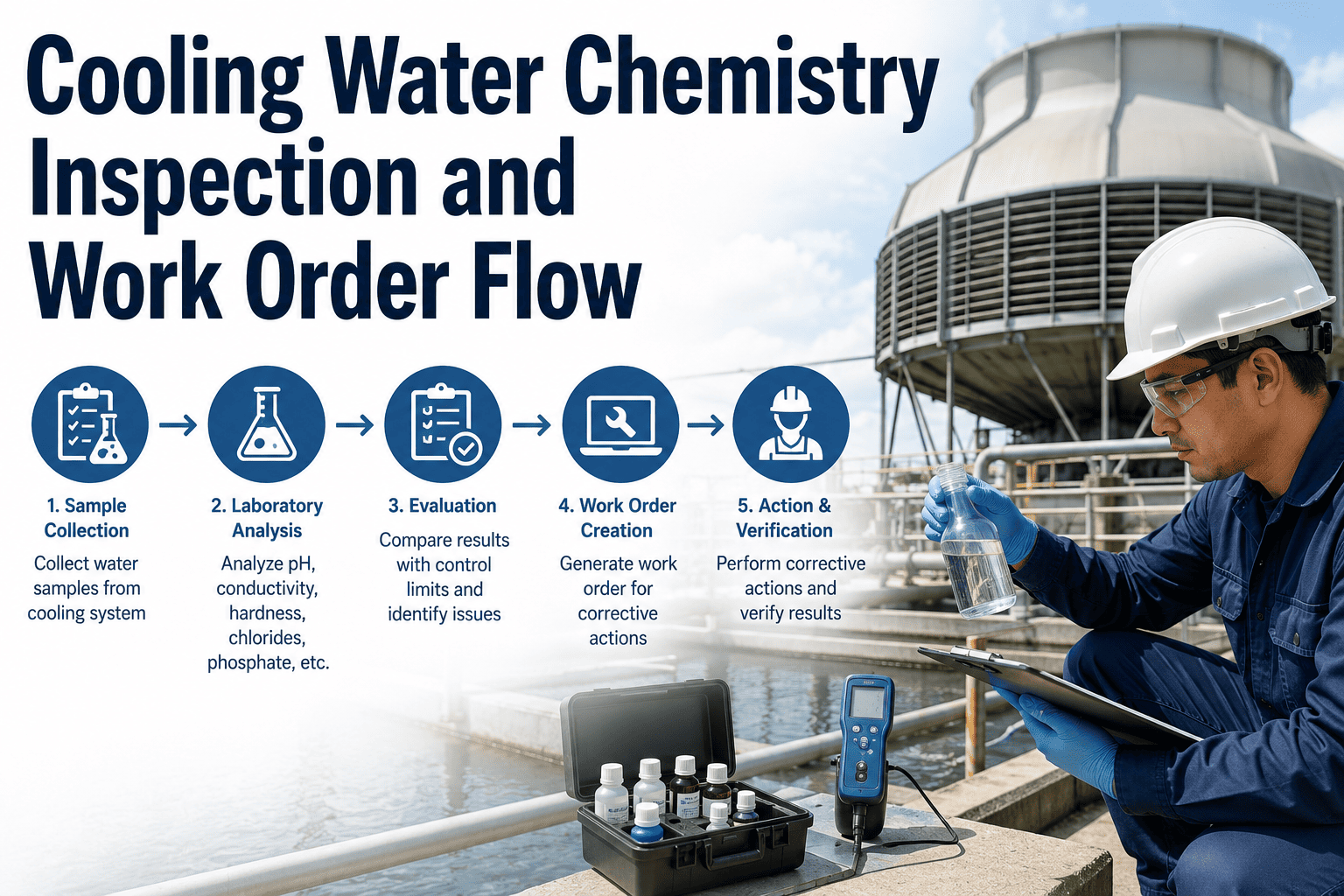
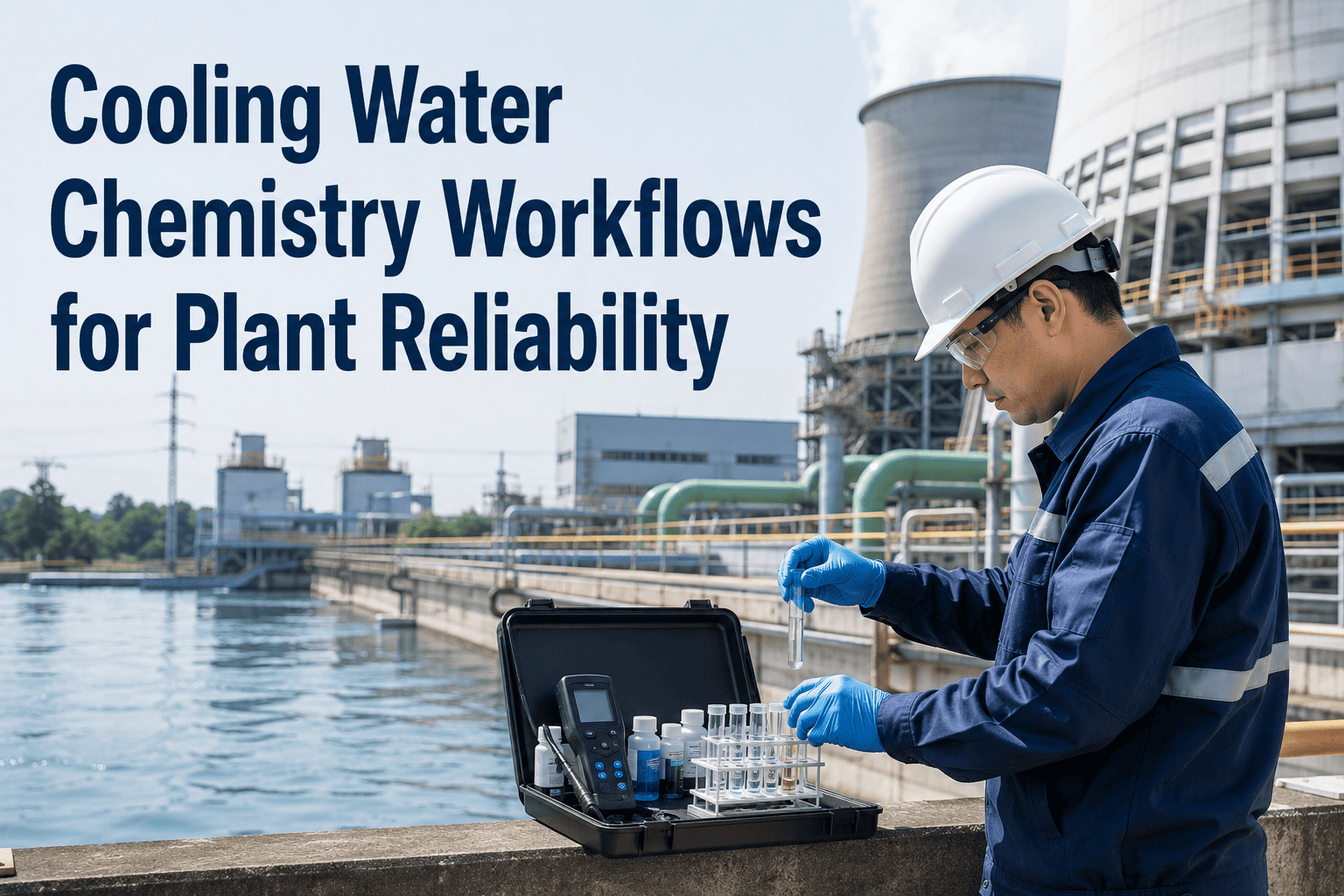
Quarterly water quality testing catches treatment program drift before fouling becomes visible. Tracking key chemistry parameters alongside approach temperature trends gives early warning of fill degradation.
Water Chemistry Parameters
Measure and record Langelier Saturation Index — LSI between -0.5 and +0.5 indicates balanced chemistry; above +0.5 indicates scaling tendency, below -0.5 indicates corrosive tendency
Frequency: Quarterly · Record: Chemistry trend log · Technician: Water Treatment Chemist
Verify cycles of concentration within water management plan target range — typically 3–6 cycles for municipal water sources; excessive COC indicates blowdown controller malfunction or conductivity probe fouling
Frequency: Quarterly · Record: COC monitoring log · Technician: Water Treatment Specialist
ATP bioluminescence or dip-slide bacterial culture testing — ATP readings above 1,000 RLU or dip-slide counts above action thresholds require immediate biocide shock treatment and escalation
Frequency: Quarterly minimum · Record: Biological monitoring log · Technician: Water Management Professional
Thermal Performance Trending
Record cooling tower approach temperature — difference between cold water temperature and ambient wet bulb temperature; rising approach temperature at same load conditions is the clearest indicator of fill fouling impact
Frequency: Quarterly · Record: Performance trend log · Technician: Process Engineer
Measure pressure drop across fill pack using static pressure taps — increasing differential pressure compared to baseline indicates progressive fouling and restriction of air and water flow channels
Frequency: Quarterly · Record: Differential pressure log · Technician: Mechanical Engineer
Cleaning and Corrective Actions
Fill Cleaning Task Tracking
Cleaning tasks require documented work orders with before-and-after condition records to verify effectiveness and satisfy water management plan audit requirements.
| Fouling Type |
Cleaning Method |
Trigger Condition |
Frequency |
Documentation Required |
| Light scale deposits |
High-pressure water wash with scale dispersant |
Fouling score ≥ 2 or LSI above +0.5 |
Semi-annual |
Before/after photos, wash water disposal record |
| Heavy calcium carbonate scale |
Acid wash (citric or inhibited HCl) under controlled conditions |
Fill channel blockage visible, approach temp rising |
Annual or as triggered |
Chemical handling log, pH neutralization record |
| Biological slime |
Biocide shock treatment followed by high-pressure rinse |
ATP above action threshold or visible slime |
As triggered; immediate response required |
Biocide application log, post-treatment ATP result |
| Particulate plugging |
Basin cleaning, nozzle flushing, fill pack rinse |
Basin sediment depth exceeds 1 inch |
Quarterly or as triggered |
Debris removal record, disposal manifest |
| Collapsed fill sections |
Fill replacement — section or full pack |
Structural collapse, permanent deformation |
As required |
Replacement work order, fill media specification |
Industry Perspective
What Cooling Tower Specialists Say About Fill Fouling
"
We see fill packs that should have been replaced two years ago still in service because no one tracked approach temperature trends. By the time the chiller is complaining, the fill is so compromised that a cleaning won't recover performance — you're looking at a full replacement that could have been avoided with quarterly monitoring.
Senior Cooling Tower Engineer, Industrial HVAC Services
"
The Legionella risk from fouled fill media is underappreciated in manufacturing. Biofilm inside a collapsed fill section is essentially invisible to biocide contact — you're treating the water while the bacteria colony sits protected in the sediment. That's why physical inspection and cleaning documentation matter as much as chemistry logs.
Water Management Professional, Pharmaceutical Manufacturing
"
We installed digital checklist tracking for our three cooling towers and within six months identified that one unit's fill was showing a fouling pattern three months ahead of the others — same water, same chemistry. Turned out a nozzle was partially blocked creating a dry zone. One work order prevented a $40,000 fill replacement.
Facilities Reliability Manager, Chemical Processing Plant
Common Questions
Fill Fouling Inspection FAQs
How do I know if cooling tower fill needs to be replaced vs. cleaned?
Replacement is required when fill shows structural collapse, permanent deformation, or UV degradation that a pressure wash cannot correct. If a high-pressure wash and chemical treatment restore approach temperature within 5% of baseline, cleaning was sufficient. Track approach temperature before and after each cleaning to build this decision framework.
OxMaint stores this trend data automatically.
What water chemistry parameters most directly cause fill fouling?
High Langelier Saturation Index (above +0.5) drives calcium carbonate scale. Elevated silica above 150 ppm creates silica scale that is extremely difficult to remove. Inadequate biocide dosing allows biological fouling. Suspended solids above 100 mg/L cause particulate plugging. All four must be monitored together — treating one in isolation often worsens another.
How often should fill fouling inspections be performed?
Monthly visual inspections are the industry minimum per CTI and ASHRAE 188 water management plan requirements. Towers in high-dust industrial environments, high-hardness water areas, or with elevated biological risk (warm climates) benefit from bi-weekly visual checks and quarterly physical fill access inspections.
What PPE is required for fill pack inspection?
Full face respirator with P100 and OV cartridges is required due to Legionella aerosol risk. Chemical-resistant gloves, safety glasses, and waterproof boots are mandatory. ASHRAE 188 recommends treating all cooling tower maintenance as a Legionella exposure task requiring respiratory protection until biological risk is confirmed controlled.
Can a CMMS help manage cooling tower fill fouling inspections?
Yes — digital platforms like
OxMaint automate monthly inspection scheduling, capture fouling severity ratings with photo attachments, trend water chemistry parameters against approach temperature, and generate ASHRAE 188 compliance reports automatically. This eliminates paper logs that routinely get lost during regulatory audits.
Stop Fouling Before It Stops Your Plant
OxMaint automates cooling tower fill inspection scheduling, tracks fouling severity trends, and maintains ASHRAE 188-ready compliance records — all accessible on mobile from the tower itself.