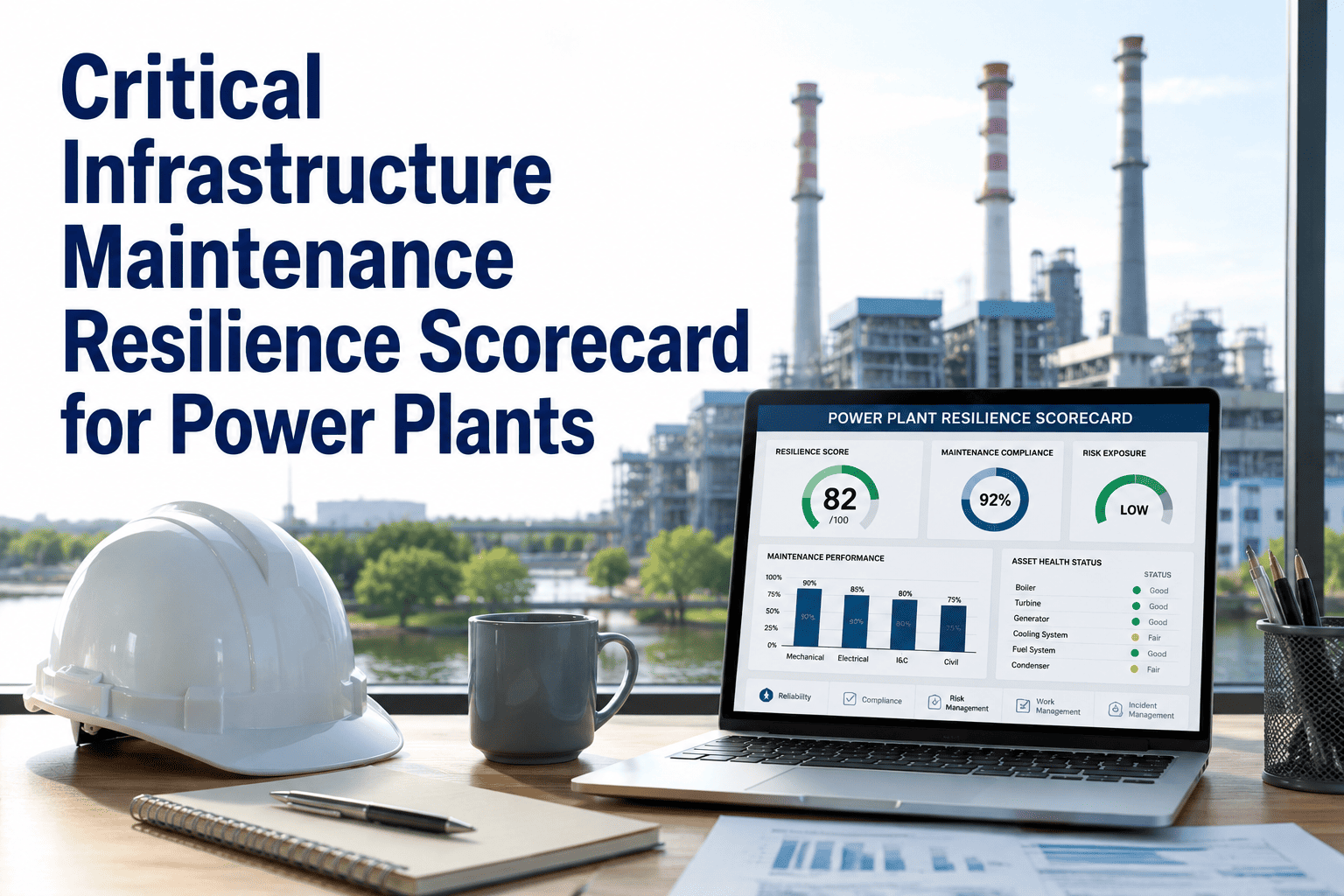
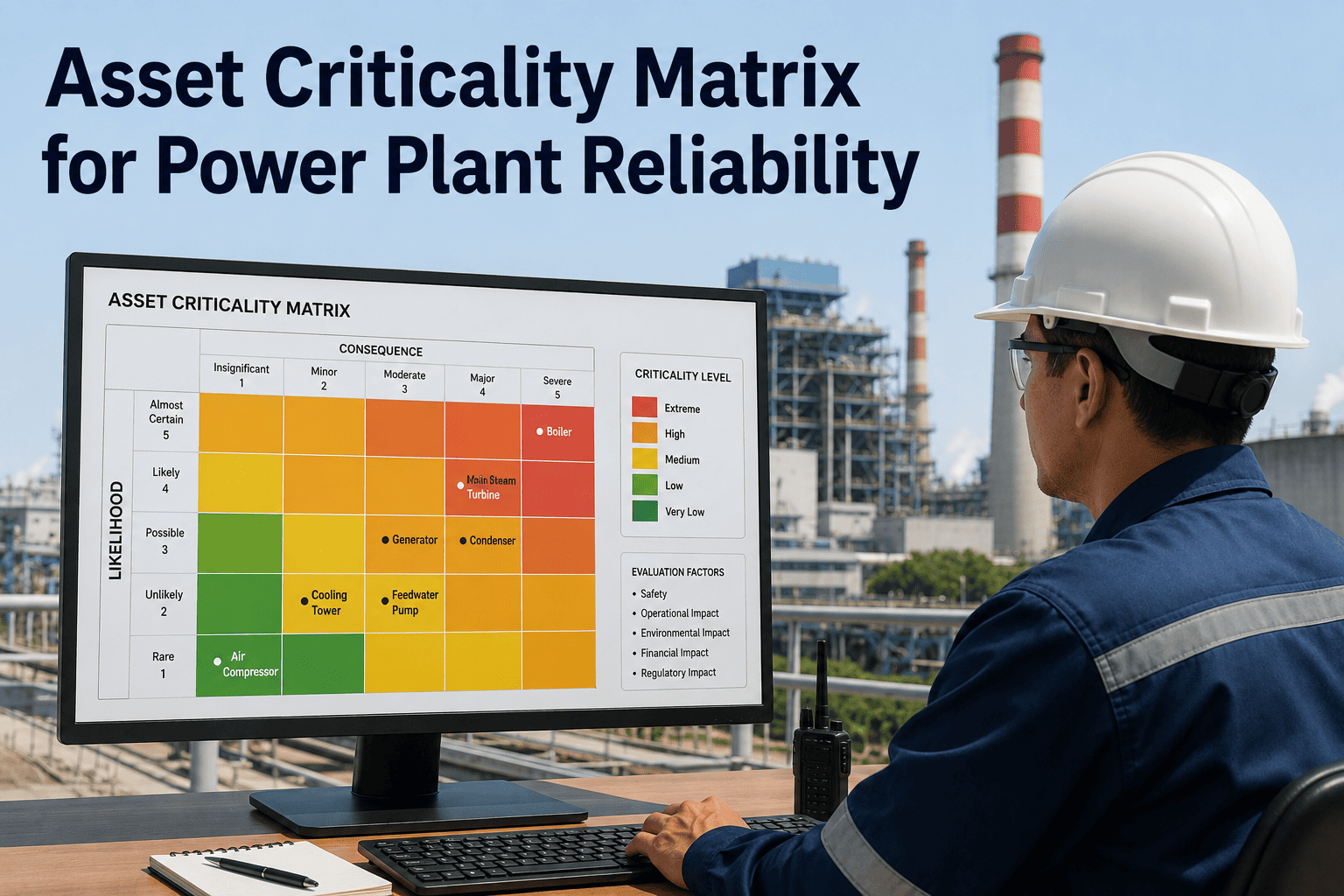
A bearing failure on one unscored, under-monitored asset can force an entire generating unit offline — and most plants only discover which assets carried that kind of risk after the failure already happened. OxMaint's CMMS turns asset criticality, monitoring coverage, and maintenance history into a single resilience score for every critical asset in the plant, ranked and visible before the next failure decides the priority for you. Book a 30-minute demo to see your own asset resilience profile, or start free and run your first scorecard this week.
ANALYTICS & REPORTING · RESILIENCE PLANNING
Know Which Assets Can Take Down the Plant Before One Does
OxMaint's resilience scorecard combines failure consequence, redundancy, and monitoring coverage into one ranked view — so capital and crew hours go to the assets that actually carry the risk, not the ones that complained loudest last quarter.
20%
of assets typically drive 80% of unplanned downtime cost
47%
reduction in unplanned downtime within 12 months of formal criticality scoring
2–4 hrs
to score a 200-asset plant using a structured criticality template
WHY EQUAL ATTENTION IS THE PROBLEM
Treating Every Asset the Same Is How Resilience Quietly Erodes
Most maintenance programs allocate attention by squeaky wheel — whoever logged the last breakdown gets the next PM slot, regardless of what that asset's failure would actually cost. A primary boiler feed pump and a breakroom HVAC unit end up competing for the same technician hours on the same 30-day cycle, simply because nobody scored the consequence of each one failing.
Resilience planning starts by reversing that. Every asset gets scored against failure consequence, redundancy, and detectability — not age or complaint volume — and the resulting tier determines how much monitoring, spares stock, and response priority it earns. Single-point-of-failure assets with no redundancy plan get the dedicated attention; standard equipment with a backup unit doesn't compete for the same resources.
THE RESILIENCE TIER STRUCTURE
Four Tiers, Scored by Consequence — Not Equipment Type
TIER 1
Critical
Single-point failure causes full production loss, safety incident, or regulatory breach. Requires condition-based monitoring, a documented redundancy plan, and dedicated PM scheduling.
Main turbines · primary boiler feed pumps · protection relays
TIER 2
Important
Failure causes partial output loss or elevated safety risk, but the plant continues operating in a degraded state while repairs proceed.
Auxiliary pumps · induced draft fans · transfer valves
TIER 3
Standard
Failure is inconvenient but does not threaten production, safety, or compliance. Standard calendar-based PM is sufficient.
Conveyors · standard lighting circuits · non-critical instrumentation
TIER 4
Minor
Negligible operational impact. Run-to-failure is often the most cost-effective strategy for this tier.
Breakroom HVAC · general facility fixtures
See Where Your Assets Actually Fall on the Resilience Tiers
OxMaint's criticality module guides each assessor through the scoring dimensions, aggregates the results automatically, and keeps a full audit trail of every tier change.
WHAT GOES INTO THE SCORE
Five Inputs That Determine an Asset's Resilience Score
| Scoring Input |
What It Measures |
Drives |
| Failure consequence |
Production loss, safety exposure, regulatory risk |
Base tier assignment |
| Redundancy |
Whether a backup asset can absorb the failure |
Monitoring priority within tier |
| Detectability |
How early a developing failure can be observed |
Condition monitoring investment |
| Repair lead time |
Time to source parts and restore the asset |
Critical spares stocking decision |
| Maintenance history |
Failure frequency and PM compliance trend |
Score review trigger |
FROM SCORE TO ACTION
A Tier 1 Score Should Change What Happens Next, Automatically
A resilience score that sits in a spreadsheet doesn't change anything. The value comes from connecting the tier directly to maintenance strategy — a Tier 1 asset should automatically receive tighter PM intervals, faster work order response targets, and a minimum spare parts stock level, without a planner having to remember to apply it manually every cycle.
1
Tier 1 assets receive condition-based monitoring and a documented redundancy or response plan
2
Critical spares are pre-positioned based on lead time, not OEM catalog defaults
3
Work order priority and crew dispatch follow tier automatically when multiple jobs compete
4
Capital replacement requests carry a quantified risk score instead of "it's old"
EXPERT REVIEW
Reliability & Resilience Planning Engineer
17 Years — Power Generation Asset Criticality and RCM Implementation
The plants that build real resilience aren't the ones with the most monitoring sensors — they're the ones that scored their assets honestly before deciding where those sensors go. I have walked into facilities where a single-point-of-failure transformer with a two-year lead time sat on the same inspection cycle as a parking lot light fixture, simply because nobody had ever ranked them against each other. Once you force every asset through the same consequence-based scoring, the priority list writes itself, and capital conversations stop being arguments about age and start being decisions backed by a number everyone can see.
FREQUENTLY ASKED
Resilience Scorecards — Common Questions
How long does it take to build a resilience scorecard for an existing plant?
A structured criticality scoring pass typically takes two to four hours for a 200-asset plant when using a guided template, with larger fleets scaling proportionally.
Book a demo to see the scoring workflow against your own asset register.
Do we need to score every asset in the plant at once?
No. The most effective starting point is the smaller set of assets responsible for most unplanned downtime cost — typically main turbines, boiler feed pumps, transformers, and protection systems. Scoring this group first, proving the approach, and expanding from there avoids the most common implementation failure: trying to analyze everything simultaneously.
How often should resilience scores be reviewed and updated?
Annually as a baseline, and immediately after any redundancy upgrade, process change, or significant failure event. An asset that gains a backup unit may move down a tier; one that takes on an expanded production role may move up.
Start free to see how tier changes are tracked with a full audit trail.
Can existing asset lists from spreadsheets or a legacy CMMS be imported and scored retroactively?
Yes. Existing asset registers can be imported and run through the same structured scoring process, so a plant doesn't need to start its asset hierarchy from scratch to benefit from criticality-based resilience planning.
OXMAINT · ANALYTICS & REPORTING
Rank Your Assets Before a Failure Ranks Them for You
Replace squeaky-wheel maintenance prioritization with a resilience scorecard that puts crew hours, spare parts, and capital dollars where the actual risk lives.