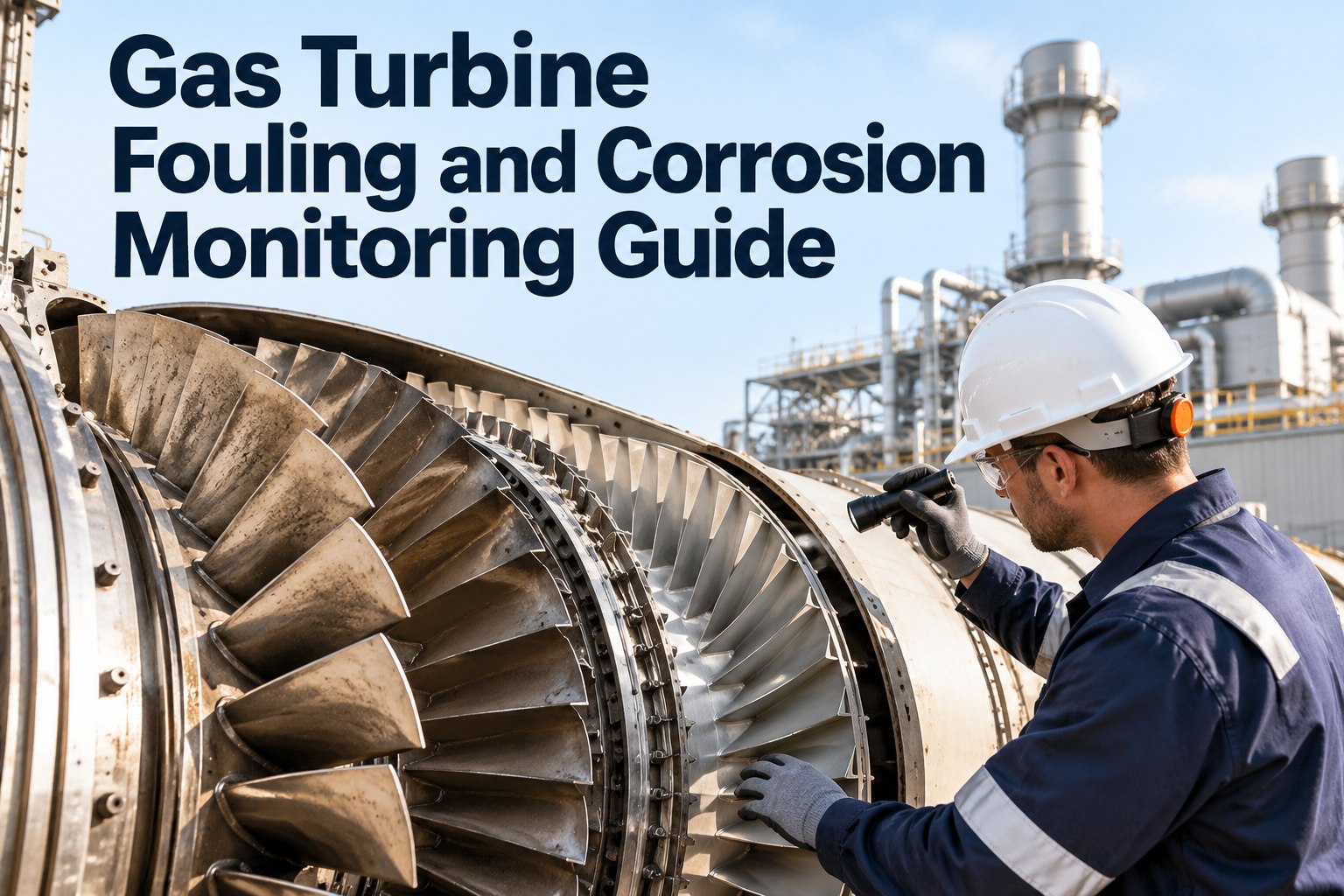
Gas Turbine Fouling and Corrosion Monitoring Guide
By Willam Jerry on October 13, 2026
Megawatts don't vanish overnight. A gas turbine loses output a little at a time as dirt coats the compressor and salt attacks the hot section. By the time someone notices on the dispatch report, the losses have been running for weeks. OXMAINT AI is the AI-powered maintenance management software that keeps your washes, inspections and performance readings on one timeline.
Power Generation · Gas Turbines · Performance & Corrosion
Gas Turbine Fouling and Corrosion Monitoring Guide
Fouling steals output from the front of the machine; corrosion eats the parts at the back. OXMAINT AI tracks the performance readings that reveal both, schedules online and offline washes, plans borescope inspections and turns every finding into a ranked work order.
CompressorFouling builds on front stages; corrosion when idle and wet
→
CombustorFuel contaminants enter the hot gas
→
Turbine BladesHot corrosion attacks airfoils and platforms
70–85%of gas turbine performance loss in operation comes from compressor fouling
2–20%output loss from fouling, from favorable to harsh sites
$0.5M–$5M+yearly cost of fouling, from a Frame 5 to a Frame 9FA
$14.7Bgas turbine MRO market in the power industry, 2024
Two Different Enemies, Two Different Watch Lists
Fouling and corrosion often get lumped together, but they behave very differently. Fouling is fast and mostly recoverable; corrosion is slow and permanent. OXMAINT AI tracks each with its own readings, schedule and findings. Start free and track both in OXMAINT AI.
WhereCompressor (idle, wet) and hot-section blades
SpeedMonths to years
EffectMetal loss, pitting, cracked coatings
RecoveryPermanent — repair or replace parts
WatchContaminant control and borescope
Reading the Signs of Compressor Fouling
Fouling shows up in performance data long before anyone sees dirt on a blade. Compare readings at corrected conditions — ambient temperature, pressure and humidity all move the numbers. OXMAINT AI logs each reading against the unit and flags the trend. Book a demo to see fouling trends in OXMAINT AI.
1
Compressor mass flowThe most sensitive early sign. Falls as blades foul.
2
Compressor discharge pressurePressure ratio slips at the same speed and ambient.
3
Compressor efficiencyDischarge runs hotter for the same pressure ratio.
4
Corrected outputActual megawatts fall below expected at the same conditions.
5
Heat rateMore fuel per megawatt-hour as efficiency falls.
Rule of thumb from one 7EA unit: about 2 psig of lost discharge pressure equals about 1 MW of lost output.
The Wash Sawtooth: How Washing Recovers Output
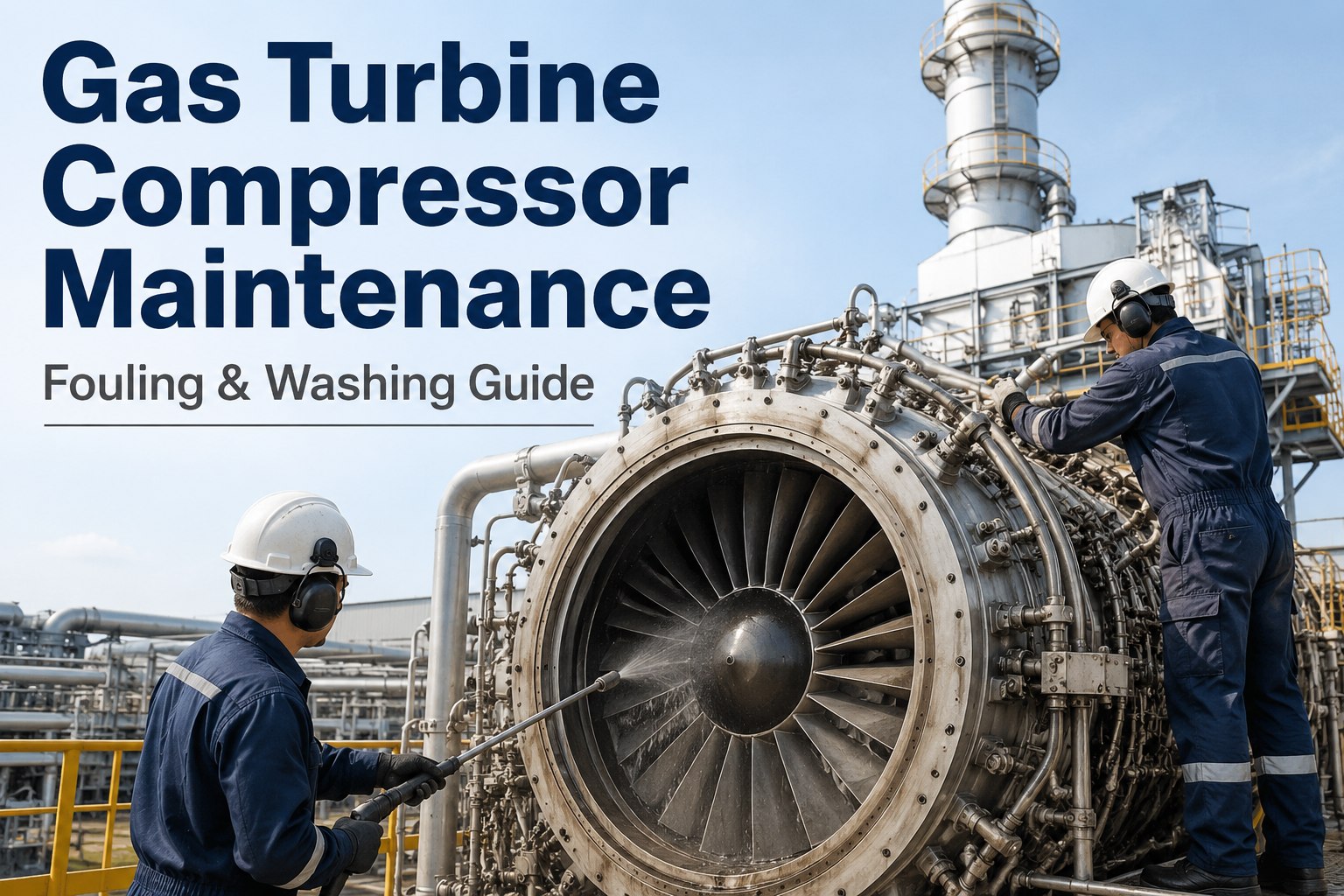
Frequent online washes slow the decline. Periodic offline washes reset the machine close to clean. What's left after an offline wash is permanent wear that only an overhaul fixes. OXMAINT AI schedules both and logs the recovery from each. Start free and schedule your wash program in OXMAINT AI.
Online Wash
WhenAt load, every few days to weekly
ReachesFront stages of the compressor
WaterDemineralized, ≤5 ppm total solids
RoleSlows the decline between offline washes
Offline (Crank) Wash
WhenShut down and cooled, a few times a year
Downtime8–10 h heavy-duty, 1.5–3 h aeroderivative
Water≤100 ppm solids, pH 6.5–7.5
RoleRecovers most recoverable output
Values from a Texas A&M Turbomachinery Symposium tutorial. Follow your OEM's wash procedures, water limits and detergents.
Every Lost Megawatt Has a Reading Behind It.
OXMAINT AI puts performance readings, wash history and inspection findings on one timeline per unit — so you wash when it pays and inspect before corrosion spreads.
Hot corrosion attacks turbine blades when salts — mostly sodium sulfate — deposit on hot metal. It comes in two forms, set by temperature, and each attacks a different part of the blade. OXMAINT AI tags borescope findings by type and location, so you can see how fast it spreads. Book a demo to track borescope findings in OXMAINT AI.
550°C730°C950°C
Type II · Low Temperature550–730°C · pitting under the blade platform, first and second stages
Type I · High Temperature730–950°C · attacks airfoils and blade tips, first and second stages
Where the Contaminants Get In
Sodium, potassium, vanadium, sulfur and chlorine drive corrosion. They enter through three doors — and each one needs its own checks. OXMAINT AI schedules sampling and inspection for all three. Start free and schedule contaminant checks in OXMAINT AI.
AIR
Inlet AirSea salt, industrial pollution, cooling tower plumes, fog releasing salt from filters.Control: filter condition and differential pressure
WATER
Injected WaterEvaporative cooler carryover, wash water and NOx injection water.Control: water quality sampling
FUEL
FuelSodium, vanadium and sulfur, especially in liquid fuels.Control: fuel analysis against OEM limits
Fouling & Corrosion Monitoring Checklist
Tick each item as it becomes part of your routine. In OXMAINT AI, every line runs as a scheduled task on the right unit, and anything out of limits becomes a work order. Book a demo to run this checklist in OXMAINT AI.
Trend StartsCorrected output and discharge pressure begin to slip.
Week 3
Alert RaisedLoss passes your wash trigger; offline wash proposed.
Next Low-Demand Window
Wash ScheduledWork order with procedure, water specs and crew.
Wash Day
Wash + BorescopeFindings logged with photos while the unit is down.
After Restart
Recovery VerifiedNew baseline saved; permanent loss tracked.
Frequently Asked Questions
How much performance does compressor fouling cost?
Fouling causes an estimated 70–85% of in-service gas turbine performance loss, with output losses from about 2% at clean sites up to 15–20% in harsh conditions. Start free and track your losses in OXMAINT AI.
How do you detect compressor fouling?
Trend corrected compressor mass flow, discharge pressure, compressor efficiency, output and heat rate. A falling trend at the same conditions signals fouling.
What is the difference between online and offline washing?
Online washing runs at load and slows fouling in the front stages. Offline washing happens with the unit shut down and recovers most of the lost output.
What causes hot corrosion in gas turbines?
Salt deposits — mostly sodium sulfate — forming on hot blades, driven by sodium, potassium, vanadium and sulfur from the air, water or fuel.
How does OXMAINT AI help with gas turbine monitoring?
The software logs performance readings, schedules washes and borescope inspections, tracks contaminant sampling and turns findings into work orders — all on one timeline per unit.
Recover the Megawatts. Protect the Blades.
Bring your gas turbine readings, wash program and inspection findings into OXMAINT AI — and plan every wash and outage on data, not guesswork.