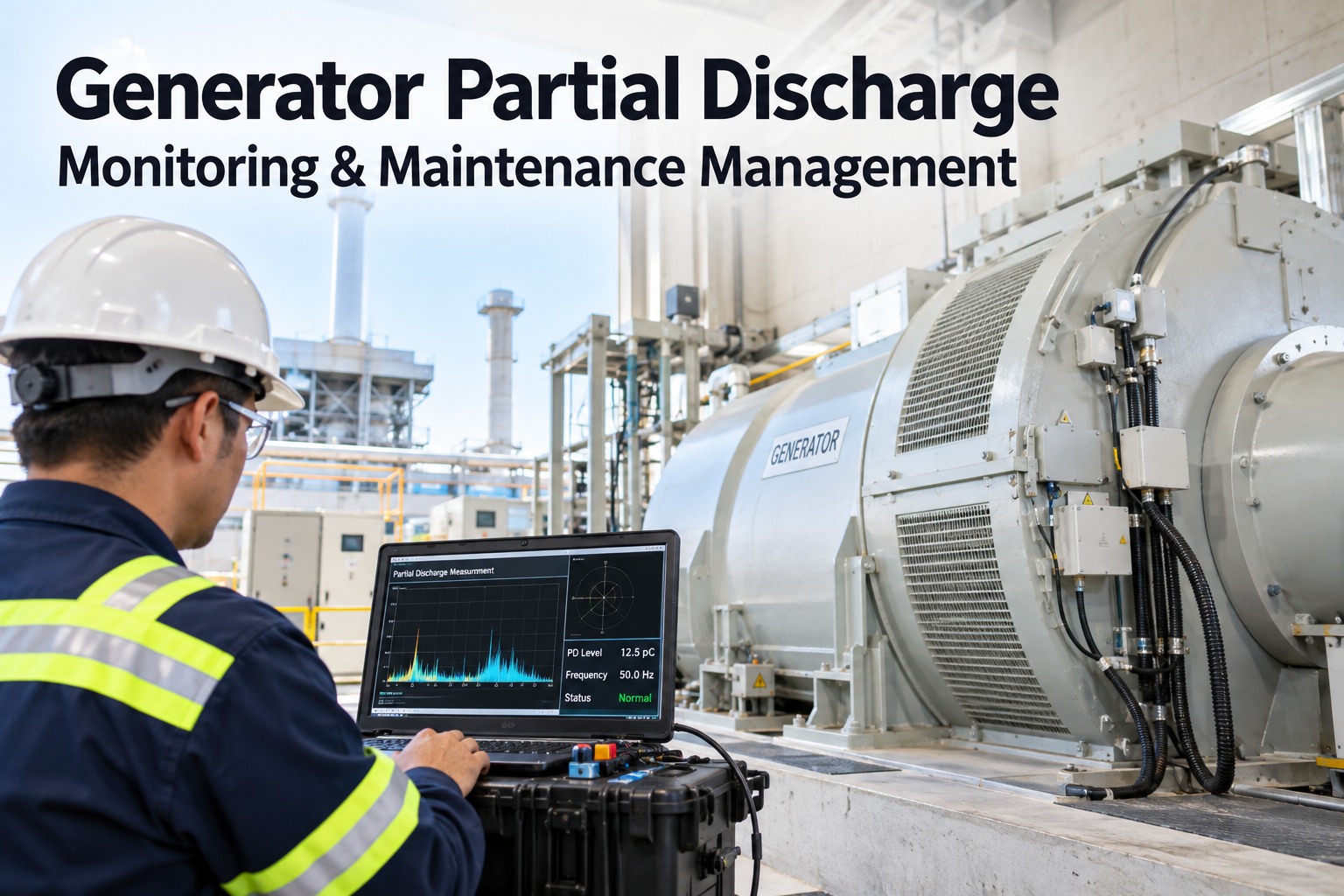
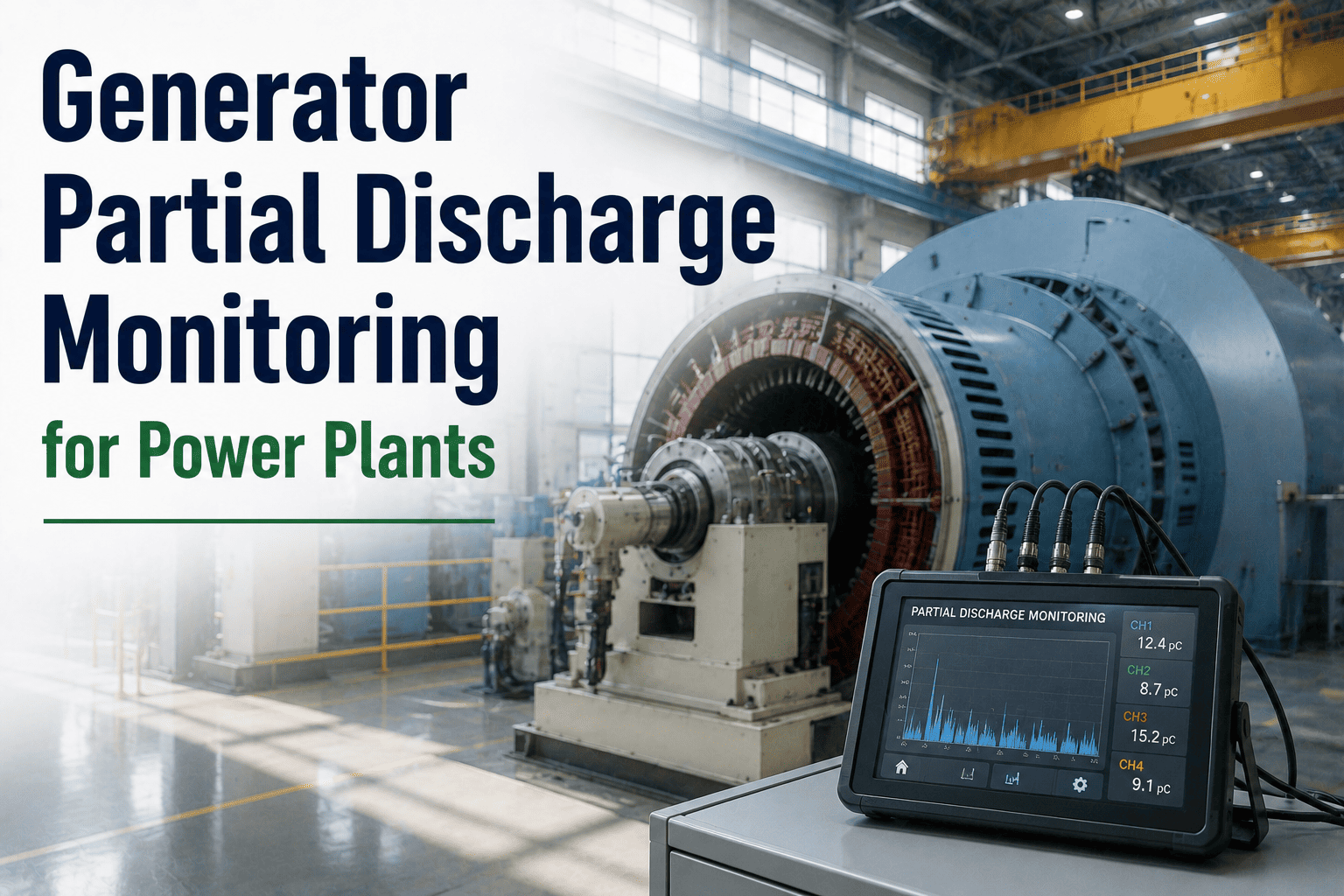
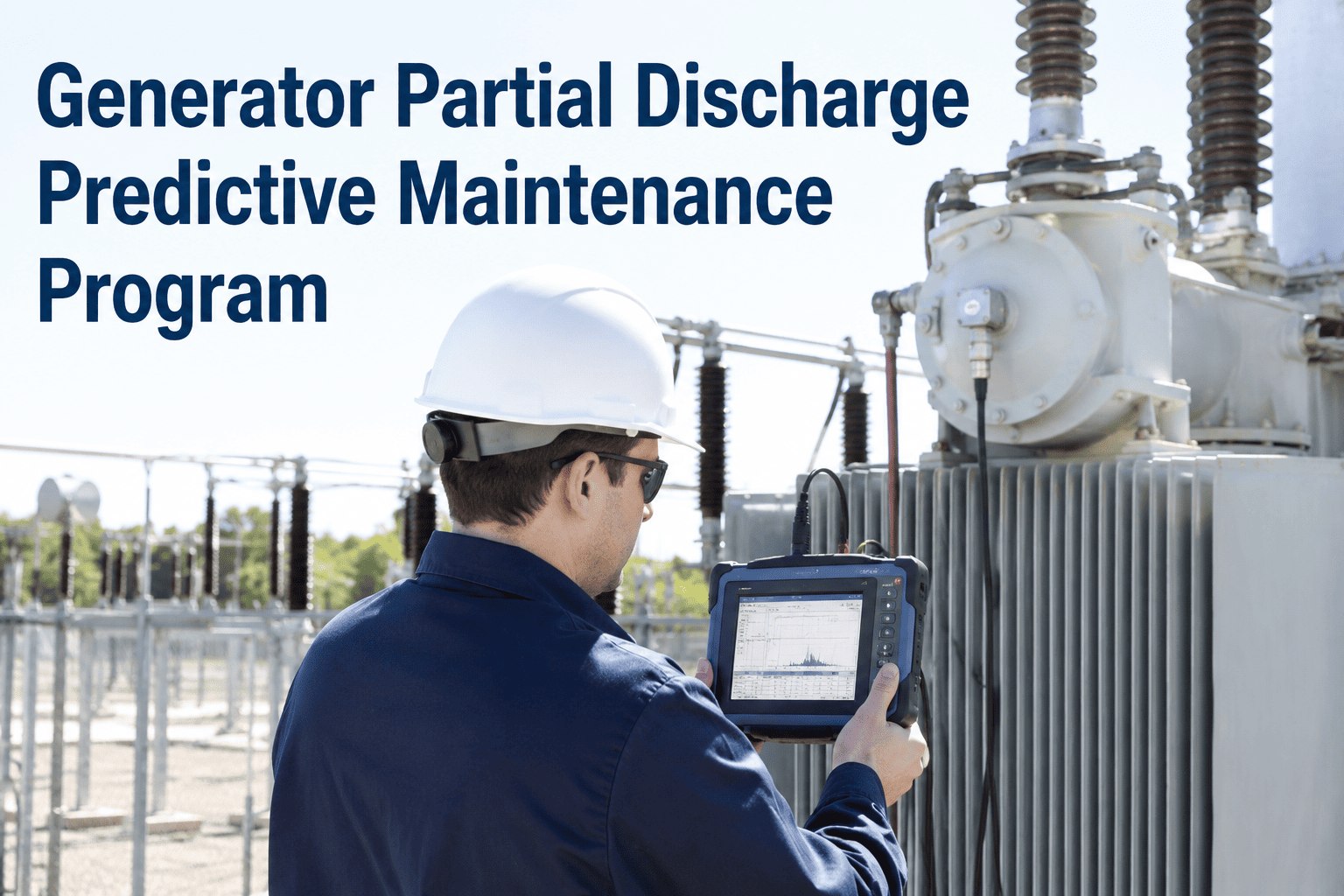
Generator partial discharge is the silent failure mode that destroys stator insulation over months before any visible sign appears. When PD activity goes untracked — no trend data, no asset history, no structured work orders — maintenance teams react to forced outages instead of preventing them. OXmaint converts every partial discharge reading into a prioritized, asset-linked workflow: from measurement to outage scope to compliance record, without the manual coordination that buries reliability engineers. If your team is still logging PD findings in spreadsheets, the cost of the next unplanned outage is already building. Start for free on OXmaint and get your first PD workflow running today.
$1.2M
Average cost of a forced generator outage at a 200MW+ thermal plant
60%
Of stator winding failures are preceded by detectable PD activity 6–18 months before failure
3x
Faster outage scope finalization when PD trend history feeds directly into work order planning
40%
Reduction in generator maintenance costs documented by utilities using structured PD monitoring programs
The Core Problem
PD Data Without a Workflow Is Just Noise
Most plants have partial discharge data. Few have partial discharge workflows. Readings live in test equipment exports, engineer inboxes, or isolated spreadsheets — disconnected from the asset record, the work order system, and the outage scope. When a generator moves to planned outage, reliability engineers reconstruct months of PD history manually. When a forced outage hits, there is no history at all.
OXmaint closes this gap by connecting PD measurements directly to asset records, auto-generating work orders when readings cross thresholds, and building the inspection history that makes every future outage faster to scope and easier to justify.
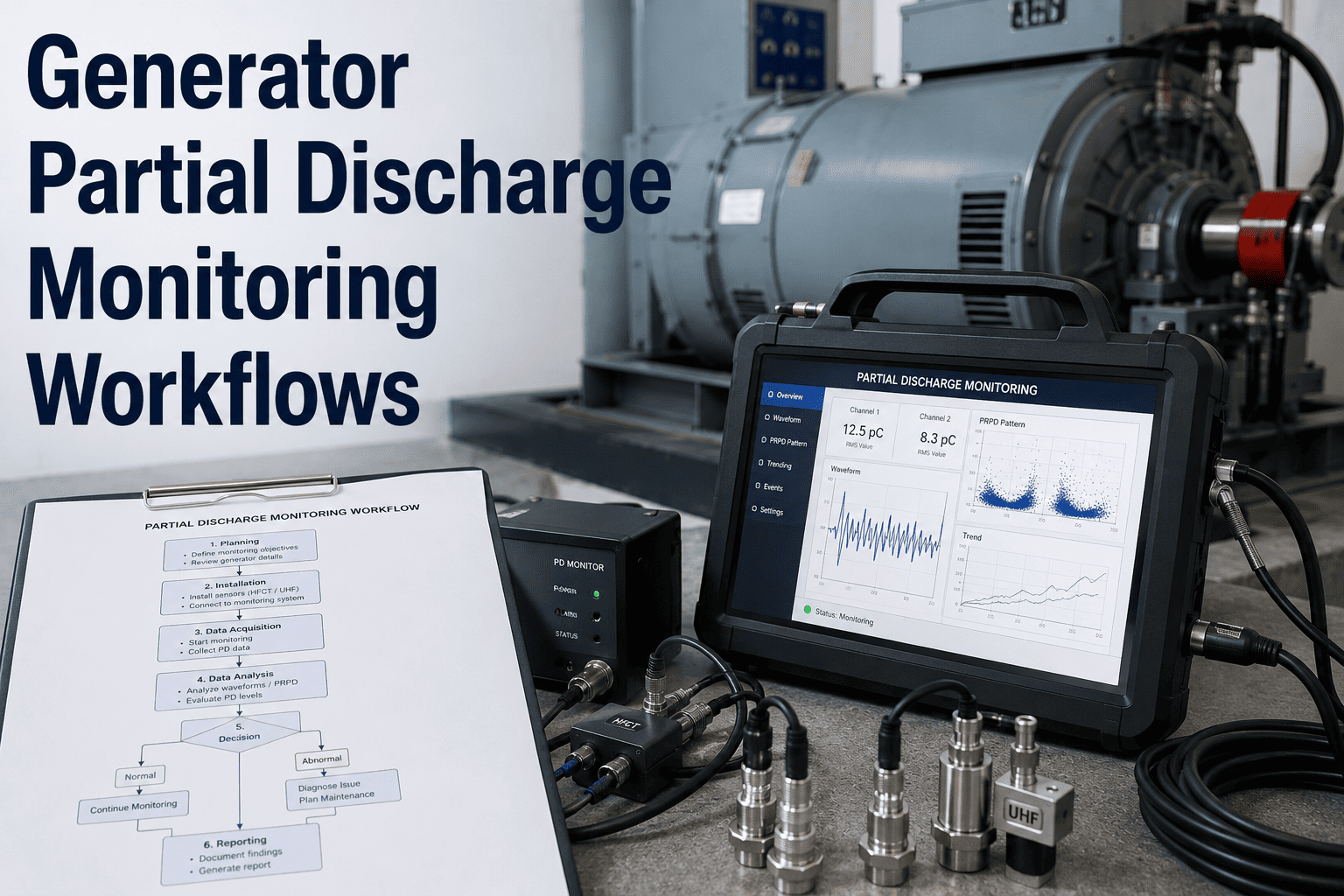
The Complete PD Monitoring Workflow
From first measurement to final compliance record — every stage connected in one platform.
01
PD Measurement Capture
Online or offline PD readings — from coupled capacitors, high-frequency CT sensors, or UHF probes — are logged directly against the generator asset in OXmaint. Each entry carries magnitude, phase pattern, test method, and engineer signature. No separate export files. No re-entry required.
02
Threshold-Based Work Order Trigger
OXmaint evaluates each PD reading against configurable severity thresholds. Readings that cross warning or action levels automatically generate a prioritized work order — pre-populated with asset ID, PD magnitude, sensor location, and recommended investigation steps. No manual triage. No missed escalations.
03
Trend Analysis and Progression Tracking
Every PD measurement adds to the asset's trend timeline. OXmaint plots reading progression over months and outage cycles, flags accelerating deterioration rates, and surfaces correlation with operating conditions — load, temperature, humidity — that manual logs never capture.
04
Outage Scope Generation
When a generator approaches planned outage, OXmaint pulls the complete PD history, active work orders, and trend trajectory into a single outage scope report. Maintenance planners see exactly which windings require inspection, what prior findings indicate, and what repair decisions are supported by the data — without manual assembly.
05
Compliance Record Closure
Every completed work order closes with technician sign-off, findings, and corrective action logged to the generator's permanent asset record. The result is a continuous, auditable PD monitoring history that satisfies NERC reliability standards, insurance requirements, and OEM warranty documentation — automatically.
Stop Logging PD Readings in Spreadsheets
OXmaint connects partial discharge measurements to work orders, asset history, and outage planning in one platform. Set up your first PD monitoring workflow in under 30 minutes.
Where Partial Discharge Occurs in a Generator
PD activity is not uniform across the machine. Understanding the source zone determines the urgency and the repair approach.
Highest Risk
Stator End Windings
Most common PD source. Vibration, thermal cycling, and contamination concentrate insulation stress at end-winding turns. Slot discharge and delamination both initiate here.
High Risk
Slot Section Insulation
Slot discharge occurs when the groundwall insulation separates from the slot wall. Detectable by phase-resolved PD patterns showing repetitive pulses at power frequency.
Moderate Risk
Inter-turn Insulation
Turn-to-turn insulation degradation produces high-magnitude pulses. Often associated with manufacturing defects or thermal overload events earlier in the generator's life.
Monitor
Rotor Field Winding
PD in the rotor winding is less common but indicates accelerated insulation aging under centrifugal stress. Often correlates with elevated hydrogen contamination readings.
PD Severity Response Matrix
OXmaint maps each PD reading to the correct response action based on severity level and trend direction.
What a Structured PD Program Delivers
6–18
months
Average PD detection lead time before stator winding failure — enough to plan repair on your schedule, not the machine's
85%
reduction
In unplanned generator outages reported by utilities with active online PD monitoring and structured work order follow-through
2–4x
ROI
Return on PD monitoring investment documented within 24 months — driven primarily by one or two prevented emergency rewind events
Frequently Asked Questions
Can OXmaint receive data from existing PD test equipment?
Yes. OXmaint accepts PD data via API integration or manual structured entry from any test equipment — Iris Power, Doble, Megger, and custom IIoT-connected sensors. You do not need to replace your existing measurement hardware.
Book a demo to see how integration works for your specific equipment setup.
How does OXmaint handle multiple generators at different sites?
OXmaint manages multi-site generator assets under a single platform. Each generator has its own PD trend history, work order queue, and outage scope. A reliability engineer or plant manager can compare PD progression across the entire fleet from one dashboard — no site-by-site login switching required.
Does OXmaint support both online and offline PD measurement methods?
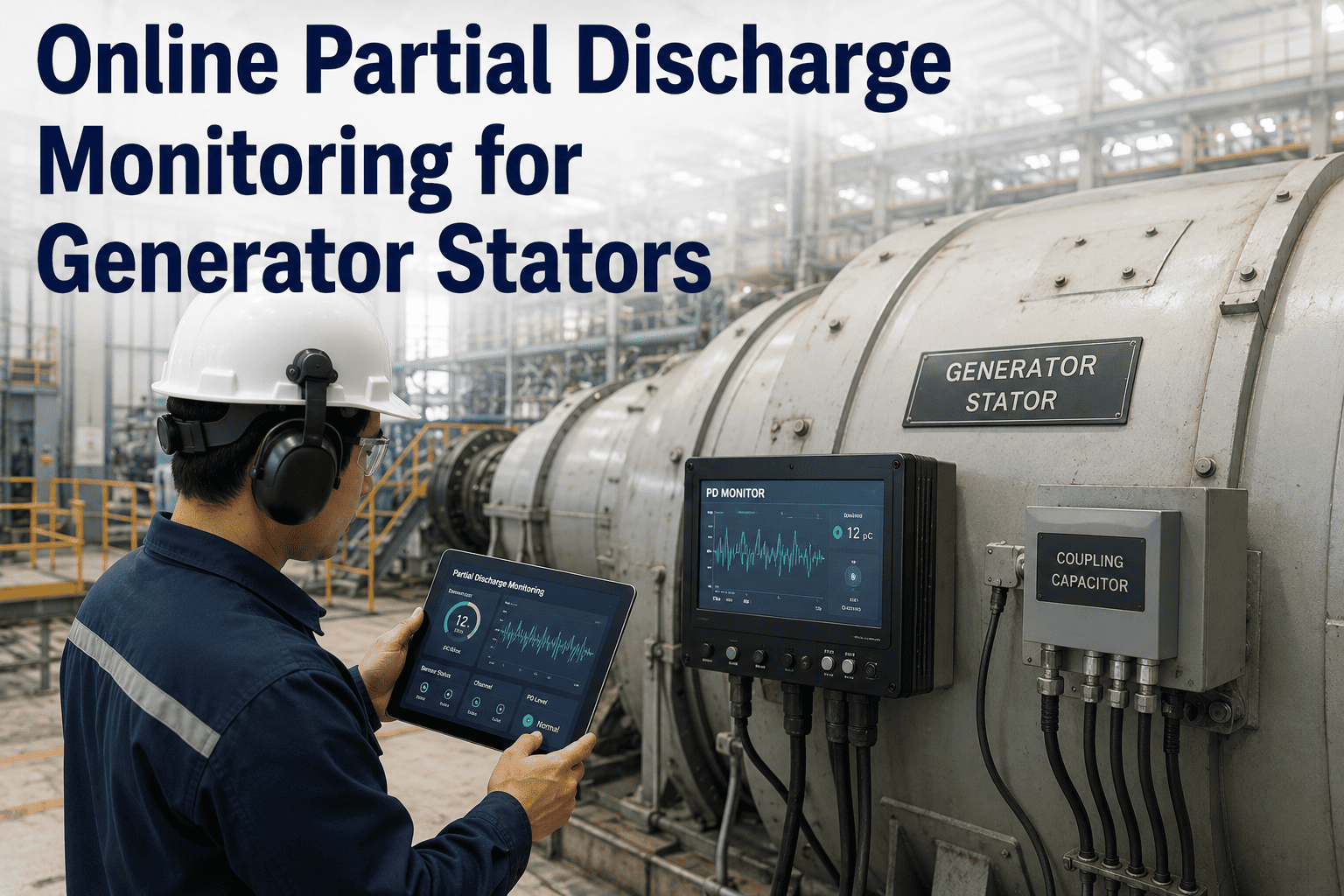
Both are fully supported. Online PD measurements from capacitive couplers or UHF probes log continuously against the asset. Offline measurements from scheduled outage testing are entered against the same asset record, building a unified trend regardless of the test method used.
Sign up free to configure your measurement types.
What compliance standards does the PD inspection record satisfy?
OXmaint generates inspection records structured to support NERC FAC and MOD reliability standards, IEEE 1434 PD measurement documentation guidelines, insurance audit requirements, and OEM warranty maintenance records — all from the same asset history that your team builds during normal operations.
How long does it take to set up a PD monitoring workflow for one generator?
A single generator can be configured in OXmaint — with asset record, PD severity thresholds, and work order routing — in under 30 minutes. Most reliability engineers have their first automated work order generated within the same session. No IT deployment or database migration required.
Generator Reliability
Every PD Reading Deserves a Work Order
OXmaint turns partial discharge data into prioritized maintenance action — with trend analysis, outage scoping, and compliance records built automatically as your team works.