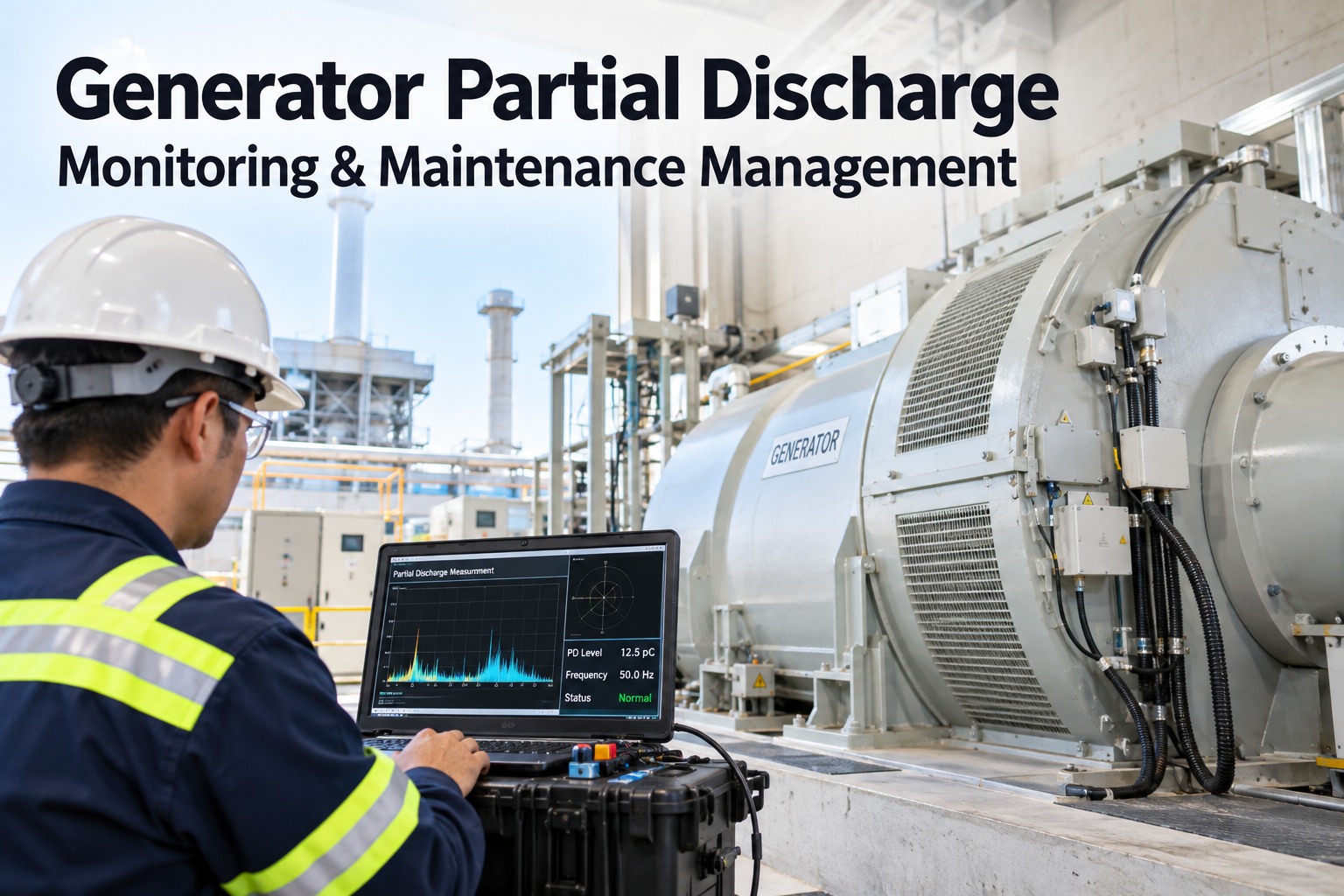
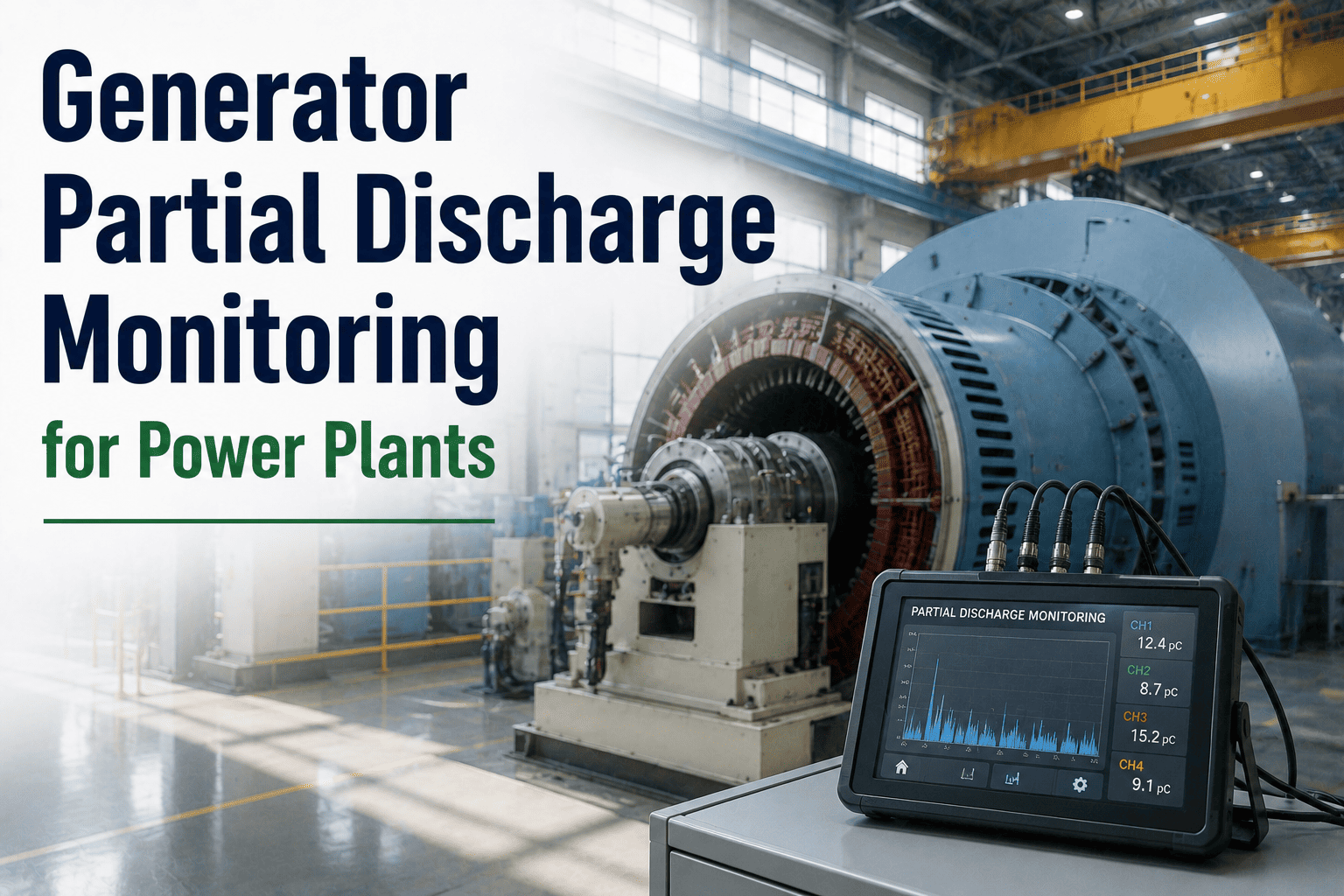
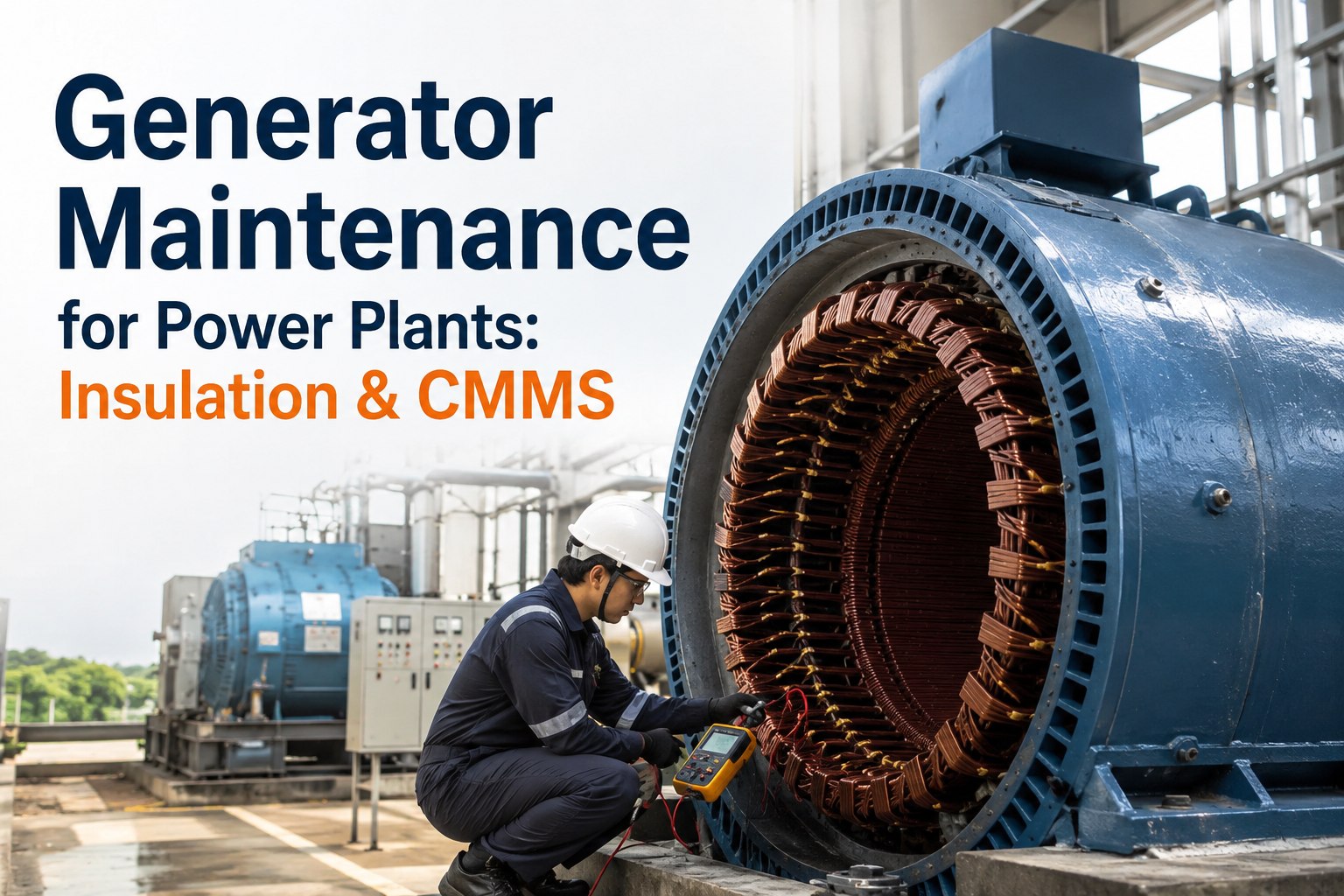
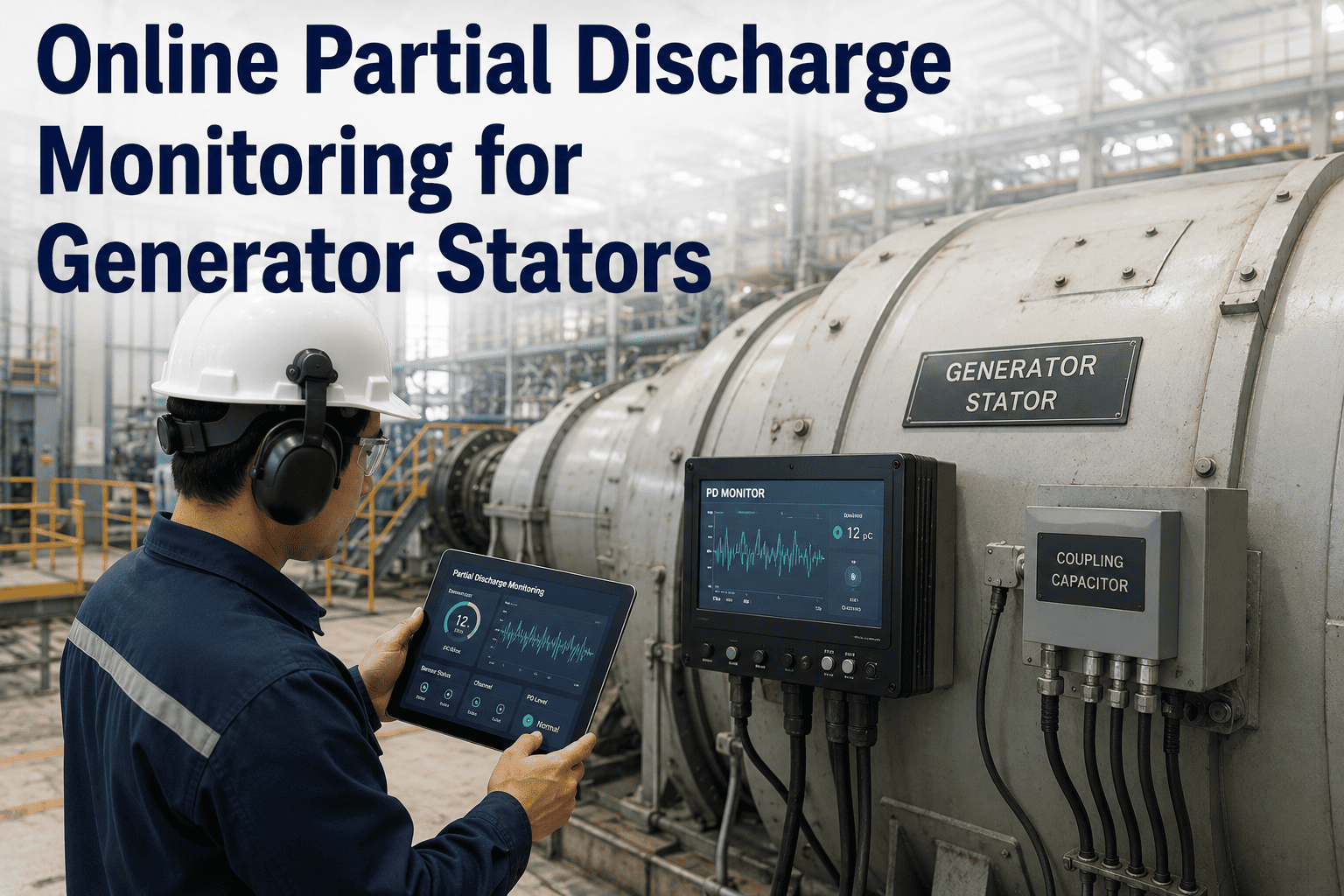
A generator with active partial discharge doesn't announce itself. It hums along at full load, produces power exactly as expected — and quietly burns through its stator winding insulation, one microscopic void at a time. By the time operators notice a problem, PD has often been active for months, sometimes years. The technology to catch it early has existed for decades. What most plants are still missing is the other half: a system that turns a PD trend into an inspection, a defect record, an engineering sign-off and a scheduled repair before the winding fails. That's the gap this guide is about — and how OXMAINT AI, the CMMS software built for critical rotating assets, closes it.
Generator Health · Partial Discharge · Maintenance Management · 2026
Don't Let a PD Reading Sit Until the Next Outage
A rising partial discharge trend that goes unread between tests is how a small void becomes a slot discharge — and a slot discharge becomes a forced outage. OXMAINT AI is the AI-powered CMMS that connects your PD data straight into the maintenance workflow: a threshold breach opens an inspection, the inspection logs a defect, engineering reviews it in the same record, and a work order goes out — automatically, not whenever someone reopens the spreadsheet.
~$562M → $934M
global PD monitoring systems market, 2025 → 2035
5.2–7.5%
CAGR range across PD monitoring segments through 2035
65–68%
of PD systems installed are now permanent/online, not temporary
1 rewind
cost a slot discharge caught late usually turns into
What Partial Discharge Actually Is, in Plain Terms
Partial discharge is a small electrical spark inside insulation that isn't strong enough to fully break down the material — yet. It happens in tiny voids, delaminations or surface gaps in stator winding insulation where the electric field is locally distorted. Each discharge is harmless in isolation. The danger is repetition: thousands of tiny discharges per second slowly carbonize and erode the insulation until it can no longer hold off the generator's full voltage. Reference standards like IEC 60034-27 describe how these events are measured and trended over time — the point isn't the spark itself, it's the trajectory. Start free and start trending your generator's PD data properly.
1
Void Forms
Micro-gap develops in insulation from thermal cycling, vibration or manufacturing stress.
2
Corona / Surface Discharge
Low-level PD begins at the void. Detectable, not yet damaging on its own.
3
Tracking Spreads
Repeated discharges carbonize a visible path across or through the insulation.
4
Slot Discharge
Erosion reaches the stator slot wall — magnitude and repetition rate climb sharply.
5
Insulation Failure
Ground fault or phase-to-phase fault. Unplanned outage, often a full or partial rewind.
This is exactly why magnitude alone isn't enough — trend, repetition rate and location together are what tell you where on this scale an asset actually sits.
Readings Without a Workflow Are Just Numbers on a Screen
Most plants already own PD sensors — capacitive couplers, RTDs used as antennas, or a portable tester brought in during outages. The readings get logged in a spreadsheet, glanced at, and filed. Nobody owns the next step. That's the actual failure mode: not a lack of data, but a lack of a system that turns a rising trend into an assigned, tracked, closed-out action. Book a demo and see the difference on your own asset list.
PD Data, No CMMS
A Spreadsheet Nobody Acts On
PD readings logged by hand after each outage test
No link between a reading and a defect record
Rising trends noticed months after they started
Engineering review happens informally, undocumented
Repair only scheduled after a trip or alarm
PD Data + OXMAINT AI
A Closed Loop From Signal to Repair
Every PD reading logged against the generator's asset record
Threshold breach auto-creates an inspection or defect
Trend history visible across years, not just the last outage
Engineering assessment documented & sign-off tracked
Corrective work order scheduled on your outage calendar
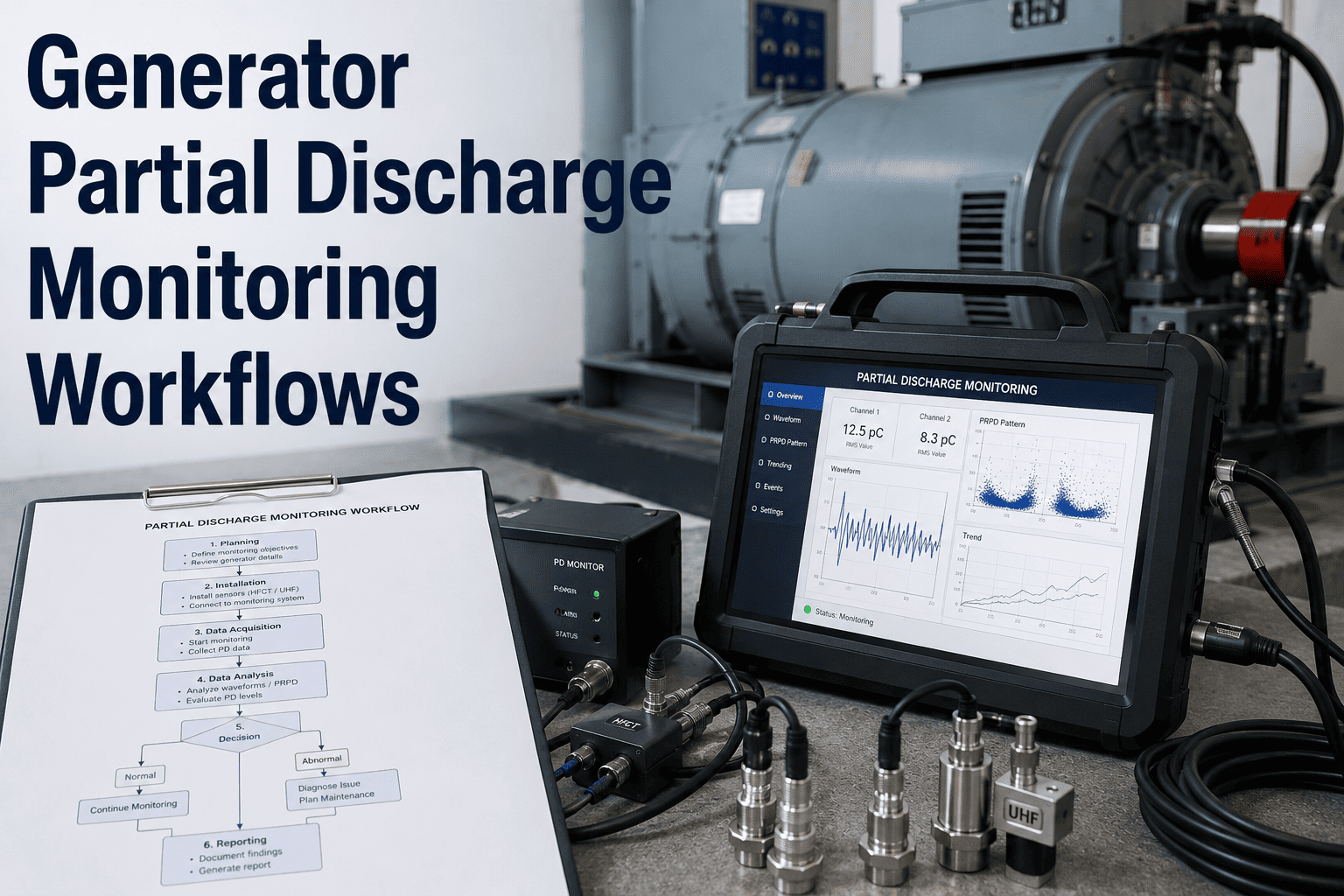
From PD Signal to Closed Work Order — The 5-Step Loop
This is the actual workflow OXMAINT AI runs underneath every generator with PD monitoring in place. Each step hands off cleanly to the next — nothing sits in an inbox waiting to be remembered. Sign up free and set this loop up on your fleet.
01
Log the Reading
Online sensor feed or offline test result recorded against the generator, phase and winding location.
02
Trend Against History
New reading compared to the asset's own baseline — magnitude, repetition rate, and rate of change.
03
Trigger Inspection / Defect
A threshold breach auto-generates an inspection task or defect record — no manual watch required.
04
Engineering Assessment
Severity, root cause and repair options documented and signed off inside the same asset record.
05
Corrective Work Order
Repair — resin injection, slot wedge, partial rewind — scheduled and tracked through to closure.
One Generator Record. Every Reading, Defect and Repair.
No more chasing a PD trend across three spreadsheets and an outage report. OXMAINT AI keeps the sensor history, the inspections, the engineering notes and the repair work orders on one timeline, per asset — so the next person reviewing that generator sees the full story in one place.
What Good PD Maintenance Management Looks Like
Plants that manage this well share the same handful of habits. None of them require new sensors — just a system that holds everyone to them consistently. Book a demo to see these enforced automatically.
✓
Baseline every winding at commissioning or first test, not after a problem shows up.
✓
Trend, don't snapshot — one reading tells you almost nothing; the slope across readings tells you everything.
✓
Tag location, not just magnitude — slot discharge and end-winding corona need very different repairs.
✓
Assign an owner to every threshold breach the moment it happens, not at the next outage meeting.
✓
Document the engineering call — run to next outage, monitor closer, or repair now — so it isn't re-litigated later.
✓
Close the loop into a work order — a finding with no scheduled action is a finding that gets forgotten.
"
We had good PD sensors on our two largest units for years. The problem was never the data — it was that a rising trend would sit in a report until someone happened to reread it before the next outage. Since we moved that whole process into OXMAINT AI, a threshold breach creates a defect the same day, engineering signs off inside the record, and the repair goes straight onto the outage plan. We caught a slot discharge developing on Unit 2 four months earlier than we would have otherwise.
Rotating Equipment Reliability Engineer · Combined-Cycle Power Plant
Frequently Asked Questions
What causes partial discharge in a generator?
Voids, delaminations, or surface gaps in stator winding insulation, usually from thermal cycling, mechanical vibration, contamination, or aging insulation. The electric field concentrates at these defects and produces small discharges long before the insulation actually fails.
How is generator PD data different from PD data on a transformer or cable?
The physics of the discharge is similar, but generators add rotating machinery variables — load, temperature, and vibration all influence readings. Location within the winding (slot vs. end-winding) also changes both the risk and the repair, which is why PD data needs to be tied to a specific asset record, not just a general test log.
Can OXMAINT AI replace our PD sensors or testing equipment?
No — OXMAINT AI doesn't measure partial discharge itself. It's the maintenance management layer that takes readings from your existing online sensors or offline test provider and turns them into tracked inspections, defects, engineering assessments and work orders.
How often should generator PD be tested or reviewed?
Online-monitored units get continuous or near-continuous trend data. Units without permanent sensors are typically tested during scheduled outages, or more often if a previous test showed elevated or rising levels — the trend, not a fixed calendar, should ultimately decide the cadence.
How quickly can we get generator PD data flowing into OXMAINT AI?
Most plants import their asset register and historical PD readings, then connect ongoing sensor feeds or manual test entry within a few weeks — after which every new reading is automatically checked against that asset's own trend.
Stop Losing PD Trends in a Spreadsheet.
Give every generator's partial discharge data a home — trended, linked to inspections and defects, signed off by engineering, and closed out with a real work order.