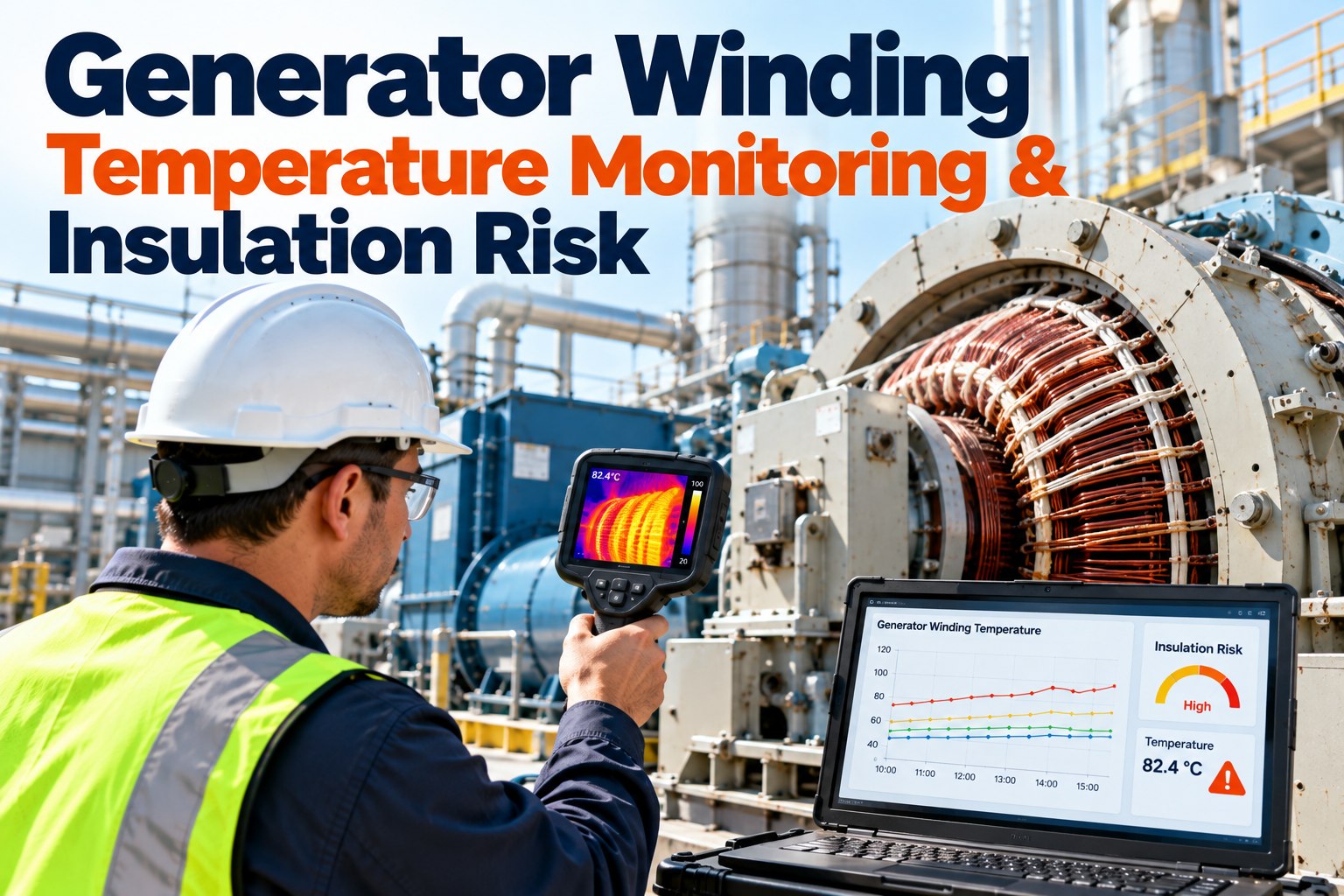
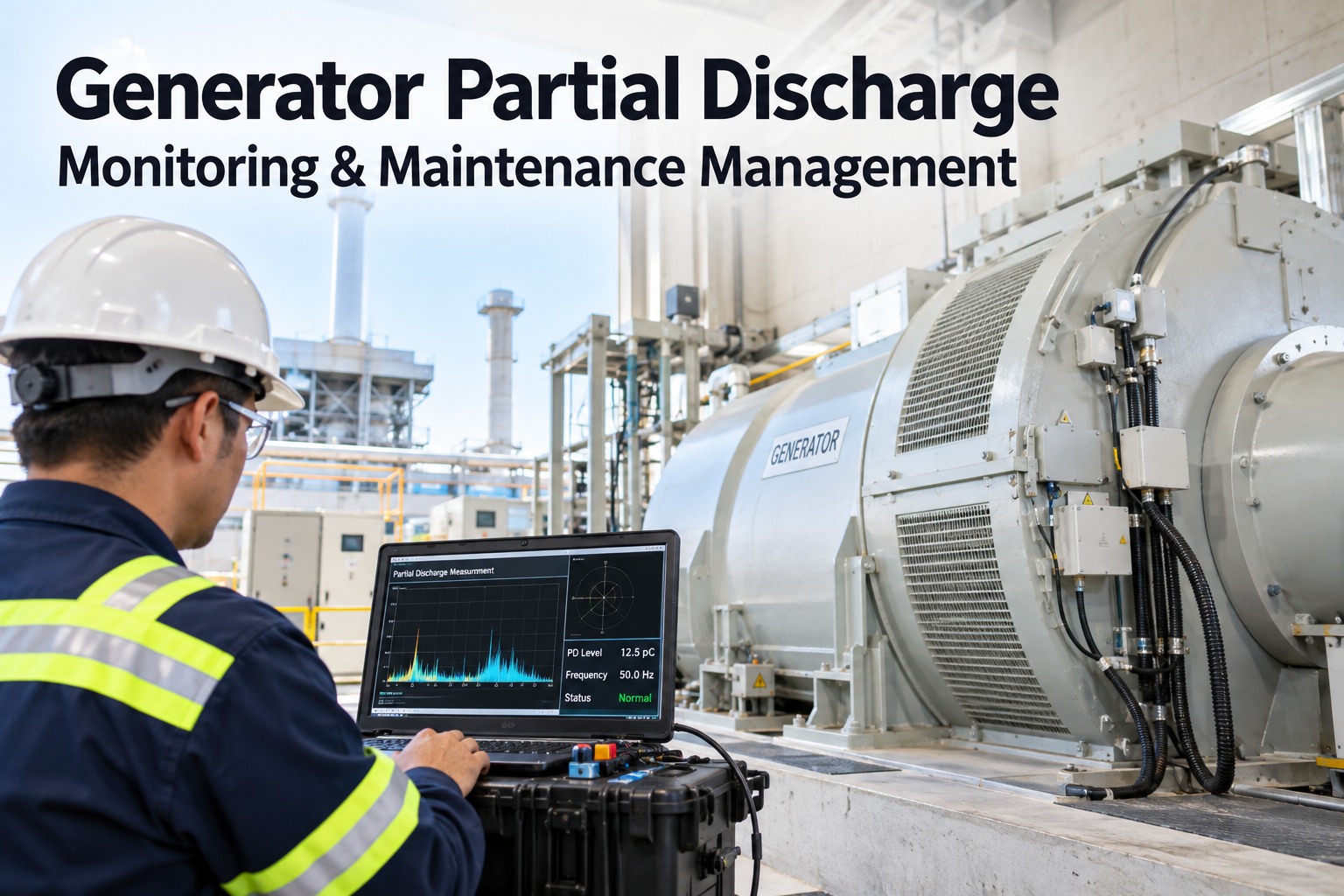
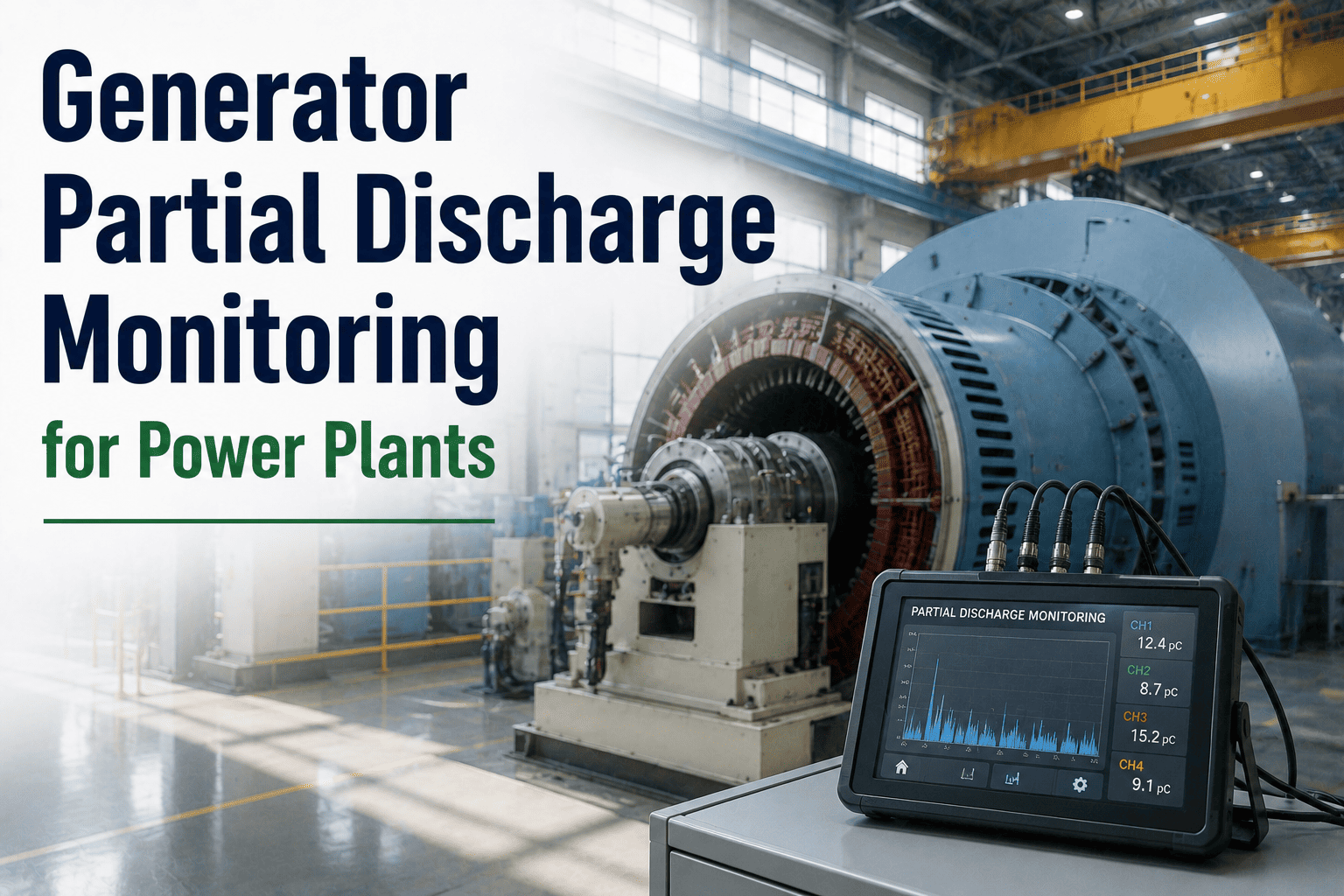
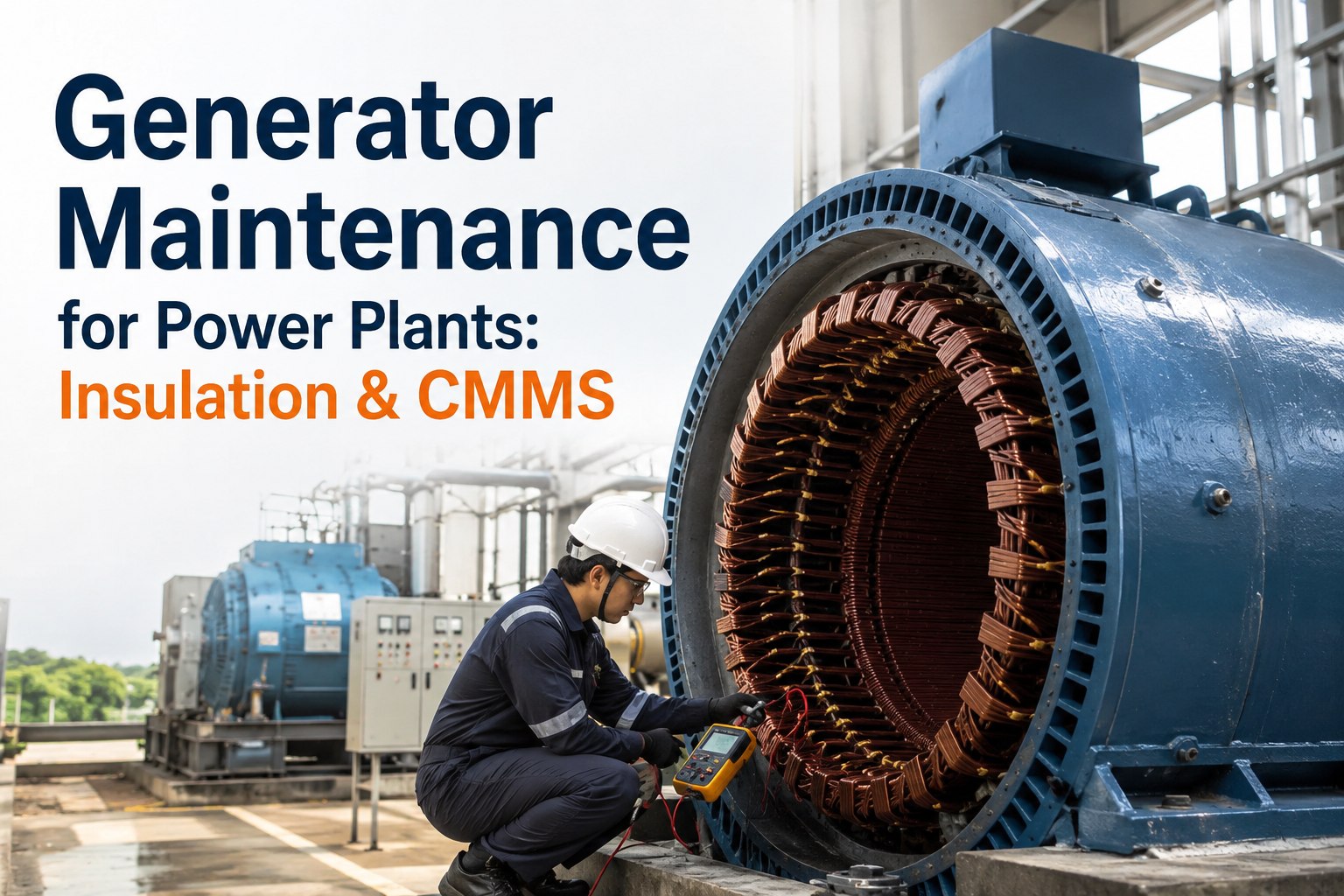
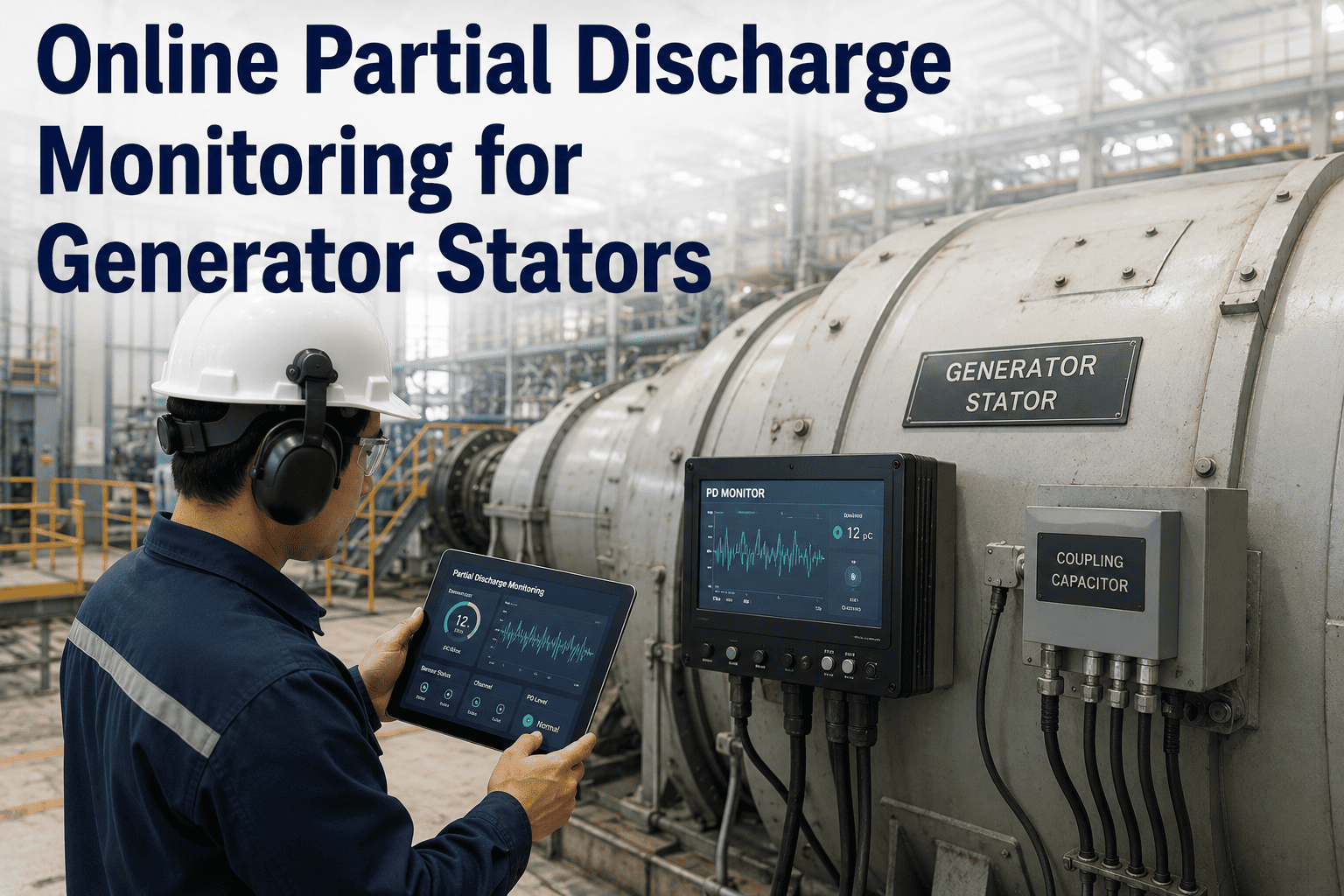
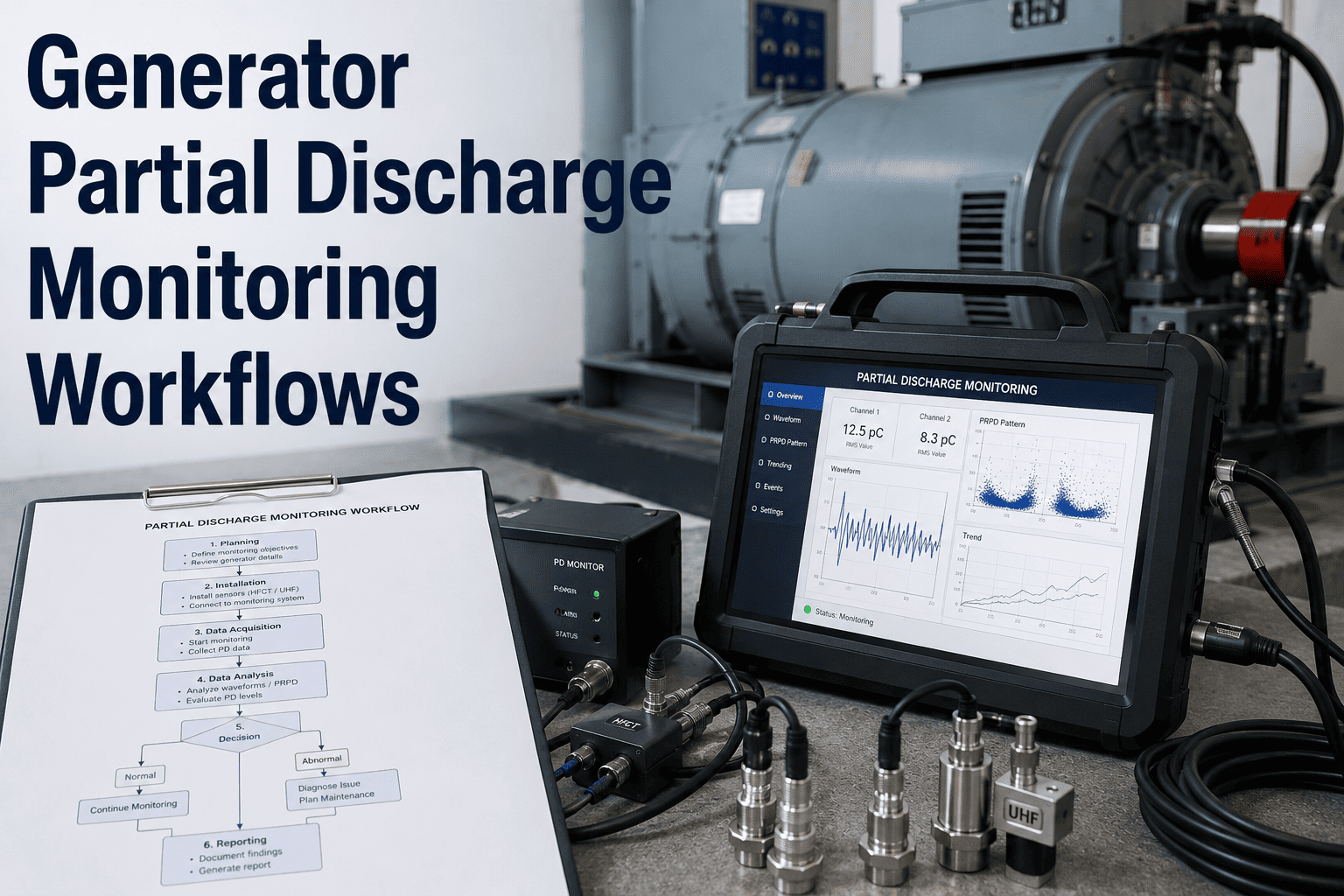
Generator stator winding failures are among the most expensive and time-consuming outage events in power generation — rewinding a large stator can take 6–18 months and cost $1M–$5M depending on unit size. What makes this particularly significant is that stator winding insulation degradation is not sudden: it progresses through measurable stages over years, and modern diagnostic tools — polarisation index testing, megger testing, partial discharge monitoring, and infrared thermography — can identify at-risk windings before they fail in service. The critical gap in most plant maintenance programs is not the availability of these diagnostic tools but the lack of a structured, CMMS-tracked program that records findings across outage cycles and generates corrective actions when insulation condition trends toward failure thresholds. OxMaint's CMMS platform closes that gap — connecting insulation test records, PD trending, and IR inspection findings to scheduled PM work orders and capital planning.
Blog · Generator Reliability · Insulation Diagnostics
Generator Stator Winding Insulation & Partial Discharge Programs
PI testing, PD monitoring, IR scanning, megger test protocols, and CMMS-backed insulation records — a complete guide for generator maintenance and reliability engineers.
$3.2M
Average stator rewind cost — 500 MW unit
12 mos
Average forced outage duration after winding failure
85%
Of stator failures preceded by detectable PD activity
5–15 yrs
Insulation life extension from structured PD program
Insulation Degradation
How Stator Winding Insulation Degrades — and What Drives Each Stage
Stator insulation degradation is multi-factorial. Thermal aging, mechanical vibration, electrical stress, and environmental contamination act simultaneously — often accelerating each other. Understanding which mechanism dominates in your machine helps prioritise diagnostic resources and target inspections at the most at-risk insulation zones.
Thermal Aging
For every 10°C above rated temperature, insulation life halves
Visible: brown discolouration, delamination at hot spots detected by IR scan. Measurable: PI ratio decline over successive megger tests.
Drivers: overloading, cooling system fault, blocked ventilation
Mechanical Looseness
Conductor vibration within the stator slot erodes insulation against slot walls
Visible: grey-black surface discharge tracking (slot discharge). Measurable: PD magnitude increase at line frequency, conductive dust in ventilation.
Drivers: loose slot wedges, loss of slot filler material, original poor cure
Electrical Stress Aging
High-voltage gradient at insulation voids initiates partial discharge erosion
Measurable: increasing PD magnitude (Q in pC) and pulse rate. Internal erosion — not visible externally until failure.
Drivers: manufacturing voids, delamination, moisture ingress, voltage transients
Contamination
Conductive deposits on winding end-turns create surface discharge paths
Visible: tracking marks, discolouration on end-turns. Measurable: reduced IR test values, increased PD at end-turn connections.
Drivers: oil mist from bearings, moisture, carbon brush dust, process contamination
Diagnostic Tests
Insulation Diagnostic Tests — What Each Measures and When to Apply Them
No single test tells the full insulation story. A well-structured stator insulation monitoring program uses four complementary diagnostic methods at appropriate intervals — each addressing a different degradation mechanism and operating at a different detection depth. Together they build an insulation health picture across every outage cycle.
| Test Method |
What It Detects |
Key Metric |
Pass / Concern Thresholds |
Recommended Interval |
| Megger Test (IR) |
Surface and bulk insulation resistance — moisture, contamination, gross damage |
Insulation Resistance (MΩ) |
Pass: >100 MΩ at rated kV · Concern: <10 MΩ |
Every outage — before and after cleaning |
| Polarisation Index (PI) |
Insulation quality and moisture absorption — bulk insulation condition |
PI = IR at 10 min / IR at 1 min |
Pass: PI >2.0 · Concern: PI <1.5 · Fail: PI <1.0 |
Every major outage (2–4 years) |
| Partial Discharge (PD) — Online |
Internal void discharges, slot discharge, end-turn discharge — active PD sites |
Qmax (pC), NQN, phase-resolved PD pattern |
Baseline year 1 · Alert: >3× baseline Qmax · Severe: >10× baseline |
Continuous or quarterly — online with unit energised |
| Partial Discharge (PD) — Offline |
Full winding PD map under controlled voltage — identifies specific coil locations |
Discharge magnitude vs. voltage (PD-V curve) |
PDIV (discharge inception): should be >80% of rated voltage |
At each major outage (4–6 years) |
| IR Thermography |
Hot spots in end-turn connections, thermal asymmetry between phases |
Temperature differential (ΔT °C between phases) |
Alert: ΔT >5°C · Action: ΔT >10°C · Trip risk: ΔT >20°C |
Annually — online with access to end-turn area |
PD Monitoring
Understanding Partial Discharge — Patterns, Severity, and What the Data Is Saying
Online PD monitoring is the most powerful continuous insulation health indicator available for in-service generators. But PD data requires interpretation — the phase-resolved pattern, pulse repetition rate, and magnitude trend together identify both the location type and the severity of discharge activity. A single PD reading means little; trend data across 12–24 months is where the diagnostic value lies.
Internal Void Discharge
Symmetric pulses at positive and negative half-cycles. Internal delamination or manufacturing void. Severity: Moderate — track trend rate of change.
Moderate Concern
Slot Discharge (Looseness)
Large pulses concentrated in positive half-cycle only. Conductor vibrating against slot wall. Urgency: Outage inspection and wedge retightening.
High Severity — Inspect
End-Turn Discharge
Asymmetric — dominant in negative half-cycle. Contamination or spacing loss in end-turn region. Clean, inspect, and re-test within 3 months.
Moderate — Clean and Retest
Low-Level Background Noise
Low, symmetric, low-frequency pulses. Normal aging activity in sound insulation. Monitor quarterly. Document as baseline for trend comparison.
Acceptable — Continue Monitoring
PD Trend Tracking in CMMS
Build a Stator Insulation Database That Spans Every Outage Cycle — Not Just the Last One
OxMaint stores PI test records, megger values, PD trend data, and IR findings against each generator asset — building the insulation history that makes the next overhaul decision defensible, not guesswork.
Testing Protocol
How to Run a PI and Megger Test — The Correct Protocol for Stator Insulation
PI and megger tests are only comparable across outage cycles if they are performed under consistent conditions. Temperature, humidity, and test voltage all affect insulation resistance readings — and inconsistent test conditions are the most common reason trending data is misleading. The protocol below represents IEEE 43 best practice adapted for large generators.
01
Pre-Test Preparation
Disconnect all surge protection, neutral grounding, and PT/CT connections. Ground all other phases. Measure and record winding temperature and relative humidity. If winding temperature is below dew point, apply winding heaters for 2–4 hours before testing — moisture suppresses IR readings.
02
Select Test Voltage
Per IEEE 43: for rated voltages 2.5–5 kV use 1,000 V DC; for 5–12 kV use 2,500 V DC; for above 12 kV use 5,000 V DC. Use the same test voltage on every successive test — voltage changes make PI comparison invalid.
03
Megger Test (1-minute IR)
Apply test voltage for exactly 60 seconds. Record resistance at exactly 60 seconds. Correct to 40°C reference temperature using the IEEE correction factor for your insulation class. Log result against date, temperature, humidity, and technician ID in CMMS.
04
PI Test (10-minute IR)
Continue voltage application for 10 minutes total without interruption. Record IR at exactly 10 minutes. Calculate PI = (IR at 10 min) / (IR at 1 min). A PI above 2.0 indicates dry, sound insulation. Below 1.5 — investigate before returning to service.
05
Discharge and Record
Discharge the winding to ground for a minimum of 4× the test duration before disconnecting. Record all results in the generator asset record in CMMS — including as-found versus as-left if any cleaning or treatment was performed between tests.
CMMS Records
What Complete Stator Insulation CMMS Records Enable
PI Trend Across Outage Cycles
Plotting PI values from successive outages reveals insulation aging rate. A PI that declines from 3.8 to 2.4 to 1.8 over three outage cycles tells a different planning story than stable values — it drives capital budget discussions 2–3 years before failure risk emerges.
CMMS enables: multi-cycle trend chart, threshold alert, capital plan trigger
Rewind vs. Repair Decision Support
When PD trending, PI decline, and IR scan findings are all in one asset record, the decision to repair individual coils versus schedule a full rewind can be made on evidence — not intuition. This can defer a $3M rewind by 4–6 years with targeted coil replacement.
CMMS enables: cost comparison modelling, deferred rewind planning, coil replacement WO tracking
Regulatory and Insurance Audit Trail
Grid operators, insurers, and regulators increasingly require documented insulation test programs with traceability. A complete CMMS record — test method, voltage, result, correction, technician, date — satisfies audit requirements without manual data assembly before each inspection.
CMMS enables: instant audit report generation, ISO 55001 compliance documentation
Frequently Asked Questions
Stator Winding Insulation — Questions Engineers Ask
What is a good polarisation index for a generator stator?
A PI above 2.0 is generally considered acceptable per IEEE 43. Values above 4.0 indicate excellent dry insulation. Values between 1.5 and 2.0 warrant investigation — clean the winding, retest, and compare to the previous outage reading. Below 1.5, return to service only after root cause is identified and addressed.
Log PI results in OxMaint to build the trend data that makes these decisions defensible.
Can online PD monitoring replace offline PD testing?
No — they are complementary. Online PD monitors the winding continuously at operating voltage and temperature, making it ideal for trend detection. Offline PD testing applies controlled voltage and maps the full PD-V curve, identifying specific coil locations and discharge inception voltage — information online systems cannot provide. Both are needed for a complete program.
Book a demo to see how OxMaint tracks both in one asset record.
How many partial discharge sensors does a generator need?
Minimum is one 80 pF high-frequency coupler per phase (3 total), installed at the machine terminals. For machines above 200 MW or where PD source location is required, 2 sensors per phase (6 total) allow time-of-arrival analysis to identify which end of the winding contains the discharge source. Sensor placement and calibration records should be captured in the CMMS at installation.
What causes a sudden drop in insulation resistance between outages?
Sudden IR drops between outages most commonly indicate moisture ingress from the cooling system (hydrogen or water-cooled stators), contamination from oil or process material, or a recent electrical transient that initiated partial discharge in a previously marginal void. The as-found IR reading at each outage — before any cleaning — is the key diagnostic data point and must be recorded in CMMS, not just the as-left reading.
Does OxMaint support tracking insulation test records for a fleet of generators?
Yes. OxMaint supports multi-unit asset hierarchies where each generator's stator winding is a separate asset record with its own test history, PM schedule, and condition trend.
Start free to configure your first generator asset, or
book a 30-minute demo to see a fleet insulation program in action.
Your Stator Winding Insulation Program Is Only as Good as Its Records
OxMaint tracks every megger test, PI result, PD trend record, and IR scan finding in one generator asset record — building the multi-cycle insulation history that drives confident repair-versus-rewind decisions and satisfies every audit requirement. Start free or book a 30-minute walkthrough.