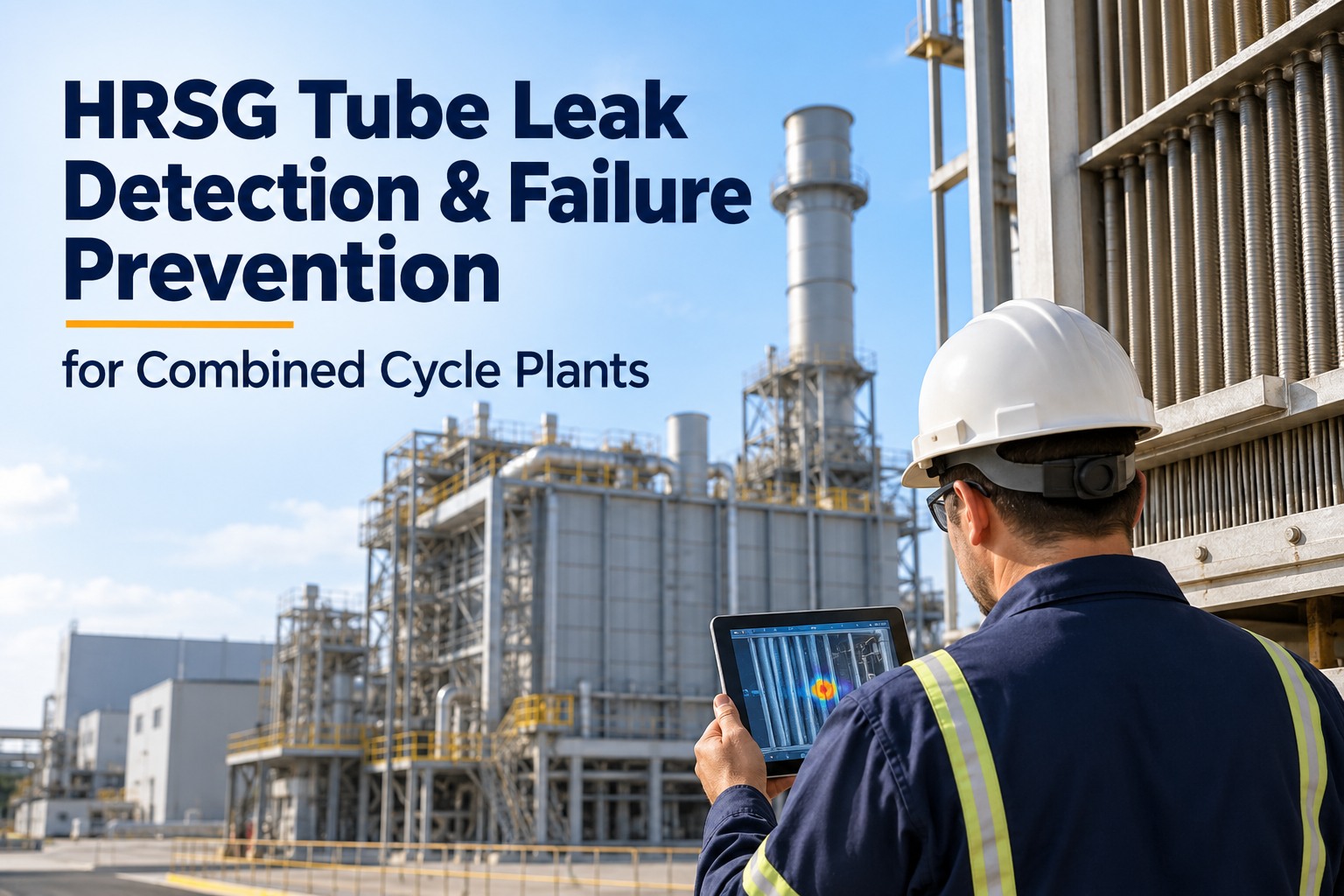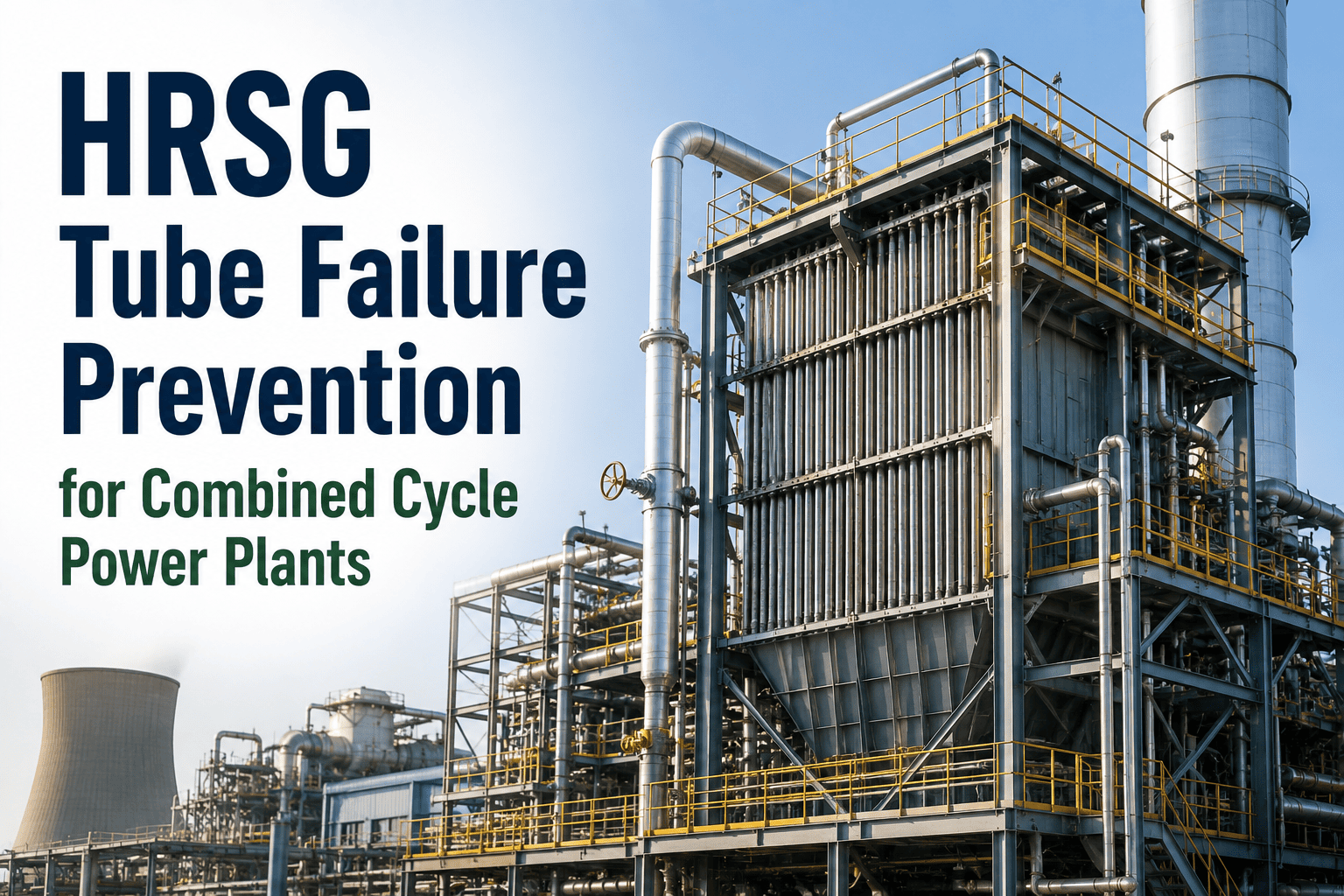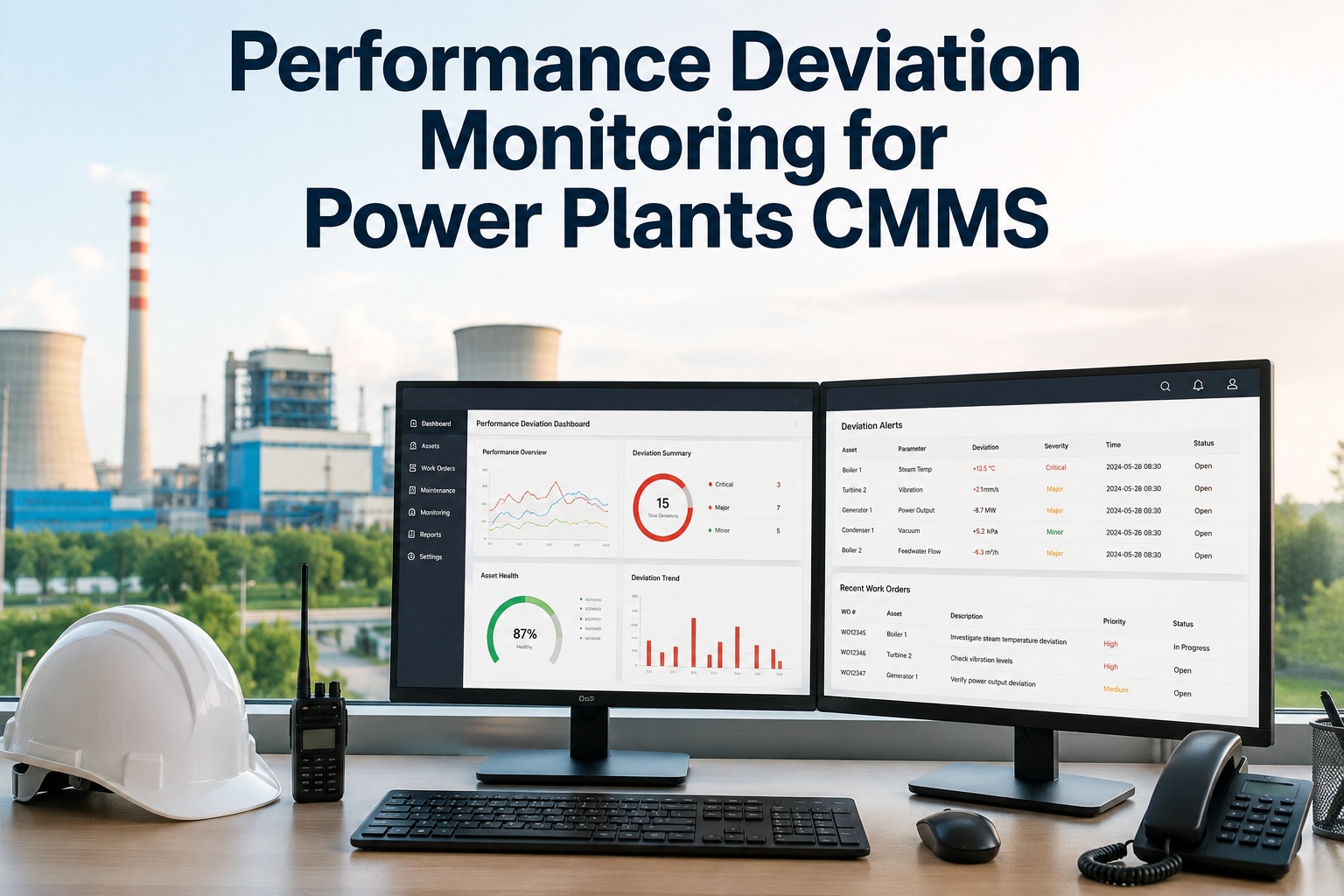
A heat recovery steam generator runs harder than any other pressure component in a combined cycle plant — cycling thermally through every start-stop, absorbing exhaust gas fluctuations from gas turbine load changes, and managing three distinct pressure sections simultaneously. When HRSG maintenance decisions still depend on fixed-interval inspection schedules and outage reports stored in folders, the gap between the rate at which damage accumulates and the rate at which it gets detected is where forced outages are born. Oxmaint CMMS closes that gap — connecting tube thickness readings, economizer performance data, and steam chemistry results to the work order system that actually drives maintenance action in your combined cycle plant.
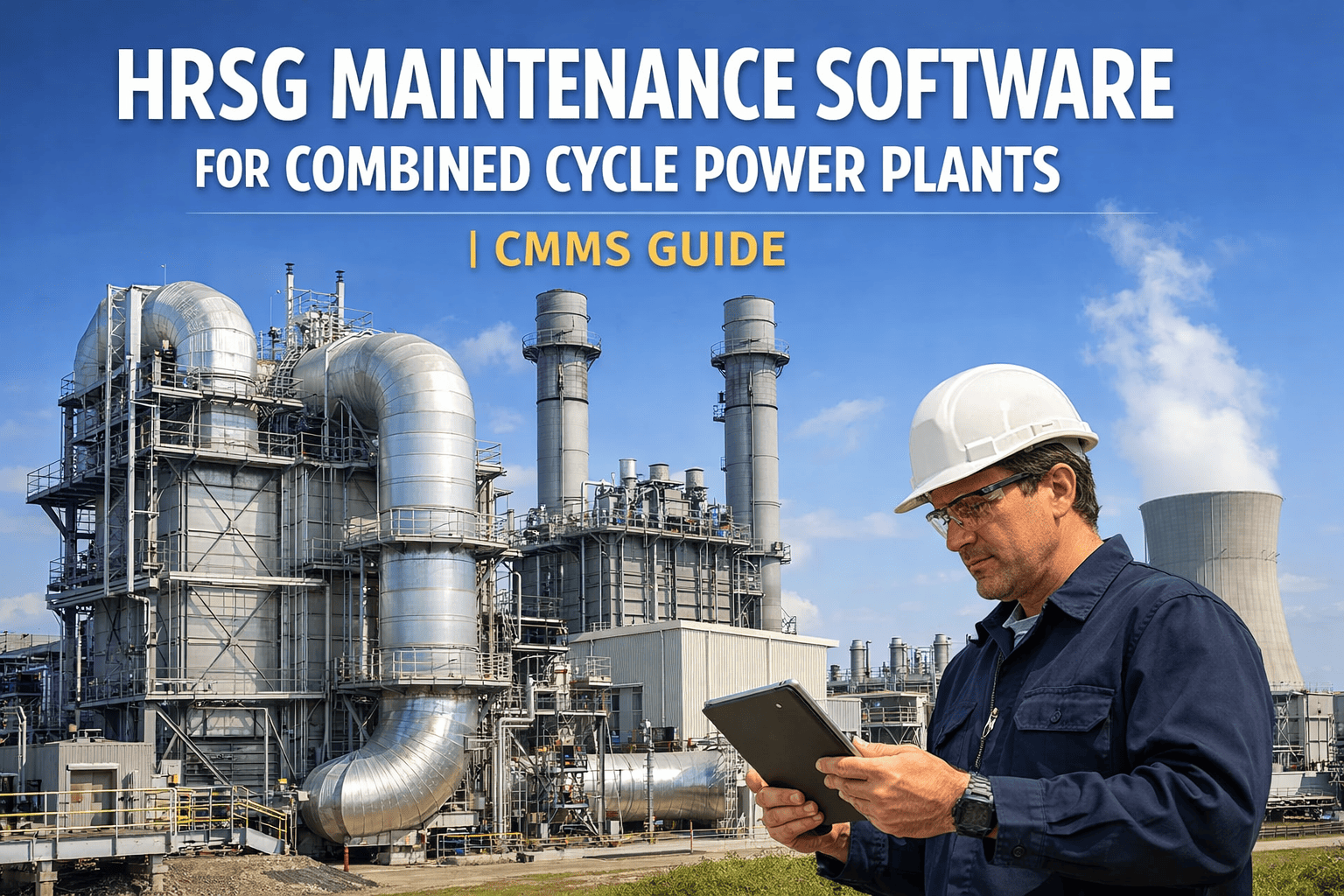
HRSG Maintenance Software for Combined Cycle Power Plants
How CMMS-integrated HRSG monitoring connects tube failure prediction, economizer performance trending, and steam chemistry control to the maintenance workflows that prevent forced outages in combined cycle plants.
Why Combined Cycle HRSGs Demand a Different Maintenance Approach
An HRSG is not a conventional boiler. It does not have a constant fire source to stabilise metal temperatures. It absorbs whatever exhaust conditions the gas turbine produces — and in a cycling plant, those conditions change every time the unit starts, ramps, or trips. Standard boiler PM programmes built for baseload steam generators fail when applied to combined cycle HRSGs because the damage mechanisms are fundamentally different.
Every start-stop cycle imposes a thermal transient on HRSG tubes and headers. In cycling units starting daily, cumulative fatigue damage accumulates far faster than in baseload plants. Creep-fatigue interaction at high-pressure superheater headers is a primary cause of unplanned HRSG outages in combined cycle fleets. Fixed-interval inspection does not track the actual cycle count — CMMS-connected cycle counter monitoring does.
FAC attacks carbon steel and low-alloy steel tubes in the economizer and LP evaporator sections — particularly at bends, tees, and downstream of flow restrictors. FAC wall thinning progresses invisibly until rupture unless an active thickness monitoring programme is tracking it. The rate is strongly influenced by pH, dissolved oxygen, and flow velocity — parameters that must be trended together, not measured in isolation.
Chloride and caustic contamination of HP steam and water circuits initiates stress corrosion cracking in austenitic components. In a combined cycle plant, chemistry excursions propagate from the condenser through the HRSG faster than in a standalone boiler because the condensate return path is shorter and cycle makeup is lower. A condenser tube leak that might take weeks to affect a conventional boiler can impact HRSG HP chemistry within hours.
When supplemental firing is used, the high-temperature exhaust gas at the duct burner zone creates oxidation and fireside corrosion conditions on the first tube rows of the HP superheater. Tube metal temperature monitoring in this zone — combined with fireside deposit inspection records — is essential for predicting remaining life. Without a CMMS connecting burner operating hours to tube condition data, this damage is typically discovered at rupture.
Six HRSG Maintenance Workflows Oxmaint Connects in One System
Ultrasonic thickness measurement results are recorded against specific tube locations in the HRSG asset hierarchy — section (HP/IP/LP), row, panel, and position. Oxmaint tracks wall thickness across multiple inspection cycles, calculates the thinning rate, and projects the remaining life to minimum acceptable wall. When projected remaining life falls below the next planned outage window, a priority inspection work order is automatically generated.
Each unit start and stop is logged against the HRSG asset record — manually by operators or via DCS integration. Oxmaint accumulates the cycle count for headers and superheater sections where design life is specified in cycles, generates inspection work orders at defined cycle interval milestones, and flags components approaching design life limits for engineering review and life extension assessment.
HP, IP, and LP drum chemistry readings — pH, conductivity, phosphate, sodium, silica, dissolved oxygen — are logged against each drum's asset record in Oxmaint. When any parameter exceeds the configured alarm limit, a structured investigation work order is generated that covers blowdown adjustment, makeup water review, and condenser integrity check. Chemistry exceedances are linked to the HRSG tube condition record to build a corrosion risk profile over time.
Economizer performance is trended by tracking approach temperature — the difference between economizer outlet water temperature and HP drum saturation temperature. Increasing approach temperature indicates internal fouling or external gas-side deposit buildup. Oxmaint trends this ratio against gas turbine load and ambient conditions, differentiating fouling from seasonal effects and triggering cleaning work orders when approach temperature deviation exceeds the configured threshold.
Every HRSG safety valve — HP, IP, and LP drum, HP superheater outlet, and reheater — has its own asset record in Oxmaint with set pressure, last test date, test result, and next due date. Recurring test work orders are generated automatically at the regulatory interval. Test results — including pop pressure, blow-down pressure, and leak-before-close findings — are recorded against the valve record and tracked for drift trends over successive test cycles.
Every defect identified during inspections, chemistry exceedances, or performance investigations that requires outage-window access is logged in the HRSG defect register — with defect type, location, severity, and recommended action. At outage planning, the full HRSG defect list — accumulated since the previous outage — is available to the planning team in a single view for scope development, resource planning, and work package preparation.
See How Oxmaint Manages HRSG Maintenance Across Your Combined Cycle Fleet
We will walk you through a live configuration — tube thickness records, cycle count tracking, chemistry alarm escalation, and outage defect management — built for your HRSG type and pressure configuration.
HRSG Steam and Water Chemistry — Key Parameters and What Deviations Signal
| Parameter | Section Monitored | Typical Alarm Limit | What Exceedance Signals | Damage Risk |
|---|---|---|---|---|
| pH | All drum sections | Below 8.8 or above 9.6 | FAC acceleration (low pH) or caustic attack (high pH) | High |
| Cation Conductivity | Feedwater, condensate | Above 0.2 µS/cm | Ionic contamination — condenser in-leakage or makeup water contamination | High |
| Dissolved Oxygen (DO) | Feedwater, deaerator outlet | Above 7 ppb (post-deaerator) | Deaerator underperformance or air in-leakage — pitting corrosion risk | High |
| Sodium (Na⁺) | HP steam, HP drum water | Above 10 ppb (steam) | Carryover from drum or condenser tube leak — stress corrosion risk | High |
| Silica (SiO₂) | HP steam | Above 10 ppb | Turbine blade silica deposition — progressive efficiency and blade damage | Medium |
| Phosphate (PO₄) | HP drum water | Above 10 ppm or below 2 ppm | Under-dosing (corrosion risk) or over-dosing (phosphate hideout/gouging) | Medium |
| Iron (Fe) | Feedwater, condensate | Above 10 ppb | Active corrosion upstream — accumulation promotes under-deposit corrosion in drums | Medium |
HRSG Inspection Schedule — What Gets Inspected, When, and What Triggers It
A CMMS-managed HRSG inspection programme replaces calendar-based scheduling with condition-triggered and cycle-triggered intervals — adapting the inspection frequency to the actual rate of damage accumulation in your specific operating profile.
HRSG Maintenance Software — What Plant Teams Ask Before Implementing
Yes. Thickness readings are stored at the individual tube level — section, row, panel, position — and tracked across every inspection cycle. Oxmaint calculates the thinning rate between cycles and projects remaining wall life, so your team knows exactly which tubes are approaching minimum before the next outage planning window. Sign up to start building your HRSG tube thickness record.
The Oxmaint asset hierarchy supports separate asset records for each HRSG pressure section — HP, IP, and LP — as child assets under the HRSG unit. Chemistry readings, inspection records, work orders, and defect registers are maintained independently per section, with consolidated reporting at the HRSG unit level for management review. Book a demo to see a multi-pressure HRSG hierarchy configured.
Yes. Unit start and stop events can be logged manually by operators or received via DCS integration. Oxmaint accumulates the cycle count against the header asset record and generates inspection work orders at defined cycle milestones — configurable per component based on OEM design life data. Sign up to configure your HRSG cycle tracking programme.
Both options are available. Online analyser readings can be received via API from your DCS historian for continuous monitoring. Plants without online analysers use the Oxmaint mobile app for manual entry by chemistry technicians — each reading is timestamped and logged against the drum asset record. See both input methods in a live demo.
Every open defect in the HRSG defect register — chemistry exceedances, thickness findings, visual inspection observations, and performance deviations — is available to outage planners in a single prioritised view. Defects can be converted directly to outage work orders from within the register, with full defect history attached. Sign up to start building your HRSG defect register today.
Your HRSG Accumulates Damage on Every Start-Stop Cycle. Your Maintenance System Should Track It the Same Way.
Oxmaint connects HRSG tube thickness records, cycle counts, steam chemistry results, economizer performance trends, and defect registers into one maintenance system — so every inspection finding drives a work order and every outage scope is built from a complete picture of asset condition, not memory and spreadsheets.