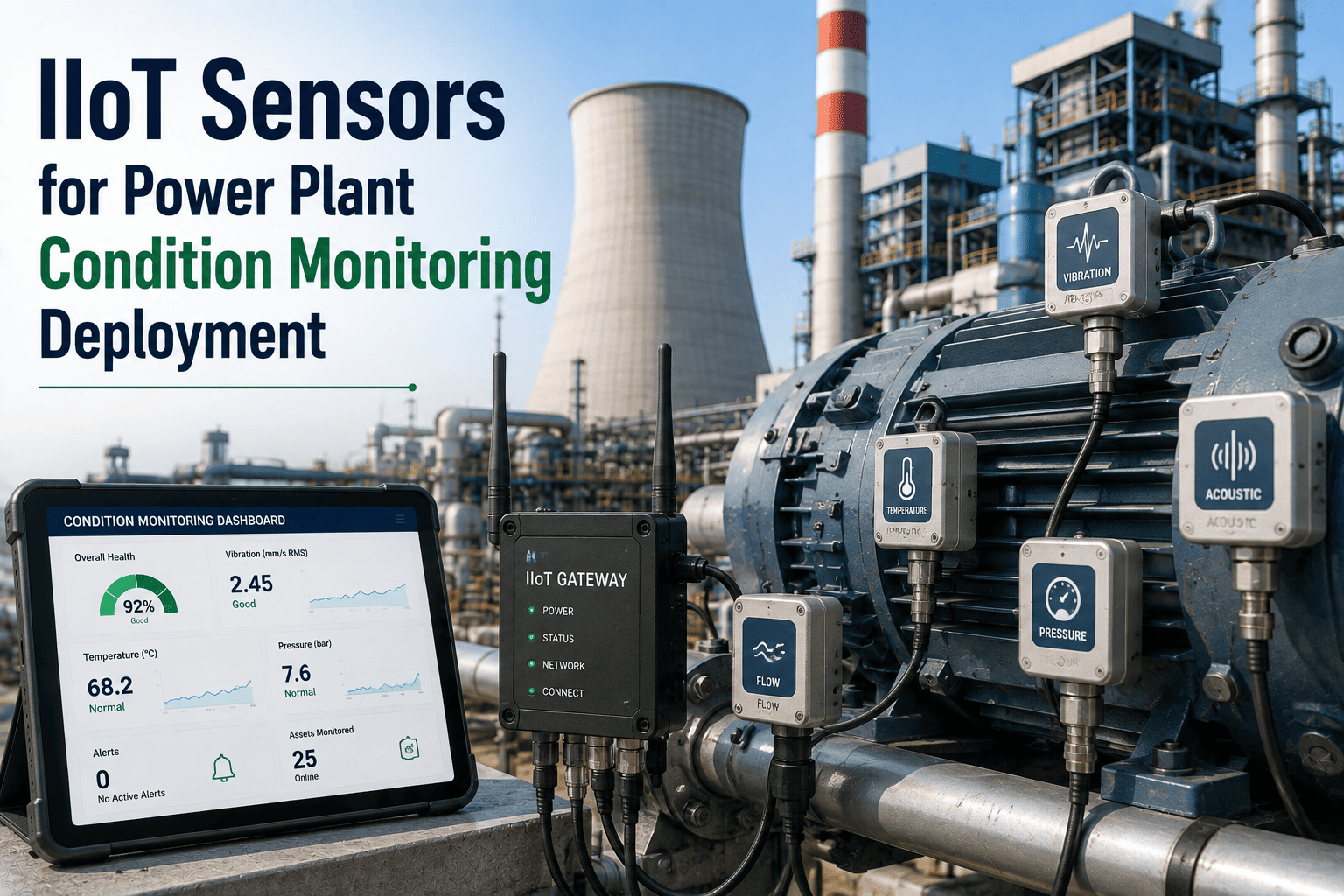
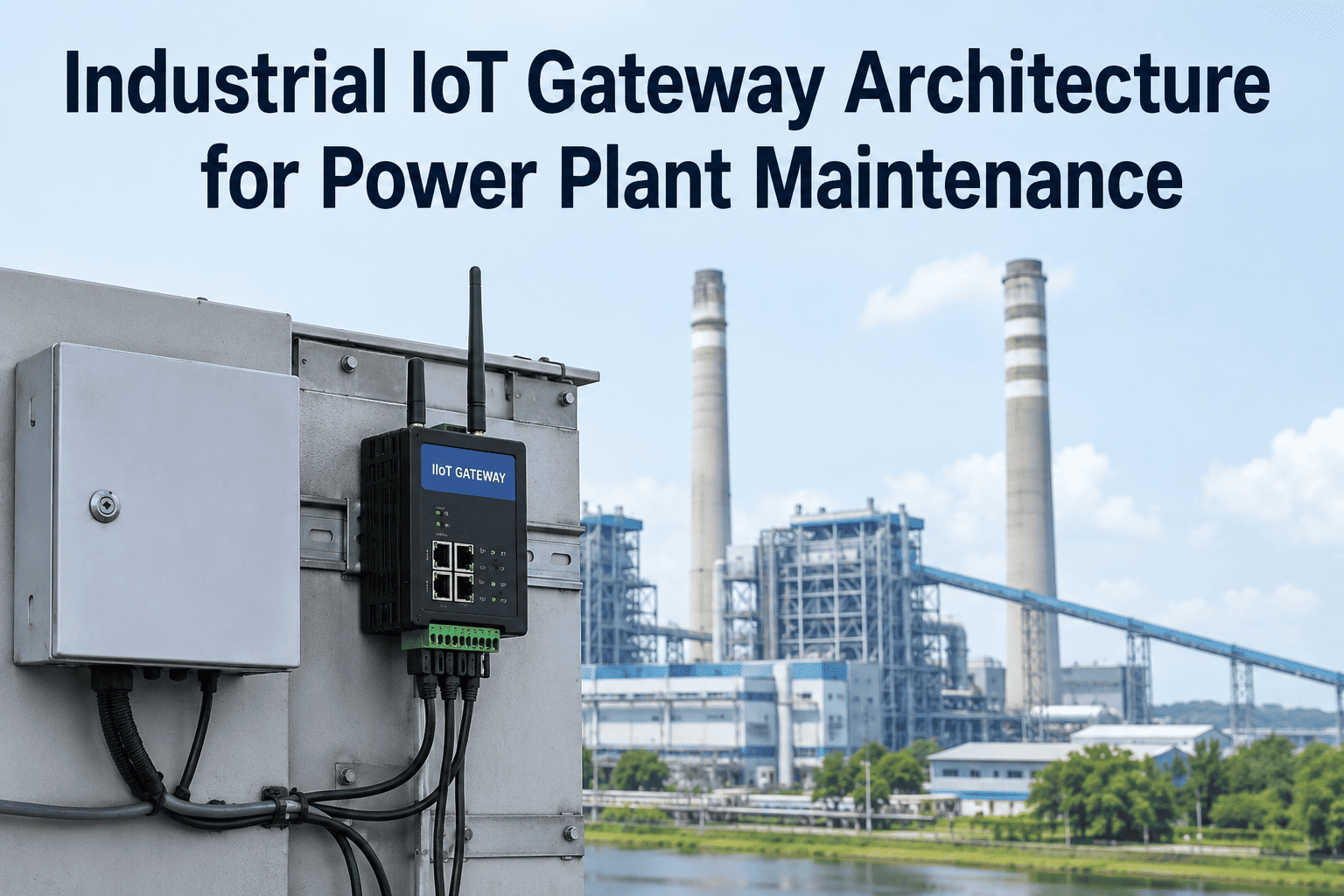
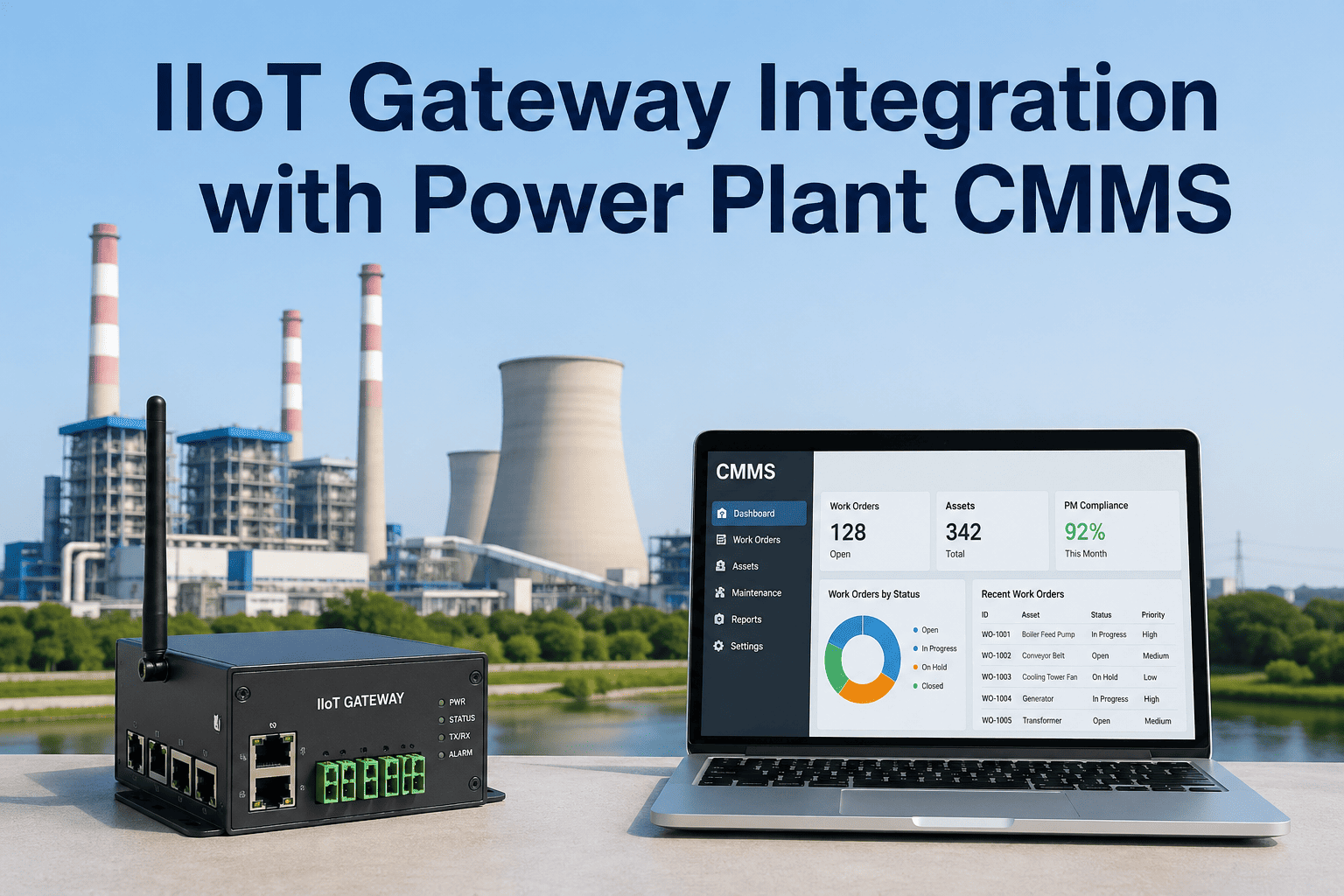
A power plant generates between 2 and 10 terabytes of sensor data per day. Most of it is never used. Not because the data is bad — but because the pipeline between sensor and insight was never built correctly. The right IIoT data pipeline architecture turns that data torrent into AI-driven predictive maintenance, real-time anomaly detection, and automated work orders that reach technicians before equipment fails. If you want to see how OxMaint sits at the end of that pipeline — turning AI anomaly detections into closed work orders and compliance records — book a demo with our IoT integration team today.
IIoT Data Pipeline Architecture for Power Plant AI Analytics
From raw sensor readings to AI-powered maintenance decisions — this technical guide covers every layer of the IIoT data pipeline: ingestion protocols, stream processing with Apache Kafka, time-series storage, AI inference architecture, and CMMS integration. Built for data engineers and maintenance technology leaders who need a production-grade architecture, not a whiteboard sketch.
Why Most Power Plant Data Never Becomes Intelligence
The average power plant has between 10,000 and 50,000 sensor measurement points. At a conservative 1-second polling interval, that is up to 4.3 billion readings per day — each carrying information about equipment health, process efficiency, and failure risk. Yet a 2024 survey found that fewer than 20% of industrial organisations have a production-grade data pipeline capable of turning that data into real-time AI insights.
The gap is not sensor coverage. It is pipeline architecture. Data trapped in OT historian silos, industrial protocols that do not speak to cloud analytics engines, time-series databases with no ML integration layer, and AI models with no path to the CMMS that triggers the maintenance action — these are the architectural failures that leave terabytes of actionable intelligence unused every day.
This guide addresses each layer of that architecture directly. Data engineers and maintenance technology leaders who want to connect OxMaint to a production IIoT pipeline can start a free trial and connect their first data source in under 60 minutes using our standard API connectors.
The Six-Layer IIoT Data Pipeline for Power Plant AI Analytics
A production-grade IIoT data pipeline for power plant AI analytics has six distinct architectural layers. Each layer has a defined responsibility, specific technology choices, and a clear interface to the next layer. Failure at any layer breaks the chain between sensor data and maintenance action.
Why Apache Kafka Is the Standard Message Bus for Industrial IIoT Pipelines
Apache Kafka has become the dominant stream processing backbone for industrial IIoT deployments — not because it is the only option, but because no other technology matches its combination of throughput, durability, replay capability, and ecosystem maturity. Tesla's Virtual Power Plant runs its real-time energy trading and grid balancing on Kafka. Industrial AI platforms from Honeywell, ABB, and Siemens all support Kafka as a primary data ingestion protocol. Understanding why Kafka fits power plant data pipelines requires understanding its core architectural advantages. For a live walkthrough of how OxMaint connects to your Kafka deployment as a downstream consumer, book a demo with our data integration team.
Choosing the Right Time-Series Database for Power Plant Sensor Data
Not all databases handle time-series sensor data equally. Relational databases collapse under the write throughput of a large sensor network. Document databases lack the temporal query primitives needed for anomaly detection feature engineering. Purpose-built time-series databases store, compress, and query sensor readings orders of magnitude more efficiently than general-purpose alternatives.
Latency Requirements by Use Case — Designing for the Right Speed
Not all power plant data pipeline use cases have the same latency requirement. Designing a pipeline that treats all data as equally urgent is expensive and architecturally complex. The right approach is a tiered latency architecture — matching processing speed to business need at each stage.
Industrial Protocol Reference — From Sensor to Kafka
The ingestion layer is where most power plant IIoT pipelines introduce their first bottleneck. Industrial sensors and controllers speak dozens of different protocols — many of them decades-old OT standards that modern data infrastructure was not designed to handle natively. Understanding which protocol belongs where is the first step in avoiding costly gateway sprawl and protocol translation layers.
How OxMaint Connects to Your IIoT Data Pipeline
OxMaint's IoT integration layer is designed to sit at Layer 6 of any IIoT data pipeline architecture — receiving AI-processed anomaly detections, fault classifications, and condition scores from your analytics stack, and converting them into structured maintenance actions with no manual handoff. The platform accepts inputs from every standard data pipeline integration pattern used in power plant environments. Start your free trial and connect your first data pipeline integration in under 60 minutes.
What Data Engineers Ask About Power Plant IIoT Pipeline Architecture
How do we handle OT/IT security separation in an IIoT data pipeline?
How much sensor data volume can a Kafka cluster handle for a large power plant?
How long does it take to build a production-grade IIoT data pipeline for a power plant?
Can OxMaint integrate with an existing OSIsoft PI or AVEVA historian?
Your Pipeline Already Generates the Data. OxMaint Turns That Data Into Closed Work Orders.
Connect your Kafka topics, REST anomaly endpoints, or MQTT alert streams to OxMaint's IoT integration layer. Every AI detection becomes an automated, tracked, compliant work order — with no manual handoff between data pipeline and maintenance action. Start connecting in under 60 minutes. No long implementation. No heavy onboarding.