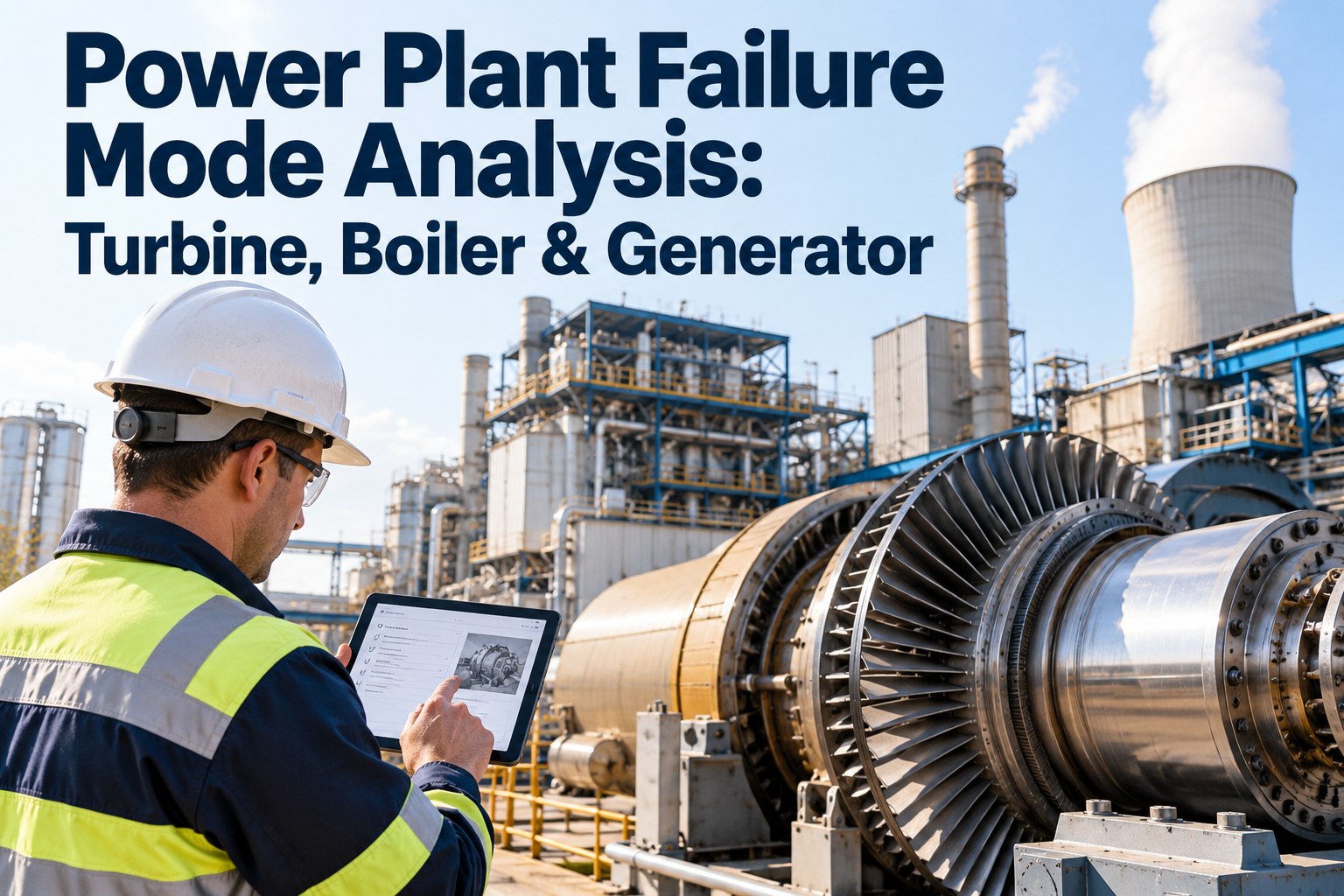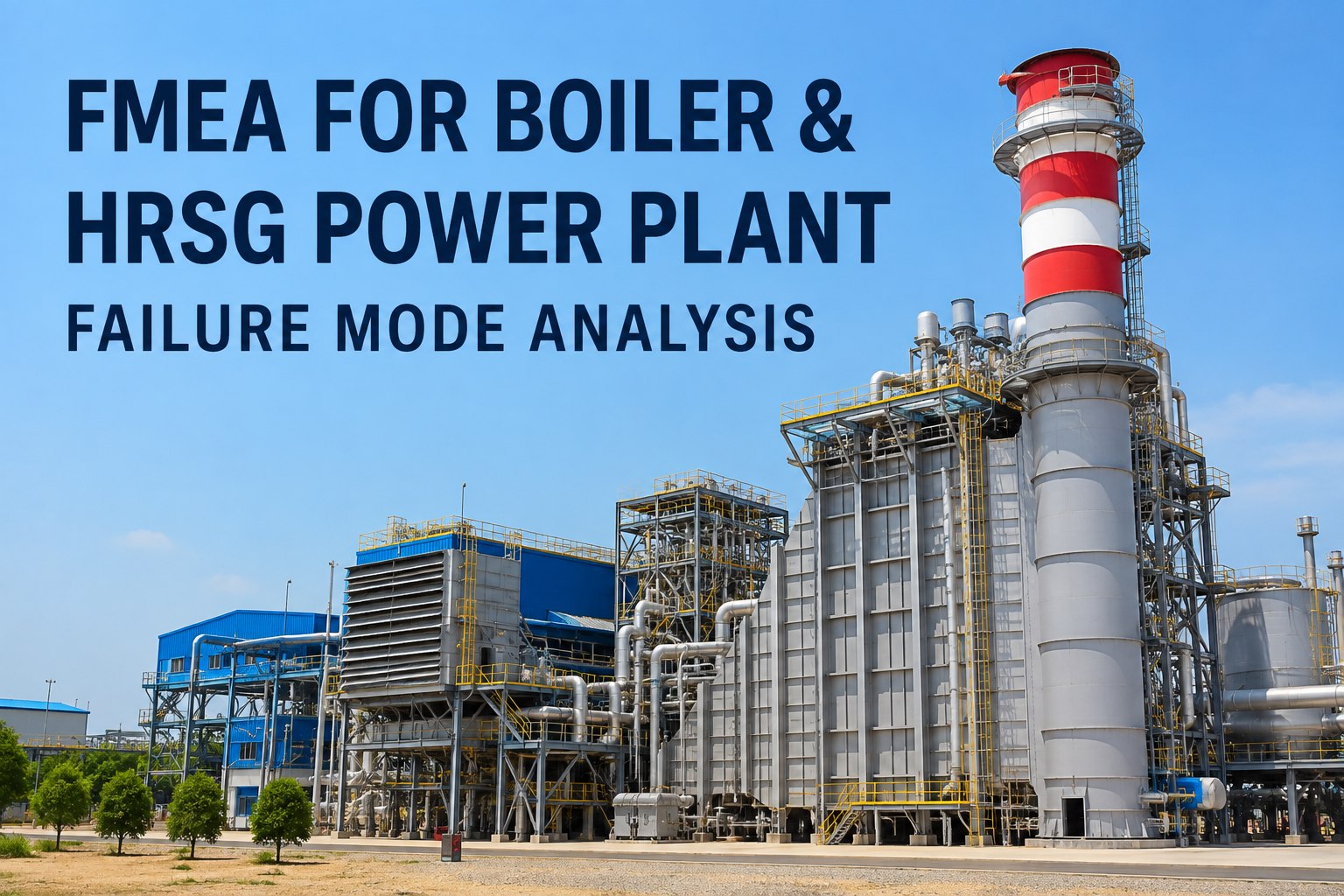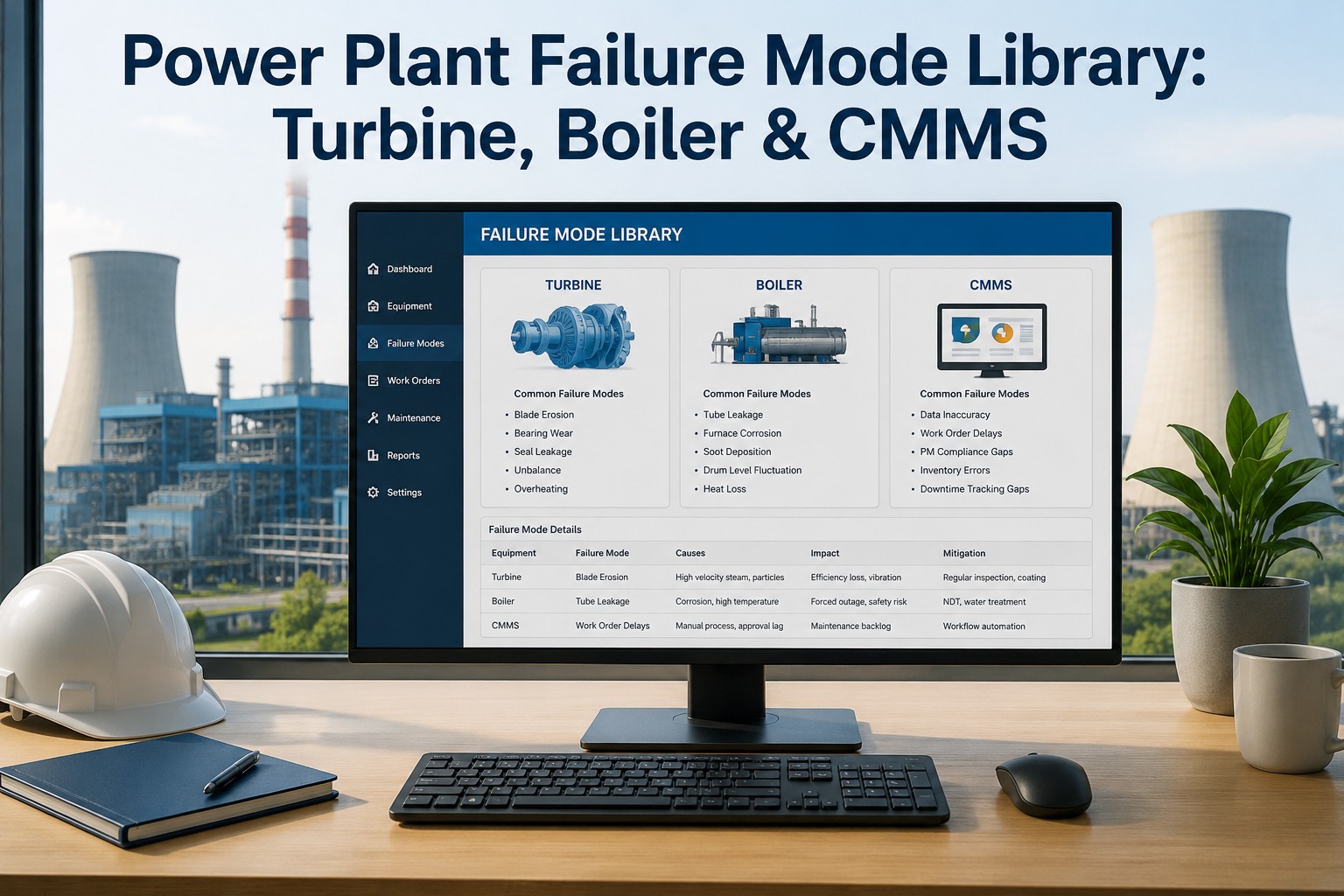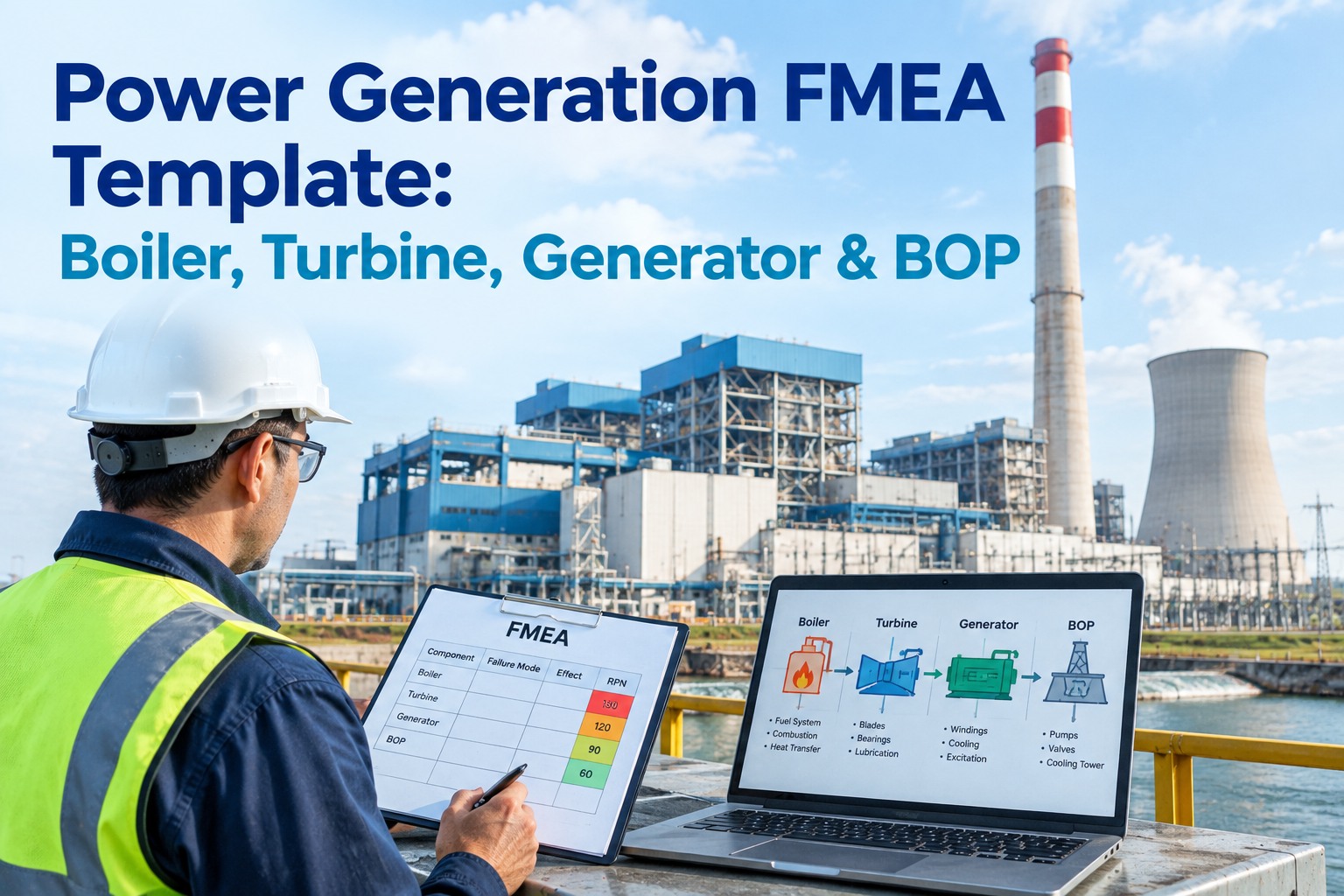
A power plant is four failure stories running in series: the boiler makes the steam, the turbine turns it into rotation, the generator turns rotation into power, and the balance of plant keeps all three fed and cooled. A single tube leak, one cracked blade, a slow-building stator partial discharge, or a failed feedwater pump can take the whole unit offline — and the megawatt-hours you lose while it's down dwarf the repair bill. An FMEA turns that risk into a ranked list: every failure mode scored on how bad it is, how often it happens, and how likely you are to catch it in time, multiplied into one Risk Priority Number that tells you exactly where to spend maintenance effort first. This guide is a working FMEA template for boiler, turbine, generator, and BOP — with filled-in RPN examples you can copy — and how OxMaint's maintenance management software keeps it a living record instead of a dead spreadsheet. Start free or book a demo.
Power Generation FMEA Template: Boiler, Turbine, Generator & BOP
Score every failure mode on Severity × Occurrence × Detection, rank by RPN, and act on the highest numbers first — a defensible reliability plan across all four plant systems, not a guess.
The RPN Formula — Three Numbers, One Priority
FMEA's engine is one multiplication. Each failure mode is scored 1–10 on three axes, and their product — the Risk Priority Number, from 1 to 1000 — ranks every mode against every other, so the boiler tube and the seal-oil pump compete on the same scale. The point isn't the score; it's the ranking it produces. Sign up free and OxMaint calculates and re-ranks RPN live as conditions change.
Set Your Action Thresholds First
A raw RPN means nothing without a line that says "act." Before scoring, agree the bands — so the analysis ends in decisions, not a spreadsheet of numbers nobody owns. These are common thresholds; calibrate them to your fleet's risk appetite. Book a demo to see RPN bands drive work-order creation automatically.
The Worked Template — Filled In Across All Four Systems
Here's the template with real power-plant failure modes scored, so you can see how the numbers separate the critical few from the trivial many. Notice the pattern: the worst RPNs combine high severity with poor detection — the failures that are both catastrophic and quiet. Sign up free and build your own worksheet against your asset register.
Scores are illustrative starting points — your team calibrates S, O and D from your own history and design. The lesson the table teaches is durable: boiler tube rupture and stator insulation top the list because both are severe and hard to detect, exactly the profile that deserves monitoring investment.
Detection Is the Lever You Actually Control.
You can't lower a boiler tube's severity or a stator's failure physics — but you can move Detection from a 7 to a 2 with the right monitoring, and that alone cuts RPN by more than half. Partial discharge builds for months before any meter shows it; the right test schedule catches it. OxMaint links each high-RPN mode to the monitoring task that lowers its detection score — and re-ranks the moment you do.
Failure Modes to Seed Each System's FMEA
A good FMEA starts from a complete failure-mode inventory, and missing one is how the surprise happens. Use these as the seed list per system, then add the modes specific to your design and fuel. Book a demo to see them structured on the asset record.
Spreadsheet FMEA vs. OxMaint Living FMEA
The classic FMEA dies the day the workshop ends — a beautiful worksheet in a shared drive that nobody re-scores and no work order ever references. Here's what changes when the FMEA lives on the assets it describes. Start free and put one system's FMEA into a live record this week.
What OxMaint Gives the Power-Plant Reliability Team
OxMaint runs the FMEA loop — score, rank, act, re-score — on the live plant, so the analysis drives maintenance instead of decorating a drive. Here's the concrete mapping. Book a demo to see it across your four systems.
Use this template plus OxMaint to identify every failure mode, score it honestly, rank the critical few by RPN, and drive the monitoring and maintenance that keep the unit generating. Try OxMaint free or book a demo to see it on your plant.
We'd done a plant FMEA years ago — three weeks of workshops, a thick binder, and then nothing. It never touched a work order. When we rebuilt it in OxMaint the difference was that RPN became operational: every failure mode sits on its asset, the score updates as our condition data comes in, and anything crossing our action threshold opens a job with an owner. The stator insulation modes on two units were sitting at high RPN mostly because of poor detection — we added partial-discharge trending, the detection score dropped, and we caught degradation on one unit months before it would have faulted. The FMEA finally does what it was supposed to: point us at the failures that actually threaten generation.
Frequently Asked Questions
Turn Four Systems of Risk Into One Ranked Plan.
OxMaint runs your boiler, turbine, generator and BOP FMEA as a living record — live RPN ranking, threshold-driven work orders, and detection tasks tied to every high-risk mode — so reliability effort always lands on the failures that threaten generation most. Start free — no credit card, unlimited users, forever. Or book a demo.