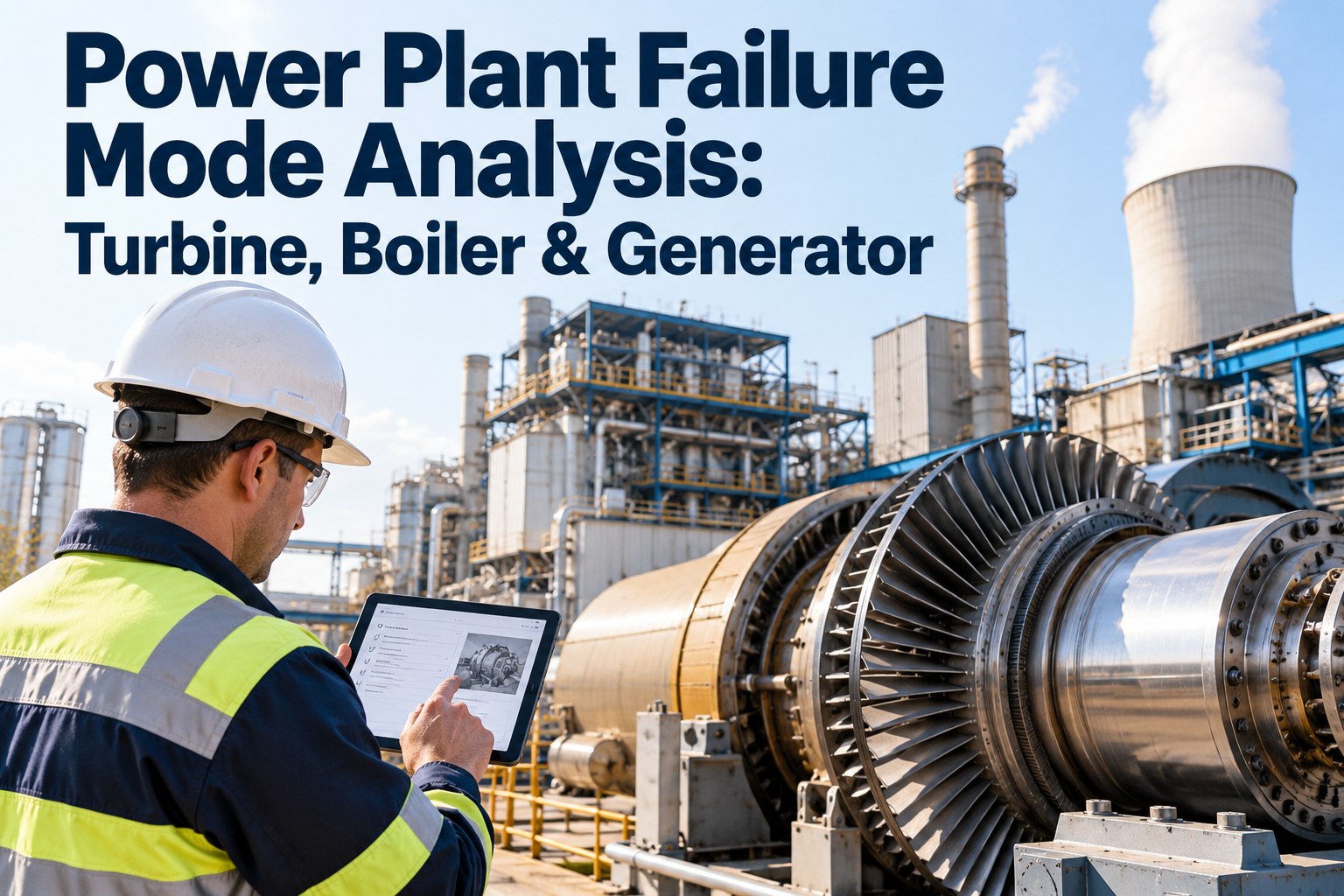
Most power plants already know how their equipment can fail. The knowledge sits in OEM manuals, outage reports, an old FMEA spreadsheet and the heads of senior engineers. The problem is that it is rarely connected to day-to-day maintenance. A bearing temperature trend is logged in one place, the failure mode it points to is documented in another, and the work order that should follow is raised only after the trip. Failure mode analysis works when the library, the inspections and the work orders live together. OxMaint AI maintenance management software keeps asset history, inspection findings, work orders and preventive plans linked so failure knowledge turns into action.
Power Plant Failure Mode Analysis: Turbine, Boiler & Generator.
A static FMEA file goes stale the day it is saved. OxMaint AI connects failure modes to asset inspections, findings, work orders and recurring PM in one platform, so every failure and every near-miss updates what you know and what you schedule next.
by asset and system
early warning signs
cause and fix recorded
strategy revised from history
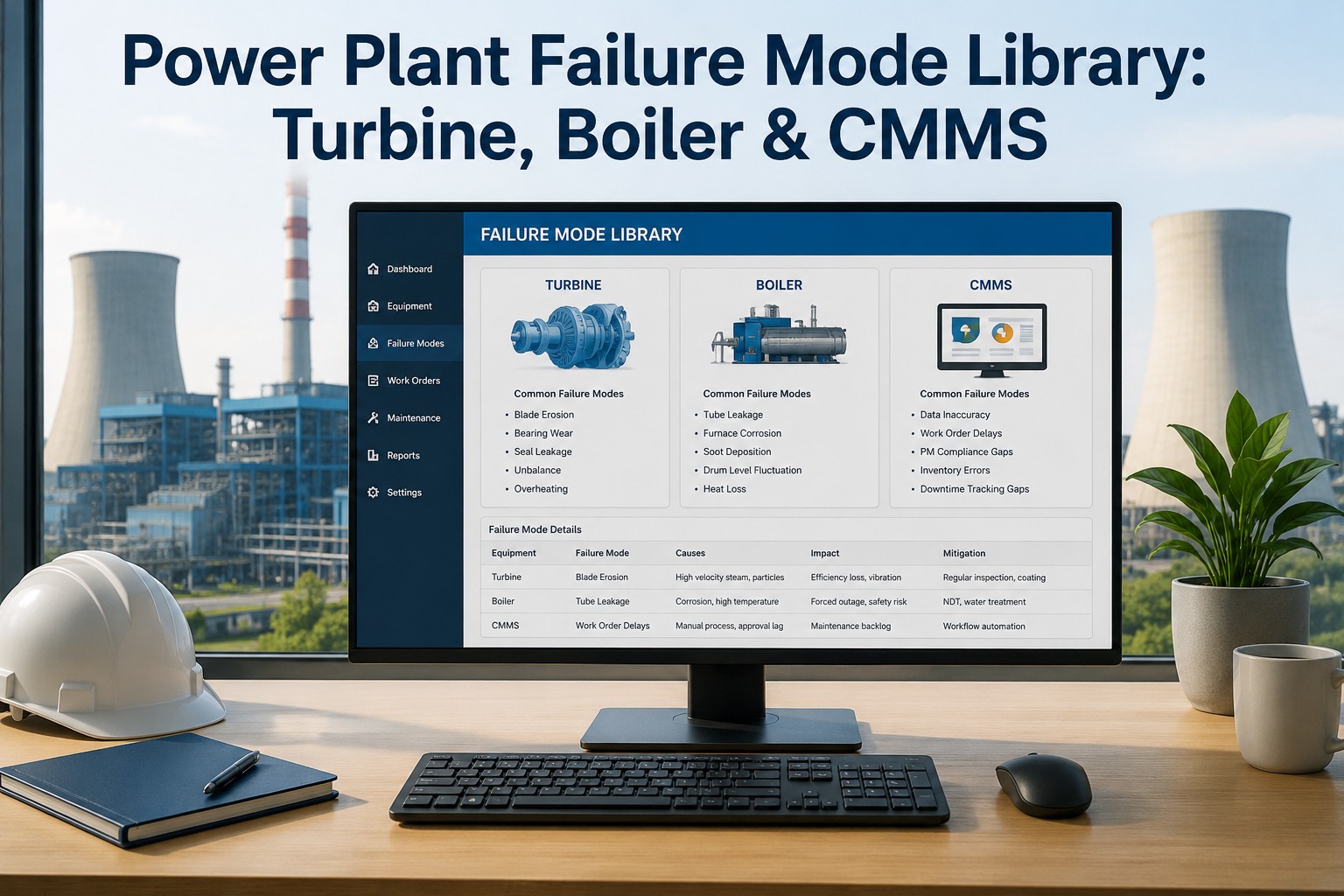
Power Plant Failure Mode Library
Pick an equipment group to see typical failure modes, what causes them, how they warn you and how to catch and correct them. These are common patterns, not a replacement for OEM guidance or your own plant history. Start free and build this library for your own assets.
| Failure mode | Typical causes | Early warning | Detect & act |
|---|---|---|---|
| Excessive vibration | Imbalance, misalignment, thermal bow, blade loss | Rising vibration, orbit change | Vibration monitoring; balance, realign, inspect blades |
| Bearing failure | Contaminated or low lube oil, misalignment | Rising bearing metal temperature, oil debris | Oil analysis and temperature trend; fix lube system, replace bearing |
| Blade erosion, fouling or cracking | Poor steam quality, deposits, resonance | Efficiency loss, vibration shifts | Borescope and performance trending; clean, repair or replace |
| Control valve sticking | Deposits, contaminated hydraulic fluid | Slow response, hunting | Valve stroke tests; overhaul and fluid cleanliness |
| Failure mode | Typical causes | Early warning | Detect & act |
|---|---|---|---|
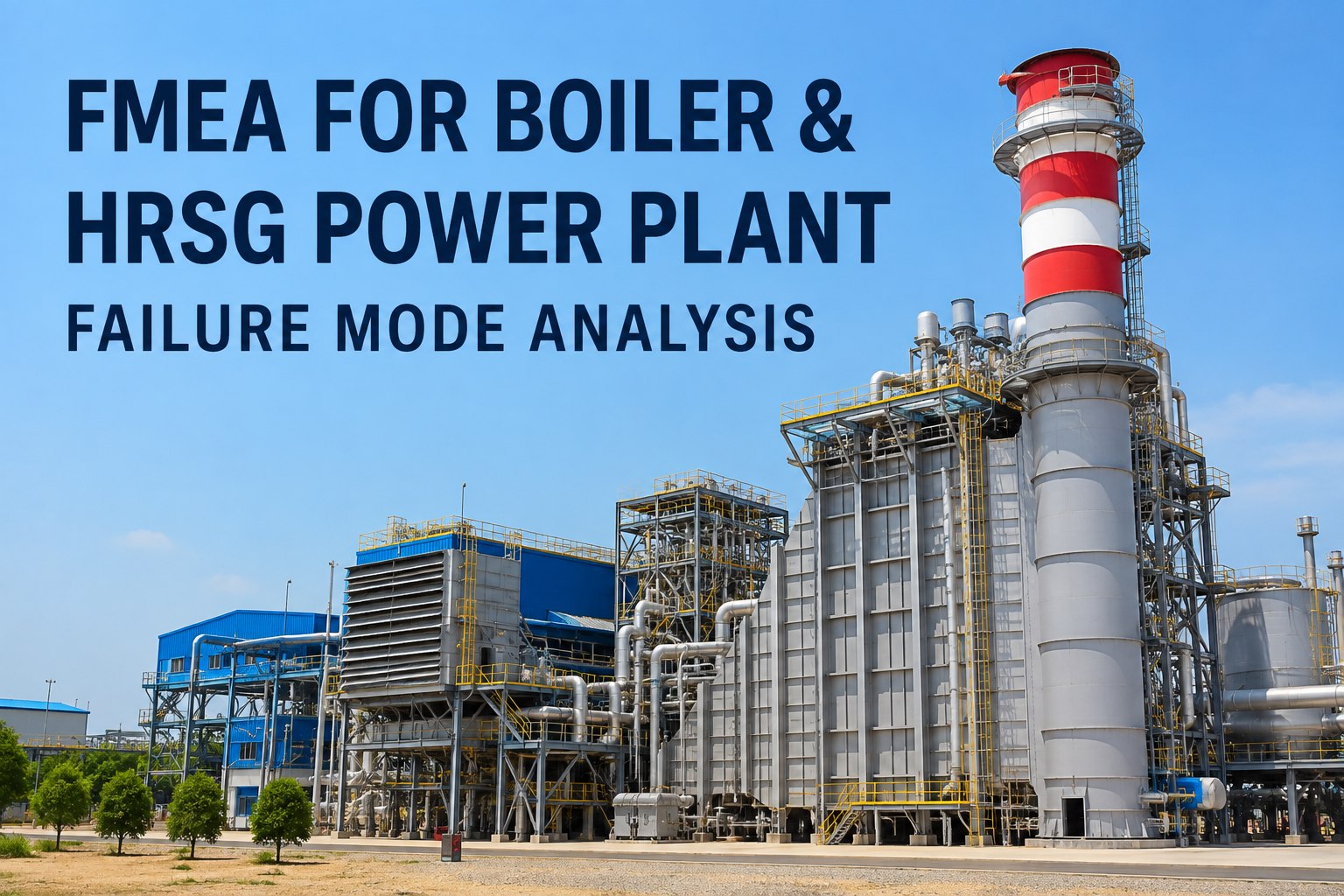
| Tube leak | Overheating, corrosion, erosion, fatigue | Rising make-up water, leak noise | Thickness trending, chemistry control; confirm cause before repair |
| Fouling and slagging | Fuel quality, combustion conditions | Rising gas temperatures and pressure drop | Temperature and ΔP trends; soot blowing, combustion tuning |
| Unstable coal feed or mill faults | Wet coal, wear, sensor drift | Firing swings, feed rate deviation | Feeder and mill checks, calibration; repair and recalibrate |
| Drum level instrument failure | Sensor drift, impulse line problems | Level hunting, disagreement between transmitters | Calibration and loop checks; recalibrate or replace |
| Failure mode | Typical causes | Early warning | Detect & act |
|---|---|---|---|
| Stator insulation degradation | Thermal ageing, moisture, partial discharge | Falling insulation resistance, rising discharge activity | Insulation and partial discharge testing; clean, dry or repair |
| Rotor shorted turns | Thermal and mechanical stress | Vibration changing with field current | Flux probe and vibration review; repair at outage |
| Shaft current bearing damage | Shaft voltage, failed grounding | Bearing wear, high shaft voltage | Check grounding brushes and insulation; restore protection |
| Cooling system faults | Blocked coolers, leaks, poor gas purity | Rising winding temperatures | Temperature and gas purity trends; clean or repair coolers |
| Failure mode | Typical causes | Early warning | Detect & act |
|---|---|---|---|
| Feedwater pump failure | Cavitation, seal or bearing wear | Vibration, flow or pressure drop | Vibration and performance trends; overhaul |
| Condenser fouling or leaks | Scale, biofouling, tube damage | Vacuum loss, chemistry excursions | Back-pressure and conductivity trends; clean, plug tubes |
| Transformer insulation fault | Overheating, ageing, moisture | Rising gases in oil, hot spots | Dissolved gas analysis and thermography; repair or replace |
| ID/FD fan imbalance | Erosion, deposits, bearing wear | Rising vibration | Vibration monitoring; clean, balance, replace bearings |
How Failure Modes Are Scored: Risk Priority Number
Classic FMEA scores each failure mode on three scales from 1 to 10 and multiplies them. A higher number means act sooner. Many organisations also use action-priority methods, so follow whichever your site has adopted. Book a demo to see risk linked to PM tasks.
Your FMEA Says the Bearing Can Fail. Does Your PM Plan Know It?
When failure modes live in a spreadsheet, nothing forces them into inspections or work orders. OxMaint AI keeps failure history, findings and recurring tasks on the same asset, so risk shows up in what gets scheduled.
Build a Living FMEA in Five Steps
How OxMaint AI Supports Failure Mode Analysis
Frequently Asked Questions
Turn Failure Knowledge Into Scheduled Work.
Record what failed, link it to the asset, act on early warnings and keep improving the plan. Start with one critical system and build from there.




-root-cause-analysis-and-prevention-programs.png)