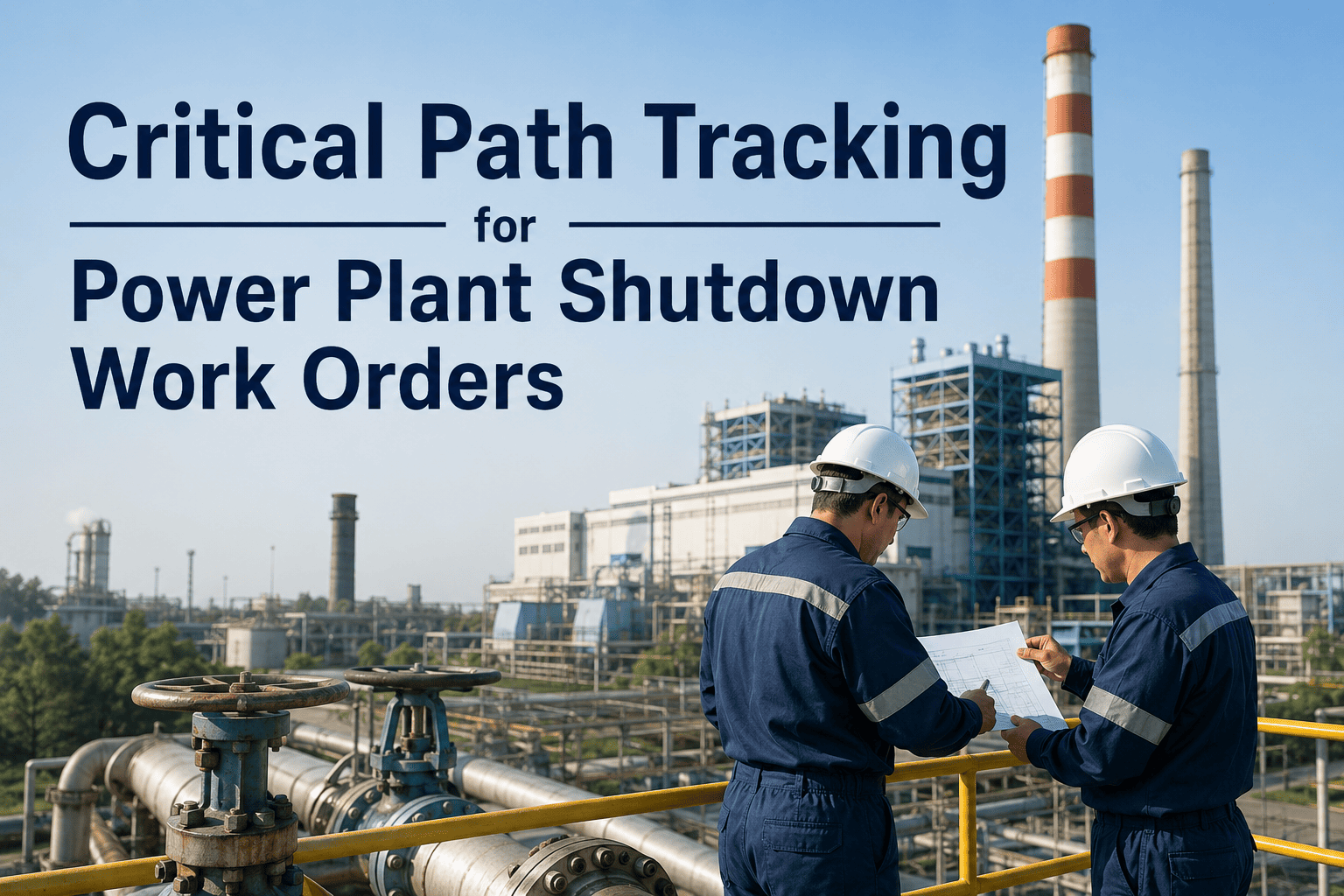
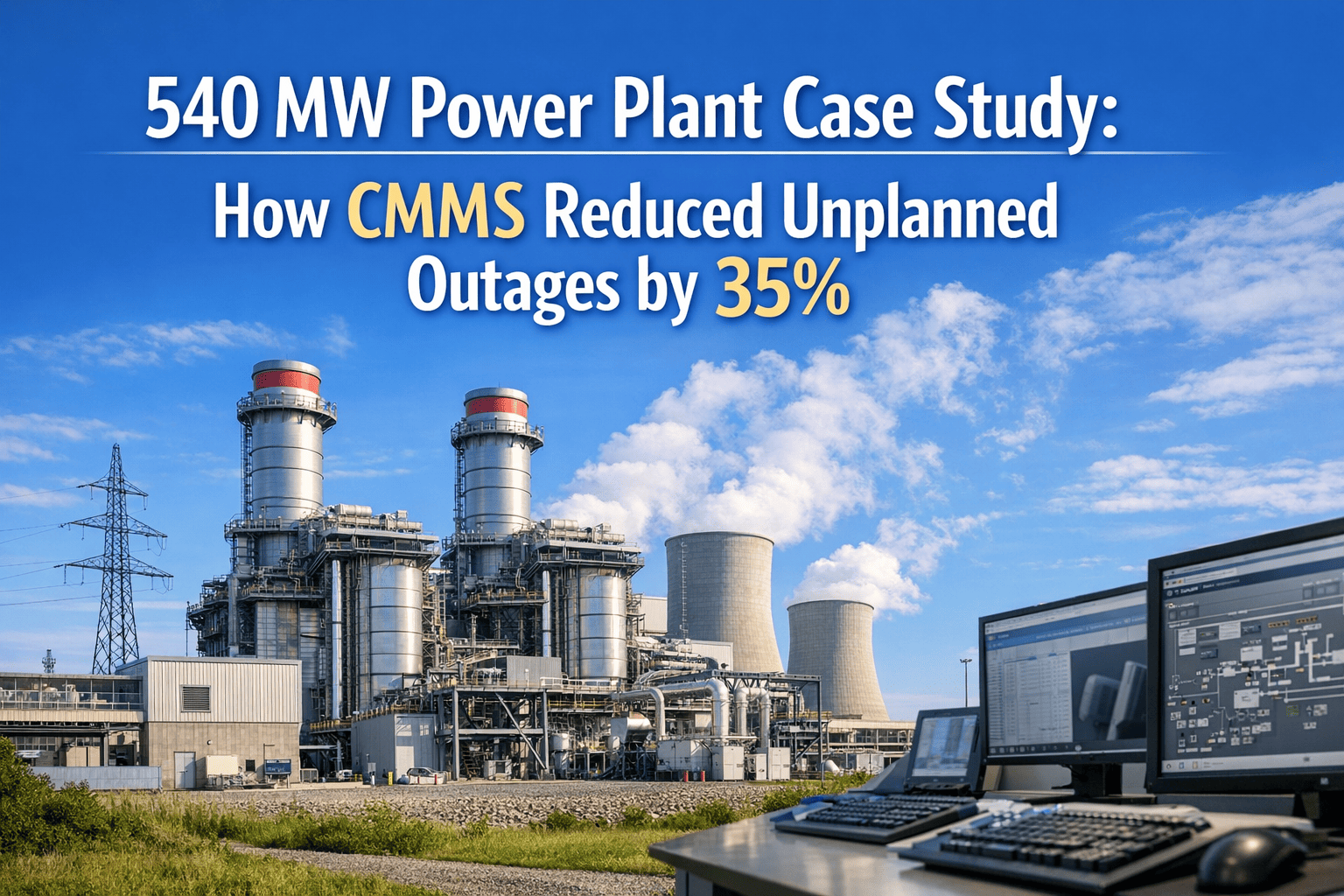
A power plant outage is the single most expensive maintenance event an operator will manage — often compressing 12 to 18 months of accumulated work into a window measured in days. When that window overruns by even 48 hours, the lost generation revenue at a 500 MW gas plant can exceed $1.2 million. The difference between outages that finish on time and those that cascade into costly overruns is almost always the same: how well the work was planned before the unit went offline. Start planning your next outage in OxMaint and bring every contractor, work package, and critical path milestone into one coordinated system — or book a demo to see how OxMaint's outage planning module reduces turnaround time for power generation operators.
Every Day Your Unit Stays Offline Costs More Than Yesterday.
Plan the Outage Before It Plans You.
Critical path tracking, contractor coordination, and thousands of work packages — managed from a single outage planning platform built for power generation operators.
Why Power Plant Outages Overrun — And What the Data Shows
Post-outage analysis from power generation operators consistently identifies the same root causes behind schedule overruns. None of them are caused by the scope of the work. They are caused by how the work was organised, communicated, and tracked before and during the outage window.
The 5-Phase Outage Planning Framework OxMaint Structures
A power plant outage is not a single event — it is a five-phase programme that begins months before the unit goes offline and concludes only when the returning unit passes acceptance testing. OxMaint manages the work across all five phases from a single platform, with each phase building on the record of the last.
Critical Path Tracking: The Capability That Protects Your Return-to-Service Date
In an outage with 4,000 to 8,000 work tasks, only 60 to 120 of them actually control the minimum outage duration. These are the critical path tasks — the ones where a single-day slip cascades into a multi-day extension. OxMaint makes the critical path visible, monitored, and managed throughout the active outage window.
Managing 20+ Contractors in One Outage Window
A major power plant outage typically involves between 15 and 40 specialist contractor teams — turbine OEM teams, electrical contractors, civil crews, specialist NDE inspectors, scaffolding contractors, and equipment rental suppliers — all working in the same physical space within the same compressed time window. Without a shared platform, coordination breaks down at handover points.
Spreadsheet Outage Planning vs OxMaint: What Changes
Most power plant outages are still planned in spreadsheets, project management tools not designed for maintenance, or standalone scheduling software disconnected from the plant CMMS. Here is where those approaches break down — and what OxMaint provides instead.
| Capability | Spreadsheet / Manual | OxMaint Outage Module |
|---|---|---|
| Work package count manageable | Breaks down above 500 tasks | Handles 6,000+ tasks natively |
| Critical path identification | Manual — easily missed | Automatic — flagged and monitored |
| Contractor access and visibility | Email / phone coordination only | Shared portal — real-time progress |
| Schedule slip detection | Identified at end-of-day meeting | Flagged at task level in real time |
| Discovered work integration | Re-baseline required — hours lost | Added as work package — instant impact view |
| Asset history updated after outage | Manual entry — often incomplete | Automatic — every closed work order updates asset |
| Regulatory documentation output | Separate system required | Built into work order completion records |
| Post-outage analysis data | Available only if manually compiled | Auto-generated — planned vs actual for every task |
What Structured Outage Planning Delivers in Practice
The performance difference between structured and unstructured outage planning compounds across every outage cycle. These outcomes are based on operational data from power generation facilities that transitioned to CMMS-based outage management from spreadsheet and manual planning approaches.
OxMaint Outage Planning Module: What Every Feature Solves
Frequently Asked Questions
How far in advance should power plant outage planning begin in OxMaint?
Can OxMaint handle the volume of work packages in a major gas turbine or steam turbine overhaul?
How does OxMaint handle work scope changes during the active outage window?
Can OxMaint integrate with existing plant CMMS, ERP, or scheduling systems?
Does OxMaint support regulatory documentation requirements for outage work on permitted equipment?
The Outage That Finishes on Time
Was Planned Six Months Ago.
OxMaint gives outage managers the work package structure, critical path visibility, and contractor coordination tools to finish planned maintenance on schedule — and build a better plan for the next one. Most facilities are fully onboarded within three weeks.