Power plant maintenance engineers spend an estimated 40% of their shift chasing information — digging through paper logs, scrolling work order histories, calling colleagues to recall what was done three shutdowns ago. An AI maintenance copilot changes this by turning your CMMS into a conversational intelligence layer: ask a question in plain language, get an answer drawn from real asset history, sensor trends, and failure mode libraries — in seconds, not hours. Plants using conversational AI inside their maintenance management platform report that engineers resolve diagnostic queries 3–5× faster, and that first-time fix rates on complex failures improve by 28–34% when technicians have instant access to AI-interpreted sensor context before they touch the equipment. The difference between a copilot that generates generic advice and one that genuinely helps is whether it is trained on your plant's actual data — work orders, failure events, OEM documentation, and the sensor patterns specific to your asset fleet. OxMaint's AI copilot is built on your operational history from day one, so every answer it gives is grounded in what has actually happened on your plant floor, not what typically happens in a textbook scenario.
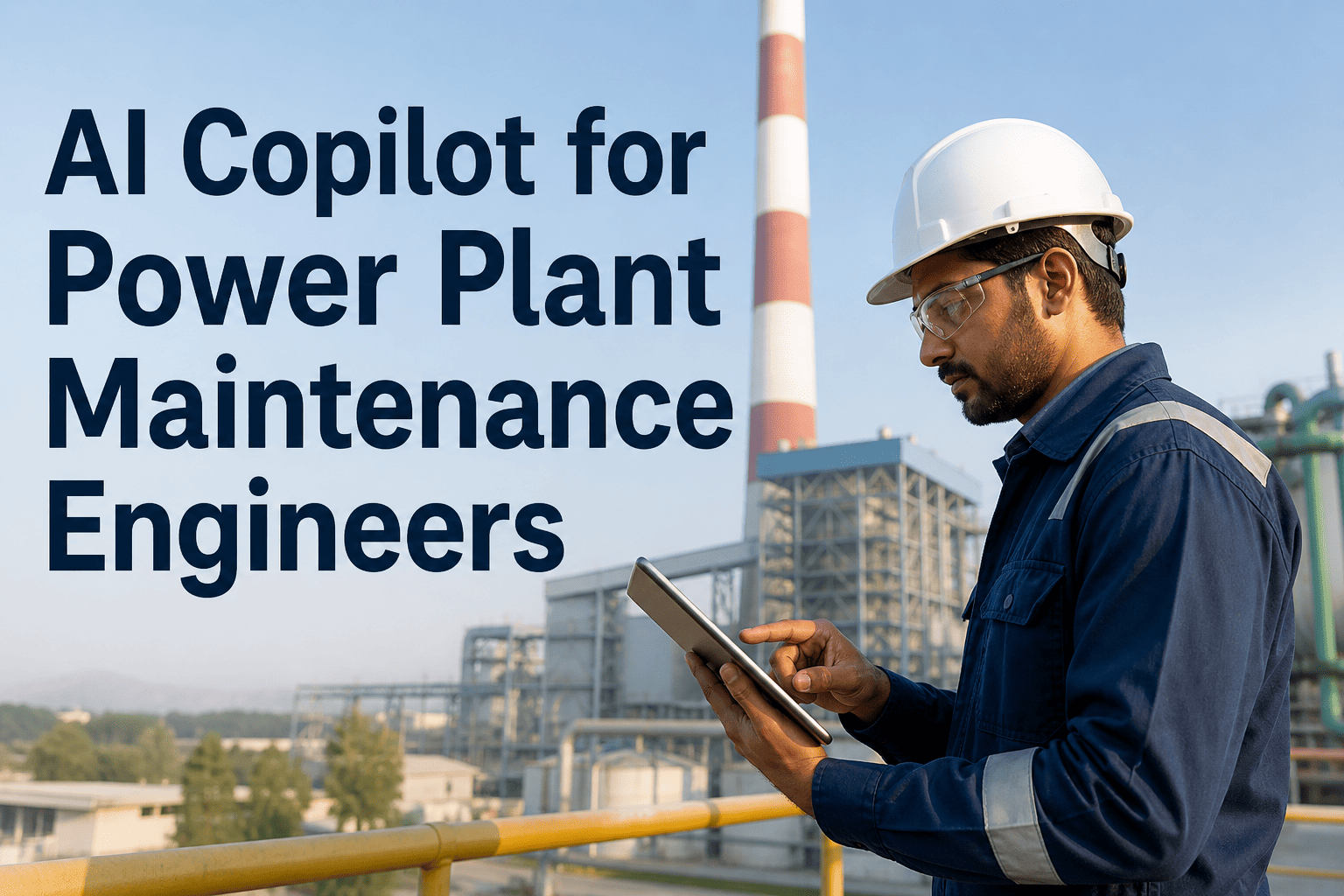
AI Copilot for Power Plant Maintenance Engineers: Query Asset History, Interpret Sensor Trends, and Get Failure Mode Answers — Instantly
A conversational AI interface inside your CMMS that gives every maintenance engineer the diagnostic depth of a 20-year expert — on demand, on any asset, at any hour.
The Information Problem Every Power Plant Engineer Knows
A turbine bearing starts trending warm. You need to know: when did this pattern last appear, what was done, did it precede a failure, and what are the likely causes at this temperature rise rate? That answer is buried across three years of work orders, a maintenance log spreadsheet from 2022, and two technicians who worked the last shutdown. The AI copilot surfaces all of it in one typed question — with the sensor trend overlaid and the failure mode probability ranked.
Finding relevant repair history for a specific asset across multiple shutdowns requires navigating years of CMMS records manually — time an engineer does not have during a developing fault situation.
Raw vibration, temperature, and pressure data streams require specialist knowledge to interpret. Not every engineer on shift has the same depth on every asset class — especially during night shifts and weekends.
OEM manuals, FMEA databases, and service bulletins contain precise failure mode guidance — but they are rarely consulted under time pressure. Engineers default to experience rather than documented best practice.
When experienced engineers retire or change shifts, the pattern recognition they carry — which sensor combination preceded which failure — is lost. AI copilot preserves and makes that knowledge accessible to every team member.
What an AI Maintenance Copilot Actually Does Inside Your CMMS
The copilot is not a chatbot that answers general questions about equipment. It is an intelligence layer trained on your plant's data — asset by asset, failure by failure — that responds to queries with context drawn from your own operational history and OEM technical documentation.
See the AI Copilot Answer Questions About Your Own Assets
OxMaint's AI copilot connects to your asset history from day one. No generic answers — every response is drawn from your plant's actual maintenance records, sensor data, and OEM documentation.
How the AI Copilot Interprets Sensor Trends — Not Just Reports Them
Most CMMS platforms show you the sensor data. The AI copilot tells you what it means. This distinction is the difference between a dashboard and a diagnostic tool.
| Sensor Signal Pattern | Standard CMMS Display | AI Copilot Interpretation | Action Generated |
|---|---|---|---|
| Bearing temp +3°C over 10 days | Chart shows upward trend | Matches early-stage lubrication starvation pattern seen on 3 similar assets before failure | Lubrication check work order, 7-day follow-up patrol |
| Vibration spike at 1× running speed | Alert triggered at threshold | 1× speed component indicates mass imbalance — distinct from previous bearing failure signature on this asset | Balancing inspection, review of last rotor overhaul record |
| Pressure oscillation pattern | Readings within limit range | Oscillation frequency matches cavitation precursor — 6 of 7 similar cases preceded pump seal failure within 21 days | Expedited seal inspection, parts reservation for likely repair |
| Motor current draw +8% | Within alarm limit, no alert | Gradual current increase without load change indicates mechanical drag — likely bearing or seal deterioration developing | Condition inspection work order, trend monitoring flag set |
Where AI Copilot Delivers the Highest Value in Power Plant Maintenance
Not every maintenance task benefits equally from AI assistance. These five scenarios account for the majority of copilot value in power generation environments.
Senior engineers are not on shift at 2 AM when a boiler feedwater pump starts showing abnormal vibration. The AI copilot gives the on-call technician the same diagnostic depth the senior engineer would provide — drawing from asset-specific failure history and sensor baseline comparison to guide the right response without an emergency call-out.
Planning a planned outage scope requires knowing the condition of every asset before the plant goes down. The copilot aggregates sensor trend trajectories, open work order history, and time-since-last-inspection data to generate a recommended inspection scope for each asset — prioritised by failure probability and consequence severity.
After an unplanned failure, the engineering team needs to understand what sensor signals preceded it, whether the failure mode was predicted, and what maintenance actions were or were not taken in the weeks before. The copilot reconstructs the full pre-failure sensor and work order timeline in minutes — a task that previously took days of manual data extraction.
Junior engineers and new plant hires need months to build asset-specific knowledge. The AI copilot compresses this timeline by making the plant's complete failure history and diagnostic knowledge accessible through natural language queries — so a 2-year engineer can diagnose with the reference depth of a 15-year veteran on day one.
Compliance audits for power plants require documenting that maintenance was performed on schedule, that sensor readings were within acceptable parameters, and that corrective actions were taken when thresholds were breached. The copilot assembles this documentation from CMMS records on request — structured, timestamped, and audit-ready.
Frequently Asked Questions
Your Plant's Maintenance History Is a Goldmine. The AI Copilot Puts It to Work.
Every work order completed, every sensor reading logged, every failure event documented in OxMaint becomes knowledge the AI copilot can retrieve, analyse, and apply to your next diagnostic question. Stop searching. Start asking.