The most dangerous jobs in a power plant — cutting into a line that may still hold energy, entering a boiler, striking an arc near fuel, working live electrical — are exactly the ones a verbal "go ahead" should never cover. A permit-to-work system is the formal control that makes sure the hazards are assessed, the isolations are in place and the right people have signed before anyone starts. The OXMAINT AI — the AI-powered maintenance management software — runs that system, so no permit goes live until its controls, approvals and expiry are all accounted for.
Safety & Compliance · Power Generation · Permit-to-Work · PTW Process Guide · 2026
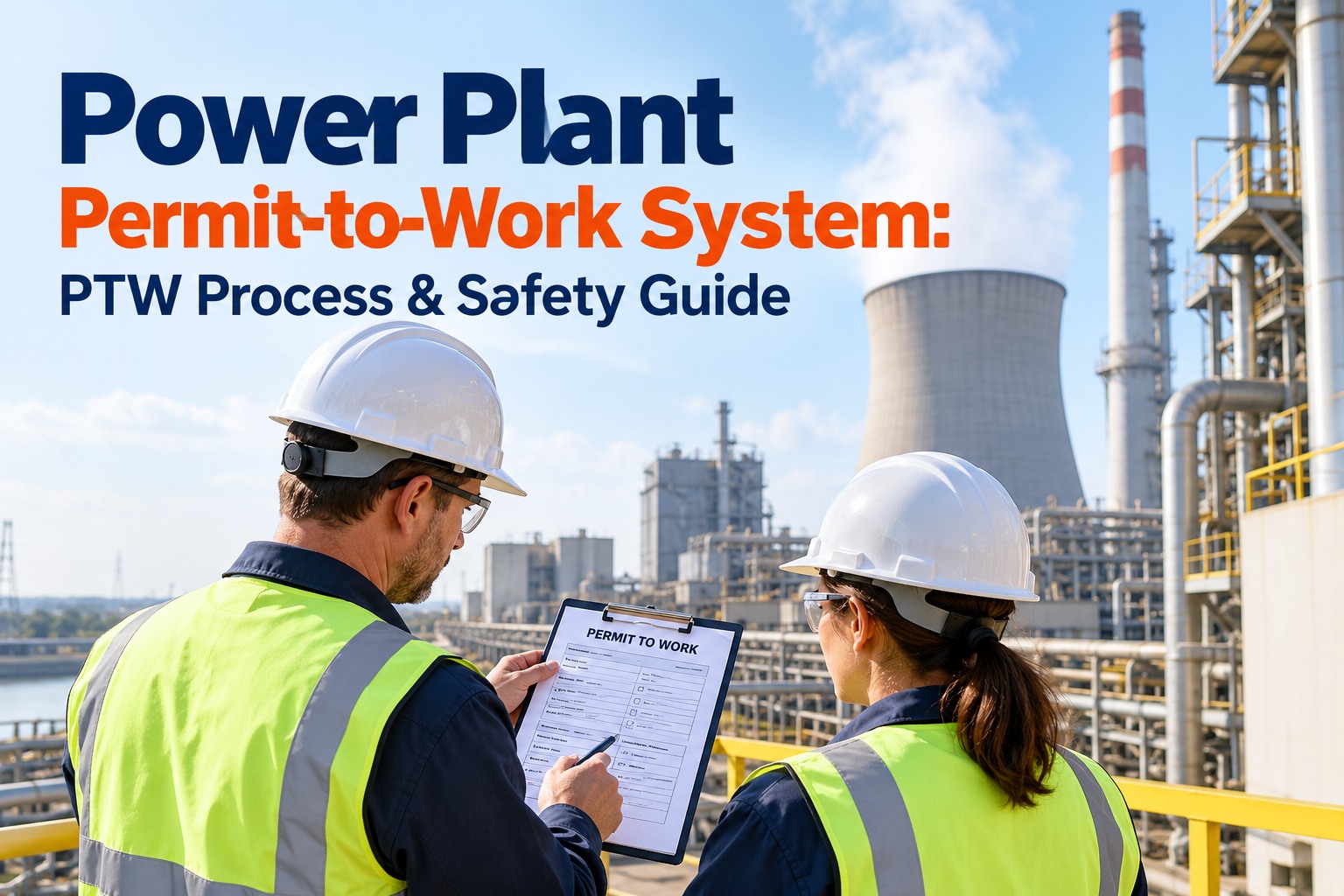
Power Plant Permit-to-Work System: PTW Process & Safety Guide
Hot work, confined space, live electrical, breaking into stored energy — each demands its own controls, its own isolations and its own sign-off. A permit-to-work system holds all of it to a documented process, and OXMAINT AI enforces that process so a permit is never issued with a gap in it.
1Request
→
2Assess & isolate
→
3Authorize
→
4Work
→
5Hand back
Formal control
High-risk work runs on a documented permit, not a verbal nod
6 permit types
Hot work, confined space, electrical, height, excavation, general
Isolation first
Lockout/tagout and proven-dead before any work is authorized
Full audit
Every check, signature and isolation kept for compliance
Where Permit Systems Break Down
A permit-to-work system does not fail because the process is wrong — it fails in the gaps, where a paper form hides what a live system would catch. These are the breakdowns that turn a controlled job into an incident, and the ones OXMAINT AI is built to close; start free and run every permit through one enforced process in OXMAINT AI.
Expired & overrun
A permit valid for one shift quietly runs into the next — the controls lapse while the work goes on.
Incomplete isolation
An energy source missed or a lock not applied leaves stored energy waiting behind a signed-off permit.
Poor handback
Work closes but isolations stay on, or the equipment returns to service before it is confirmed safe.
Conflicting permits
Two crews on the same isolated equipment — one lifts a lock the other still depends on.
The Permit-to-Work Lifecycle
Every permit moves through the same gated sequence — and the gate that matters most is authorization, where nothing proceeds until the controls are confirmed. OXMAINT AI holds the permit at each stage until the step before it is genuinely complete; book a demo to see the gated permit lifecycle in OXMAINT AI.
1
Request
The job is raised with its scope, location and hazards named.
2
Risk assessment
Hazards judged and the controls that make the work safe set out.
3
Isolation & controls
Energy isolated, locked and tagged; atmospheres and PPE confirmed.
4
Authorization
The gate — the permit is signed only when every control is verified.
5
Work in progress
The job proceeds within the permit's limits, time and conditions.
6
Handback
Work confirmed complete, isolations lifted, equipment returned safe.
7
Close
The permit is cancelled and the full record kept for audit.
The Permit Types a Power Plant Runs
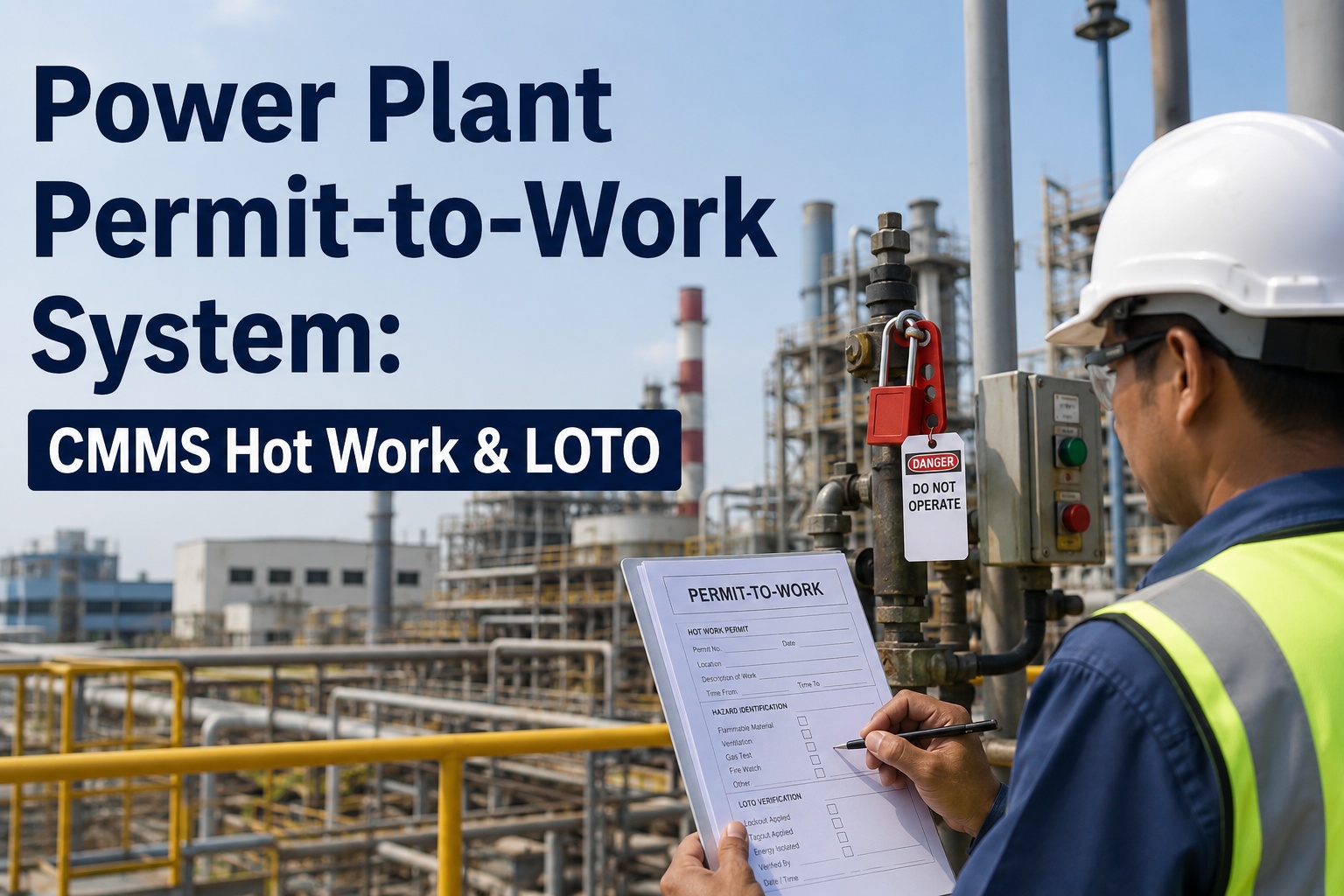
Different work carries different killers, so each high-risk activity has its own permit, its own controls and its own governing standard. These are the permits a thermal plant issues most; start free and issue every permit type from one place in OXMAINT AI.
Hot Work
Welding, cutting, grinding and open flame near combustibles.
Fire watch · gas test · combustibles cleared
NFPA 51B · OSHA 1910.252
Confined Space Entry
Boilers, tanks, vessels, sumps and other enclosed spaces.
Atmosphere test · attendant · rescue plan
OSHA 1910.146
Electrical / LOTO
Work on or near energized or isolated electrical equipment.
Isolate · lock & tag · prove dead · arc-flash PPE
OSHA 1910.147 · NFPA 70E
Working at Height
Scaffolds, roofs, boiler structures and elevated platforms.
Fall arrest · access check · exclusion zone below
OSHA 1910.28
Excavation
Trenching and ground disturbance across the site.
Buried-services check · shoring · edge control
OSHA 1926 Subpart P
General / Cold Work
Lower-risk mechanical work still needing documented control.
Basic isolation · area control · scope limits
Site PTW procedure
Energy Isolation Is the Heart of It
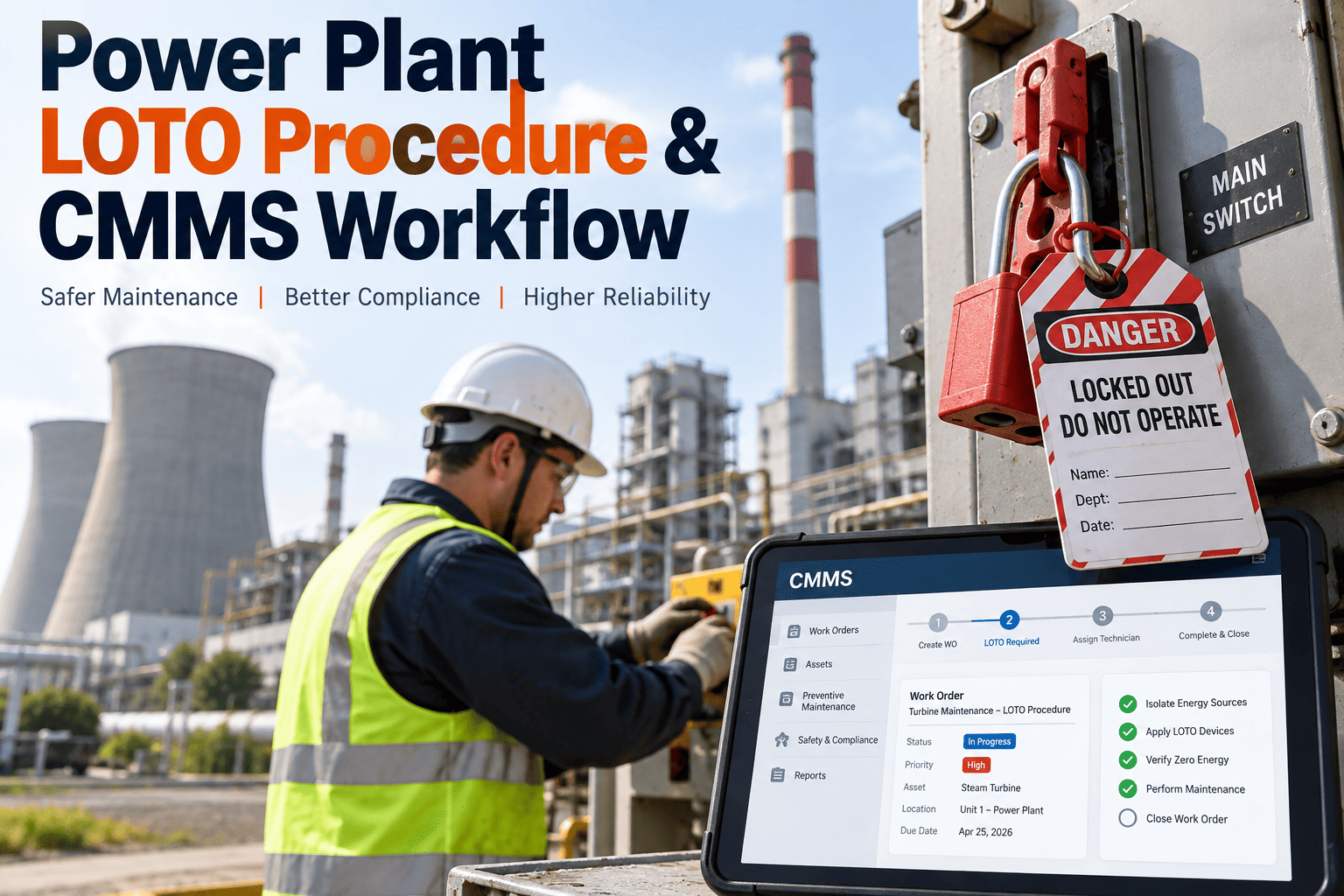
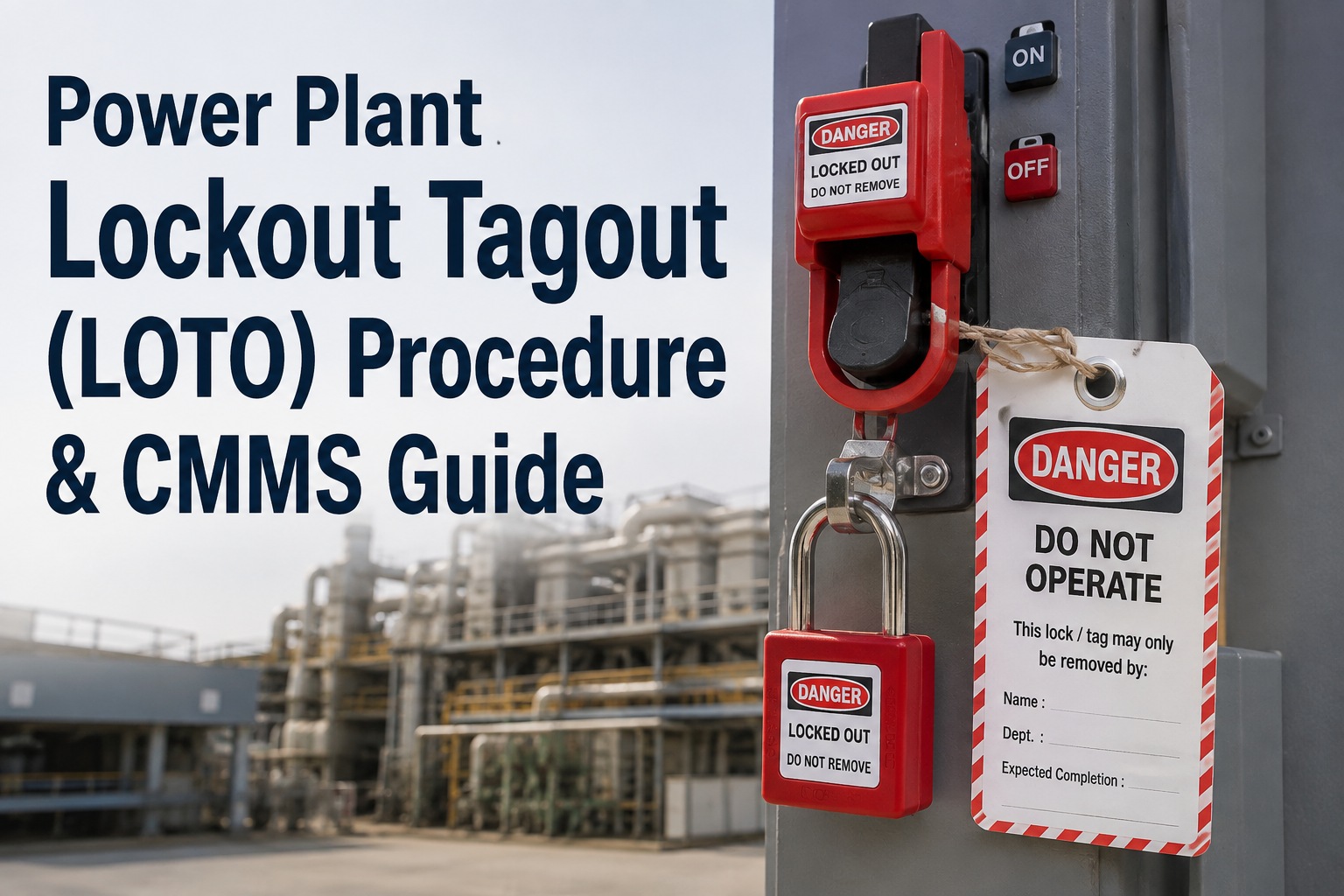
Most serious permit failures trace back to one thing — energy that should have been isolated was not, or was let back too soon. Lockout/tagout is the sequence that removes that risk, and it is the control a permit exists to confirm; book a demo to see the isolation register inside OXMAINT AI.
1
Identify energies
Electrical, mechanical, thermal, pressure, chemical — every source named.
2
Isolate each one
Open, close or disconnect at the right isolation point for each source.
3
Lock & tag
A personal lock and a tag on every point, so nothing can be re-energized.
4
Release stored energy
Bleed pressure, discharge, drain and block any residual energy.
5
Prove zero energy
Test to confirm dead and de-energized before the permit is signed.
What Gets Checked, Signed and Kept
A permit is only as good as the checks behind it and the record it leaves — the proof that the controls were real and the right people owned them. This is what a sound permit holds for each work type; start free and keep an audit-ready record of every permit in OXMAINT AI.
Permit
Pre-issue checks
Authorizing roles
Validity
Record kept
Hot Work
Gas test, fire watch, area cleared
Issuer + area owner
Shift / task
Permit + gas readings
Confined Space
Atmosphere test, attendant, rescue
Entry supervisor
Entry window
Entry log + readings
Electrical / LOTO
Isolation, lock, tag, proven dead
Authorized person
Until handback
Isolation register
Working at Height
Access, fall arrest, exclusion zone
Issuer + supervisor
Shift / task
Permit + checklist
Excavation
Buried services, shoring plan
Issuer + engineer
Task duration
Permit + services map
General Work
Isolation, scope, area control
Permit issuer
Shift / task
Signed permit
A Paper Permit Cannot Flag Its Own Gap. OXMAINT AI Can.
A form in a folder will not warn you that it has expired, that an isolation is missing, or that another crew is working the same equipment. The OXMAINT AI maintenance management software enforces the checks, holds the gate at authorization and keeps the whole record — so a permit is a live control, not a piece of paper.
How OXMAINT AI Runs Permit-to-Work
A permit system earns its keep only when the process cannot be skipped and the record cannot be lost — and that is the job the software does. Here is what the OXMAINT AI maintenance management software brings to power-plant PTW; book a demo to see permit-to-work enforced end to end in OXMAINT AI.
Digital permit issue
No permit goes live until its risk assessment, controls and checks are complete and on record.
Isolation & LOTO register
Every isolation point locked, tagged and logged, so nothing is re-energized while work is live.
Approval workflow
The right authorities sign in the right order, each step timestamped against the permit.
Expiry & overrun alerts
A permit cannot quietly run past its validity — the system flags it before the controls lapse.
Conflict check
A second permit on the same isolated equipment is flagged before both are ever live at once.
Full audit trail
Every permit, check, isolation and signature kept and searchable for inspection and compliance.
Frequently Asked Questions
What is a permit-to-work system?
It is a formal, documented control for high-risk work. It ensures the hazards are assessed, the right controls and isolations are in place, and the right people authorize the job before anyone starts.
Which jobs need a permit in a power plant?
Hot work, confined space entry, electrical and lockout/tagout work, working at height and excavation — any task where a missed control can seriously injure or kill. Lower-risk jobs still use a general permit.
How does PTW relate to lockout/tagout?
Lockout/tagout is the energy-isolation control. The permit is the wider document that confirms the isolation is done — plus every other control — before the work is authorized to go ahead.
What standards govern power-plant permits?
Key U.S. references include OSHA 1910.147 for hazardous-energy control, 1910.146 for confined spaces, 1910.252 with NFPA 51B for hot work, 1910.269 for electric power generation, and NFPA 70E for arc-flash safety.
Why move from paper permits to software?
Make Every High-Risk Job Run on a Permit That Cannot Be Skipped.
Run permit-to-work inside the OXMAINT AI maintenance management software — digital permit issue, an isolation and LOTO register, a gated approval workflow, expiry and conflict alerts and a full audit trail — so hot work, confined space, electrical and every other high-risk job is controlled, authorized and recorded, every time.