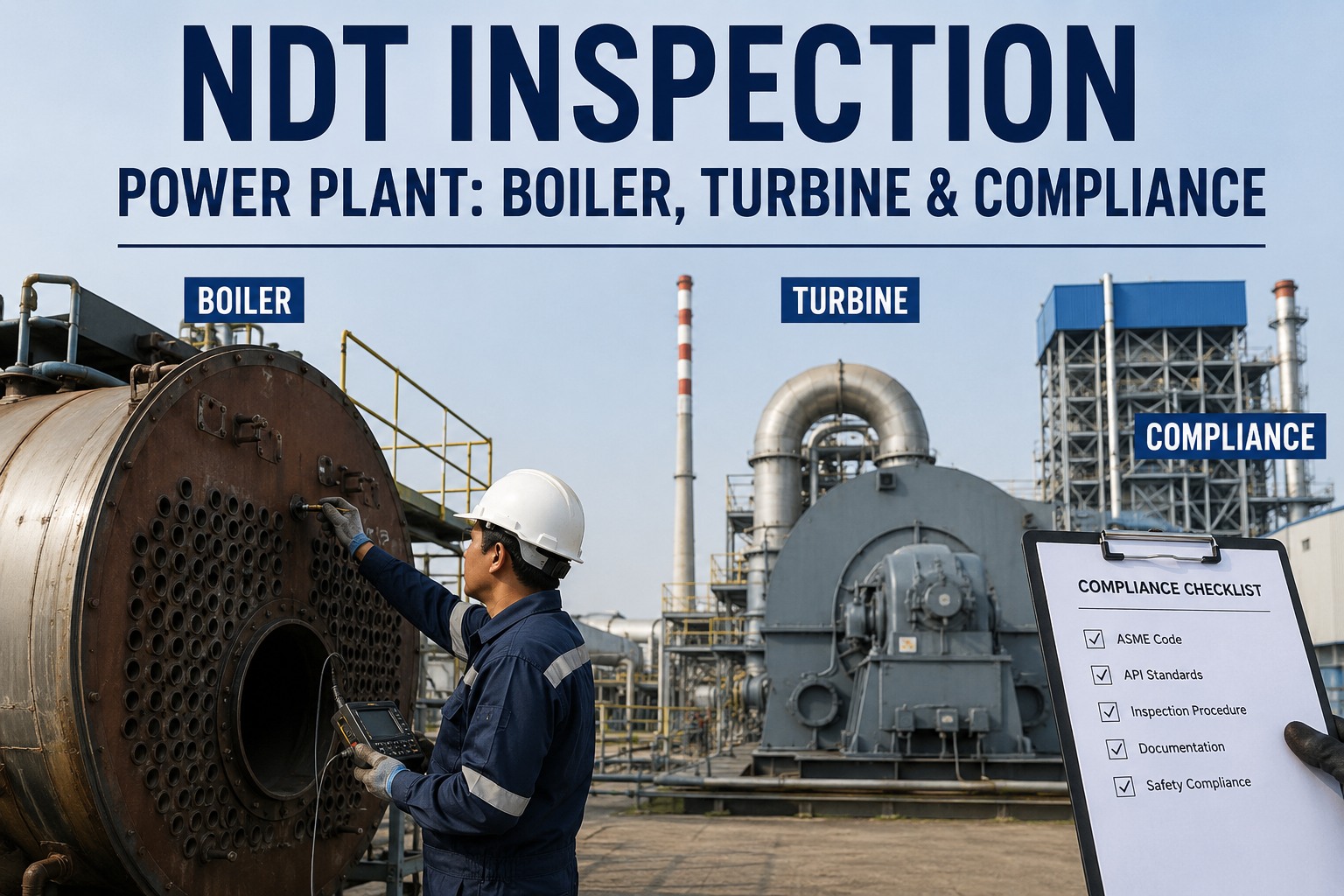
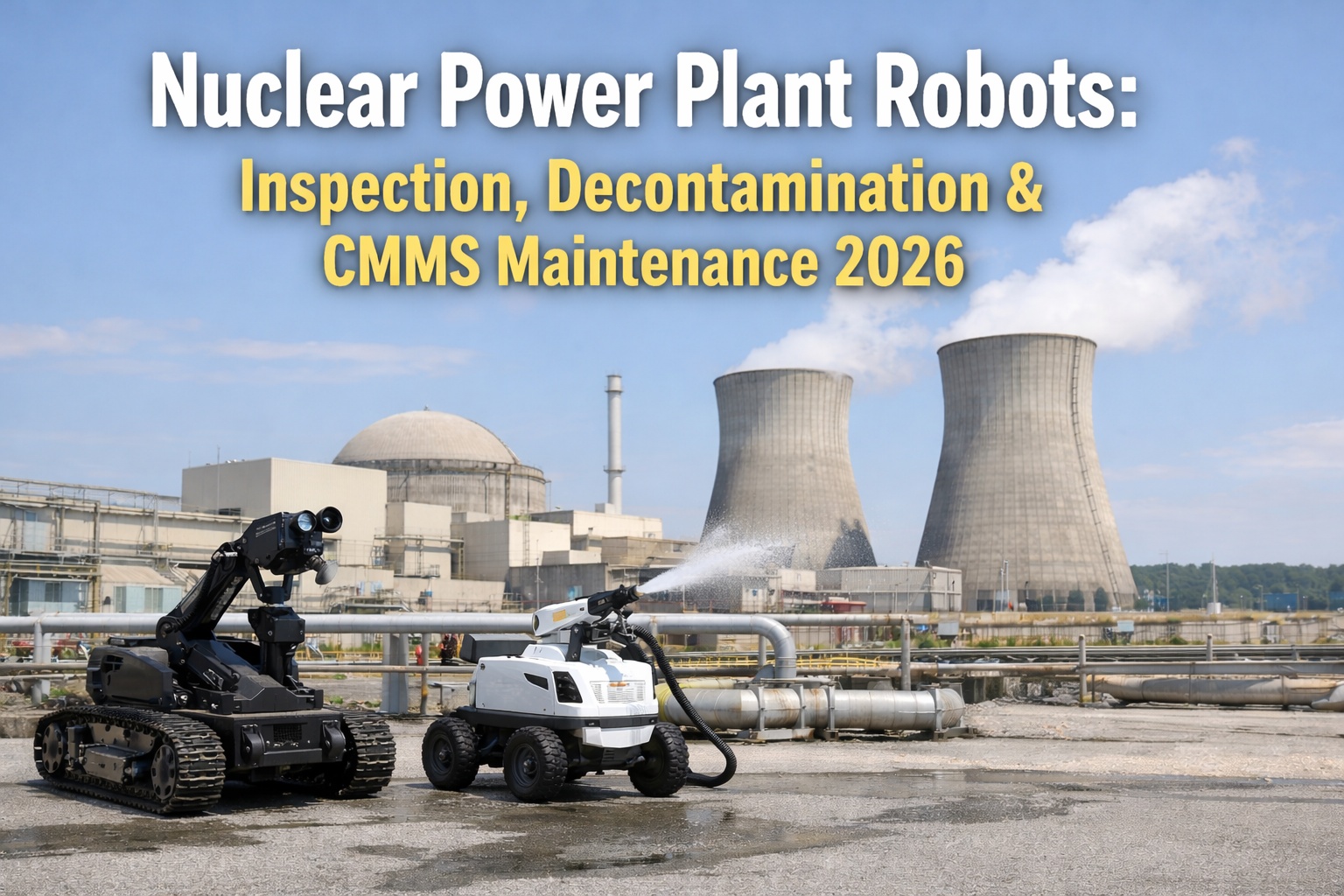
Power plants operate in a relentless cycle of combustion, steam, and generation — turbines spinning at 3,600 RPM, boiler tubes under 2,500 PSI, and cooling systems rejecting megawatts of waste heat around the clock. Equipment failures in these environments do not wait for scheduled shutdowns. A single boiler tube leak costs $500,000 per day in lost generation. A turbine bearing failure can destroy a $20M rotor assembly in seconds. Yet most plant inspections still depend on human operators walking routes with clipboards, limited to areas they can safely access, constrained by outage windows, and generating data that takes hours to reach a maintenance planner. ROS 2-based robotic inspection systems eliminate these constraints — deploying autonomous robots into boiler cavities, turbine halls, and cooling tower basins where human access is dangerous, difficult, or impossible, then feeding every finding directly into a CMMS built for power plant maintenance — sign up free to explore Oxmaint as a prioritised, evidence-backed work order ready for execution.
Why Power Plants Are Turning to ROS 2 Robotic Inspection
Conventional inspection routines cover less than 40% of critical power plant assets during active generation. Confined spaces inside boiler drums, superheater tube banks, and condenser waterboxes remain uninspected until planned outages — by which time small defects have become catastrophic failures. ROS 2 robots change this by operating continuously in areas where temperature, pressure, and access constraints make human inspection impractical. Every finding flows automatically into Oxmaint — try it free to see automated work orders in action with thermal images and severity scoring.
Critical Inspection Zones: Where Robots Replace Risk
Each area of a power plant presents unique thermal, chemical, and structural access challenges. ROS 2 robots are configured with zone-specific sensor payloads and navigation strategies to capture data that human inspectors cannot safely collect. Findings route directly to schedule a demo to see how robotic findings auto-generate Oxmaint work orders for immediate maintenance action.
Boiler Internals & Tube Banks
Hazards: Extreme radiant heat from waterwalls, superheater and reheater tube banks at 540°C+, ash buildup creating confined access, toxic flue gas (SO2, NOx, CO).
Inspection targets: Tube wall thickness, weld integrity at headers, slagging and fouling severity, erosion patterns on economiser tubes, refractory condition on burner throats.
ROS 2 nodes: boiler_nav (confined-space SLAM), thermal_mapper (tube surface profiling), ut_thickness (wall thickness scanning), ash_analyser (fouling depth measurement).
Steam Turbine Hall & Generator
Hazards: High-speed rotating machinery (3,000-3,600 RPM), steam leaks at 2,500 PSI, extreme noise (110+ dB), confined bearing pedestals, hydrogen-cooled generator enclosures.
Inspection targets: Bearing pedestal vibration and temperature, steam valve condition, turbine casing expansion measurements, hydrogen seal integrity, exciter condition monitoring.
ROS 2 nodes: turbine_patrol_nav, vibration_collector (tri-axial accelerometer), steam_leak_detector (ultrasonic + thermal), casing_expansion_monitor, h2_leak_scanner.
Cooling Tower & Condenser Systems
Hazards: Wet, slippery surfaces in cooling tower basins, Legionella exposure risk, confined condenser waterboxes, biofouling and chemical treatment zones.
Inspection targets: Cooling tower fill condition, drift eliminator integrity, condenser tube fouling and plugging, circulating water pump vibration, expansion joint condition.
ROS 2 nodes: wet_terrain_nav (slip-resistant gait), fill_condition_scanner (visual AI), condenser_tube_inspector, cw_pump_monitor, bio_fouling_assessor.
Fuel Handling & Emissions Systems
Hazards: Coal dust explosion risk, ammonia leaks at SCR systems, fly ash exposure, confined ESP hoppers, rotating pulveriser components.
Inspection targets: Coal conveyor belt condition, pulveriser wear components, SCR catalyst condition, ESP plate alignment, FGD absorber tower internals, ash handling system wear.
ROS 2 nodes: atex_safe_nav (explosion-proof navigation), dust_monitor, scr_catalyst_scanner, esp_plate_inspector, fgd_corrosion_mapper.
Every Robotic Inspection Creates a Maintenance Decision. Automate Both.
Oxmaint receives robotic inspection findings via ROS 2 bridge nodes and automatically generates prioritised work orders with thermal images, vibration spectra, severity classification, and recommended corrective actions — from detection to dispatched repair in under 5 minutes.
From Checkpoint to Work Order: The Data Pipeline
Capturing data is only valuable when it reaches the right people with the right urgency. Here is how robotic patrol data becomes a closed-loop maintenance action — create your free Oxmaint account to experience the full data pipeline.
Sensor-to-Defect Pairing for Power Plant Assets
The right sensor matched to the right defect type ensures every robotic checkpoint captures actionable intelligence — sign up for Oxmaint free to automate sensor-to-work-order workflows.
| Defect Category | Primary Sensor | What Gets Detected | CMMS Action |
|---|---|---|---|
| Tube Wall Thinning | Ultrasonic Thickness Gauge | Boiler tube erosion, waterwall wastage, header corrosion pitting | Condition-based work order with thickness map overlay |
| Bearing Degradation | Tri-axial Accelerometer | Turbine bearing wear, pump cavitation, fan imbalance, misalignment | Predictive alert with vibration trend comparison |
| Steam & Gas Leaks | Ultrasonic Microphone + Thermal | Steam trap failures, valve seat erosion, flange gasket blowout, H2 leaks | Leak repair order with energy loss estimate |
| Thermal Anomalies | FLIR Radiometric Camera | Refractory hot spots, insulation failure, electrical hot joints, cooling loss | Priority work order with thermal image evidence |
| Structural Deterioration | HD Camera + AI Classification | Corrosion, fatigue cracks, weld defects, missing fasteners, coating failure | Defect order with annotated photo and severity rating |
| Atmospheric Hazards | Multi-Gas Analyser | CO, H2S, SO2, NH3 concentration; O2 depletion in confined spaces | Safety alert + permit hold; compliance log auto-entry |
Manual Rounds vs. Robot + CMMS Patrols
The gap between clipboard-based walk-arounds and sensor-equipped robotic patrols shows up in every measurable inspection metric — book a demo to see Oxmaint's robotic integration in your plant context.
Deployment Roadmap: Pilot to Full Coverage
Successful robotic inspection programs follow a phased rollout — start narrow, prove value fast, and expand based on documented results. Schedule a free consultation to get a deployment plan tailored to your power plant.
Measured Impact After Deployment
When robotic patrols and CMMS integration operate together, the improvements are structural shifts in how maintenance teams function. These figures reflect documented results from power plants with six or more months of robotic inspection operations.
From Inspection Waypoint to Dispatched Work Order in Under 5 Minutes
Oxmaint bridges the gap between robotic inspection technology and maintenance execution — ensuring every thermal anomaly, vibration spike, and gas alarm becomes a tracked, completed, verified repair.
Frequently Asked Questions
Replace Risk With Robots. Replace Guesswork With Data. Start With Oxmaint.
Your robots capture thermal scans, vibration baselines, and gas readings. Oxmaint turns every reading into an asset history entry, a trend line, or a prioritised work order — automatically. One platform connecting robotic inspection to maintenance outcomes.