Transformer Runtime Hours and Oil Analysis Maintenance
By shreen on February 21, 2026
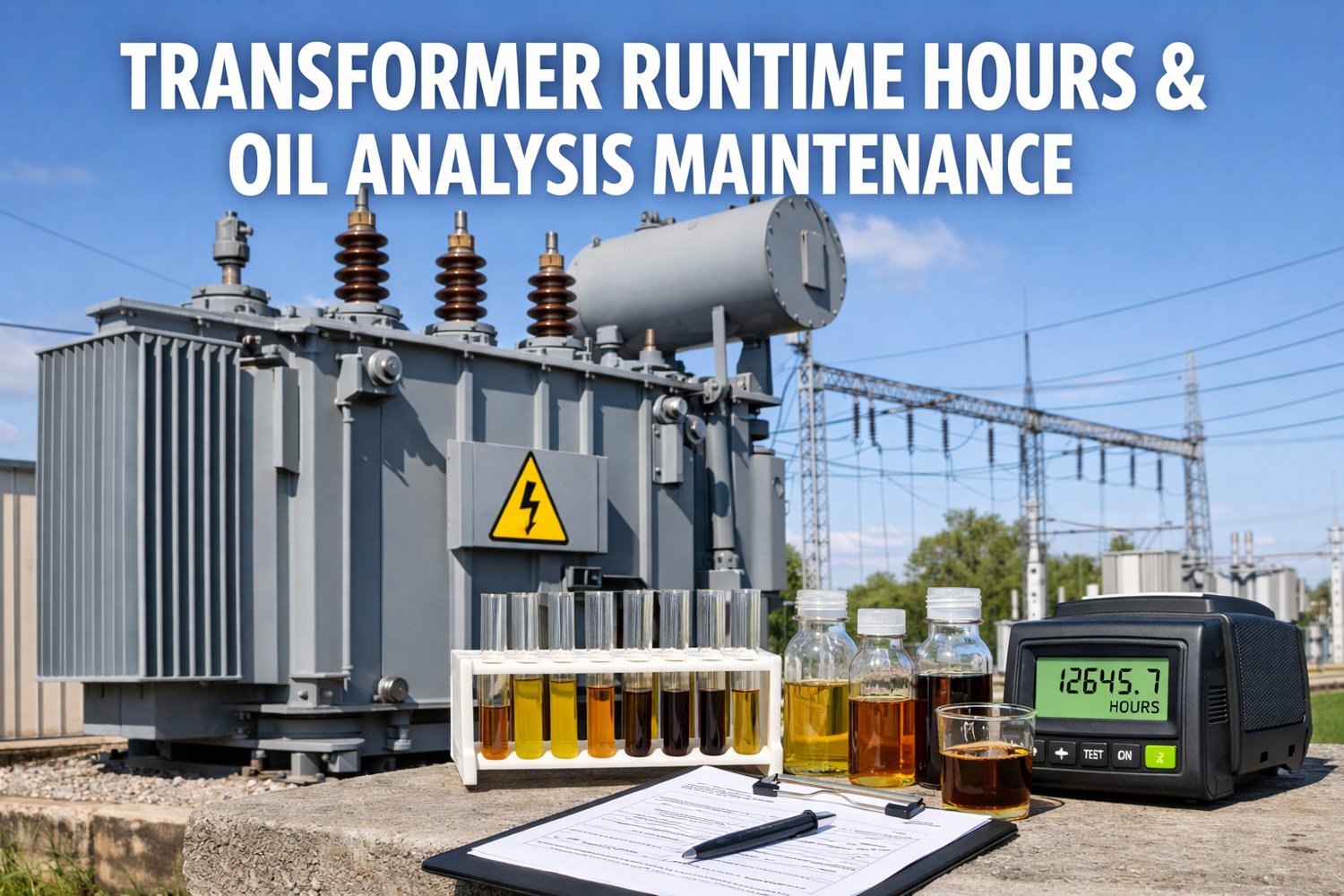
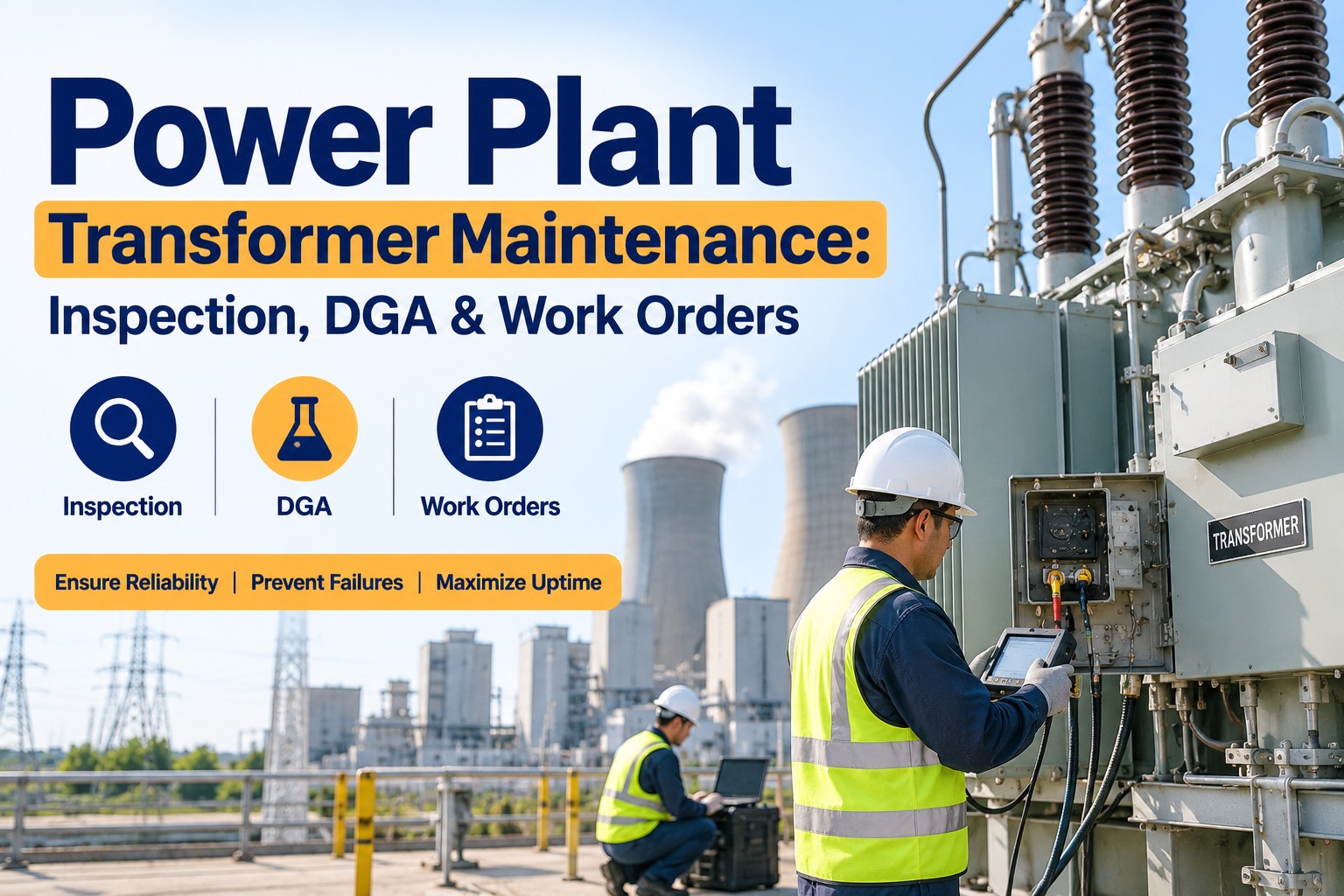
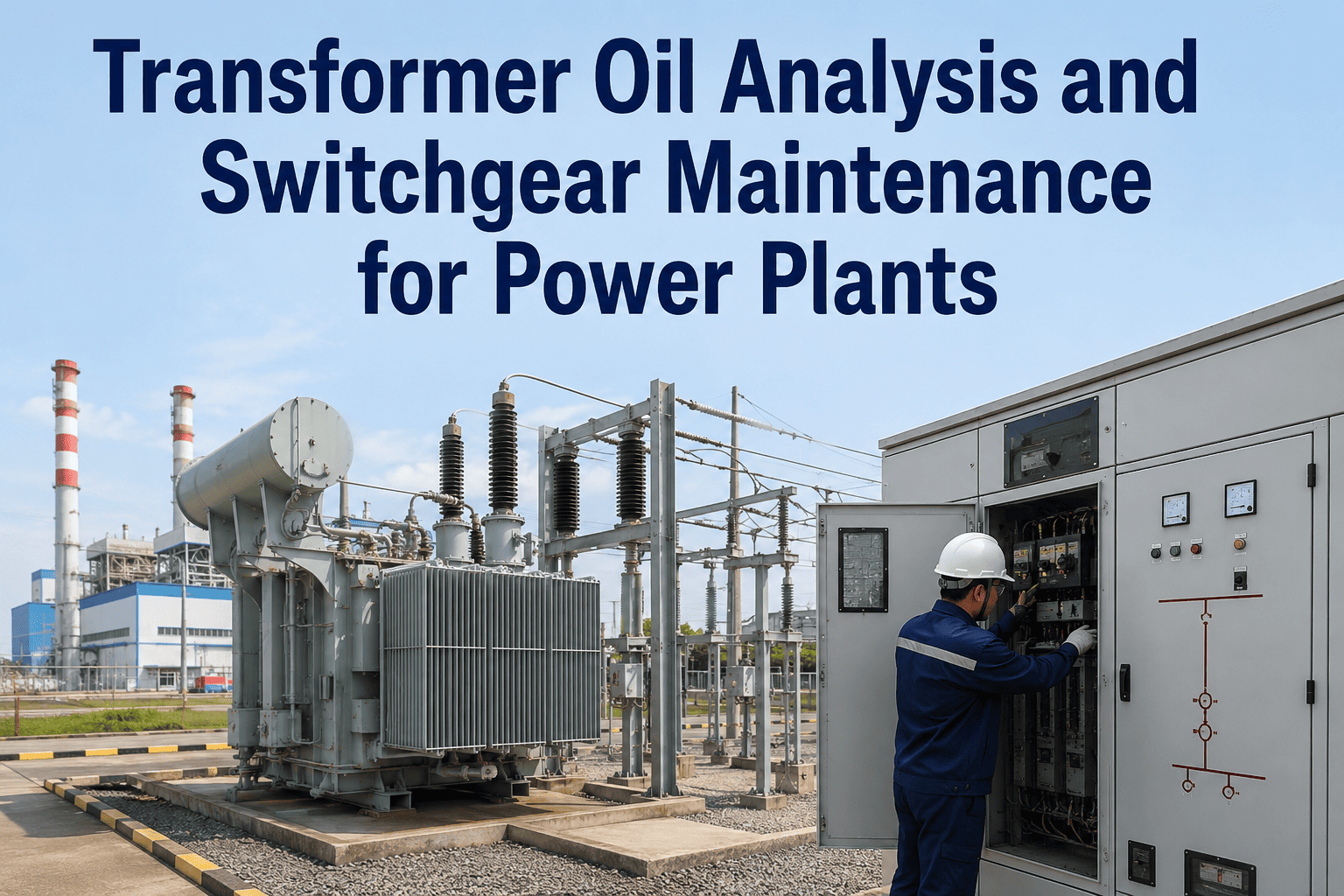
Electrical transformers are the backbone of every industrial facility, yet most maintenance teams still rely on fixed calendar schedules instead of actual runtime data to plan oil analysis and servicing intervals. A transformer running 20 hours a day degrades its insulating oil far faster than one operating 8 hours under light load — but traditional maintenance plans treat them identically. Facilities that align oil sampling frequency with real runtime hours catch dissolved gas anomalies, moisture contamination, and dielectric breakdown indicators weeks before catastrophic failure. Sign up for Oxmaint to automatically track transformer runtime hours and trigger oil analysis work orders based on actual operating conditions.
68%
Of transformer failures are linked to insulating oil degradation that routine analysis would have detected
$2.4M
Average cost of a single power transformer failure including equipment, downtime, and lost production
4,000+
Runtime hours threshold where dissolved gas analysis frequency should increase for loaded transformers
Why Calendar-Based Oil Sampling Fails Transformer Maintenance Teams
Most facilities sample transformer oil once or twice a year regardless of how hard the unit is working. This blanket approach creates two problems: over-maintained transformers waste labor and testing budgets, while heavily loaded units go too long between samples and develop faults undetected. Runtime-based oil analysis scheduling solves both issues by matching sampling frequency to actual thermal and electrical stress on the insulating fluid. Facilities using Oxmaint's runtime-triggered maintenance catch oil degradation patterns 40% earlier than those on annual schedules.
Calendar-Based Approach
Fixed annual or semi-annual samplingIgnores actual load profiles, ambient temperature, and duty cycles that accelerate oil aging
Same interval for all transformersA 500 kVA distribution unit gets the same schedule as a 50 MVA power transformer
Reactive fault discoveryProblems found only after visible symptoms like oil discoloration or audible humming appear
Runtime-Based Approach
Sampling intervals tied to operating hoursHeavy-duty transformers sampled more frequently; lightly loaded units sampled less often
Risk-stratified maintenanceCritical power transformers get tighter thresholds than auxiliary distribution units
Automated CMMS-triggered work ordersOxmaint generates oil sampling tasks automatically when runtime hour thresholds are reached
Key Insight
Dissolved Gas Analysis Is the Single Most Effective Transformer Diagnostic
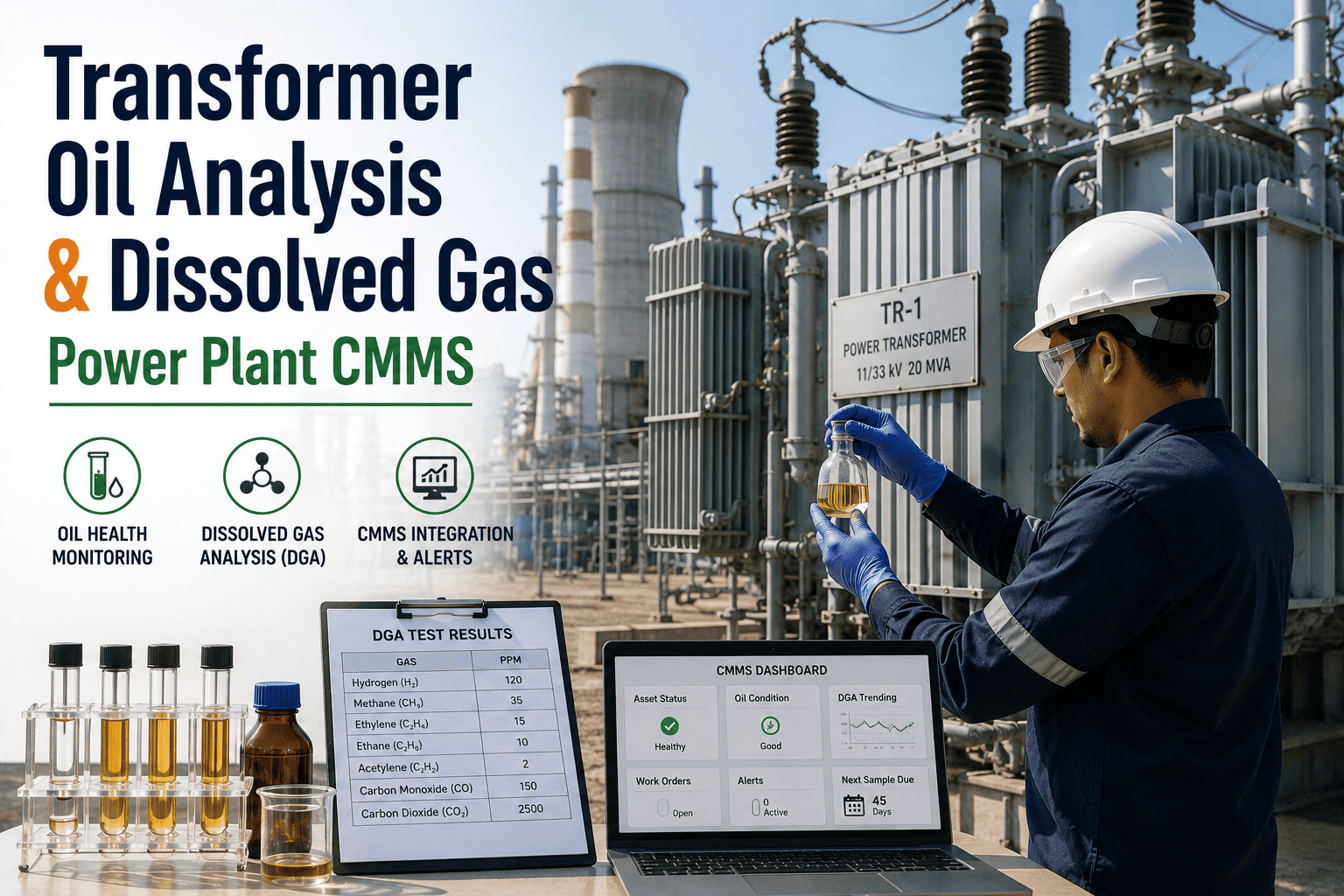
Dissolved gas analysis detects seven fault gases — hydrogen, methane, ethane, ethylene, acetylene, carbon monoxide, and carbon dioxide — that indicate specific internal conditions ranging from partial discharge to high-energy arcing. When paired with runtime hour tracking, DGA trending becomes predictive rather than reactive: you see gas generation rates per operating hour, not just absolute concentrations. This rate-of-change data is what separates early warnings from late discoveries. Book a demo to see how Oxmaint tracks DGA trends against runtime hours for every transformer in your fleet.
Oil Analysis Tests Every Facility Should Track by Runtime Hours
Different oil tests serve different diagnostic purposes, and each has an optimal sampling frequency based on how hard the transformer is working. Here are the essential tests every maintenance team should schedule through their CMMS based on cumulative runtime hours.
DGA
Dissolved Gas Analysis
Identifies fault gases generated by electrical and thermal stress inside the transformer tank. The most critical test for detecting incipient failures.
Sample at every 2,000 runtime hours for critical unitsPower transformers above 10 MVA serving primary production loads
Sample at every 4,000 runtime hours for standard unitsDistribution transformers under moderate, consistent loading conditions
Track gas generation rates per 1,000 hoursRising rates signal active faults even when absolute values remain below alarm limits
Measures dissolved water in insulating oil, which directly reduces dielectric strength and accelerates cellulose aging in transformer windings.
Test at every 3,000 runtime hours or seasonallyWhichever threshold is reached first, especially in humid climates
Maintain moisture below 20 ppm for units above 69 kVHigher voltage classes require drier oil for safe dielectric performance
Log results against load percentage in CMMSTemperature cycling under heavy load pulls moisture from cellulose into oil
Detects:+ Gasket seal deterioration+ Breather system failures
DBV
Dielectric Breakdown Voltage
Measures the voltage at which insulating oil fails electrically. Low breakdown voltage indicates contamination from moisture, particles, or chemical byproducts.
Test at every 4,000 runtime hours for all classesMinimum 30 kV breakdown for distribution, 55 kV for power transformers
Retest within 500 hours after any tap changer operation surgeTap changer arcing generates carbon particles that lower dielectric strength
Correlate with moisture and particle count dataCombined analysis pinpoints whether contamination is chemical, particulate, or moisture-driven
Detects:+ Oil contamination severity+ Filtration system effectiveness
FFA
Furan Analysis
Furan compounds in transformer oil indicate cellulose insulation degradation in windings. This is the primary non-invasive method for estimating remaining winding life.
Test at every 6,000 runtime hours for transformers over 15 years oldAging cellulose generates furfuraldehyde at accelerating rates as degree of polymerization drops
Flag any reading above 1.0 ppm 2-furfuraldehydeIndicates significant cellulose aging requiring increased monitoring frequency
Trend against cumulative runtime for life estimationFuran generation rate per 1,000 hours predicts remaining insulation life more accurately than age alone
Automate Oil Analysis Scheduling Based on Real Runtime Data
Oxmaint tracks cumulative runtime hours for every transformer in your fleet and automatically generates oil sampling work orders when your configured thresholds are reached — complete with test specifications, sampling procedures, and lab submission checklists. Stop relying on calendar reminders and let real operating data drive your maintenance decisions.
Runtime Hour Thresholds: When to Sample by Transformer Class
Not every transformer needs the same oil analysis frequency. The table below provides recommended sampling intervals based on voltage class, load profile, and cumulative runtime hours — thresholds you can configure directly inside Oxmaint's asset management module.
Transformer Class
Load Profile
DGA Interval
Moisture Test
Full Panel
Power (above 100 MVA)
Continuous heavy load
Every 1,500 hrs
Every 2,000 hrs
Every 4,000 hrs
Power (10–100 MVA)
Variable load cycling
Every 2,000 hrs
Every 3,000 hrs
Every 6,000 hrs
Distribution (1–10 MVA)
Moderate steady-state
Every 4,000 hrs
Every 4,000 hrs
Every 8,000 hrs
Distribution (below 1 MVA)
Light or intermittent
Every 6,000 hrs
Every 6,000 hrs
Every 10,000 hrs
Pad-Mount / Dry-Type
Facility distribution
N/A (no oil)
N/A
Insulation resistance every 8,000 hrs
How Oxmaint Connects Runtime Tracking to Oil Analysis Workflows
A CMMS that tracks runtime hours without connecting them to maintenance actions is just a fancy counter. Oxmaint closes the loop between data collection and work execution — every hour logged moves your transformers closer to their next automated service trigger.
Automatic Runtime Logging
Integrates with SCADA, smart meters, and IoT sensors to log operating hours without manual entry. Supports both continuous and intermittent duty cycle tracking.
SCADA IntegrationIoT Sensors
Threshold-Based Work Orders
Configure runtime hour thresholds per transformer class. When a unit hits its threshold, Oxmaint auto-generates a work order with the correct oil tests, sampling procedures, and assigned technician.
Auto Work OrdersCustom Thresholds
DGA Trend Dashboards
Visualize dissolved gas concentrations plotted against runtime hours. Rate-of-change alerts trigger escalation protocols before absolute alarm levels are reached.
Gas TrendingRate Alerts
Lab Report Integration
Upload oil analysis lab reports directly into transformer asset records. Results auto-populate trend charts and flag any out-of-spec parameters for immediate review.
Report UploadAuto Flagging
Interpreting Oil Analysis Results: Fault Gas to Root Cause Matrix
Understanding what each dissolved gas indicates is essential for prioritizing maintenance actions. This matrix maps key fault gases to their root causes and recommended CMMS-triggered responses.
Fault Gas
Indicates
CMMS Response
Urgency
Hydrogen (H2)
Partial discharge, corona effect in insulation voids
Increase DGA frequency to monthly; schedule insulation resistance test
Medium
Acetylene (C2H2)
High-energy arcing, severe internal fault
Immediate de-energization assessment; emergency work order with root cause investigation
Critical
Ethylene (C2H4)
Severe overheating of oil above 700 degrees
Load reduction; thermal imaging scan; cooling system inspection work order
High
Carbon Monoxide (CO)
Cellulose insulation degradation from thermal stress
Furan analysis work order; trending review against runtime hours
Medium
Methane (CH4)
Low-temperature thermal fault (150–300 degrees)
Hot spot investigation; connection tightness check; increase monitoring frequency
Low
The difference between a transformer that lasts 30 years and one that fails at 15 is almost always in the oil management program. Runtime-based sampling catches what calendar-based schedules miss — and a connected CMMS makes that possible at fleet scale.
Knowing which oil test results demand immediate action versus continued monitoring separates proactive maintenance teams from reactive ones. Configure these alert thresholds in Oxmaint's condition monitoring module to auto-escalate critical findings.
Immediate Action Required
Acetylene detected above 2 ppm or any rapid increase
Dielectric breakdown voltage below 25 kV
Moisture content exceeding 35 ppm in power transformers
Increased Monitoring
Total combustible gas rising faster than 10% per 1,000 runtime hours
Furan levels between 0.5–1.0 ppm 2-furfuraldehyde
Power factor exceeding 0.5% at 25 degrees
Normal — Continue Scheduled Sampling
All dissolved gases within normal limits and stable trending
Dielectric breakdown voltage above 55 kV for power class
Moisture below 15 ppm with stable seasonal variation
Stop Guessing When to Sample — Let Runtime Data Decide
Oxmaint is the CMMS platform that connects transformer runtime hours to automated oil analysis scheduling, DGA trend tracking, and condition-based maintenance workflows. Every transformer in your fleet gets the right test at the right time based on how hard it is actually working. Join thousands of maintenance teams already using runtime-driven intelligence to protect their most critical electrical assets.
Frequently Asked Questions About Transformer Oil Analysis Maintenance
How often should transformer oil be tested based on runtime hours?
It depends on transformer class and load profile. Power transformers above 10 MVA under heavy load should have DGA performed every 2,000 runtime hours, while lighter-loaded distribution units can extend to 4,000–6,000 hours. Sign up for Oxmaint to configure custom runtime thresholds that automatically trigger oil sampling work orders for each transformer in your fleet.
What is dissolved gas analysis and why is it important?
Dissolved gas analysis measures seven key fault gases produced inside transformers by electrical and thermal stress. Each gas pattern points to a specific fault type — from low-temperature hotspots to high-energy arcing. DGA is the industry standard for non-invasive transformer health assessment because it detects problems weeks or months before physical symptoms appear.
Can a CMMS automatically schedule oil analysis based on operating hours?
Yes. Modern CMMS platforms like Oxmaint integrate with SCADA systems and IoT meters to log runtime hours automatically. When a transformer reaches its configured hour threshold, the system generates a work order with the correct test specifications, assigns the responsible technician, and tracks completion. Book a demo to see automated runtime-triggered maintenance in action.
What does high acetylene in transformer oil mean?
Acetylene above 2 ppm or any rapid increase is the most serious dissolved gas finding, indicating high-energy electrical arcing inside the transformer. This condition requires immediate investigation and likely de-energization. Your CMMS should be configured to auto-escalate acetylene alerts to emergency priority with notifications to both maintenance and electrical engineering teams.
How does runtime-based sampling save money compared to calendar-based schedules?
Runtime-based sampling eliminates unnecessary tests on lightly loaded transformers while increasing frequency on heavily stressed units. Facilities typically reduce total oil testing costs by 15–20% while actually improving fault detection rates on critical assets. The real savings come from catching problems early — a $500 oil test that prevents a $2.4M transformer failure delivers enormous returns.