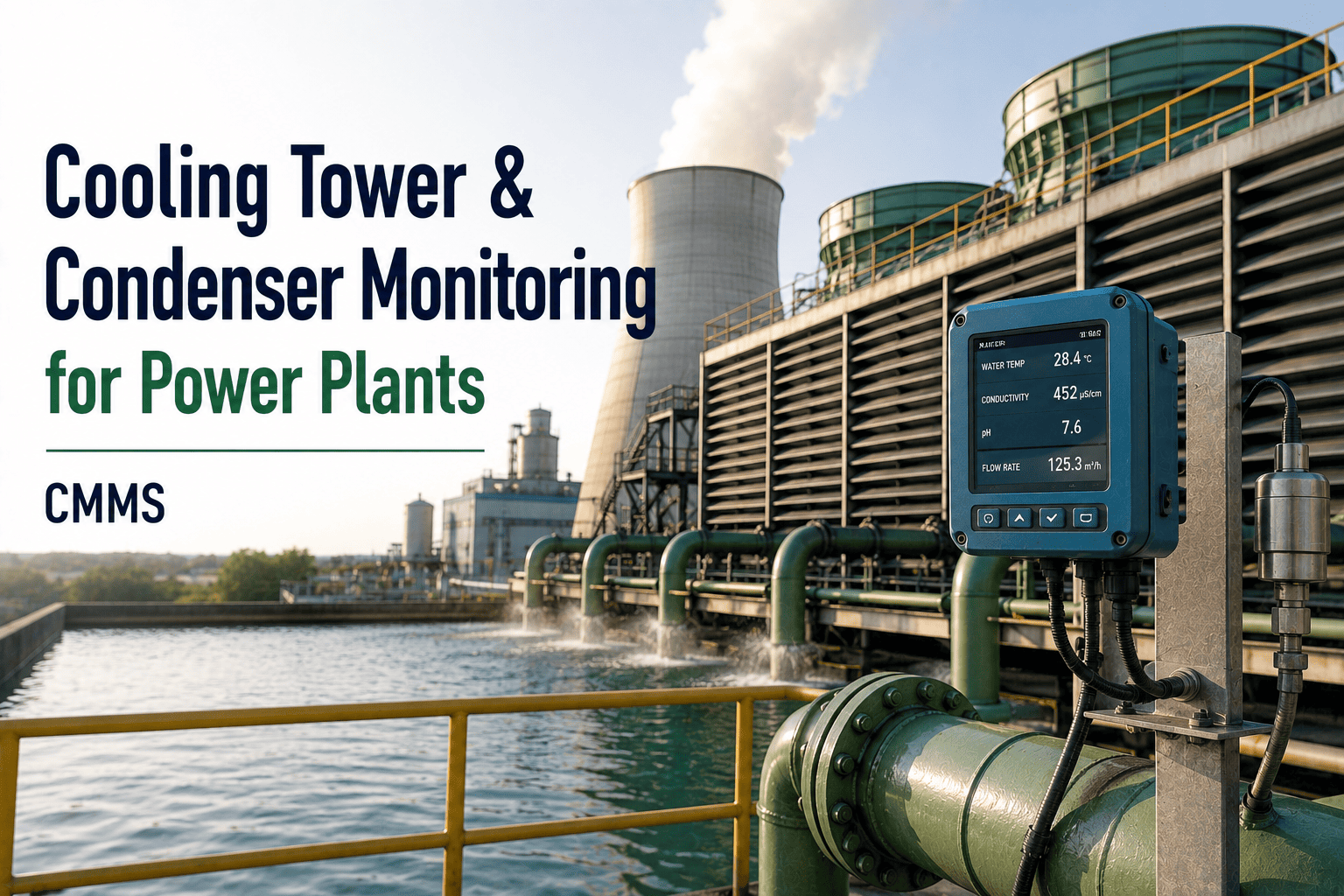
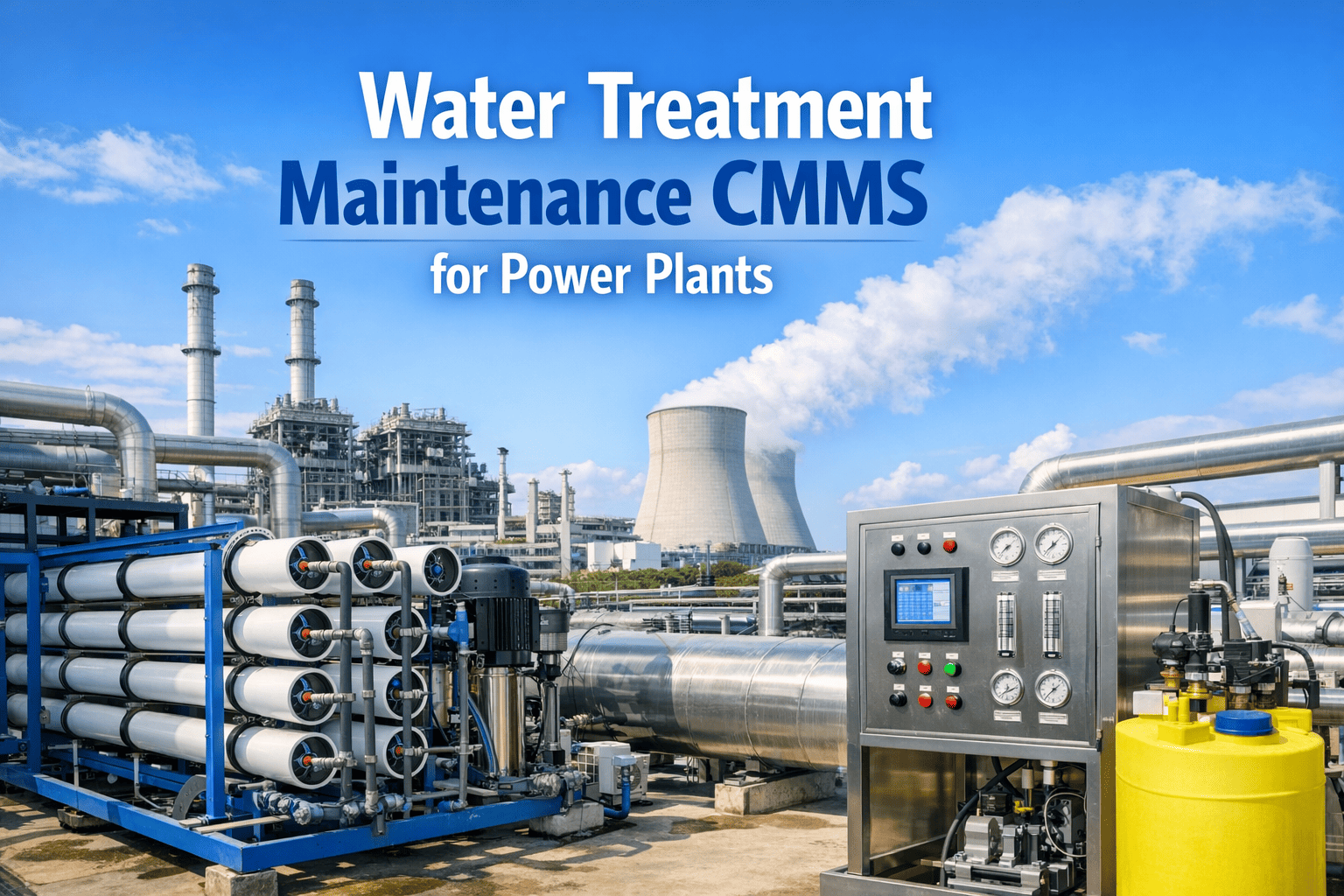
Every thermoelectric power plant withdrawing water from a river, lake, or coastal body operates under an NPDES permit that sets hard numerical limits on discharge temperature, pH, total dissolved solids, residual chlorine, heavy metals, and biological impingement — and those limits are getting tighter. EPA's 2024 Effluent Limitation Guidelines update introduced near-zero discharge requirements for several wastewater streams, while state regulators are independently narrowing thermal discharge windows and cycles-of-concentration thresholds for cooling tower blowdown. Most facilities are managing this growing compliance load with monthly lab samples, manual log sheets, and scheduling systems that were never built to connect water quality data to the maintenance team responsible for the equipment producing it. OxMaint's Compliance Reporting module changes that relationship entirely — connecting your cooling system sensor data, chemical treatment records, and intake structure inspection logs into a single NPDES-aligned compliance platform. Book a demo to see how OxMaint maps your facility's water discharge obligations to live cooling system performance data.
OxMaint · Compliance Reporting · Water & Cooling Systems
Water Discharge Compliance Starts
With the Equipment You Maintain.
NPDES permit tracking · Thermal discharge monitoring · Cooling tower chemical management · Intake screen inspection records — connected in one platform.
CWA §316
(a) Thermal · (b) Intake Structures
Real-Time
Discharge parameter monitoring
2024 ELG
EPA update — zero-discharge for select streams
Auto DMR
NPDES report generation in minutes
What Your NPDES Permit Actually Requires — Parameter by Parameter
NPDES permits for thermoelectric power plants monitor far more than temperature. Every discharge point carries a distinct set of parameter limits tied to the receiving water body's assimilative capacity, aquatic habitat requirements, and technology-based effluent standards. OxMaint tracks each parameter in real time and alerts your team before a limit is approached — not after it is exceeded.
THERMAL DISCHARGE
Ambient+5°F limitMax permit
Discharge temp delta vs. receiving body
Maximum outlet temperature (seasonal)
Thermal plume mixing zone compliance
CWA §316(a) · EPA 40 CFR Part 423
CHEMICAL PARAMETERS
TargetAlert thresholdPermit limit
pH (typically 6.0 – 9.0 SU)
Residual chlorine / biocide (≤0.2 mg/L)
Total dissolved solids (TDS)
Total suspended solids (TSS)
40 CFR Part 423 · State NPDES permit conditions
BIOLOGICAL / INTAKE
AcceptableReview zoneBTA limit
Impingement mortality (fish / shellfish)
Entrainment (eggs, larvae)
Intake velocity (≤0.5 fps, new facilities)
CWA §316(b) · BTA standard per NPDES permit
Cooling System Components — Maintenance That Drives Compliance
Water discharge compliance is not a water quality problem. It is a maintenance problem. Fouled heat exchangers raise discharge temperatures. Degraded chemical dosing pumps let chlorine concentrations drift. Clogged intake screens increase impingement mortality rates. Every discharge violation has a maintenance root cause — and OxMaint tracks both together, so the connection is never missed.
INTAKE SYSTEM
Traveling Screens
Rotating intake screens prevent fish impingement. Screen integrity, wash system flow, and rotation frequency are §316(b) compliance factors.
PM: Wash cycle verification — weekly
Predictive: Differential pressure rise triggers cleaning WO
Intake Pumps
Maintains minimum approach velocity per §316(b) permit condition. Flow reduction increases entrainment risk and thermal efficiency losses downstream.
PM: Pump inspection — quarterly
Predictive: Flow rate drop >8% from baseline
COOLING SYSTEM
Condenser / Heat Exchanger
Tube fouling reduces heat transfer efficiency and drives up discharge temperature. Even partial tube plugging can breach thermal discharge limits during summer peak load.
PM: Tube inspection — annual outage
Predictive: Discharge temp delta approaching permit limit
Cooling Tower
Fill fouling, basin sedimentation, and drift eliminator degradation affect cycles of concentration, TDS in blowdown, and biocide demand — all NPDES-relevant.
PM: Fill inspection, basin cleaning — seasonal
Predictive: TDS rise signals reduced COC tolerance
TREATMENT SYSTEM
Chemical Dosing Systems
Biocide, scale inhibitor, and corrosion inhibitor dosing pumps must maintain precise dosage. Overdosing chlorine produces discharge violations. Underdosing risks Legionella and condenser fouling.
PM: Pump calibration — monthly
Predictive: Dose rate deviation >5% from setpoint
Blowdown Treatment Unit
Removes TDS, chromium, zinc, and copper before discharge to meet ELG limits. The 2024 EPA ELG update introduces near-zero limits for several streams from this unit.
PM: Media replacement, filter inspection — per schedule
Predictive: Effluent quality trending toward permit limit
NPDES Discharge Monitoring Report — Built Automatically from OxMaint Data
The Discharge Monitoring Report (DMR) is the core regulatory submission under the NPDES program — filed monthly or quarterly to EPA or state agencies. It must reconcile monitoring data, chemical records, and maintenance events into a single certified document. Most facilities assemble DMRs manually from three or four different data sources, consuming days of environmental staff time each cycle. OxMaint automates the entire assembly process.
Data Sources — Pulled Automatically
SCADA / sensor dataDischarge temp, flow, pH
Lab resultsTDS, TSS, metals, chlorine
Maintenance recordsWOs, calibrations, inspections
Chemical logsDosing records, product certs
DMR Output Package
Parameter summary with permit limit comparison
Exceedance log with corrective action records
Monitoring frequency compliance verification
Equipment calibration and QA/QC documentation
Signatory-ready PDF for eDMR submission
Generation time: <5 minutes · Manual equivalent: 2–4 days
COMPLIANCE REPORTING · COOLING SYSTEMS
Every DMR your facility files should take minutes, not days. OxMaint makes that the default — not the exception.
Connect your cooling system data and maintenance records to OxMaint and generate your first automated DMR package within 30 days of going live.
Thermal Discharge — The Compliance Limit That Changes Every Season
Thermal discharge limits under CWA §316(a) are not fixed annual thresholds. They vary by season, ambient receiving water temperature, and aquatic species sensitivity windows. A discharge that was fully compliant in February may exceed permit conditions by the same absolute temperature in August. OxMaint tracks both your discharge temperature and the ambient receiving water temperature simultaneously — calculating your real-time compliance margin dynamically throughout the year.
Winter
Ambient: ~42°F
Discharge: ~57°F
Margin: Compliant
Spring
Ambient: ~58°F
Discharge: ~73°F
Margin: Compliant
Summer
Ambient: ~74°F
Discharge: ~89°F
Margin: 3°F from limit
Fall
Ambient: ~62°F
Discharge: ~77°F
Margin: Compliant
OxMaint calculates real-time compliance margin by comparing your discharge delta against the seasonal permit limit window — and alerts operations when condenser fouling or reduced cooling tower performance begins eroding that margin before summer peak.
Regulatory Frameworks — What OxMaint Tracks for Water Discharge Compliance
Water discharge compliance for power plants spans federal effluent guidelines, state NPDES permit conditions, intake structure requirements, and wastewater-specific limitations. OxMaint maintains native alignment to all applicable frameworks so a single set of operational data produces compliance evidence for every overlapping obligation.
Regulatory Framework
What It Governs
Key Requirement
OxMaint Support
NPDES
All point source water discharges
Monthly/quarterly DMR submission with parameter limits
Automated DMR generation from live data
CWA §316(a)
Thermal discharge temperature limits
Discharge temp vs. seasonal receiving water limit
Real-time thermal margin tracking with alerts
CWA §316(b)
Cooling water intake structures
Best Technology Available — impingement/entrainment
Intake screen inspection log & mortality records
ELG 2024
FGD wastewater, BATW, CRL streams
Near-zero discharge limits for mercury, arsenic
Parameter monitoring against ELG numeric limits
40 CFR 423
Steam electric effluent guidelines
Technology-based limits for TSS, oil & grease, pH
Auto-comparison against permit effluent limits
State Permit
State-specific limits (often more stringent)
TDS, COC limits, biocide discharge windows
Custom permit condition mapping per facility
Frequently Asked Questions
How does OxMaint connect to our water quality monitoring instruments?
OxMaint integrates with your existing SCADA, DCS, or plant historian to pull continuous water quality sensor data — discharge temperature, pH, flow rate, conductivity, and residual chlorine. For parameters measured through periodic lab sampling rather than continuous monitoring, OxMaint provides a structured data entry interface that timestamps each result and stores it against the relevant discharge point and NPDES permit condition. Most facilities are fully connected within one week of deployment without any changes to installed instrumentation.
Can OxMaint automatically generate our monthly Discharge Monitoring Reports?
Yes. OxMaint aggregates all monitoring data, maintenance records, and calibration documentation for each discharge point and generates a DMR package structured for eDMR submission to EPA's NPDES reporting system. The platform flags any exceedances in the reporting period, attaches the corrective action records for those events, and produces a signatory-ready document for your responsible official. Generation time is under five minutes per DMR, replacing a process that typically takes two to four days of manual assembly per reporting cycle.
How does OxMaint handle thermal discharge compliance during peak summer load?
OxMaint calculates your real-time thermal compliance margin by tracking both your discharge temperature and the ambient receiving water temperature simultaneously. As ambient temperatures rise through summer, the platform narrows the alert threshold dynamically — issuing maintenance alerts when condenser fouling or reduced cooling tower performance is eroding your compliance margin weeks before a permit limit is approached. Facilities using OxMaint have used this signal to schedule condenser tube cleaning and cooling tower maintenance in spring, before summer operating conditions create compliance exposure.
Does OxMaint support CWA §316(b) compliance for cooling water intake structures?
OxMaint manages traveling screens, fish return systems, and intake pump maintenance as fully tracked assets with permit-linked inspection schedules. Every screen wash cycle, rotation check, and fish mortality survey is recorded as a timestamped maintenance record that satisfies §316(b) Best Technology Available demonstration requirements under your NPDES permit. The platform also tracks approach velocity data where continuous monitoring is installed, flagging any readings that approach the 0.5 fps threshold for new or modified facilities.
How does OxMaint help manage the 2024 EPA ELG update requirements for FGD wastewater and bottom ash transport water?
OxMaint tracks the specific wastewater streams affected by the 2024 ELG update — FGD wastewater, bottom ash transport water, and combustion residual leachate — as distinct monitoring points with near-zero discharge limits for mercury and arsenic. The platform alerts operations and environmental teams when effluent quality in these streams approaches ELG numeric limits, triggers corrective maintenance on treatment equipment, and maintains the monitoring documentation required for ELG compliance demonstration. Note that the Trump Administration announced reconsideration of the 2024 ELG Rule in March 2025, and OxMaint updates its framework templates as final regulatory requirements are clarified.
NPDES · CWA §316 · ELG COMPLIANCE
Water Discharge Compliance Requires Maintenance That Works.
OxMaint Connects Both.
From intake screen inspections to automated DMR generation — OxMaint tracks every maintenance activity and discharge parameter that determines whether your facility stays within its NPDES permit limits.
Auto DMR
Monthly reports generated in minutes
Real-Time
Thermal margin tracking vs. seasonal limits
6 Frameworks
NPDES · §316(a/b) · ELG · 40 CFR 423 · State