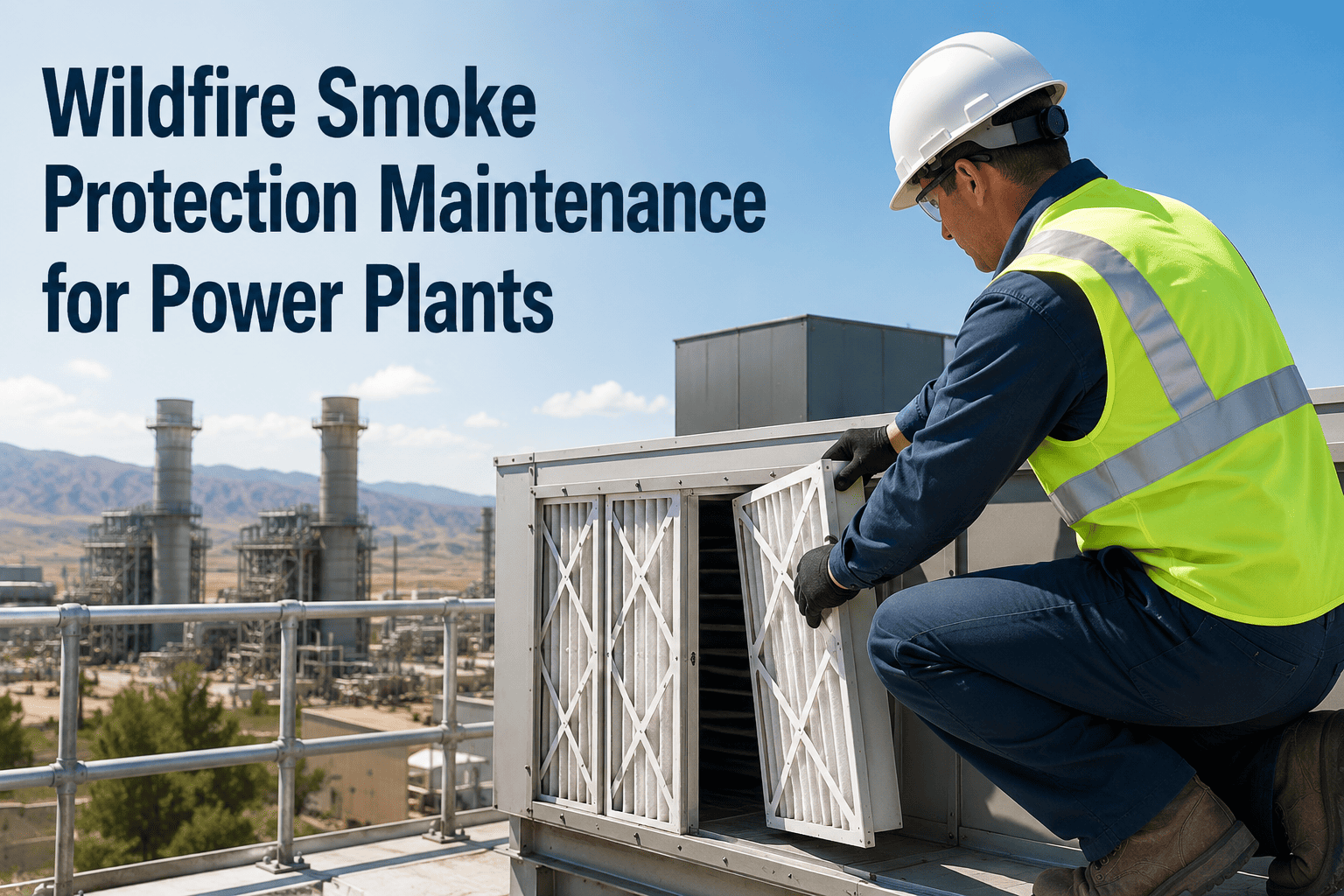
Every wildfire season puts power plant operations at serious risk — airborne particulates clog HVAC filters, contaminate switchyards, and degrade sensitive control systems faster than routine schedules can catch. Plants without a structured smoke-event maintenance protocol face unplanned downtime, equipment failure, and compliance gaps that compound long after the fires are out. OxMaint's preventive maintenance platform gives power plant teams a proactive framework to track filter replacements, HVAC inspections, switchyard condition checks, and safety work orders — all triggered automatically before smoke damage becomes a shutdown event. Managing climate-related risk doesn't have to be reactive. Start your free trial or book a 30-minute demo to see how power plants are building wildfire-ready maintenance programs with OxMaint.
Wildfire Smoke Is a Maintenance Emergency Your PM Schedule Isn't Ready For
When smoke rolls in, your filters saturate in hours, not months. Your switchyard surfaces accumulate conductive ash. Your HVAC units strain against particulate loads they weren't designed to handle continuously. OxMaint triggers the right work orders at the right time — so your plant stays operational while fires burn nearby.
What Wildfire Smoke Actually Does to Power Plant Equipment
Fine PM2.5 particles overwhelm standard filter capacity within 24–72 hours of heavy smoke exposure, reducing airflow to control rooms and increasing fire risk from overheated electronics.
Ash deposits on insulators create conductive paths that trigger flashovers. Smoke residue on bushings and disconnect switches accelerates corrosion and increases fault probability.
Particulate buildup on cooling coils and heat exchangers reduces thermal efficiency, forcing generating units to operate closer to temperature limits during peak summer demand.
Smoke particles infiltrate analyzer ports, pressure transmitter impulse lines, and optical flame detectors — creating false readings and masking actual equipment conditions.
A Four-Phase Maintenance Response Built Into Your CMMS
OxMaint structures wildfire smoke protection into four triggered phases — from pre-season readiness through post-event restoration — so your team always knows what needs to happen, in what order, and who is responsible.
- Document all filter grades, types, and baseline differential pressure readings
- Photograph and record condition of all switchyard insulators and bushing surfaces
- Verify HVAC outside air damper close-off functionality across all buildings
- Set smoke-season PM trigger thresholds in OxMaint — earlier than standard intervals
- Auto-generated work orders for filter differential pressure checks every 12 hours
- Daily switchyard visual inspection with photo evidence logged in OxMaint
- Cooling water intake screen inspection triggered at AQI threshold breach
- Safety work order for control room positive pressure verification
- Replace all filters regardless of remaining life — reset intervals to new baseline
- Inspect and clean switchyard insulators, document condition with before/after photos
- Flush and inspect cooling coils, record fouling severity in asset history
- Full instrument air system check — analyzers, transmitters, optical detectors
- OxMaint generates complete smoke-season maintenance report per asset
- Cost tracking — parts, labor, and emergency work vs planned PM comparison
- Update next season's trigger thresholds based on this season's consumption data
- Export compliance documentation for regulatory reporting and insurance purposes
Don't Wait for Smoke to Start Your Maintenance Response
OxMaint lets you pre-configure smoke-event PM rules that fire automatically when conditions change — so your team is executing the right tasks from minute one, not figuring out what to do while equipment degrades.
Critical Smoke-Event Inspection Points Power Plants Must Track
What Smoke-Season Maintenance Looks Like With a Proper System
| Area | Without OxMaint | With OxMaint |
|---|---|---|
| Filter Monitoring | Checked on normal schedule — saturates between visits causing fan strain | Smoke-triggered interval cuts to every 12 hours — replaced before differential pressure spikes |
| Switchyard Inspection | Ad-hoc walk-downs with no photo evidence or comparison baseline | Daily mobile inspections with photo log linked to asset — trends visible across events |
| Work Order Triggering | Supervisor manually decides what to do when smoke arrives — inconsistent response | Pre-configured smoke-event rules auto-generate correct work orders the moment AQI threshold is met |
| Compliance Records | Scattered notes, no documentation of event response for auditors or insurers | Full event history — what was done, when, by whom, with photographic evidence |
| Post-Event Recovery | No structured recovery checklist — items missed until the next failure | Phased recovery work orders ensure every affected system is restored before return to normal schedule |
Wildfire Smoke Maintenance — What Power Plant Teams Ask Most
Can OxMaint trigger smoke-specific work orders based on external air quality data?
How does OxMaint help document smoke event response for regulatory and insurance purposes?
Can we set different PM intervals for smoke season versus normal operation?
Does the mobile inspection app support photo evidence capture for switchyard walk-downs?
How quickly can we build a wildfire smoke maintenance program in OxMaint?
Wildfire Season Comes Every Year. Your Maintenance Plan Should Too.
OxMaint gives power plant maintenance teams a structured, automated, and fully documented response to wildfire smoke — from the first AQI alert to the final post-event inspection. Build your smoke-ready PM program today.