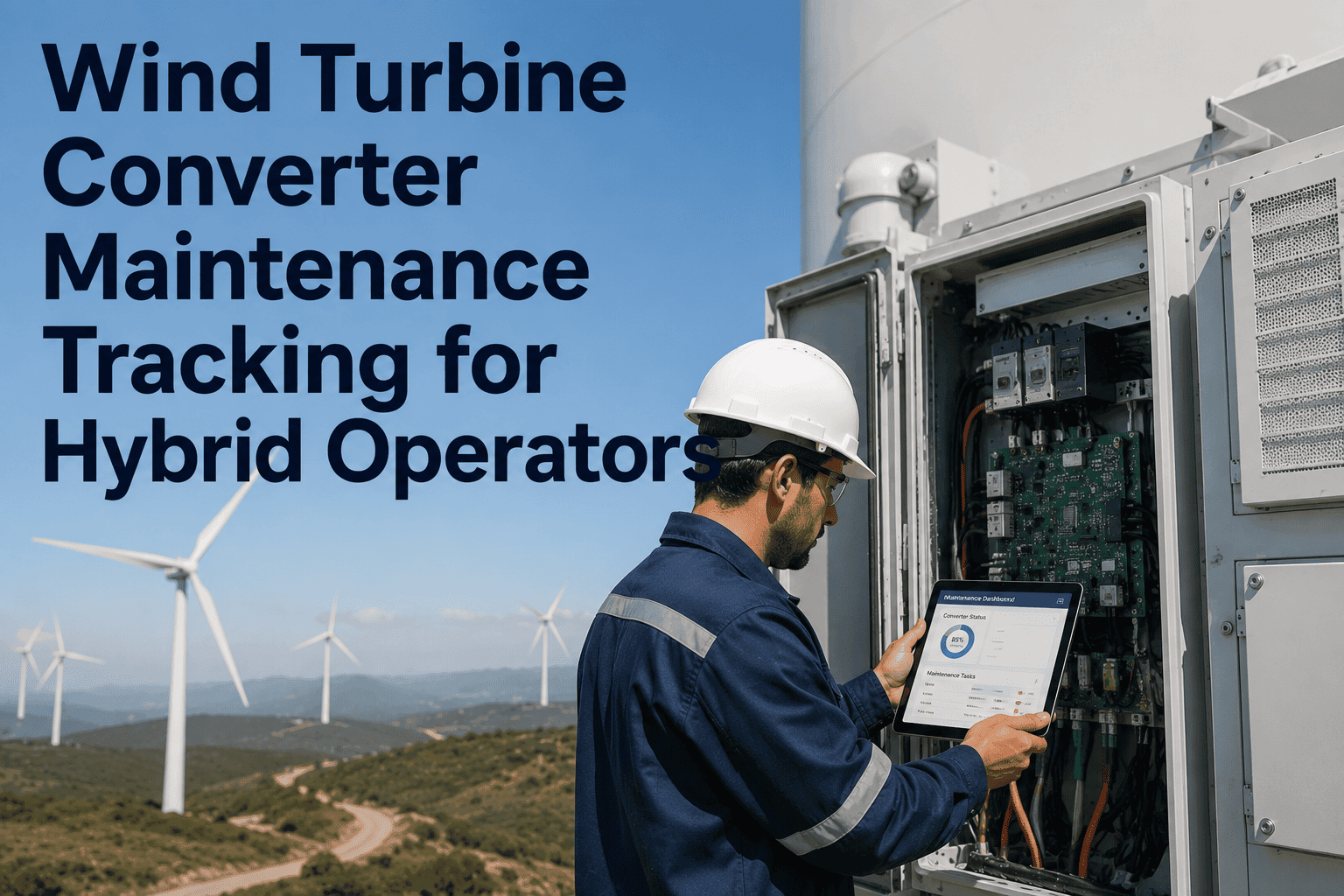
Full-power converters are the highest-value, highest-failure-risk component in modern wind turbines — and for hybrid wind-plus-storage operators, a failed converter doesn't just take a turbine offline, it disrupts the power conditioning that feeds battery charge cycles. Converter failure rates increase sharply when maintenance tracking is disconnected from actual operating conditions: a converter running at sustained high load during peak dispatch cycles degrades brush contacts, capacitors, and IGBT modules faster than calendar-based service intervals account for. Most hybrid operators still track converter maintenance in OEM service portals that have no visibility into battery dispatch schedules, grid curtailment events, or the actual duty cycles that determine when service is genuinely due. OxMaint's Predictive Maintenance module integrates turbine SCADA data, converter fault logs, and battery system operating data into a unified maintenance tracking system — giving hybrid operators the condition-aware scheduling that calendar-based approaches simply cannot provide.
How Converter Failures Happen — and Why Hybrid Sites Are Higher Risk
Track Converter Health by Operating Condition, Not the Calendar
OxMaint connects your turbine SCADA, converter fault logs, and battery dispatch data to create condition-based PM schedules that reflect actual equipment stress — not manufacturer averages written for single-asset sites.
What OxMaint Tracks for Converter Maintenance
| Converter Component | Parameter Tracked | PM Trigger | Failure Prevention |
|---|---|---|---|
| IGBT Modules | Thermal resistance trend, switching losses | Thermal resistance increase of 15% | Module replacement before catastrophic failure |
| DC Link Capacitors | Capacitance value, ESR measurement | 20% capacitance drop from baseline | Scheduled replacement prevents converter trips |
| Liquid Cooling System | Coolant pH, conductivity, flow rate | pH below 7.0 or above 8.5 | Flush and refill before corrosion damage |
| Air Filters | Differential pressure across filter | Pressure drop above OEM threshold | Prevents thermal runaway from restricted airflow |
| Brake Resistors | Resistance value, thermal event history | Resistance deviation beyond 5% | Prevents overcurrent during emergency stop events |
| Control Board Firmware | Software version vs. OEM current release | Version lag of 2+ releases | Patches known fault handling defects |
Why Hybrid Wind-Storage Sites Need Separate Tracking Logic
A converter at a wind-only site runs in one operating mode. A converter at a hybrid site switches between wind generation mode, battery charge conditioning, reactive power support, and grid frequency response — sometimes multiple times in an hour. Standard OEM service intervals are designed for single-mode operation.
Field Perspective
We retrofitted battery storage to eight of our turbine sites and immediately saw our converter replacement rate double. The OEM service intervals didn't change — but our operating conditions did. When we put the converters in OxMaint with duty-cycle-based scheduling instead of fixed 6-month intervals, we caught three units with rising thermal resistance before they failed. That's three avoided unplanned outages, which at our capacity factor and PPA price is around 140,000 EUR in avoided lost revenue per event. Predictive maintenance for converters isn't a nice-to-have at hybrid sites — it's the difference between managing your portfolio and being managed by it.
Frequently Asked Questions
How does OxMaint integrate with wind turbine SCADA for converter monitoring?
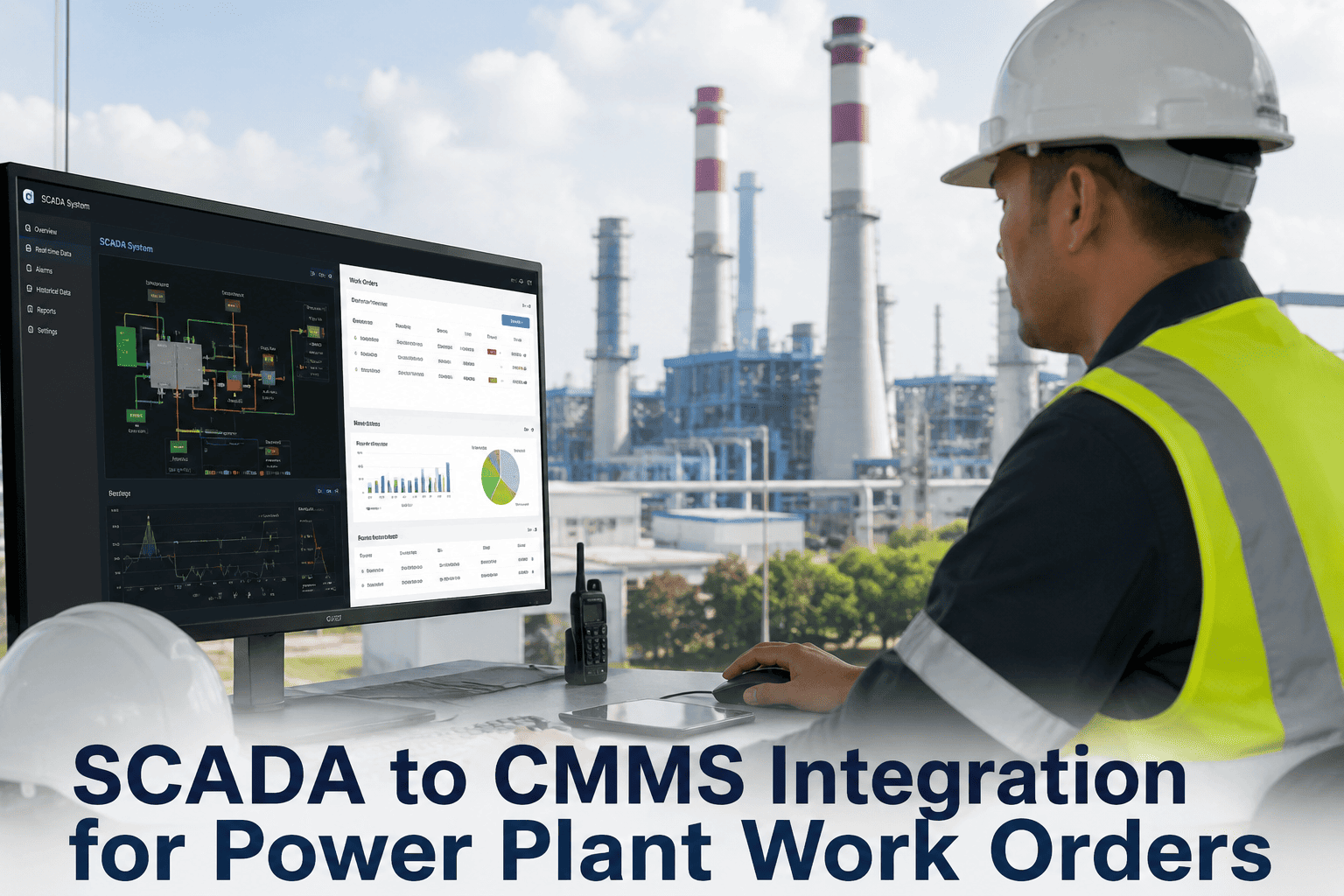
OxMaint connects to turbine SCADA historians via API or scheduled data export, ingesting converter temperature, fault codes, output power, and operating mode data. This feeds the condition-based PM engine — triggering work orders when parameters cross defined thresholds rather than waiting for the next calendar service date. Start free to configure your SCADA integration.
Can OxMaint track converter maintenance across multiple turbine OEMs on the same site?
Yes. OxMaint maintains separate asset records and PM templates per turbine model, with OEM-specific service checklists, torque specs, and parts lists assigned per asset class. Multi-OEM hybrid sites are a common use case — portfolio managers see all converter maintenance in one dashboard regardless of manufacturer. Book a demo to see multi-OEM asset management in action.
What converter fault data should hybrid operators log in a CMMS?
At minimum, log every converter fault event with timestamp, fault code, operating mode at fault time, and resolution action. This creates the trend data that identifies repeat faults on specific units — the strongest leading indicator of impending converter failure. OxMaint captures this data automatically when SCADA integration is active, with no additional technician logging required.
How often should full-power converters at hybrid sites be serviced?
Standard OEM intervals for wind-only turbines run at 6–12 months for major service. For hybrid site converters with high duty-cycle stress, condition monitoring data typically triggers additional inspections every 3–4 months for thermal and cooling system checks. OxMaint's predictive module adjusts service intervals automatically based on accumulated operating hours and fault event frequency. Start a free trial to build condition-based converter schedules for your fleet.
Your Converters Are the Most Vulnerable Asset at Your Hybrid Site
OxMaint gives hybrid wind-storage operators the condition-based tracking, SCADA integration, and portfolio visibility needed to catch converter failures before they happen — at every site, across every OEM.