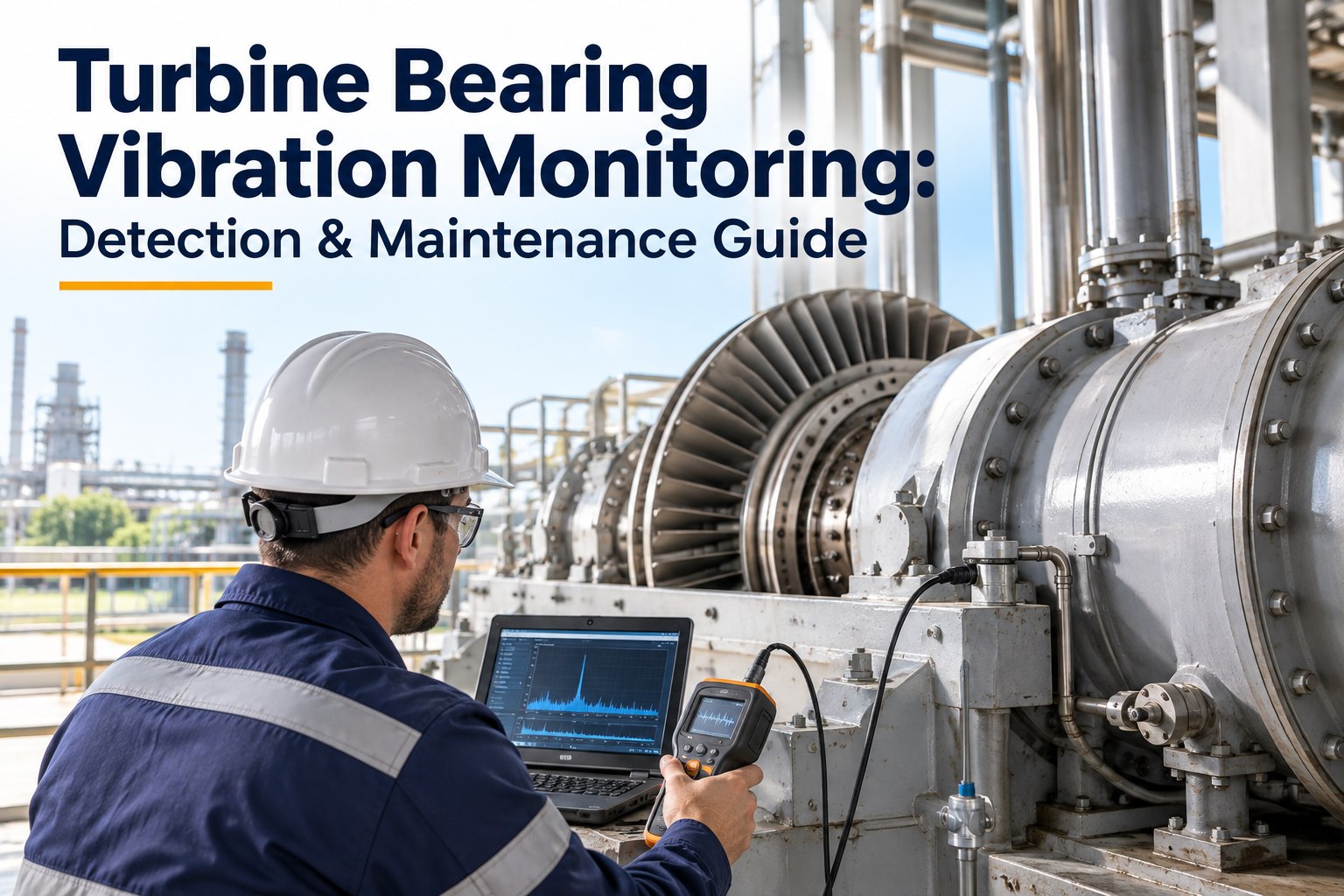
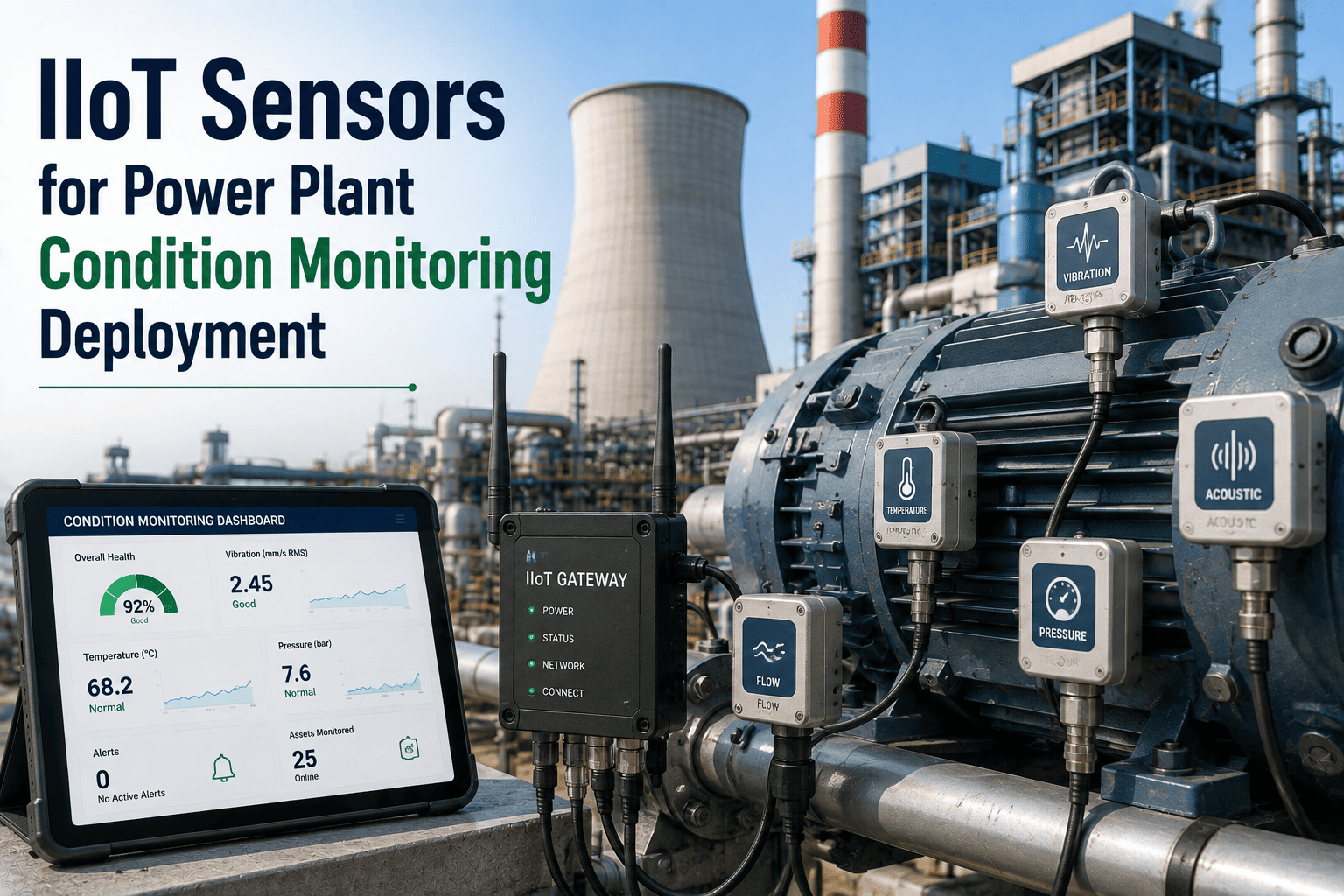
Turbines and generators are the revenue-generating heart of any power plant — and they're also among the most expensive assets to repair when something goes wrong. A single unplanned generator failure can cost anywhere from $50,000 to over $2 million, yet the warning signs are almost always present weeks or months before the actual breakdown. Vibration tells the story: subtle shifts in amplitude, frequency, or harmonic signature that indicate a bearing wearing down, a shaft going out of alignment, or a rotor becoming imbalanced. Wireless vibration sensors make it possible to read that story continuously, without waiting for a scheduled inspection or a manual walkround. This guide covers everything maintenance engineers need to know about deploying wireless vibration sensors on turbines and generators — and how OxMaint's CMMS platform turns that sensor data into scheduled maintenance actions before failure strikes. Want to see it in action first? Book a demo with our team.
Vibration Detects Bearing Failure Up to 12–18 Months Before It Happens
Wireless accelerometers mounted on turbines and generators stream vibration data 24/7. OxMaint analyzes frequency signatures, spots developing faults, and triggers maintenance before catastrophic failure occurs.
What Vibration Data Actually Tells You
Every rotating machine has a vibration fingerprint. When that fingerprint changes, something inside the machine is changing too — and vibration analysis tells you exactly what and where.
Impulsive high-frequency spikes at bearing defect frequencies (BPFO, BPFI). High-frequency RMS acceleration rises weeks before low-frequency readings change.
Single dominant peak at 1× running speed in radial direction. Consistent sinusoidal pattern that grows in amplitude as imbalance increases.
Elevated 2× and 3× harmonics alongside 1× peak, often with strong axial vibration. Angular misalignment shows dominant axial component.
Many harmonics at 0.5× sub-harmonics up through high multiples of running speed. Erratic amplitude behavior with truncated waveform in time domain.
Where to Mount on Turbines & Generators
Sensor placement determines what you can and cannot detect. A comprehensive monitoring strategy requires multiple sensors per machine, positioned to capture vibration in radial and axial directions at each key bearing location.
Radial + Axial
Radial
Radial
Radial + Axial
Choosing the Right Wireless Vibration Sensor
Not all accelerometers are equal. The sensor you select determines which failure modes you can detect and how early. These are the critical specifications to match to your turbine and generator application.
Frequency Bandwidth
For turbine bearing fault detection, sensors must capture up to 10 kHz. Bearing defect frequencies vary by rotational speed and bearing geometry — higher bandwidth catches earlier-stage faults when amplitudes are still low.
Noise Density
A noise density of 100–200 mg/√Hz is recommended for reliable early bearing fault detection in turbines. Lower noise floor means the sensor captures subtle fault signatures before they escalate into detectable vibration levels.
Measurement Range
Gearbox bearings and rotor blades require sensors capable of measuring at least 50 g peak amplitude. Generator bearings typically operate in a lower range but need headroom for impact events during start-up or load changes.
Wireless Protocol
LoRaWAN offers up to 10-year battery life with coverage of several kilometers — ideal for large plant footprints and remote locations. Wi-Fi suits high-data-rate applications near network infrastructure where AC power is accessible.
Environmental Rating
Power plant environments expose sensors to dust, steam, oil mist, and temperature extremes. Sensors must be rated IP67 or higher and certified for hazardous area use (ATEX / Class I Div I) where explosive atmospheres may exist.
Sampling Rate & Storage
Capturing at least 20 kHz sampling rate is integral to capture the complete spectrum of vibration signatures associated with potential generator faults. Edge processing reduces transmission load while preserving fault-relevant data.
3 Vibration Analysis Techniques That Catch Faults Early
Fast Fourier Transform
Converts raw time-domain vibration data into a frequency spectrum. Identifies specific fault frequencies — BPFO, BPFI, gear mesh frequency — allowing analysts to pinpoint exactly which component is deteriorating and at what severity.
RMS Velocity Trending
Root mean square velocity is the standard indicator of general rotating machine health. Trending RMS velocity over time against ISO 10816 alarm bands provides the clearest view of whether a machine's overall condition is stable, worsening, or approaching failure.
Envelope (Demodulation)
Isolates impulsive bearing signals from high background noise by band-pass filtering around the bearing's natural resonance frequency and demodulating the envelope. Particularly effective for early-stage inner and outer race faults at low fault severity.
From Vibration Signal to Work Order — Automatically
Raw vibration data has no value until it drives a maintenance action. OxMaint closes that gap, connecting sensor alerts directly to your maintenance workflow.
Sensor Data Ingestion
OxMaint receives continuous vibration data streams from wireless sensors via API, SCADA historian, or direct LoRaWAN gateway connection. Supports RMS velocity, acceleration, and FFT spectrum data formats.
Threshold Monitoring
Configurable alarm bands per asset, aligned to ISO 10816 or custom OEM specifications. Warning (yellow) and alarm (red) thresholds trigger different response levels — inspection vs. immediate shutdown.
Automated Work Order Creation
When vibration exceeds a threshold, OxMaint instantly generates a work order with fault description, affected asset, recommended inspection tasks, and priority level — routed to the right technician automatically.
Trend Tracking & History
Every vibration reading is logged against the asset's history. Trending dashboards show whether a developing fault is stable, progressing slowly, or accelerating — giving your team the context to prioritize correctly.
Outage Planning Integration
OxMaint identifies which turbines and generators will exceed vibration limits before the next planned outage window, giving your engineering team time to prepare parts, scaffold, and specialist labor in advance.
What Plants Achieve with Wireless Vibration Monitoring
Of bearing faults detected before any visible or audible symptom appears
Reduction in unplanned turbine downtime reported by plants using CBM programs
Maintenance cost reduction achievable by eliminating reactive and unnecessary preventive maintenance
Sensor deployment cost reduction versus wired systems when using wireless LoRaWAN architecture
Frequently Asked Questions
How many vibration sensors does a single steam turbine need?
A comprehensive monitoring strategy for a steam turbine typically requires 4–8 sensors. At minimum, two sensors per bearing (horizontal and vertical radial) at the drive end and non-drive end, plus axial sensors at thrust bearing locations. For turbines coupled to a gearbox and generator, the full string may require 10–14 sensors total to cover all critical bearing positions.
Can wireless sensors handle the electromagnetic interference near generators?
Yes, but sensor and antenna selection matters. Generators produce significant electromagnetic fields that can affect standard wireless signals. Industrial-grade wireless vibration sensors designed for power plant applications use frequency-hopping spread spectrum (FHSS) or LoRaWAN protocols that are resilient to EMI. Sensor housings should be rated for high-EMI environments, and antennas should be positioned away from the generator stator if possible.
What is the difference between RMS velocity and acceleration measurement?
RMS velocity (measured in mm/s) is the standard indicator of overall machine health and is directly compared against ISO 10816 alarm limits. Acceleration (measured in g) is more sensitive at higher frequencies and is the preferred metric for early bearing fault detection. High-frequency RMS acceleration rises weeks or months before velocity-based readings show a change — making it the earlier warning indicator.
How does OxMaint connect to wireless vibration sensors?
OxMaint integrates with sensor data through multiple pathways: direct API integration with LoRaWAN network servers, connection to plant SCADA or historian systems (OSIsoft PI, Ignition, Wonderware), or through IoT gateway middleware. Once connected, sensor readings are mapped to specific assets in the OxMaint asset registry and begin feeding the condition monitoring dashboards automatically.
How long do wireless vibration sensor batteries last?
Battery life depends heavily on sampling frequency and transmission rate. LoRaWAN-based sensors configured for periodic sampling (every 15–30 minutes) typically achieve 3–10 years of battery life. Sensors configured for continuous high-frequency monitoring require either more frequent battery replacement or external power via energy harvesting. Most plants balance detection capability and battery life with 15-minute sampling intervals for base monitoring.
What ISO standards apply to turbine and generator vibration monitoring?
ISO 10816 (and its successor ISO 20816) provides vibration severity limits for rotating machinery by machine class. ISO 13373 covers vibration condition monitoring procedures for machines. API 670 is the standard specifically for machinery protection systems used on critical turbomachinery in the oil, gas, and power generation industries, defining requirements for vibration, axial position, and speed monitoring systems.
Your Turbines Are Sending Signals Right Now.
Are You Listening?
OxMaint connects wireless vibration sensors directly to your maintenance workflow — automatically generating work orders when bearing health starts to degrade, so your team acts before failure, not after.
Typical sensor-to-CMMS integration: under 2 weeks. First prevented failure ROI: often within 90 days.