Senior living communities operate inside one of the most heavily regulated sectors in facilities management. Fire safety certifications, elevator inspections, medication room audits, HVAC servicing windows, dietary equipment checks — each carries its own deadline, its own documentation requirement, and its own consequences for failure. For one 180-bed assisted living community in the Pacific Northwest, managing that compliance burden on paper had become untenable. Inspection failures were recurring. Audit preparation consumed entire workweeks. And behind the scenes, a maintenance team of seven was spending more time hunting for records than performing the work those records were meant to document. The decision to deploy OxMaint's CMMS compliance management platform changed every one of those realities — within a single operational year. Book a free demo to see how OxMaint applies to your senior living facility.
About the Facility
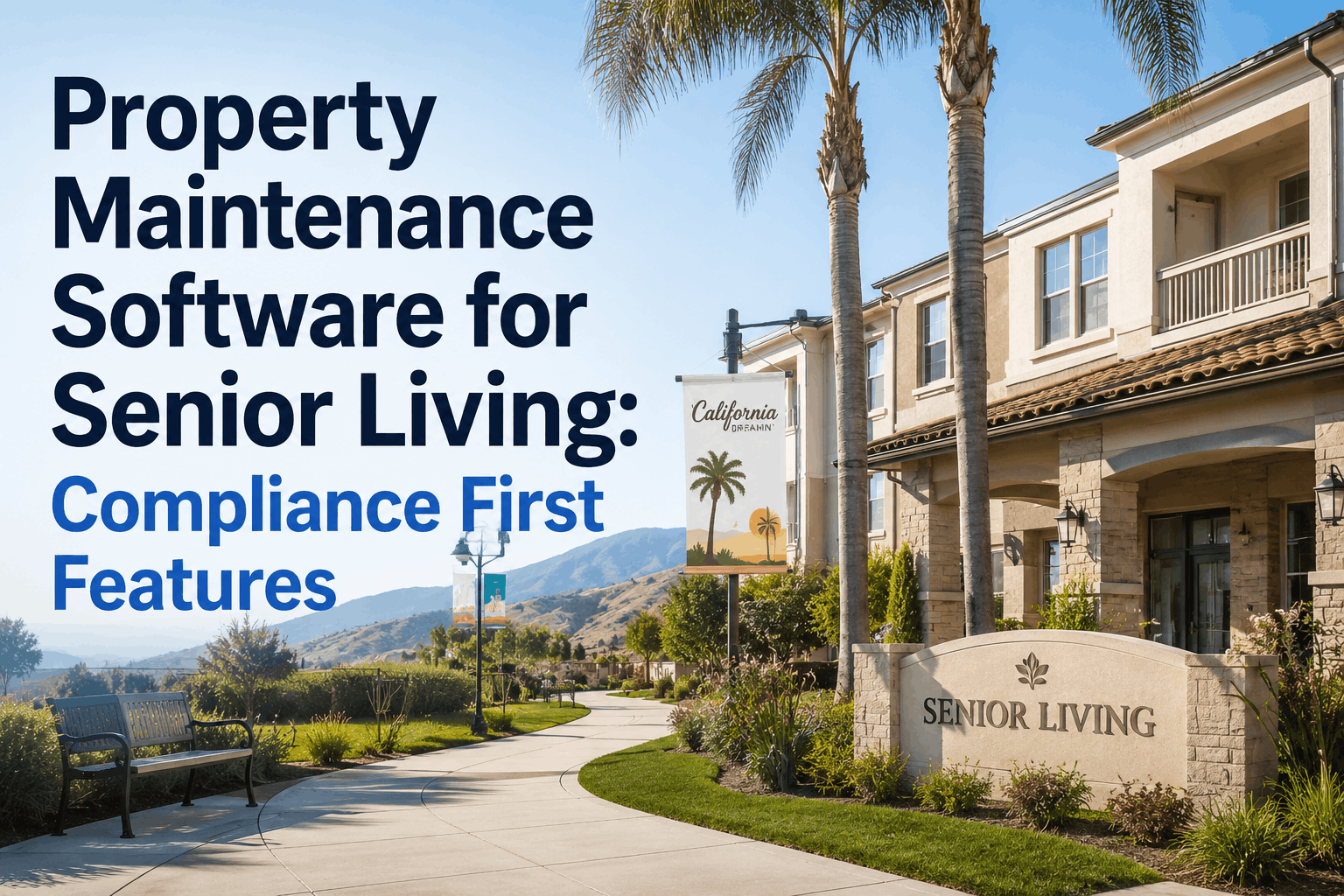
The facility is a licensed assisted living and memory care community comprising 180 beds across four residential wings, a dedicated memory care unit, and shared amenities including dining halls, therapeutic activity rooms, a rehabilitation gym, and landscaped outdoor courtyard spaces. Licensed by state health authorities and subject to federal CMS guidelines, it operates under a continuous compliance obligation across more than 60 regulated asset categories.
| Facility Type | Assisted Living & Memory Care Community, 4 residential wings |
| Capacity | 180 licensed beds — Studio, companion, and private suite configurations |
| Regulated Assets | 740+ tracked assets across fire safety, HVAC, elevators, kitchen, medical storage, and grounds |
| Compliance Obligations | State health authority, CMS, local fire marshal, OSHA, and dietary equipment inspection programs |
| Occupancy Rate | 88% average — 158 residents at time of deployment |
| Prior Compliance Model | Paper-based inspection logs. Shared drive folders. No automated reminders. No digital audit trail. |
| Compliance Performance | 64% on-time inspection rate. 3 failed audits in 18 months. $34,000 in remediation costs. |
What Was Breaking Down
The compliance failures at this facility were not caused by a lack of diligence from staff. They were caused by a system that made compliance structurally difficult to sustain. Paper logs went missing. Reminder emails were missed or buried. Vendor service records arrived weeks after the fact, by which point the inspection window had already closed. When state auditors arrived unannounced, pulling together a coherent compliance record required hours of manual document retrieval — and still left gaps.
OxMaint CMMS Compliance Management
After evaluating four platforms, the facility's operations director selected OxMaint for its healthcare-aware compliance framework, mobile-first field interface, and its ability to generate timestamped, auditor-ready documentation automatically — without requiring additional administrative staffing. Deployment was completed in 11 days by the existing seven-person maintenance team without disrupting resident services or daily operations.
All 740+ regulated assets catalogued with inspection frequencies, regulatory authority mapping, service history fields, and responsible-party assignments — the first structured compliance inventory the facility had ever maintained.
Every inspection obligation — fire suppression testing, elevator certifications, kitchen hood cleaning, HVAC filter cycles, medical refrigeration audits — mapped to auto-generating work orders with zero manual dispatch.
Every completed inspection produces a timestamped, technician-signed digital record with photo documentation. Auditor-ready compliance reports generated in under four minutes — not four days.
Automated notifications issued at 30, 14, and 3 days prior to every compliance deadline — escalating to department heads if the primary assignee does not acknowledge. No single point of failure.
External contractor service records uploaded directly to asset profiles via mobile app at time of service. Eliminated the lag between vendor work completion and documented compliance evidence.
Real-time compliance status across all asset categories. Color-coded overdue, upcoming, and completed inspection views. Board-ready summary reports generated on demand for ownership and administrative review.
11-Day Deployment Timeline
The deployment was structured to minimize disruption to active resident care operations. All onboarding activities were completed during off-peak hours by the existing maintenance team, with no temporary staffing and no consultant engagement beyond OxMaint's standard remote onboarding support.
All 740+ regulated assets catalogued across fire safety, HVAC, elevators, dietary equipment, medical storage, and building envelope systems. Each asset linked to its governing regulatory authority, required inspection frequency, and assigned maintenance owner.
53 compliance inspection schedules configured across all regulated asset categories. Multi-tier escalation reminders activated for every deadline. Historical paper records digitized and uploaded to establish baseline compliance history for auditor continuity.
Digital audit trail framework activated with photo documentation requirements for all regulated inspections. External vendor access credentials issued to three contracted service providers for direct record submission, eliminating manual document handoffs.
Full team trained in under 2.5 hours on mobile documentation workflows. First automated inspection work orders dispatched on go-live day. Within 30 days, the facility achieved a 97% on-time completion rate — reaching 100% by month three and sustaining it through the following nine months.
After 12 Months: The Numbers
Same facility. Same team. Same regulatory obligations. One compliance system changed every measurable outcome.
| Metric | Before OxMaint | After OxMaint | Impact |
|---|---|---|---|
| Inspection Completion Rate | 64% on-time | 100% on-time | +36 points. Zero missed deadlines for 12 months. |
| Failed Regulatory Audits | 3 in 18 months | 0 in 12 months | 3 unannounced inspections passed. No deficiencies cited. |
| Audit Preparation Time | 47 hrs per cycle | 14.5 hrs per cycle | 3.2x faster. Reports generated in under 4 minutes. |
| Compliance Labor Cost | $61,000 / year | $13,400 / year | 78% reduction. 162 admin hours saved annually. |
| Overdue Maintenance Tasks | 68 / month avg. | 4 / month avg. | 94% reduction across all asset categories. |
| Financial Exposure | $89K projected risk | $0 fines or penalties | Full elimination. $136,600 total year-one recovery. |
Why the Results Held
Compliance became predictable, not reactive. Before OxMaint, the facility's compliance posture depended entirely on individuals remembering deadlines and manually retrieving records under audit pressure. After deployment, 53 compliance schedules operated automatically — generating work orders, issuing reminders, escalating overdue items, and producing timestamped documentation without any manual trigger. Compliance became a system output, not a human effort.
Audit readiness dropped from weeks to minutes. The 47-hour audit preparation cycle was the most visible symptom of the facility's underlying record-keeping problem. With every inspection now generating an immediate digital record linked to the relevant asset, regulatory reports that once took days to compile were produced in under four minutes on demand — and passed three separate unannounced inspections without a single cited deficiency. See how OxMaint generates audit-ready compliance reports for healthcare facilities.
Financial exposure was eliminated, not just reduced. The $89,000 in projected annual fine exposure represented a conservative estimate of what continued non-compliance would cost the facility. Achieving 100% compliance for 12 consecutive months meant that exposure was fully neutralized — with no fines, no remediation plans, and no corrective action requirements from any regulatory body across the entire operating year.
Staff time was redirected to residents, not paperwork. The 78% reduction in compliance-related labor did not mean fewer staff hours — it meant those hours were no longer consumed by manual tracking, file retrieval, and audit preparation. Maintenance staff returned to proactive asset care. The administrative coordinator who had previously managed the compliance spreadsheet system was redeployed to resident services coordination.
License risk was removed from the board agenda. Failed audits in a licensed senior living environment carry consequences that extend well beyond fines — including potential license suspension, bed-count restrictions, and reputational damage to occupancy rates. With zero failed inspections in 12 months, the facility's ownership group removed compliance risk from its quarterly board review for the first time in three years.
Frequently Asked
How does OxMaint handle unannounced inspections?
Can external vendors submit their own service records into the system?
Is OxMaint suitable for smaller senior living facilities or single-site operators?
What regulatory frameworks does OxMaint support for senior living?
How quickly does compliance performance improve after go-live?
What the Results Prove
This senior living community did not have a compliance intent problem — it had a compliance infrastructure problem. A paper-based tracking system with no automated reminders, no real-time visibility, and no reliable audit trail made 100% compliance structurally impossible, regardless of how capable or committed the maintenance team was. The system itself was the ceiling.
Deploying OxMaint replaced that ceiling with a floor. Within 11 days and without disrupting a single day of resident care, the facility moved from a 64% on-time inspection rate and three failed audits to a 100% compliance record sustained across 12 consecutive months and three unannounced regulatory reviews. The $136,600 in year-one financial recovery — against an $8,400 platform investment — reflects not just avoided fines, but the compounding value of a maintenance operation that finally had the infrastructure to perform at the level its team was always capable of delivering. That is the measurable impact of structured compliance management in a senior living environment.