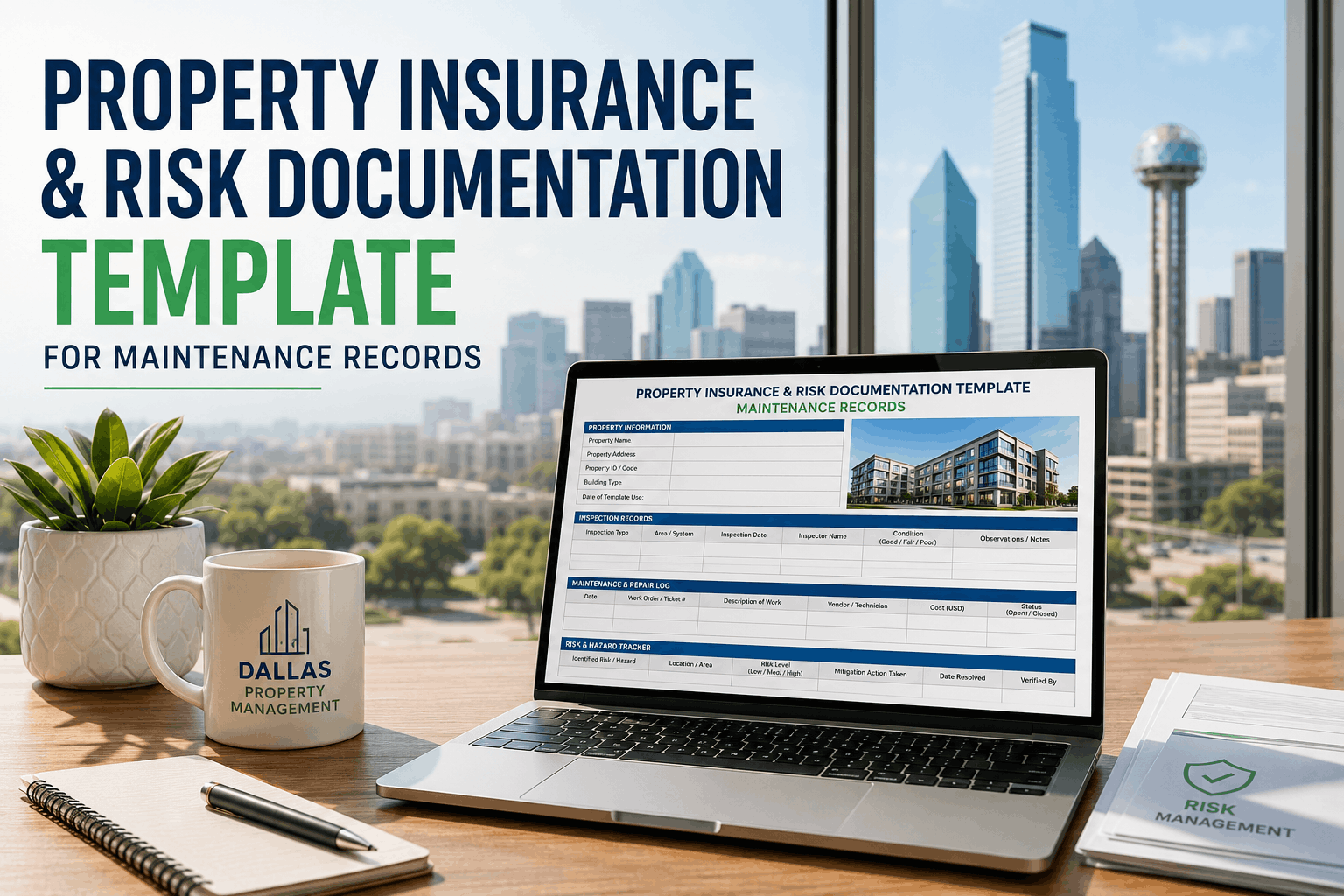
Property maintenance risk registers fail not because risk identification is difficult but because property managers cannot systematically track whether maintenance interventions are mitigating those risks over time. Without structured asset risk tracking, safety compliance issues, critical failure risks, and financial exposures all disappear into general maintenance activity—with no clear visibility into whether high-risk assets actually improved. Sign Up Free to see how OxMaint gives property managers the risk assessment framework, maintenance compliance records, and asset performance tracking needed to measure risk mitigation across individual properties and entire portfolios.
Identify and Track Property Maintenance Risks Systematically
OxMaint connects risk identification, maintenance action tracking, and compliance verification to give property managers complete visibility into whether your risk mitigation strategy is actually reducing hazards and improving asset safety across your portfolio.
Understanding Property Maintenance Risk Categories and Assessment Methodology
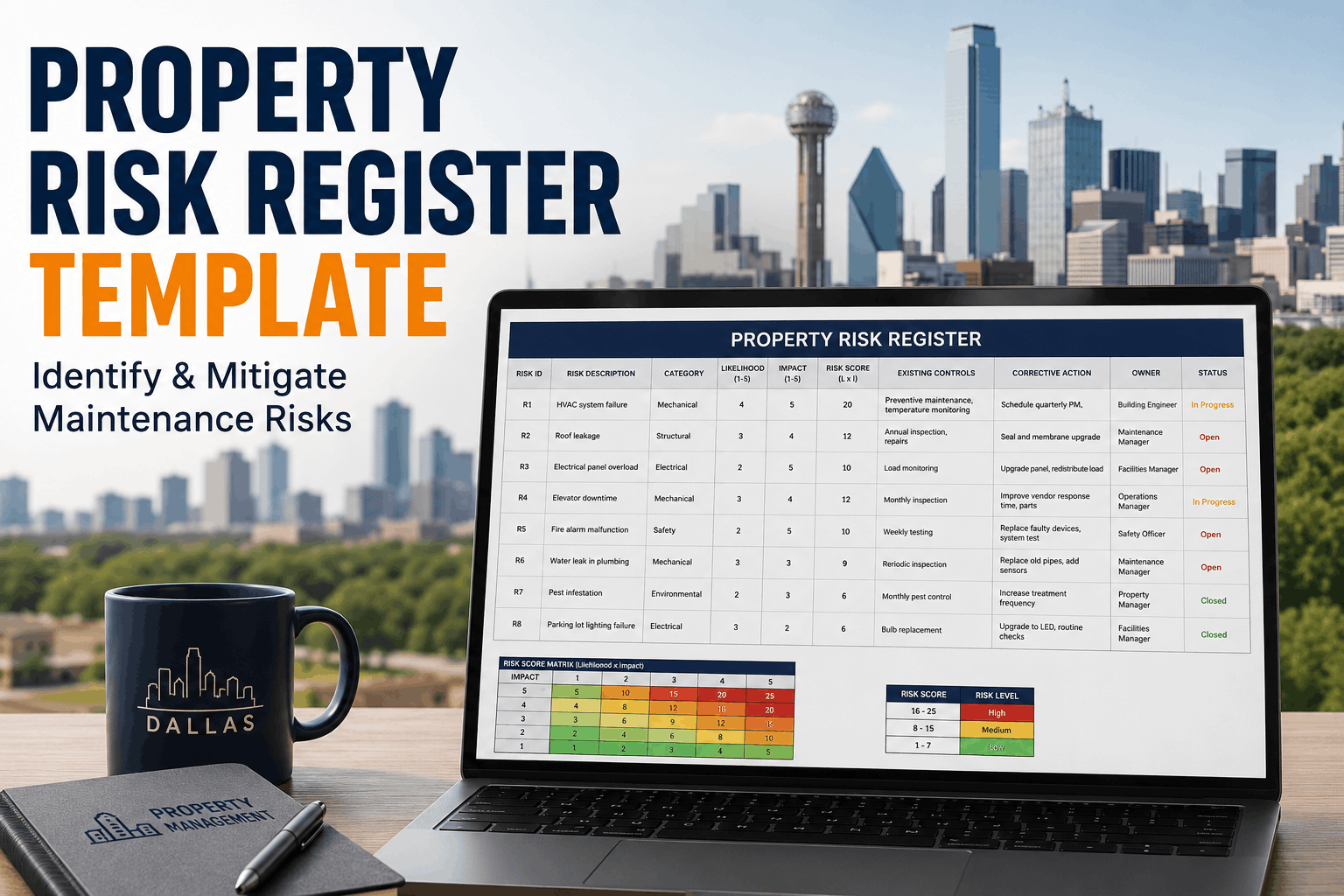
Property risk registers begin with clear categorization of threat types: safety risks (slip-and-fall hazards, structural failures, fire code violations), compliance risks (regulatory violations, building code non-conformance, inspection failures), financial risks (costly emergency repairs, capital improvement deferred costs), environmental risks (water damage, mold, hazardous material exposure), and reputational risks (tenant complaints, liability incidents, regulatory enforcement actions). Facilities that establish baseline risk assessments for high-risk assets—exterior walkways, stair conditions, roof integrity, plumbing systems, electrical infrastructure, environmental hazards like lead paint or asbestos—create the reference point against which maintenance actions can later be measured. Property managers should evaluate each risk by probability (how likely the hazard will materialize), impact (financial or safety consequence if it does), and residual risk after mitigation (what remains if corrective action is taken). OxMaint enables property managers to assign risk ownership, define mitigation timelines, and book a demo to see how asset history and compliance documentation combine to validate risk reduction efforts without manual spreadsheet extraction.
OxMaint records identified safety risks (trip hazards, loose railings, non-functioning detectors) and tracks corrective work orders to document whether deficiencies were closed within required timeframes.
Regulatory violations, code non-conformance, and inspection findings are logged by severity and tracked through closure, providing evidence that violations were remediated and compliance restored.
OxMaint records historical failure patterns, maintenance frequency, and corrective action effectiveness—enabling probability estimates based on actual asset performance data rather than assumption.
Risk mitigation strategies are documented in work orders and linked to baseline risk records, creating an audit trail that proves specific maintenance actions were taken to address identified exposures.
OxMaint assigns accountability by asset and risk type, routing notifications to responsible parties and tracking response times to ensure no high-priority risk falls through organizational cracks.
Cost of risk-mitigation maintenance is tracked alongside avoided repair costs when hazards are proactively addressed, enabling property managers to calculate risk reduction investment ROI.
Critical Property Maintenance Risk Metrics and Tracking Standards
The percentage of portfolio assets that have been assessed and formally entered into the risk register represents the first critical step—you cannot manage risks you have not identified. Property managers who have assessed 100% of building components against structured risk criteria (roof condition, electrical safety, plumbing integrity, environmental exposure, code compliance status) create a complete baseline. OxMaint facilitates rapid asset assessment by organizing work order history, inspection records, and regulatory violation data into risk category summaries. Facilities conducting annual re-assessment cycles find that 15-25% of previously low-risk assets shift to elevated risk based on deterioration, regulatory changes, or inspection findings. Tracking re-assessment frequency and updating risk status ensures the register remains current and actionable. Sign Up Free to begin asset risk profiling from existing maintenance records immediately.
Of the maintenance actions documented as necessary to reduce identified risks, what percentage were actually completed within the assigned timeframe? Properties that track this metric find that 40-60% of planned risk mitigation work slips due to budget constraints, competing priorities, or lack of accountability. Establishing a tracking discipline where every high-risk mitigation action is recorded in work order systems, assigned to responsible parties, and marked complete only when verification is documented creates organizational accountability. Deferred high-risk mitigation—roof repairs not completed, electrical code violations not remediated, safety hazards not closed—accumulates liability exposure. OxMaint enables property managers to flag high-priority mitigation tasks, send overdue notifications, and track completion against baseline timelines. Teams that book a demo can see how work order tracking and risk assignment combine to eliminate silent deferred maintenance.
The average number of days from safety hazard identification (inspection finding, complaint, code violation) to corrective action verification represents how quickly the property responds to protect tenants and reduce liability. Industry data shows that properties with structured tracking close urgent safety deficiencies (non-functioning smoke detectors, trip hazards, blocked exits) within 5-15 business days, while properties without tracking often allow these same items to remain open for 60+ days. Each day a known safety hazard remains unaddressed multiplies liability exposure if an incident occurs during that window. OxMaint automates hazard notification to responsible parties and tracks closure timelines, providing management visibility into whether safety response discipline matches the organization's stated commitment. Properties that maintain closure velocity below 7 days for high-severity safety findings demonstrate to insurers and regulators that safety is treated as immediate priority rather than deferred maintenance.
Building code violations, housing law non-compliance, and regulatory enforcement notices identify critical risks that must be remediated within legal timeframes. Properties that fail to track violations or don't document corrective actions face penalties, permit delays, and escalated enforcement. OxMaint records all regulatory findings by citation type, assigns deadlines based on compliance requirements, and tracks remediation documentation (corrective work orders, inspector re-visits, penalty resolution). Properties that achieve 100% violation closure rate within required timeframes protect themselves from compounding penalties and demonstrate regulatory good faith. Understanding the liability cost of unresolved violations (fines, license impacts, reputation damage) helps prioritize violation remediation against competing maintenance needs.
If risk mitigation actions are truly addressing root causes, the same hazard should not recur on the same asset within a reasonable timeframe. A slip-and-fall hazard at a specific location that is closed and then re-appears within 60 days suggests the root cause (poor drainage, inadequate surface treatment, lighting deficiency) was not actually resolved—only the symptom was temporarily addressed. OxMaint tracks hazard recurrence by location and risk type, enabling property managers to identify whether repeat issues indicate ineffective corrective actions or deteriorating asset conditions requiring different interventions. Assets with high recurrence rates may need root cause escalation (engineering assessment, vendor expertise consultation) rather than standard maintenance response.
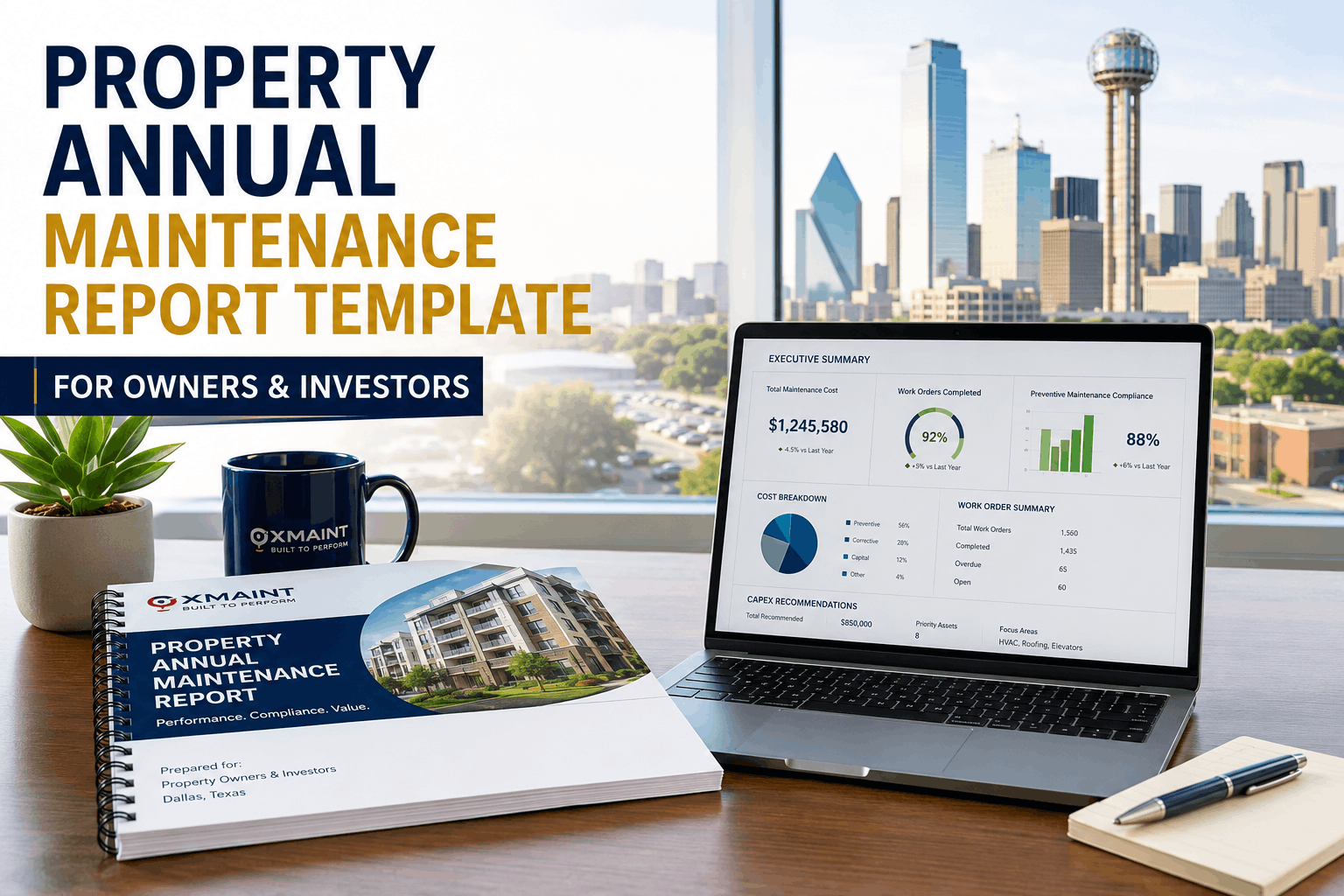
Individual asset risk tracking must roll up into portfolio-level risk visibility that enables property managers to allocate capital and attention strategically. A portfolio risk score (calculated from the distribution of high, medium, and low-risk assets, weighted by impact severity) shows whether the overall risk profile is improving or deteriorating. Properties that calculate quarterly portfolio risk scores typically find that properties with structured maintenance and risk tracking show 15-20% annual risk score improvement over 3-year periods. OxMaint aggregates individual asset risk data into portfolio dashboards, enabling real estate managers to identify which property types, asset classes, or geographic regions carry disproportionate risk and need targeted intervention. Demonstrating risk score improvement to ownership and stakeholders validates the business case for ongoing risk management investment.
Property Risk Register Reference Table: USA-Based Compliance Standards
| Risk Category | Assessment Frequency | Mitigation Target | Compliance Reference | Closure Requirement |
|---|---|---|---|---|
| Safety Hazards | Quarterly inspection | 7-day closure for high-severity | OSHA/Local Building Code | Documented corrective action |
| Code Violations | Annual audit | 100% closure within legal deadline | Building Code/Housing Law | Inspector re-certification |
| Environmental Risk | Bi-annual survey | Exposure elimination or containment | EPA/State Environmental Regs | Professional remediation report |
| Financial Risk | Annual assessment | 75%+ of critical items addressed | Capital Reserve Planning | Budget allocation proof |
| Structural/Utility Integrity | Triennial engineering review | Deferred maintenance below 15% | ASTM Building Codes | Professional inspection certification |
Building a Property Maintenance Risk Register: Implementation Roadmap
Establish Risk Assessment Protocol
Document the risk categories you will track, define assessment criteria (probability, impact, residual risk), and establish frequency schedules for re-assessment by asset type and risk severity. OxMaint enables structured risk recording from the first assessment forward.
Audit Current Asset Inventory Against Risk Criteria
Review all property assets systematically—roof condition, electrical systems, plumbing integrity, structural safety, environmental exposures, code compliance status—and record initial risk classification for each major asset category. Identify 10-20 highest-risk assets for priority attention.
Document Risk Ownership and Accountability
Assign responsibility for monitoring, reporting, and remediating each risk category to named positions within the organization. Record escalation procedures for high-priority items to prevent risks from being overlooked due to organizational gaps.
Link Risk Register to Maintenance Work Orders
When maintenance actions are taken to mitigate identified risks, record the work order with explicit risk linkage in OxMaint. This creates an audit trail showing which risks were addressed and when, enabling post-action risk re-assessment.
Review Risk Status Monthly and Re-assess Quarterly
Schedule monthly risk management reviews to track closure progress on high-priority items and quarterly re-assessment cycles to update risk status based on completed maintenance, deterioration patterns, and regulatory changes. Book a Demo to see risk review workflows in OxMaint.
Calculate Risk-Adjusted ROI on Mitigation Investments
Compare maintenance investment costs against avoided repair costs, insurance premium reductions, and liability exposure mitigation to justify continued risk management program funding and identify where additional investment will deliver highest risk reduction per dollar.
Frequently Asked Questions: Property Maintenance Risk Registers
What is a property maintenance risk register and why do property managers need one?
A risk register is a structured record of identified property hazards (safety, compliance, financial, environmental), their probability and impact, mitigation actions taken, and tracking of whether risks are actually being reduced. Without one, safety issues and regulatory exposures often get lost in general maintenance activity.
How often should properties conduct risk assessments?
High-risk assets should be re-assessed annually or when significant maintenance is completed. Quarterly reviews track mitigation progress on open items. Following a risk event or regulatory change, immediate re-assessment ensures the register reflects current exposure.
What types of risks should be included in the register?
Safety risks (slip-and-fall, structural failure, fire hazards), compliance risks (code violations, regulatory non-conformance), financial risks (high repair costs), environmental risks (mold, lead, hazardous materials), and reputational risks (liability incidents) all belong in a comprehensive register.
How does OxMaint support risk register management?
OxMaint organizes asset history into risk categories, tracks maintenance actions linked to risk mitigation, monitors closure timelines, and generates portfolio-level risk dashboards—eliminating manual spreadsheet tracking and ensuring risks don't slip through cracks.
What happens if a property doesn't track maintenance risks systematically?
Without tracking, safety hazards remain unaddressed, code violations go unremediated, liability exposure accumulates unnoticed, and property managers cannot demonstrate to ownership or insurers that risks are being actively managed—creating exposure to incidents, fines, and insurance coverage gaps.
Can property managers prioritize which risks to address first based on impact and probability?
Yes—risk matrices rank assets by calculated risk score (probability × impact), enabling property managers to focus mitigation resources on high-impact, high-probability hazards first. OxMaint calculates this automatically from asset history.
What should property managers do if a mitigation action is taken but the same risk recurs?
Recurring risks suggest the root cause was not adequately addressed. OxMaint flags repeat hazards automatically, triggering root cause review escalation rather than repeating the same standard maintenance action.
How long should risk registers be maintained for compliance and liability purposes?
Maintain risk records for a minimum of 7 years to support insurance claims, regulatory audits, and liability defense. OxMaint maintains complete audit trails of all risk assessments, mitigation actions, and closure documentation indefinitely.
Transform Property Risks from Hidden to Managed
OxMaint gives property managers the asset assessment framework, maintenance tracking, and compliance documentation needed to systematically reduce property maintenance risks and prove to ownership that safety and regulatory exposure are under control.
"Before we implemented a structured risk register in OxMaint, we had no visibility into which properties carried high risk exposure or whether our maintenance investments were actually reducing hazards. Now we quantify risk by property, track mitigation completion, and can demonstrate to our board that safety and compliance exposure is actively declining. Safety incidents dropped 35% in the first year because risks that would have been overlooked now trigger immediate action."
— Facility Director, Portfolio of 24 Properties, USA
-and-use-it-for-maintenance-planning.png)