A 1,200-unit multifamily portfolio was spending $2.8M annually on reactive maintenance — emergency repairs, after-hours vendor callouts, and guest compensation claims. The root cause? No formal risk register. Critical risks like aging roof membranes, failing HVAC units, and outdated elevator controllers were identified only after failure — never before. Twelve months after implementing OxMaint's risk register, the portfolio had reduced reactive maintenance spend by 42%, lowered insurance premiums by 18%, and eliminated three high-severity safety risks before they caused incidents. Start free — build your property risk register today.
Identify, score, and mitigate property maintenance risks with Oxmaint's risk register template — likelihood ratings, impact scores, risk levels, corrective action tracking, and review schedules. Download free or use the digital version with automated work orders.
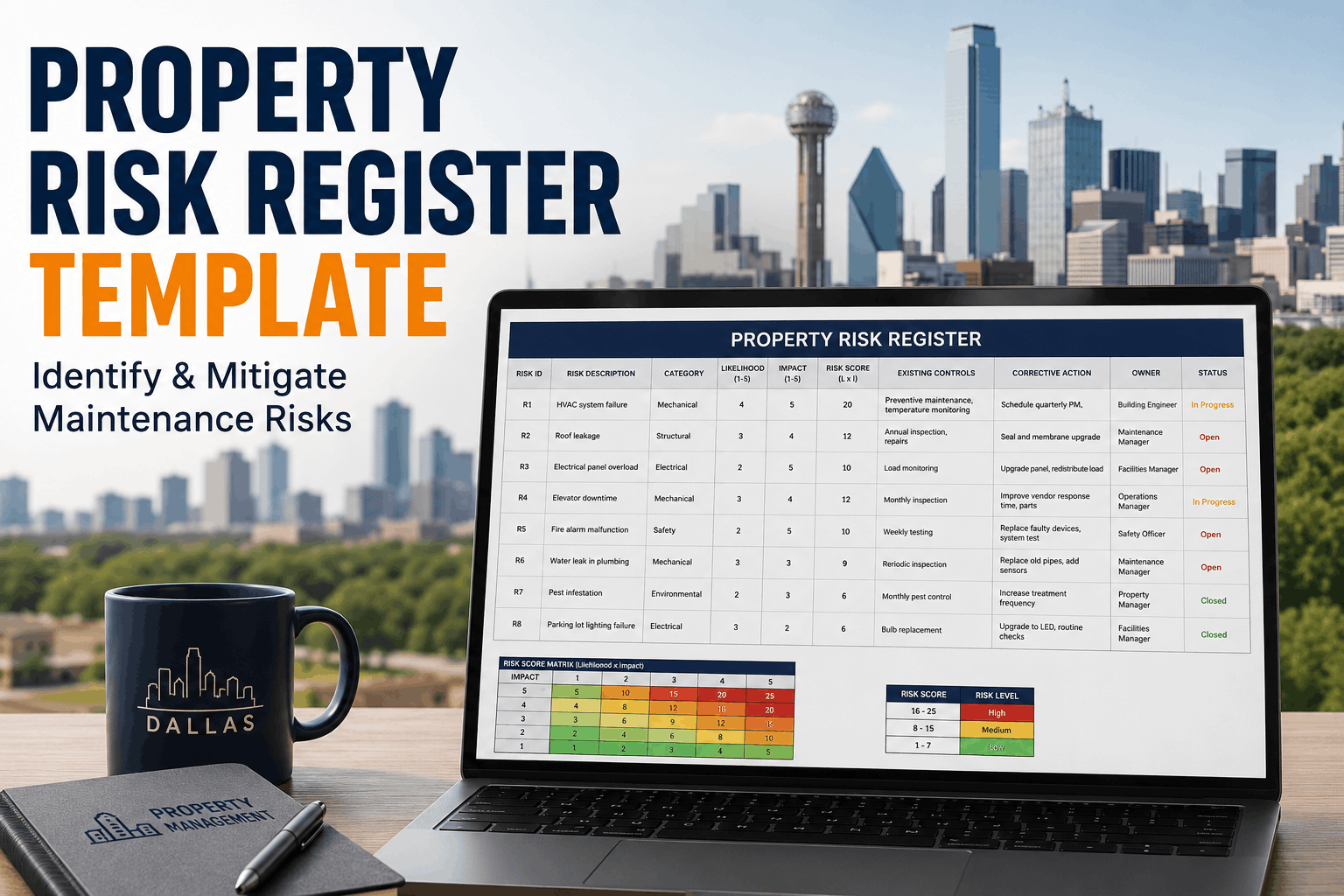
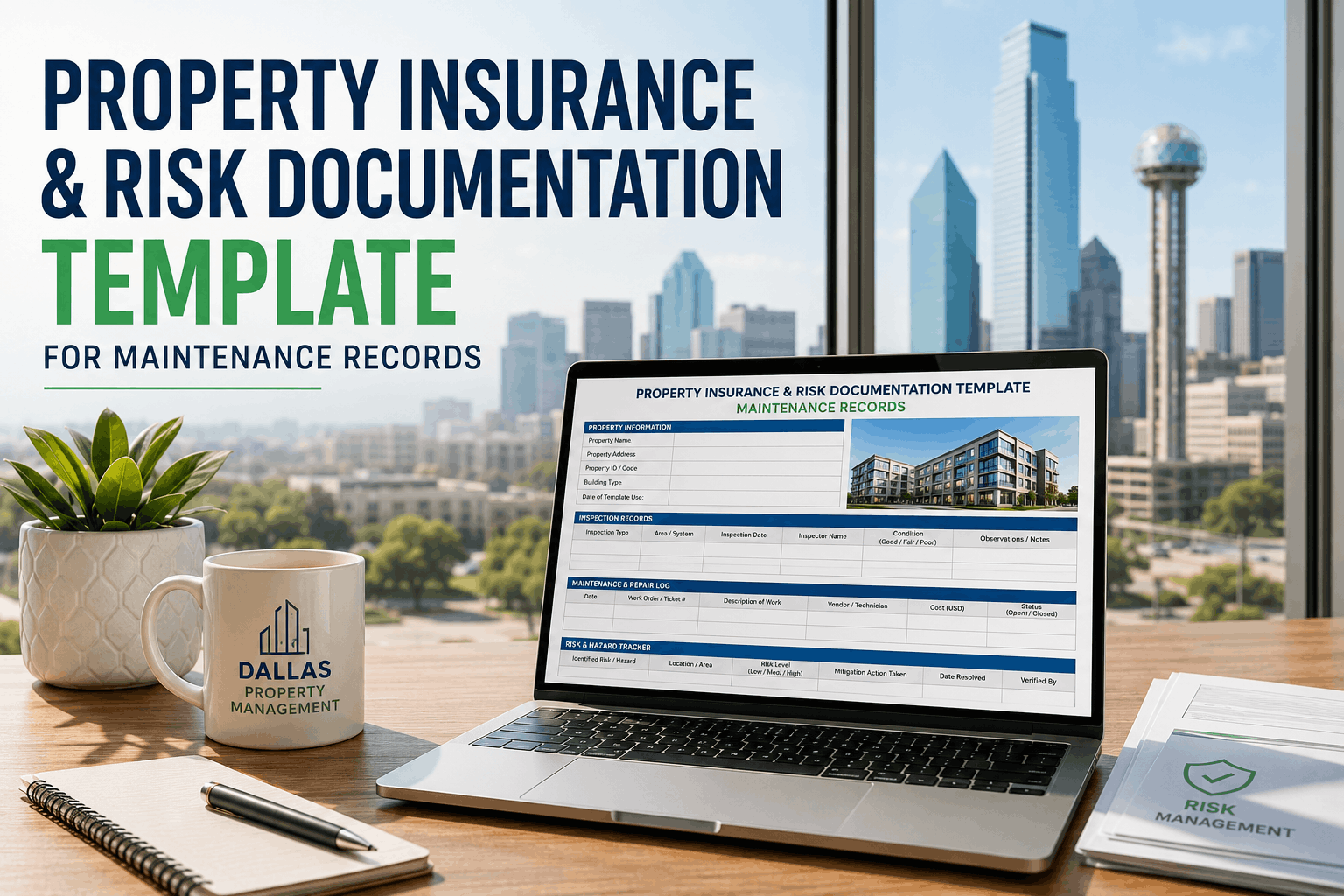
This template structures every maintenance risk into eight mandatory sections. Download and use as a paper form, or start a free Oxmaint trial to use the digital version with automated risk scoring, work order integration, and review scheduling.
Risk ID & Description
Unique ID · Risk name · Detailed description · Date identified · Identified by. Assign a unique identifier to every risk (e.g., HVAC-001, ROOF-002, ELEV-003). Describe the risk in enough detail that any team member can understand the hazard.
Risk Category
Select one: Asset Failure · Safety Hazard · Code Compliance · Environmental · Security · Operational. Categorize each risk for portfolio-level roll-up and trend analysis. Asset failure risks map to maintenance capital planning. Safety hazards map to liability exposure.
Likelihood Rating
1 (Rare) · 2 (Unlikely) · 3 (Possible) · 4 (Likely) · 5 (Almost Certain). Likelihood = probability this risk will occur within the next 12 months without mitigation. Base rating on historical data, industry benchmarks, and asset condition.
Impact Rating
1 (Negligible) · 2 (Minor) · 3 (Moderate) · 4 (Major) · 5 (Catastrophic). Impact = consequence if this risk occurs. Consider financial cost, guest or tenant impact, safety consequences, regulatory penalties, and reputational damage.
Risk Score & Level
Score = Likelihood × Impact (1–25). Level: Critical (20–25), High (15–19), Medium (9–14), Low (1–8). Risk score determines prioritization. Critical risks require action within 30 days. High risks within 90 days.
Mitigation Plan & Owner
Action description · Assigned team member · Due date · Budget required. Every risk must have a named owner and a defined mitigation action. Without ownership, risks remain on the register indefinitely but never get resolved.
Process
Risk Register Process — 5 Steps from Identification to Closure
A formal risk register is not a static document. It is a living management system that cycles through five distinct phases — each essential for maintaining an accurate picture of property risk exposure.
01
Risk Identification
Inspect assets, review maintenance history, analyze incident reports, survey property managers. Identify every potential hazard that could cause financial loss, safety incident, or regulatory violation. Document each risk with unique ID and detailed description.
02
Risk Scoring
Score likelihood (1–5) and impact (1–5) independently. Multiply to get risk score (1–25). Calculate risk level: Critical (20–25), High (15–19), Medium (9–14), Low (1–8). Oxmaint's digital risk register calculates scores automatically — no math errors.
03
Risk Triage
Prioritize risks by score. Critical risks require action within 30 days. High risks within 90 days. Medium and Low risks scheduled in next planning cycle or accepted. Escalate critical risks to senior management with mitigation plan and budget request.
04
Mitigation Planning
Define corrective actions for each risk. Assign named owner. Set due date. Estimate budget. Oxmaint creates linked work orders automatically from mitigation plans — ensuring actions are executed, not just planned.
05
Closure & Review
Verify mitigation completion. Update risk register with closure date and residual risk score. Schedule quarterly review to reassess risks — risks can increase or decrease score over time as asset condition changes.
Critical risk closure rate — every score 20+ risk mitigated within 30 days
3
High-severity safety incidents prevented in first year after risk register deployment
We had no formal risk register before Oxmaint. Risks were managed by memory — and memory failed. An aging roof membrane on Building C had been flagged as "check soon" for 18 months. No one owned it. No action was taken. When it failed during a rainstorm, four units flooded, and we paid $47,000 in guest relocation and repair costs. That single incident would have been prevented by a proper risk register. After implementing Oxmaint's risk register, we identified 22 critical risks across our portfolio, assigned owners to every one, and closed 18 within 90 days. Our insurance auditor asked to see our risk register during renewal. We exported it in 5 minutes. The auditor noted that our documented mitigation program was the best she had seen in 10 years.
Director of Operations · 1,200-Unit Multifamily Portfolio, Texas, USA
Critical risks are identified. Mitigation is tracked. Savings are documented.Oxmaint's risk register turns property risk management from reactive guesswork into proactive, data-driven strategy — see results in 90 days.
The 5×5 risk matrix is the industry standard for property risk assessment. Likelihood and impact each score from 1 (lowest) to 5 (highest). The product determines risk level and required action timeline.
Likelihood ↓ Impact →
1 (Rare)
2 (Unlikely)
3 (Possible)
4 (Likely)
5 (Almost Certain)
5 (Catastrophic)
5
10
15
20
25
4 (Major)
4
8
12
16
20
3 (Moderate)
3
6
9
12
15
2 (Minor)
2
4
6
8
10
1 (Negligible)
1
2
3
4
5
Critical (20–25) — Action within 30 days · High (15–19) — Action within 90 days · Medium (9–14) — Schedule next planning cycle · Low (1–8) — Monitor, accept, or defer. Access free digital template.
What is a property risk register, and why do I need one?
A property risk register is a structured log of all maintenance and operational risks across your portfolio, with each risk scored by likelihood and impact. Insurers, lenders, and regulators increasingly expect documented risk registers. Properties without formal risk registers face higher insurance premiums and weaker liability defense positions.
How often should I update my property risk register?
Quarterly review is industry best practice for active property portfolios. High-risk assets (aging roof, aging HVAC, aging elevator) may require monthly review. Oxmaint schedules risk register reviews automatically at configurable intervals — ensuring no risk stays on the register without reassessment longer than intended.
What is a good risk score threshold for immediate action?
Critical risks (score 20–25) require action within 30 days. High risks (score 15–19) require action within 90 days. Medium risks (score 9–14) schedule in next planning cycle. Low risks (score 1–8) monitor or accept. These thresholds are configurable in Oxmaint based on your risk tolerance and regulatory requirements.
Does Oxmaint integrate risk register with maintenance work orders?
Yes. When you define a mitigation action for a risk, Oxmaint creates a linked work order with assigned owner, due date, and priority based on risk level. Work order status updates automatically update the risk register mitigation status. This closed-loop integration ensures risks do not stay open after mitigation work is complete.
How does Oxmaint handle risk register for multi-property portfolios?
Oxmaint supports portfolio-level risk aggregation. View risks across all properties in one dashboard, filter by risk level, category, property, or owner. Export portfolio risk register for investor reporting, insurance renewal, or lender compliance. Each property can have its own risk register while rolling up to portfolio totals.
Free Template · Digital Risk Register
Identify. Score. Mitigate. Track. Close.
Join property portfolios achieving 42% reactive maintenance reduction and 18% lower insurance premiums with Oxmaint's risk register — live in 3–5 days.