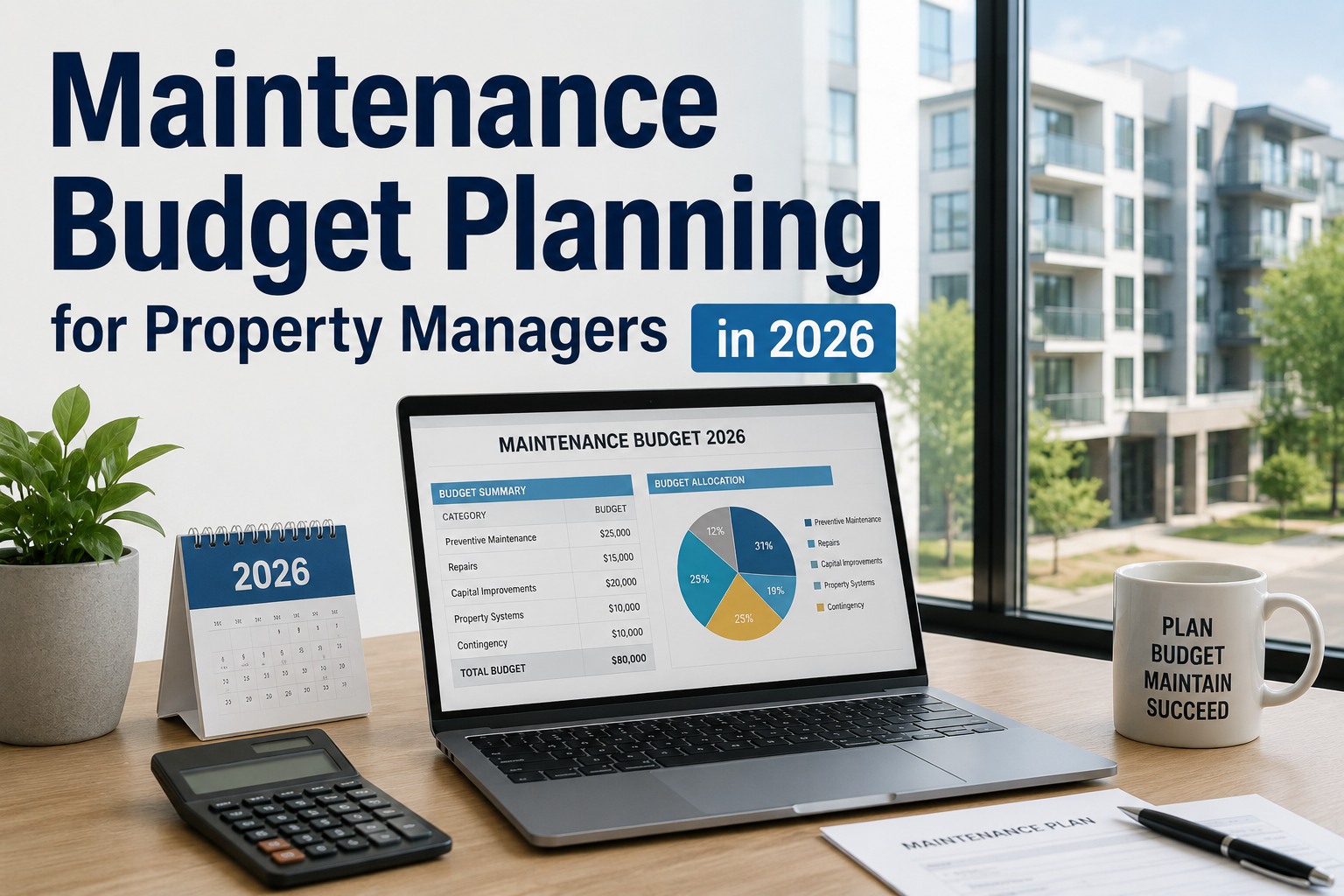
A realistic property maintenance budget for 2026 typically allocates 1–2% of a property's replacement value per year — or roughly $1,000–$2,500 per residential unit — split across routine repairs, preventive maintenance, capital reserves, and a true emergency fund. The property managers who get budgets approved without a fight are the ones who show owners a structured maintenance budget plan backed by asset data, not last year's spreadsheet plus 3%. This guide walks through the four-bucket budget structure, per-unit benchmarks by asset type, reserve funding rules, and the forecasting method that turns maintenance budget planning from an annual argument into a 20-minute approval. If you want the asset history and cost-per-unit analytics that make these numbers defensible, Start Free Trial and pull your real maintenance spending data in days, not months.
What will deferred maintenance cost your portfolio in 2026?
Every $1 of deferred repair becomes roughly $4 of future capital cost. Underfunded property maintenance budgets don't save money — they borrow it at 300% interest from next year's owner distribution.
The 4 buckets every property maintenance budget needs
Most maintenance budget variance fights happen because everything lives in one line item. Split your property maintenance cost planning into four distinct buckets and owners stop questioning individual invoices — they approve a system.
Routine / Reactive
Day-to-day repairs: plumbing leaks, appliance swaps, lockouts, drywall. Typically 35–45% of total maintenance spending. Benchmark: $500–$1,000 per unit/year for multifamily rentals.
Preventive Maintenance
Scheduled HVAC service, gutter cleaning, pest control, fire-safety inspections, water-heater flushes. Usually 15–25% of budget — and the bucket that shrinks every other bucket when funded properly.
Capital Reserves (CapEx)
Roofs, boilers, elevators, parking surfaces, full repaints. Fund at $250–$500 per unit/year minimum, driven by a capital needs assessment — not a guess. This is where deferred-repair debt hides.
Emergency Reserve
Burst pipes, storm damage, failed furnaces in January. Hold 5–10% of the total maintenance budget as untouchable contingency. If you spend it on routine overruns, your preventive bucket is underfunded.
How much should you budget for property maintenance per unit in 2026?
The classic "1% of property value" rule is a floor, not a plan. Realistic rental maintenance budget benchmarks vary sharply by asset age and type — use these 2026 ranges as your starting point, then adjust with your own work-order history.
| Property Type | Routine + Preventive / Unit / Yr | Capital Reserve / Unit / Yr | % of Gross Rent |
|---|---|---|---|
| Multifamily (built after 2010) | $800 – $1,200 | $250 – $350 | 8 – 10% |
| Multifamily (1980–2010) | $1,200 – $1,800 | $350 – $500 | 10 – 13% |
| Multifamily (pre-1980) | $1,800 – $2,500 | $500 – $750 | 13 – 16% |
| Single-family rental | $1,000 – $1,500 | $300 – $450 | ~1% of home value |
| Commercial / mixed-use | $1.50 – $2.50 per sq ft | $0.40 – $0.75 per sq ft | 10 – 15% of NOI |
Worked example: a 120-unit garden complex built in 1995, averaging $1,450/month rent, should carry roughly $1,500/unit in operating maintenance ($180K) plus $420/unit in reserves ($50K) — a $230K annual property maintenance budget, or about 11% of gross rent. Presenting it this way, with per-unit math, gets approved. Presenting "$230K, same as last year plus inflation" gets cut.
A 5-step maintenance budget planning process owners approve
Property maintenance forecasting fails when it starts from last year's spend. Start from the assets instead — condition, age, and failure history produce a maintenance budget plan that defends itself.
Audit asset condition, not just invoices
Walk every major system — HVAC, roofing, plumbing risers, water heaters, appliances — and log age, condition, and remaining useful life. A 14-year-old water heater is a 2026 line item whether last year's budget knew it or not.
Pull 24 months of work-order history
Calculate real cost per unit per month by category. If you can't, that's the first problem to fix — property managers using a CMMS pull this report in minutes; spreadsheet teams burn two weeks reconstructing it.
Schedule preventive work by month
Map every recurring task — quarterly HVAC service, annual backflow tests, seasonal gutter work — onto a 12-month calendar with vendor costs attached. This converts "preventive maintenance" from a vague allowance into a priced schedule.
Build the capital plan from useful-life data
List every component with replacement cost and expected end-of-life year. A roof at year 18 of a 25-year life needs $0 this year but a funded reserve — show owners the curve, not a surprise.
Track variance monthly, not annually
Review actual vs. budget every month and reforecast quarterly. A 5% variance caught in March is a conversation; the same variance found in December is a credibility problem that poisons next year's budget.
What underfunded maintenance budgets really cost
Cutting a property repair budget by 15% rarely saves 15% — it converts planned $400 fixes into unplanned $2,000 emergencies, and the compounding is brutal across a portfolio.
Scenario: a 60-unit portfolio defers $18K of preventive HVAC and plumbing work to "protect cash flow." Within 18 months it absorbs three emergency compressor replacements at $4,800 each, a riser leak with $22K in water damage and tenant displacement, and a failed inspection that delays a refinance. Total cost of "saving" $18K: over $58K — plus an owner who now questions every number you present.
Build your 2026 maintenance budget on real asset data
OxMaint's AI-powered CMMS turns your work orders, assets, and vendor invoices into the exact numbers this guide requires — automatically, across every property you manage.
Cost-Per-Unit Analytics
See maintenance spending per unit, per building, per category in real time — the benchmark data that makes budget requests defensible to owners.
Preventive Maintenance Scheduling
Auto-generate recurring PM work orders with attached costs, so your preventive bucket is a priced calendar — not a hopeful allowance. Teams cut emergency calls 30–50%.
Asset Lifecycle Tracking
Log install dates, condition, and repair history for every HVAC unit, roof, and water heater — the useful-life data your capital reserve plan is built on.
Owner-Ready Reports
Export budget-vs-actual and forecast reports in one click — walk into owner meetings with documentation, not explanations. Replace two weeks of spreadsheet archaeology.
Book a 30-minute demo — bring one property, leave with a budget model
We'll load one of your buildings into OxMaint and show you the per-unit cost report, PM calendar, and capital forecast your 2026 budget needs.
Property maintenance budget questions, answered
How much should I budget for rental property maintenance per year?
Plan on 1–2% of property value annually, or roughly $1,000–$2,500 per unit for multifamily depending on building age. A common rule of thumb is also one month's rent per unit per year. Older assets (pre-1980) belong at the top of every range.
What percentage of rental income should go to maintenance?
Most well-run portfolios spend 8–15% of gross rent on operating maintenance, plus a separate capital reserve. If you're consistently under 8%, you're likely deferring work that will resurface as emergency spend or value loss at refinance.
What's the difference between a maintenance budget and a capital reserve?
The operating maintenance budget covers recurring repairs and preventive service; the capital reserve funds big-ticket replacements like roofs, boilers, and elevators. Mixing them is the #1 cause of "surprise" special assessments. OxMaint's asset lifecycle tracking shows exactly which components hit end-of-life in which year — Book a Demo to see it on your own assets.
How do I get owners to approve a bigger maintenance budget?
Present per-unit math, the 4-bucket structure, and the deferred-maintenance multiplier ($1 today = $4 later) rather than a single lump sum. Owners approve systems and data; they cut unexplained totals. Monthly variance reporting keeps the trust you earn at approval.
How do I forecast maintenance costs without years of clean data?
Start with asset age and condition (Step 1 above) plus industry benchmarks, then let a CMMS build your real history going forward. Most OxMaint users have reliable per-unit cost data within 90 days of moving work orders off spreadsheets and text messages — Start Free Trial and your 2027 budget writes itself.
Stop defending last year's numbers. Start presenting next year's plan.
OxMaint gives property managers the work-order history, PM scheduling, and per-unit cost analytics that turn maintenance budget planning into a 20-minute owner approval.
Free 14-day trial · No credit card · Set up your first property in under an hour