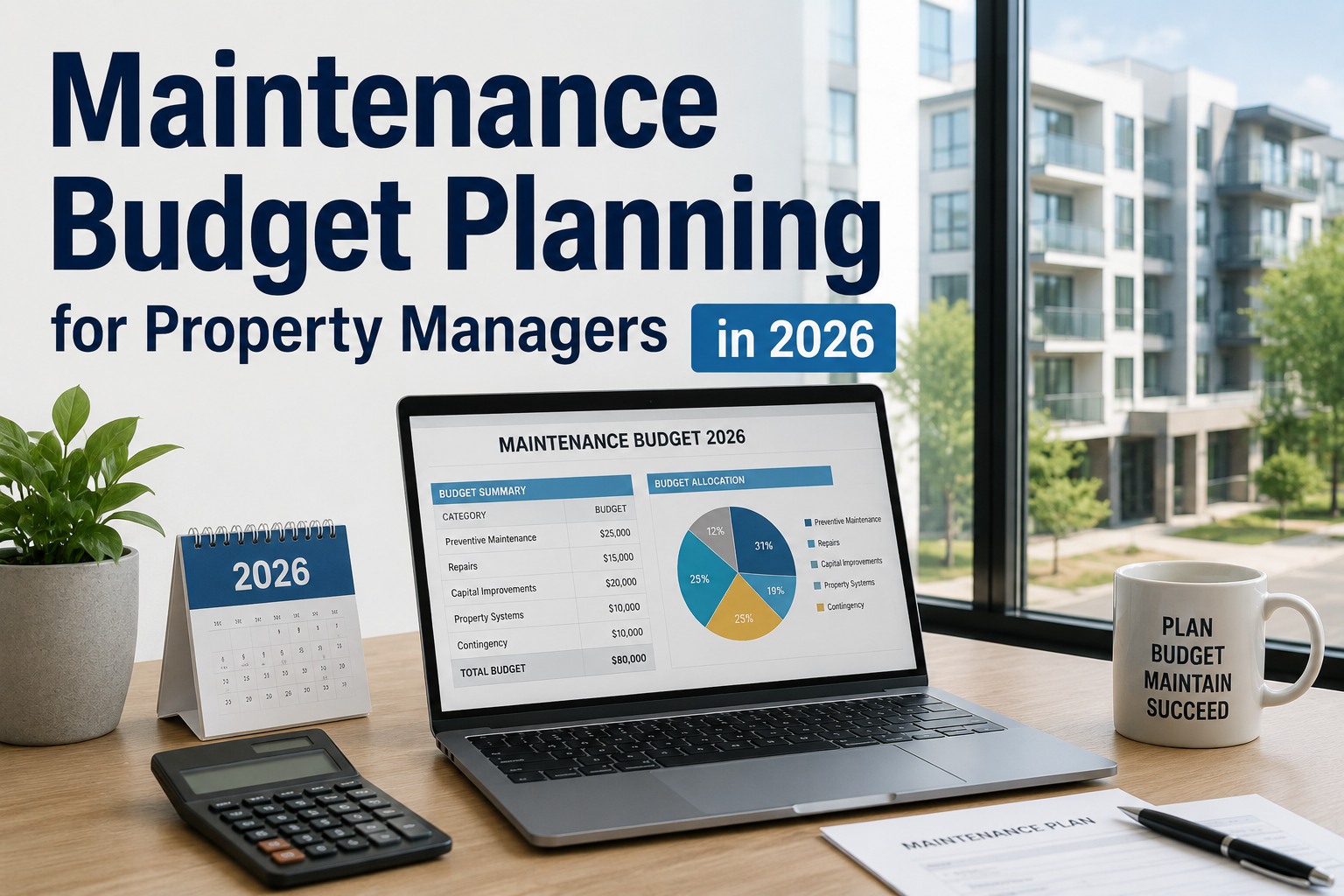
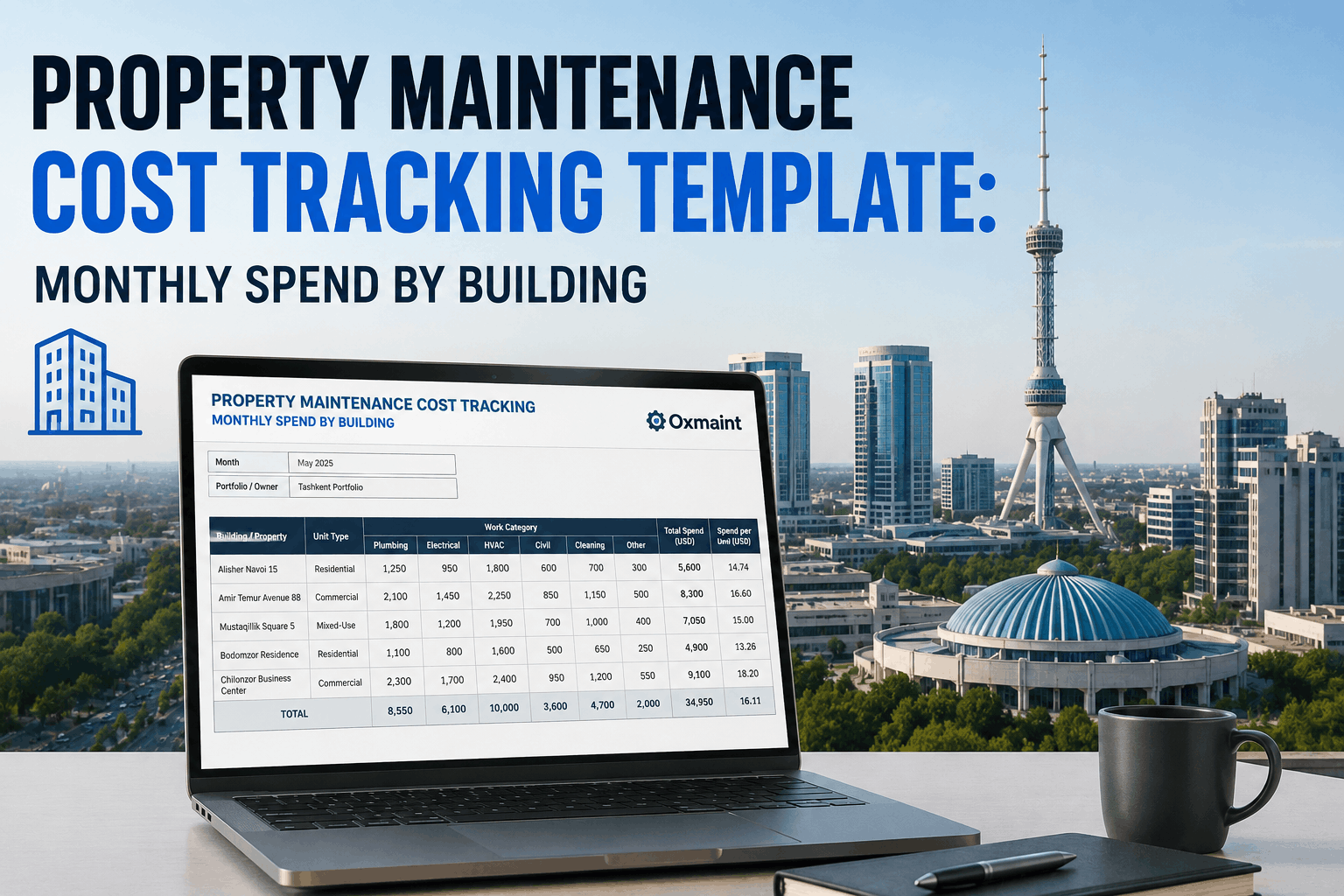
Property managers handling multi-unit portfolios face a critical challenge: budgeting accurately for unpredictable maintenance while balancing capital expenditures, operating expenses, and emergency reserves. Fannie Mae research suggests allocating 4% of annual rent to maintenance, though industry experts recommend 10-15% depending on property age and systems. Without a structured budget template, most portfolio managers underestimate costs by 20-30%, leaving properties vulnerable to deferred maintenance spirals, tenant dissatisfaction, and accelerated asset deterioration. Start Free Trial to replace fragmented spreadsheets with OxMaint's property maintenance budget template — automatically calculating CapEx/OpEx allocation, cost-per-unit trending, and emergency fund reserves using real maintenance history across your entire portfolio.
Property Maintenance Budget Template: Key Components
What Every Annual Property Budget Spreadsheet Must Include
Building Your Property Budget: Five Essential Categories
Income Sources, Maintenance Costs, Capital Improvements & Financial Reserves
Property Budget Template Calculation Methods: Industry Standards
Three Proven Approaches to Estimating Annual Maintenance Budgets
| Budget Method | Formula | Best For | Accuracy Level |
|---|---|---|---|
| % of Purchase Price | Property Cost × 1% = Annual Budget | Single-family homes, recent acquisitions with known acquisition cost | Moderate (varies with property age) |
| Per Square Foot | Building Sq Ft × $1.00–$1.50 = Annual Budget | Multi-family complexes, commercial buildings, standardized sizing | Good (scalable across properties) |
| % of Rental Income | Annual Rent × 4–10% = Annual Budget | Income-based portfolios, variable cost analysis, Fannie Mae-aligned | Excellent (aligns with operating revenue) |
How OxMaint's Budget Template Replaces Static Spreadsheets
Real Maintenance Data Powers Accurate Property Budget Planning
Property managers who transition from Excel budget spreadsheets to OxMaint's data-driven maintenance budget template typically increase forecast accuracy by 25-35%, reduce mid-year budget surprises by 40-50%, and identify cost-reduction opportunities worth 10-15% of annual maintenance spend. The platform automatically calculates CapEx/OpEx allocation, reserves, and cost-per-unit metrics from your actual maintenance history — no manual estimation, always audit-ready. Start Your Free Trial to build your first property budget with real data today — your baseline budget report generates within hours of connecting your maintenance records.
What Property Managers Say About Data-Driven Budget Templates
Real Results from Portfolio Directors Using OxMaint Budget Planning
We managed a 23-property portfolio using separate Excel files for each building. Budget season was a nightmare — reconciling costs took 3 weeks, we always missed seasonal spikes (HVAC in spring, snow removal in winter), and management kept asking why actual maintenance exceeded budget by 15-20% every year. OxMaint pulled all our maintenance history automatically, showed us we were spending 3x more on emergency repairs than planned maintenance (reactive ratio was 70% vs our 30% goal), and calculated a baseline budget backed by 18 months of real data. Now we forecast accurately month-by-month, adjust quarterly based on actual spend, and our YTD variance is consistently within 5%. Finance stopped asking why we were overspending — the budget became credible because it was built on facts.
— Portfolio Director, Multi-State Residential Property Management Firm
Frequently Asked Questions: Property Maintenance Budget Templates
What is the ideal ratio of CapEx to OpEx in a property maintenance budget?
Industry standard is 70-80% OpEx (routine maintenance, utilities, management) and 20-30% CapEx (major upgrades, system replacements). Portfolios with older buildings may skew higher on CapEx due to approaching end-of-life replacements.
How much should I set aside for emergency maintenance reserves?
Reserve 10-20% of total annual operating budget for emergencies (typically $500–$2,000 per unit in multifamily). This prevents cash flow crunches when major systems fail unexpectedly like pipe bursts or roof leaks.
What is the most accurate method for estimating property maintenance budgets?
% of annual rental income (4-10%) is most accurate for income-generating properties and aligns with Fannie Mae guidelines, since it scales with revenue and accounts for occupancy variations directly.
How often should I update my property maintenance budget?
Review and adjust budget quarterly based on YTD actual spend, seasonal trends, and emerging maintenance issues. Annual comprehensive rebudgeting using 12+ months of actuals ensures accuracy for next fiscal year planning.
Can a property maintenance budget template account for inflation?
Yes. OxMaint templates allow scenario-based adjustments for inflation (2-5% annually typical) or contractor rate increases. Build multiple budget versions (conservative, moderate, aggressive) to evaluate different inflation scenarios.
How do I allocate CapEx across multiple properties in a portfolio budget?
Prioritize by asset age, condition ratings, and failure risk. OxMaint shows which properties have highest maintenance spend and longest remaining useful life on key systems to guide capital allocation strategically.
What cost categories should be included in a comprehensive property budget?
Must include: utilities, insurance, property taxes, management fees, routine maintenance, repairs, landscaping, snow removal, vendor services, contingency reserves, and capital improvements. Missing categories lead to significant underestimation.
How do I compare my property budget against industry benchmarks?
Compare cost-per-unit or cost-per-sq-ft against BOMA standards and OxMaint's portfolio benchmarks. Significant variances signal efficiency opportunities or indicate properties needing accelerated maintenance investment.