Multi-family property managers deal with plumbing failures that are rarely random. They are the result of deferred inspections, untracked assets, and no system to catch deterioration before it becomes a burst pipe, a flooded unit, or a six-figure insurance claim. This guide covers what structured plumbing maintenance looks like, what it costs when you skip it, and how Oxmaint keeps it all on schedule. If you want to see how Oxmaint maps plumbing schedules across your entire portfolio, our team can walk you through it in 30 minutes with no obligation.
$13B
Annual water damage losses in US residential and commercial properties
65%
Of plumbing failures are preventable with scheduled inspections and condition tracking
4.2x
Higher cost for emergency plumbing repairs vs. planned preventive service visits
22%
Of multi-family tenant complaints are plumbing-related, directly affecting lease renewals
Stop Treating Plumbing Failures as Surprises
Oxmaint gives you a live asset registry and automated PM schedules for every plumbing system across every property. Track condition, schedule service, and eliminate the emergency call premium.
What Is Plumbing Maintenance for Multi-Family Properties?
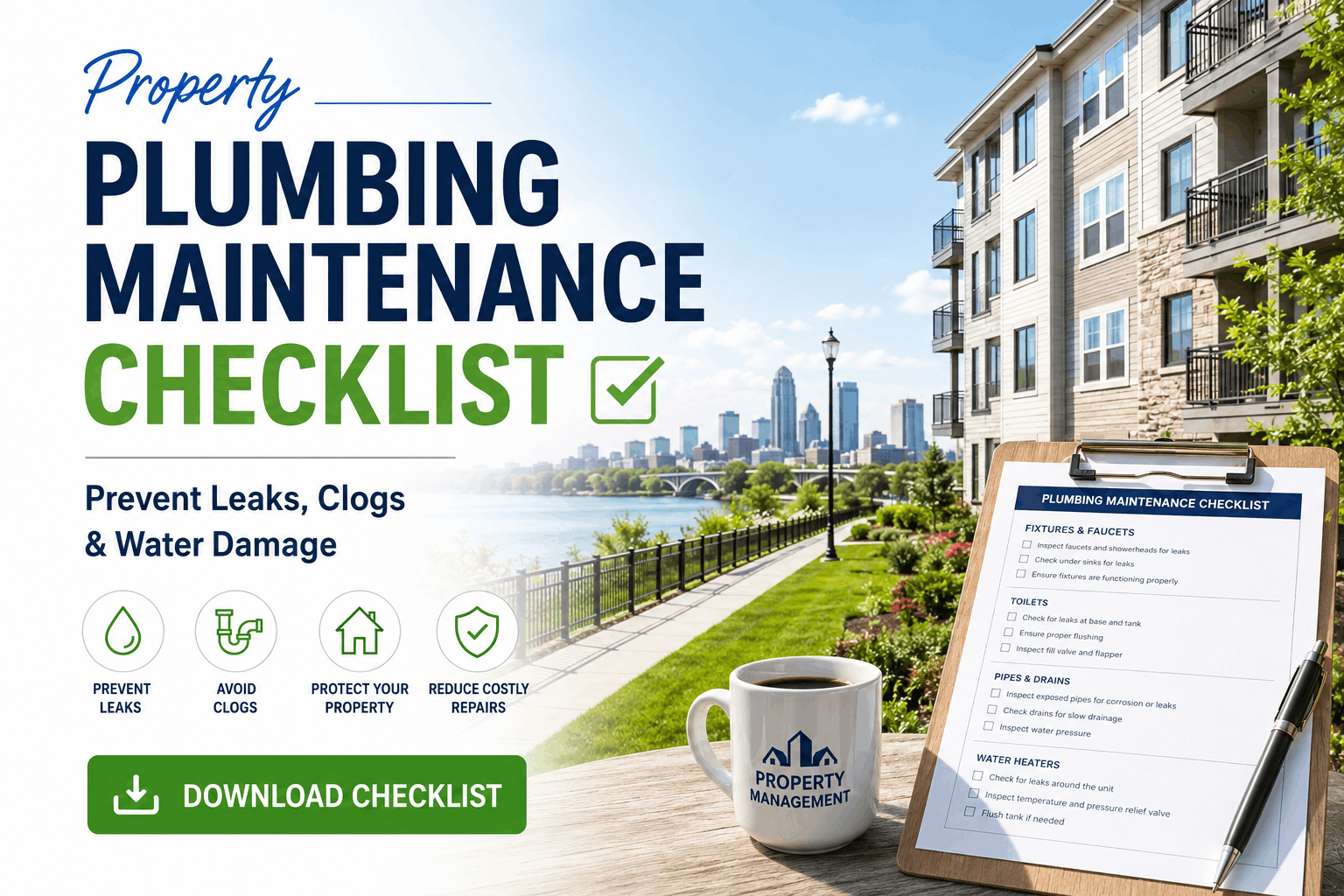
Plumbing maintenance in multi-family buildings is the structured, scheduled process of inspecting, servicing, and tracking all water supply, drainage, and mechanical plumbing systems before failures occur. It covers everything from individual unit fixtures to building-wide water heaters, sewer lines, pressure regulators, and backflow preventers. Done reactively, it costs significantly more and disrupts tenants. Done preventively with condition tracking, it is one of the highest-return maintenance investments a property manager can make. See how Oxmaint structures plumbing PM schedules for portfolios like yours in a quick 30-minute walkthrough.
Preventive Plumbing
Scheduled inspections and servicing based on asset age, usage, and condition scores. Catches corrosion, pressure issues, and seal failures before they escalate into damage claims.
Reactive Plumbing
Run-to-failure model where repairs only happen after a leak, blockage, or burst. Emergency call-outs average 4.2x the cost of a planned service visit and always happen at the worst time.
Condition-Based Tracking
Each plumbing asset carries a live condition score tied to inspection outcomes, failure history, and age. Triggers maintenance at the right time, not too early, not too late.
Compliance-Driven Inspection
Local codes and building safety regulations require documented inspection cycles for backflow preventers, water heaters, and sewer systems. Tracked records protect you during audits and insurance claims.
Core Plumbing Systems Every Property Manager Must Track
Multi-family buildings have layered plumbing infrastructure. Missing one system in your PM schedule is enough to trigger a cascade of damage affecting multiple units. Oxmaint's asset hierarchy maps every system to every property so nothing falls through the gaps — book a demo to see it in action.
01
Water Supply Lines
Main supply pipes, branch lines, and unit connections. Aging galvanized steel lines corrode from the inside, reducing flow and contaminating water. Inspect annually and track pipe material and install date per property.
02
Water Heaters
Central and unit-level heaters need anode rod checks, sediment flushing, and thermostat calibration. Neglected heaters fail at 60-70% of rated lifespan, adding $800-$2,400 in avoidable replacement cost per unit.
03
Drainage and Sewer Lines
Building-wide drain stacks and sewer laterals require annual camera inspections and root intrusion checks. A single sewer backup can damage 4-8 units simultaneously, with remediation costs exceeding $35,000.
04
Water Pressure Systems
Pressure reducing valves (PRVs) and booster pumps maintain safe operating pressure across floors. Uncontrolled high pressure degrades fixtures 3x faster and voids manufacturer warranties on faucets and appliances.
05
Backflow Preventers
Required by code in most jurisdictions. Annual testing and certification is mandatory. A failed backflow preventer creates cross-contamination risk and triggers immediate regulatory action, fines, and liability exposure.
06
Fixtures and Valves
Unit-level faucets, toilets, shut-off valves, and supply lines. A running toilet wastes up to 200 gallons per day. Leaking shut-off valves are the leading cause of unit water damage during vacancies and turnovers.
One Platform for Every Plumbing Asset Across Every Property
Oxmaint tracks every system listed above with condition scores, maintenance history, and auto-scheduled work orders. Your team never misses a cycle and you always have audit-ready records.
6 Plumbing Pain Points Draining Your Maintenance Budget
These are not edge-case problems. They are the predictable outcomes of running without a structured plumbing maintenance program across multiple properties. Want to identify which of these are costing your portfolio the most right now? Our team can map it against your current operations in one session.
01
Emergency Leak Calls
After-hours emergency plumber rates run $250-$400/hr with travel fees. A pipe burst that a $90 inspection would have caught turns into a $4,000 repair plus remediation, drywall, and tenant compensation.
02
Water Damage Insurance Claims
The average multi-family water damage claim is $11,000. Three claims in two years and your premium increases 25-40% or coverage is denied. Most claims trace directly to deferred inspection of supply lines and valves.
03
Untracked Asset Age
Without an asset registry, property managers do not know the age or condition of water heaters, PRVs, or main lines. Replacements happen as emergencies instead of planned CapEx. A $1,200 scheduled replacement becomes a $4,500 emergency job.
04
Tenant Disruption and Complaints
Plumbing failures are the top source of tenant satisfaction complaints in multi-family buildings. Tenants experiencing 2+ water-related disruptions per year are 2.1x more likely not to renew. Lost rent from a single vacancy in Class A properties exceeds $18,000 annually.
05
Compliance Gaps
Backflow preventer testing, water heater certifications, and sewer inspection documentation are code-required in most jurisdictions. Missing records during an inspection results in fines averaging $2,500-$8,000 per violation, plus mandatory remediation timelines.
06
Water and Utility Waste
Undetected leaks and running fixtures drive utility bills up 15-30% in buildings without meter monitoring. A single leaking toilet at 200 gallons/day adds $900+ per year in water costs before it is ever reported or fixed.
Reactive vs. Planned Plumbing Maintenance: The Real Cost Gap
Every dollar spent on reactive plumbing repairs is evidence of a missed preventive opportunity. The numbers below reflect real cost differences across multi-family portfolios operating with and without a structured PM program.
Repair Cost
Emergency rates of $250-$400/hr. Burst pipe repair averages $4,000-$9,000 including remediation.
Scheduled service at standard rates. Same repair costs $800-$1,500 with advance prep and parts.
Water Heater Life
Fails at 60-70% of rated lifespan without anode rod and sediment maintenance. Replacement cost $900-$2,400 per unit.
Condition-based servicing extends lifespan to full rated life. 15-20% reduction in total replacement spend.
Compliance Records
Manual logs scattered across emails and paper. Gaps discovered during inspections result in $2,500-$8,000 in fines.
Every inspection and service auto-logged against the asset. Audit-ready records exportable in under 2 minutes.
Tenant Impact
2+ unplanned water outages per year. 2.1x higher non-renewal risk. Vacancy costs compound across the portfolio.
Scheduled off-hours maintenance with advance notice. 40% fewer plumbing-related tenant complaints.
CapEx Visibility
No asset age data. Replacements hit the budget as surprises. CapEx overruns exceed 20% annually for reactive portfolios.
Rolling 5-10 year forecasts from condition scores and remaining useful life. Predictable capital planning every cycle.
Water Costs
Undetected leaks and running fixtures drive utility bills 15-30% above baseline before anyone notices.
Scheduled fixture inspections catch leaks early. Utility costs stay within baseline with documented results.
Plumbing Maintenance Schedule: What to Do and When
A structured plumbing PM calendar removes guesswork from your team's workflow. These intervals are based on industry-standard maintenance cycles for multi-family residential and commercial-residential properties. Oxmaint auto-schedules all of these intervals tied to your actual asset records — see how it works for your property count in a live demo.
Monthly
Check water pressure at main and floor levels (target 40-80 psi)
Inspect common area fixtures for drips, corrosion, and valve function
Review unit-level complaint logs for repeat plumbing calls
Test sump pump operation where applicable
Quarterly
Flush water heater sediment and inspect anode rods
Test shut-off valve operation at main and unit level
Inspect PRV function and calibration
Check expansion tanks and pressure relief valves
Semi-Annual
Camera inspection of main drain stacks and sewer laterals
Full inspection of supply line connections at unit level during turnovers
Grease trap cleaning in buildings with common kitchens
Irrigation and outdoor plumbing check before seasonal changes
Annual
Backflow preventer testing and certification (code-required in most jurisdictions)
Full building water heater service and lifespan assessment
Main supply line pressure test and leak detection survey
Update asset condition scores and flag units approaching end-of-life
How Oxmaint Manages Plumbing Maintenance Across Your Portfolio
Oxmaint is built for multi-site operations. Every plumbing asset across every property gets a live condition score, a scheduled PM cycle, and a full service history so your team always knows what is due, what was done, and what to plan for. Start a free trial and build your first plumbing maintenance schedule before the end of the week with no implementation fees required.
Step 01
Asset Registry for Every Plumbing Component
Log every water heater, PRV, backflow preventer, sewer lateral, and fixture with install date, model, and baseline condition. Portfolio-wide visibility from day one, no spreadsheets required.
Step 02
Automated PM Scheduling by Interval and Condition
Monthly, quarterly, and annual cycles auto-generate work orders tied to each asset record. Technicians receive assignments with full asset history before they arrive on site.
Step 03
Condition Scoring and Remaining Useful Life
Each inspection updates the asset's condition score. Oxmaint calculates remaining useful life for water heaters, PRVs, and main lines, so you plan replacements, not react to them.
Step 04
Compliance Documentation, Always Audit-Ready
Every backflow test, water heater certification, and sewer inspection is logged with technician ID, date, and findings. Reports export in under 2 minutes for code inspections or insurance audits.
Step 05
CapEx Forecasting for Plumbing Replacements
Rolling 5-10 year capital models show when water heaters, main lines, and sewer systems will need replacement across the entire portfolio. No budget surprises for ownership or investors.
Step 06
Mobile Work Orders for Field Technicians
Technicians complete inspections, log findings, and update condition scores directly from their phone. Data is live in the platform the moment the job is closed, no paper, no delay.
Build Your Plumbing PM Program in Under an Hour
Oxmaint gives multi-family property managers a complete plumbing maintenance system with zero implementation fees and same-week go-live. Your first PM schedule can be live before your next maintenance call comes in.
Smart Plumbing Investment Analysis: Costs vs. Returns
Preventive plumbing and IoT-enabled water monitoring have a clear ROI structure for multi-family portfolios. The payback periods below are based on typical multi-family building performance data. We can run a custom return projection against your current plumbing spend and property count in a 30-minute session with no commitment required.
| Solution |
Implementation Cost |
Annual Savings |
Payback Period |
| Preventive Plumbing PM Scheduling (CMMS) |
$1,200 / building |
$42,000 / avoided emergency repairs |
Under 2 weeks |
| Leak Detection Sensors (IoT) per Building |
$2,100 / building |
$38,000 / water damage and utility savings |
Under 3 weeks |
| Water Heater Lifecycle Tracking |
$800 / building |
$28,000 / deferred replacement and efficiency |
Under 2 weeks |
| Automated Compliance Documentation |
$900 / portfolio |
$18,000 / avoided fines and audit costs |
Under 2 weeks |
| Smart Water Meter Monitoring |
$2,800 / building |
$31,000 / utility and leak loss reduction |
Under 5 weeks |
| Full IoT + CMMS Platform Deployment |
$8,500 / building |
$143,000 / building annually |
Under 6 months |
Complete IoT implementation delivers 3.2x ROI within 18 months, with most plumbing solutions paying for themselves in under 6 months.
Investment Reality: Full IoT deployment costs average $8,500 per building but returns $143,000 annually. The 3.2x ROI makes IoT investment essential for competitive operations.
Plumbing Maintenance ROI: The Results That Matter
40%
Fewer tenant plumbing complaints in buildings on structured PM programs vs. reactive portfolios
$42K
Average annual savings per building from avoided emergency plumbing repairs and water damage
20%
Extension in water heater lifespan when anode rods and sediment flushing are maintained on schedule
3.2x
ROI within 18 months of deploying a full preventive maintenance and IoT platform across your portfolio
Annual Cost Comparison: Reactive vs. Preventive Plumbing per 100-Unit Building
Reactive
Planned (Oxmaint)
Frequently Asked Questions
How often should multi-family buildings have plumbing inspections?
What plumbing systems cause the most expensive failures in apartment buildings?
Sewer line backups and supply pipe failures cause the highest remediation costs in multi-family buildings, with single events averaging $11,000-$35,000 depending on the number of affected units. Water heater failures and PRV failures are the next most expensive, particularly in buildings where asset age is not tracked. All of these are preventable with scheduled inspections and condition-based maintenance. The key is having a system that tracks when assets were last serviced and flags deteriorating condition before failure occurs.
Oxmaint gives you live condition scores for every plumbing asset — see it in a demo.
What does a water heater maintenance program look like for a 50-unit building?
A 50-unit building typically has central water heaters serving multiple zones, along with unit-level heaters in some configurations. Quarterly anode rod inspections, annual sediment flushing, thermostat calibration, and pressure relief valve testing are the core tasks. Each heater should have an install date, model, and service history in your asset registry. Without this, replacements occur as budget emergencies rather than planned CapEx. Buildings with tracked water heater programs extend equipment lifespan by 15-20% on average, cutting replacement spend significantly over a 10-year horizon.
Start a free trial and set up your first water heater PM cycle today.
How does plumbing maintenance documentation protect against insurance and compliance risk?
Insurance carriers increasingly require documented maintenance records when processing water damage claims. A well-documented PM program demonstrates due diligence and can be the difference between a paid claim and a denied one. On the compliance side, backflow preventer certification and sewer inspection records are mandatory in most US jurisdictions and equivalent regulations exist in the UK, Australia, and UAE. Gaps in these records during inspections result in fines of $2,500-$8,000 per violation. Oxmaint auto-logs every service event against the asset record and exports compliance-ready reports in under 2 minutes.
Can Oxmaint handle plumbing maintenance scheduling across 10 or more properties?
Yes. Oxmaint is purpose-built for multi-site commercial and residential portfolios. The asset hierarchy (Portfolio, Property, System, Asset, Component) keeps every plumbing asset organized by property without data overlap or manual sorting. Portfolio-level reporting shows PM compliance rates, open work orders, and condition scores across all properties in a single dashboard. As you add properties, the structure scales without rebuilding anything. Teams managing 5 to 50 properties use the same system with the same visibility.
See how it scales to your portfolio count in a live walkthrough.
How quickly can a property team go from no system to a structured plumbing PM program?
Most teams using Oxmaint go live within days, not months. There are no heavy implementation fees or long onboarding processes. You start by building your asset registry, which can be done property by property or imported in bulk. PM schedules generate automatically once assets are entered. Most property managers complete their first full plumbing PM cycle within 60-90 days of going live and see measurable reductions in emergency calls within the first two months. The fastest way to see what setup looks like for your specific properties is to run a live session with our team.
Book a 30-minute walkthrough and we will map the setup against your current property list.
Your Plumbing Systems Need a Schedule, Not a Crisis Plan.
Oxmaint gives multi-family property managers a complete plumbing maintenance platform with asset tracking, PM scheduling, compliance documentation, and CapEx forecasting. One platform. Every property. Every pipe. No implementation fees and live within days.
Full plumbing asset registry with condition scoring
Auto-scheduled monthly, quarterly, and annual cycles
Compliance-ready documentation for backflow and sewer
Rolling CapEx forecasts for water heater and pipe replacement