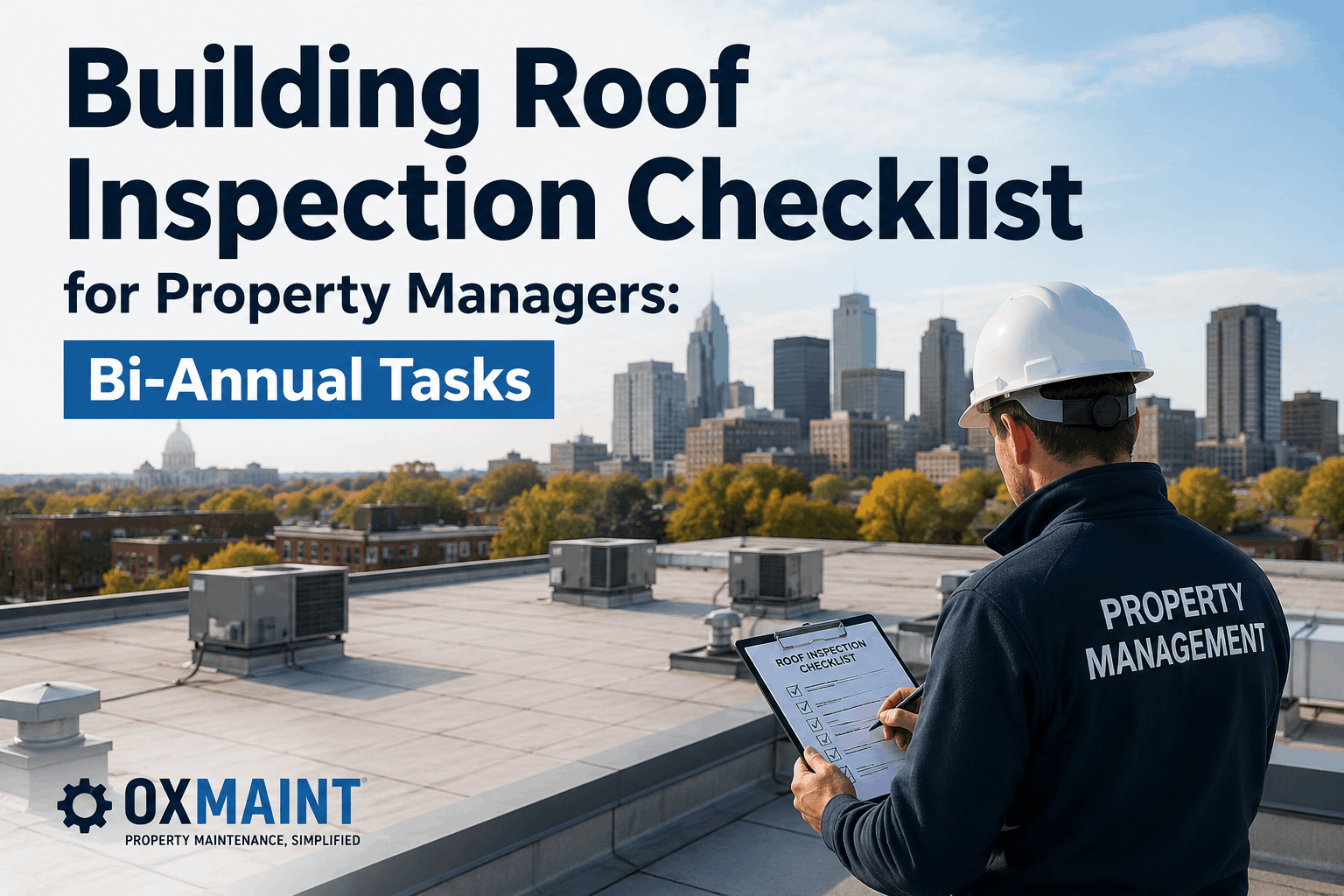
A single roof leak costs $5,000-$50,000 to remediate once water damage spreads into walls, insulation, and structural framing. Building roofs account for 40% of all commercial property insurance claims — yet 70% of property managers skip bi-annual inspections until visible leaks appear. This comprehensive bi-annual roof inspection checklist catches membrane damage, flashing failures, and drainage blockages before they cause catastrophic water damage. Scheduled spring and fall roof inspections, documented with geotagged photos in Oxmaint, extend roof lifespan 5-10 years and prevent emergency capital repairs costing 3-5x more than preventive inspection costs.
Prevent Roof Leaks Before They Cause Water Damage
Bi-annual roof inspection checklist with geotagged photo documentation, membrane condition assessment, and drainage verification — all scheduled and tracked in Oxmaint.
1. Pre-Inspection Planning & Safety Preparation
Roof inspections are high-risk activities. Proper safety equipment, weather timing, and licensed contractor selection are critical to prevent injuries and ensure inspection validity.
2. Roof Membrane & Surface Condition Assessment
The roof membrane is the primary weatherproofing barrier. Inspectors must evaluate membrane type (TPO, EPDM, BUR, asphalt, metal) and identify material-specific failure modes before they progress to leaks.
3. Flashing & Penetration Inspection
Flashing failures account for 70% of roof leaks. Every roof penetration (HVAC curbs, vent pipes, skylights, wall-to-roof transitions) requires meticulous inspection. Small flashing gaps become catastrophic leaks within months.
4. Drainage System & Water Management Inspection
Proper roof drainage is critical. Standing water accelerates membrane deterioration and increases leak risk. Clogged drains cause ponding that can destroy roofs in a single heavy rain event.
Roof Condition Assessment Matrix
GOOD CONDITION
Findings: Intact membrane, minor wear, functional flashing, clean drains
Action: Continue regular maintenance & annual inspections
Life Remaining: 5-10 years
FAIR CONDITION
Findings: Small punctures/tears, aging flashing, some ponding, debris accumulation
Action: Plan repairs within 12 months, increase inspection frequency to twice yearly
Life Remaining: 3-5 years
POOR CONDITION
Findings: Multiple leaks, significant blistering, failed flashing, chronic ponding
Action: Emergency repairs now, plan full reroofing within 24 months
Life Remaining: 0-2 years
5. Post-Inspection Documentation & Repair Planning
Detailed inspection reports with photographic evidence guide repair prioritization and capital budgeting. Documented inspections prove due diligence to insurers and create liability protection.
Establish Bi-Annual Roof Inspection Schedules in Oxmaint
Spring and fall roof inspection reminders, geotagged photo documentation, defect tracking, and repair prioritization — all in one platform.
6. Roof Maintenance Cost Comparison & ROI Analysis
Preventive roof maintenance costs $0.50-1.50 per sq ft annually. Compare that to reroofing costs of $6-15 per sq ft — the ROI on prevention is 10-30x return. Property managers who defer roof maintenance end up replacing roofs 5-10 years early due to accelerated deterioration.
Annual Preventive Maintenance
Bi-annual inspections: $500-1,200
Drain cleaning (2x/year): $300-600
Flashing sealant reapplication: $200-500/year
Debris removal & cleanup: $300-600
Annual Total: $1,300-2,900
Per sq ft (10,000 sq ft roof): $0.13-0.29/sq ft
Emergency Roof Leak Repair
Emergency leak detection: $800-1,500
Water damage mitigation: $2,000-10,000+
Interior ceiling repair: $1,000-5,000
Mold remediation (if needed): $3,000-15,000+
Emergency Total: $6,800-31,500
Per sq ft: $0.68-3.15/sq ft (5-10x prevention cost)
Full Roof Replacement
TPO/EPDM reroofing: $6-10/sq ft installed
Asphalt shingle replacement: $7-12/sq ft installed
Metal reroofing: $12-20/sq ft installed
10,000 sq ft roof total: $60,000-120,000+
Timeline to replacement: 15-25 years normal / 8-12 years with deferred maintenance
Frequently Asked Questions — Building Roof Inspections
1. How often should roofs be inspected?
Bi-annual inspections (spring and fall) are industry standard. Older roofs (15+ years) should be inspected quarterly. After severe weather (high winds, hail, heavy snow), emergency inspections are recommended to identify damage before it causes leaks.
2. What is the typical lifespan of a commercial roof?
TPO/EPDM membranes: 15-20 years. Asphalt shingles: 15-25 years. Metal roofing: 30-50 years. Lifespan depends on maintenance quality, climate, and installation standards. Well-maintained roofs reach full lifespan; neglected roofs fail at 50-70% of expected age.
3. What causes most roof leaks?
Flashing failures (70%), clogged drains (15%), membrane punctures (10%), and seam failures (5%). Flashing — especially around HVAC units, vent pipes, and wall transitions — is the most vulnerable component. Regular flashing maintenance prevents majority of roof leak problems.
4. How much does a roof replacement cost?
$6,000-15,000+ per 1,000 sq ft depending on membrane type, structural condition, and labor costs. A typical 10,000 sq ft roof costs $60,000-150,000 to replace. Early replacement planning and competitive bidding can reduce costs 10-15% vs. emergency reroofing at premium pricing.
5. What should be included in a roof inspection report?
Overview photos, close-up defect photos with location reference, measurements, roof age, membrane type, condition rating (good/fair/poor), specific findings, contractor recommendations, repair priorities, and estimated costs. Detailed reports guide maintenance planning and prove due diligence to insurers.
6. Can small roof leaks be patched or must the entire roof be replaced?
Small punctures and flashing leaks can be patched at $300-2,000. Patching is cost-effective for early-stage damage. However, if multiple leaks or systemic blistering exists, replacement may be more economical. Comparison of remaining roof life vs. repair costs determines the right approach.
7. What is the cost difference between preventive maintenance and emergency repairs?
Preventive maintenance: $0.13-0.29/sq ft annually. Emergency leak repairs: $0.68-3.15/sq ft (5-10x higher). A small preventive investment of $2,000/year prevents emergency damage costing $30,000+. ROI on roof maintenance is 10-15x return through avoided emergency repairs.
8. Should property managers hire licensed roofers or can maintenance staff handle inspections?
Hire licensed, insured roofing contractors for bi-annual inspections. They understand membrane-specific failure modes and provide warranty-valid documentation. Maintenance staff can perform basic visual checks but cannot provide professional assessment required by insurance companies and building owners for capital planning decisions.
"We deferred roof maintenance on our portfolio for 5 years — thought we were saving money. Then a major leak on one building caused $85,000 in water damage to 12 units. We lost 10 tenants and spent $150,000 on mold remediation plus emergency reroofing. That single event cost us 5 years of rent income. Now we inspect roofs bi-annually through Oxmaint. The $2,000/year prevention investment is the best expense in our budget — it prevents catastrophic losses."
— Robert Thompson, Portfolio Manager, 45-Building Commercial Property Portfolio (2.5M sq ft), USA
Prevent Roof Leaks & Water Damage with Scheduled Inspections
Oxmaint's bi-annual roof inspection checklists, geotagged photo documentation, condition tracking, and repair prioritization — protecting your property from $50,000-100,000+ water damage emergencies.


.png)
