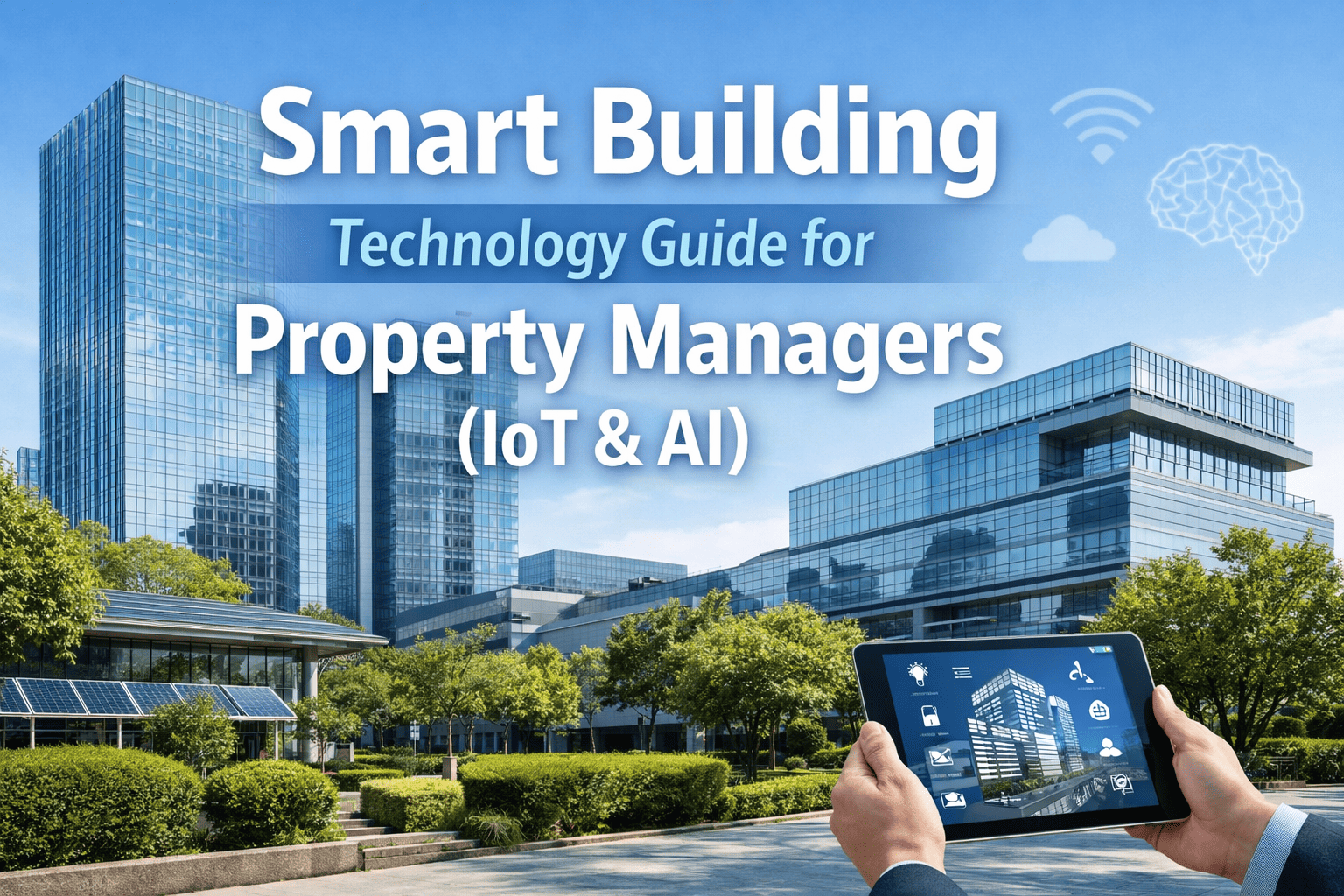
Property maintenance has evolved from reactive firefighting to strategic asset management through two distinct approaches: preventive maintenance (scheduled interventions) and predictive maintenance (condition-based monitoring). Understanding when to deploy each strategy allows property managers to optimize budgets, extend equipment lifecycles, and eliminate unexpected failures. Preventive maintenance operates on time-based schedules—changing HVAC filters quarterly, inspecting fire suppression systems annually—while predictive maintenance leverages IoT sensors and data analytics to trigger interventions only when equipment actually shows signs of degradation. Leading property portfolios now blend both approaches, using preventive care for regulatory compliance items and predictive analytics for high-value critical systems. Ready to optimize your maintenance strategy? Sign up for free to implement intelligent maintenance scheduling today.
Strategic Advantage
The Cost of Reactive Maintenance
Emergency repairs cost 3-9x more than planned maintenance and shorten equipment lifespan by 30-40%. Unplanned downtime disrupts tenant operations, damages reputation, and creates safety liabilities that proactive strategies eliminate entirely.
3-9x
Higher emergency repair costs
30-40%
Equipment life reduction
25%
Maintenance cost reduction
Choose Your Maintenance Strategy
Give your property portfolio the analytical tools to balance scheduled care with intelligent monitoring. Join thousands of managers optimizing maintenance spend while maximizing asset uptime.
Preventive Maintenance: Time-Based Reliability
Preventive maintenance (PM) operates on fixed intervals—calendar dates, runtime hours, or usage cycles—regardless of actual equipment condition. Property managers schedule HVAC servicing before peak seasons, test emergency generators monthly, and inspect roofing systems biannually. This approach excels for compliance-mandated inspections, safety-critical systems, and equipment where failure modes are well-understood and consistent. PM programs reduce emergency work orders by 70% and provide budget predictability through scheduled labor and parts procurement. However, traditional PM can lead to over-maintenance (replacing components with remaining useful life) and misses random failures that occur between scheduled intervals. Modern CMMS platforms optimize PM schedules based on historical failure data, adjusting frequencies to match actual asset performance rather than generic manufacturer recommendations. Teams exploring preventive strategies can Book a Demo to see automated scheduling in action.
Fixed Schedule PM
Calendar-Based
Quarterly HVAC filter changes
Annual fire system inspections
Monthly elevator safety checks
Biannual roofing assessments
Compliance: Guaranteed
Runtime PM
Usage-Based
Pump servicing every 2,000 hours
Compressor maintenance cycles
Generator load bank testing
Motor bearing lubrication
Accuracy: High
Seasonal PM
Weather-Driven
Pre-winter boiler inspections
Spring cooling tower startup
Fall gutter cleaning programs
Summer irrigation audits
Readiness: 100%
Compliance PM
Regulatory-Required
OSHA safety equipment checks
Backflow prevention testing
Sprinkler system inspections
Emergency lighting certification
Violations: Zero
Predictive Maintenance: Condition-Based Intelligence
Predictive maintenance (PdM) transforms property management from calendar-driven to data-driven decision making. IoT sensors continuously monitor vibration, temperature, electrical current, and acoustic signatures to detect degradation patterns before functional failure occurs. Machine learning algorithms analyze these data streams, identifying anomalies that human inspection would miss and predicting remaining useful life with 85-95% accuracy. For property managers, this means servicing chillers only when bearing wear indicates need, replacing pumps based on actual performance degradation rather than arbitrary dates, and catching electrical panel issues before they cause outages. PdM reduces maintenance costs by 25-30% compared to preventive approaches by eliminating unnecessary interventions while preventing catastrophic failures. The strategy requires upfront investment in sensor infrastructure and analytics platforms but delivers ROI within 12-18 months for critical building systems. High-value assets like central plants, elevator machinery, and large electrical distribution systems benefit most from predictive monitoring.
Cost Efficiency
PdM Advantage: 25-30%
Predictive maintenance eliminates unnecessary parts replacement and labor while preventing expensive emergency repairs through early intervention.
Failure Prevention
PdM Detection: 85-95%
Advanced algorithms identify failure patterns weeks or months before breakdown, compared to preventive schedules that may miss random failures.
Implementation
PM Advantage: Immediate
Preventive programs deploy immediately with existing staff while predictive requires sensor installation, data integration, and calibration periods.
Compliance Assurance
PM Advantage: Complete
Regulatory inspections and safety certifications require documented scheduled maintenance that predictive monitoring alone cannot satisfy.
Build Your Hybrid Strategy
Equip your portfolio with the optimal blend of scheduled preventive care and intelligent predictive monitoring. Maximize asset lifespan while minimizing total maintenance cost.
Strategic Selection: When to Use Each Approach
Effective property management requires strategic deployment of both maintenance philosophies rather than choosing one exclusively. Preventive maintenance remains essential for compliance-regulated systems, safety-critical equipment, and assets with predictable wear patterns. Fire suppression systems, emergency generators, and elevator safety circuits demand scheduled inspection regardless of apparent condition to satisfy code requirements and liability standards. Predictive maintenance delivers superior value for high-capital assets with random failure modes, continuous operation requirements, and measurable condition indicators. Central chillers, large motors, and electrical distribution systems benefit enormously from vibration analysis, thermal imaging, and oil analysis that detect internal degradation invisible to visual inspection. The hybrid approach applies preventive care to regulatory items while deploying predictive monitoring on critical infrastructure, optimizing both compliance posture and capital expenditure. Budget-constrained properties might start with preventive programs for all assets, then layer predictive capabilities onto the 20% of equipment causing 80% of maintenance costs.
Optimize Your Maintenance Mix
Give your team the analytical platform to determine which assets need scheduled care versus continuous monitoring. Join leading portfolios balancing reliability with cost efficiency.
Preventive Priority
Compliance & Safety
Fire alarm & suppression
Emergency lighting systems
Life safety generators
Elevator safety circuits
Risk: Minimized
Predictive Priority
High-Value Assets
Central plant chillers
Large HVAC air handlers
Critical pump systems
Main electrical switchgear
ROI: 12-18 Months
Hybrid Approach
Balanced Strategy
Cooling towers (PM + vibration)
Boiler systems (PM + thermal)
Air compressors (PM + oil analysis)
Building automation systems
Optimization: Maximum
Run-to-Failure
Low-Consequence Items
Standard light fixtures
Office equipment
Non-critical fans
Easily replaced components
Effort: Eliminated
Frequently Asked Questions
Which is more cost-effective: preventive or predictive maintenance?
Predictive maintenance typically reduces costs 25-30% compared to preventive by eliminating unnecessary interventions while preventing failures. However, predictive requires sensor investment and works best on high-value assets. Most portfolios optimize costs using preventive for compliance items and predictive for critical infrastructure.
Can small property portfolios benefit from predictive maintenance?
Yes, through scalable IoT solutions and cloud analytics. Even portfolios under 100,000 square feet can deploy predictive monitoring on their most critical systems—typically central HVAC plants and emergency power—while maintaining preventive schedules for regulatory compliance items.
How do I transition from reactive to proactive maintenance?
Start by implementing preventive schedules for compliance-mandated systems to eliminate violation risk. Then inventory critical assets by replacement cost and failure impact. Deploy predictive monitoring on the top 20% of equipment by value, expanding as ROI is demonstrated. Modern CMMS platforms support this graduated approach.
What data does predictive maintenance require?
Predictive systems analyze vibration signatures, thermal patterns, electrical current draw, oil chemistry, and acoustic emissions. IoT sensors transmit this data continuously to cloud platforms where machine learning algorithms identify deviation from baseline performance and predict remaining useful life.
Does predictive maintenance replace maintenance staff?
No—it elevates staff effectiveness. Technicians transition from routine inspections to targeted interventions based on actual condition data. Predictive analytics guide troubleshooting, reduce diagnostic time, and enable precision repairs that extend asset life rather than replacing components prematurely.