How to Reduce Maintenance Costs in Commercial Properties
By sara on February 12, 2026
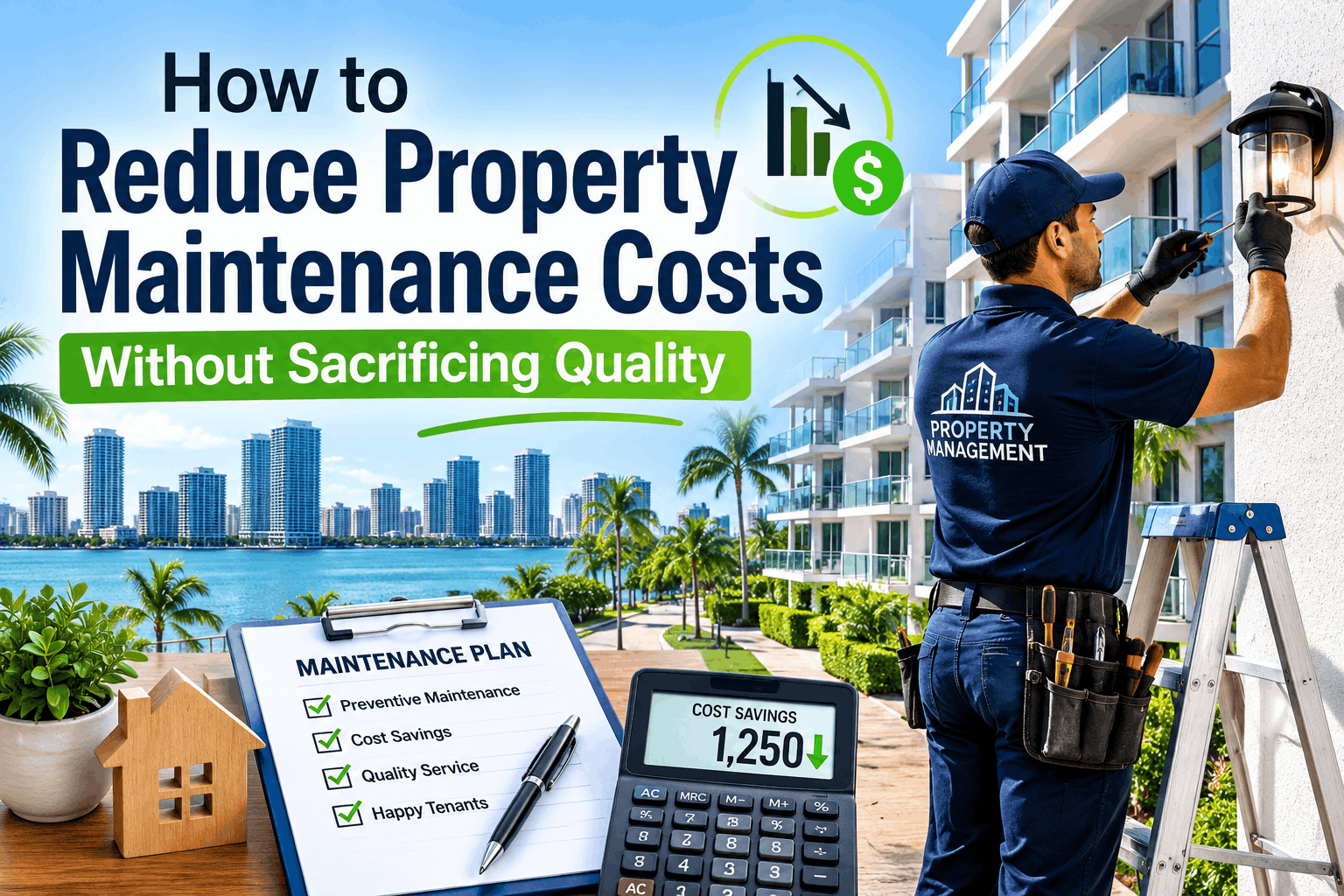
Commercial property maintenance costs represent 15–35% of total operating budgets, with reactive maintenance approaches driving unnecessary spending through emergency repairs ($3,000–$8,000 average cost vs $800–$2,000 for planned work), premature equipment replacement (failing to achieve 70–80% of rated equipment life), and inefficient resource allocation that keeps technicians responding to crises rather than preventing failures. A 200,000 square foot office building spending $400,000 annually on maintenance can reduce costs by $120,000–$180,000 (30–45%) through systematic preventive maintenance programs, vendor consolidation strategies, and data-driven decision frameworks—while simultaneously improving tenant satisfaction, reducing emergency callouts by 60–75%, and extending equipment lifecycles by 15–30%. The transformation from reactive to predictive maintenance requires strategic investment in CMMS platforms, IoT monitoring systems, and standardized operating procedures, but delivers documented ROI of 200–400% within 12–24 months through avoided emergency repairs, optimized parts inventory, negotiated vendor contracts, and energy efficiency improvements that compound savings year over year. Start reducing costs with OxMaint.
The maintenance cost reduction opportunity is particularly acute for properties with deferred maintenance backlogs, aging equipment (>15 years), fragmented vendor relationships, and paper-based or spreadsheet work order systems that prevent trend analysis and performance measurement. Properties implementing comprehensive maintenance cost reduction programs report consistent savings across multiple categories: HVAC maintenance costs decline 35–50% through filter management protocols and predictive sensor monitoring, plumbing costs drop 40–60% via water leak detection and fixture upgrade programs, electrical costs decrease 25–40% through power quality monitoring and lighting retrofits, and vendor costs compress 20–35% via competitive bidding frameworks and consolidated service agreements. These savings flow directly to net operating income—increasing property valuations by $8–$15 for every $1 of annual maintenance cost reduction in typical cap rate environments. See cost reduction strategies in action.
Cut Maintenance Costs 30–45% While Improving Service Quality
Transform reactive spending into strategic investment. Eliminate emergency repair premiums, optimize vendor contracts, extend equipment life, and achieve measurable cost reduction—all through proven frameworks built for commercial property teams.
Understanding your current maintenance spending breakdown is essential for targeting high-impact cost reduction opportunities. Most commercial properties discover that 60–70% of maintenance costs concentrate in just 3–4 categories, making focused intervention highly effective.
Commercial Property Maintenance Cost Breakdown
Total Annual Maintenance Budget (Typically $2.00–$4.50/sq ft)
Not all cost reduction strategies deliver equal ROI or fit every property profile. This framework helps prioritize initiatives based on current spending patterns, property age, equipment condition, and available capital for upfront investment.
Emergency repairs cost 3–5× planned maintenance due to after-hours labor rates (150–200% premiums), expedited parts shipping (25–50% markups), and rushed diagnostics that often miss root causes. Converting 70% of emergency repairs to scheduled maintenance generates immediate 15–25% cost reduction.
Emergency Repair Reduction Protocol
Root Cause Analysis: Review all emergency work orders from past 12 months. Categorize by equipment type and failure mode. Identify patterns—repeated failures of same equipment, seasonal spikes, specific vendor gaps.
Preventive Maintenance Schedule: Build PM schedules targeting top 10 emergency failure modes. HVAC filter changes, belt inspections, pump bearing lubrication, drain cleaning—convert reactive incidents to calendar-based prevention.
Predictive Monitoring: Deploy IoT sensors on critical equipment (chillers, boilers, main pumps). Vibration, temperature, and power monitoring provides 2–6 week warning before failure, enabling planned repairs during business hours.
Critical Spares Inventory: Stock high-failure parts identified in root cause analysis (belts, contactors, pump seals, thermostats). $3,000–$8,000 inventory investment eliminates $15,000–$30,000 in expedited shipping annually.
After-Hours Criteria: Establish clear criteria for true emergencies (life safety, property damage, tenant impact >10 units). Route non-emergency requests to next-day queue, eliminating 40–60% of after-hours callouts.
Properties reducing emergency repairs from 15% to 5% of total maintenance save $40,000–$80,000 annually on a $400,000 maintenance budget while improving equipment reliability and tenant satisfaction.
Vendor Audit & Consolidation: Document all vendors (HVAC, elevator, plumbing, electrical, landscaping, cleaning). Identify overlapping capabilities. Consolidate from 15–20 vendors to 8–12 preferred providers with volume discounts and priority response.
Competitive Bidding: Re-bid major service contracts (HVAC, elevator, janitorial) every 2–3 years. Include detailed scope, performance metrics, and pricing transparency requirements. Competitive pressure generates 15–30% savings on contract renewal.
Performance-Based Contracts: Structure contracts with SLA penalties (response time, first-time fix rate, uptime guarantees) and performance bonuses. Aligns vendor incentives with cost reduction and reliability goals rather than billable hours.
Parts Markup Caps: Negotiate parts markups at cost+10–15% versus typical 30–50% contractor markups. Require itemized invoices showing parts cost, labor hours, and travel. Eliminates $15,000–$40,000 in hidden parts inflation annually.
Multi-Property Leverage: Portfolio owners: bundle service contracts across multiple properties for volume pricing. 5+ property portfolios achieve 20–35% discounts versus individual property contracts through aggregated buying power.
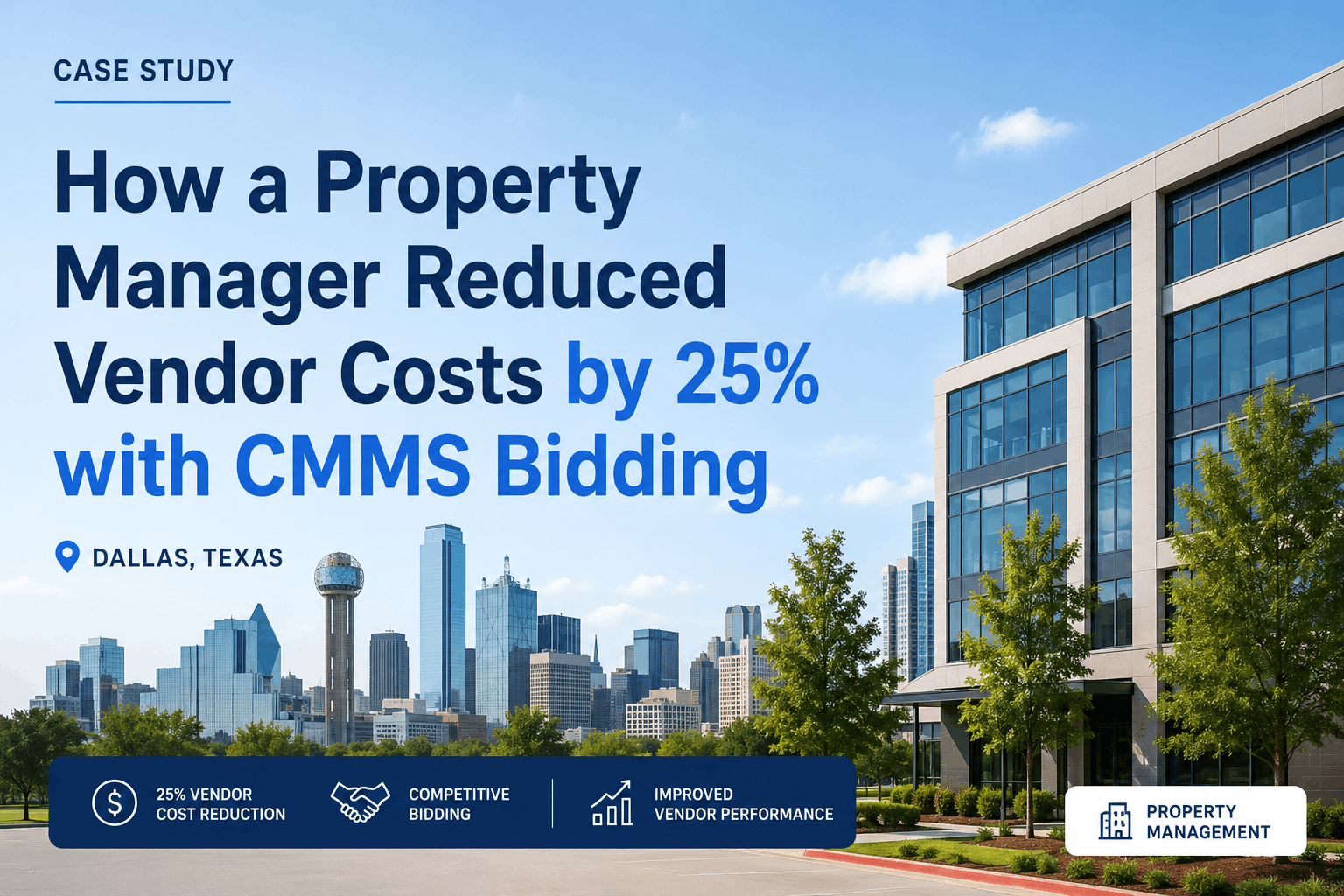
Vendor optimization generates 20–35% savings on contracted services representing $60,000–$100,000 annual reduction on typical 200,000 sq ft property with $300,000 vendor spend.
Equipment Inventory: Create comprehensive asset register with make, model, install date, warranty status, and maintenance requirements for all major equipment. Prioritize assets by replacement value and failure impact on operations.
Manufacturer PM Schedules: Source OEM maintenance schedules for all critical equipment. Build calendar-based task lists: monthly filter changes, quarterly belt inspections, semi-annual refrigerant checks, annual bearing lubrication.
CMMS Implementation: Deploy computerized maintenance management system with automated PM work order generation, mobile technician access, parts inventory tracking, and cost reporting. Enables compliance measurement and continuous improvement.
Compliance Tracking: Measure PM completion rates (target >95%), time-to-complete, and cost per PM. Identify scheduling conflicts, staffing gaps, or vendor performance issues preventing consistent execution.
Properties achieving >90% PM compliance see 60–75% reduction in emergency repairs, 15–30% equipment life extension, and 25–40% lower total maintenance costs within 12–18 months.
Cost Reduction Tactics by System
System-Specific Cost Reduction Strategies
System
Cost Reduction Tactic
Savings Potential
Implementation Cost
HVAC
Automated filter change program, sensor monitoring, BAS optimization
Effective cost reduction requires baseline measurement, ongoing tracking, and comparison to industry benchmarks. These metrics enable data-driven decisions and validate improvement initiatives.
Cost Per Sq FtEmergency RatioPM ComplianceVendor Performance
Total Maintenance Cost/Sq Ft
Industry benchmark: $2.00–$4.50/sq ft annually for Class A/B office buildings. Track monthly to identify seasonal patterns and improvement trends. Properties above $4/sq ft indicate high-priority cost reduction opportunities. Calculate separately for different building systems (HVAC, plumbing, electrical) to identify outlier categories requiring focused intervention.
Emergency vs Planned Maintenance Ratio
Target: <10% of total maintenance spend on emergency repairs. Properties spending >15% on emergencies are in reactive mode generating 3–5× cost premiums. Track by equipment type to identify chronic failure patterns. Successful PM programs drive emergency ratio from 15–20% down to 5–8% within 12 months, delivering immediate cost savings.
Preventive Maintenance Completion Rate
Target: >95% on-time PM completion. Below 85% indicates scheduling conflicts, inadequate staffing, or poor prioritization. Track PM completion by technician, equipment type, and service frequency. Properties improving PM compliance from 70% to 95% see corresponding 40–60% reduction in emergency repairs within 6–12 months as preventive work prevents failures.
Common Cost Reduction Mistakes to Avoid
Maintenance Cost Reduction Pitfalls
Mistake
Why It Fails
Consequence
Better Approach
Indiscriminate Budget Cuts
Reduces PM spending to hit budget targets
Emergency repairs spike 3–6 months later, total costs increase 20–40%
Strategic cost reduction via efficiency, not service elimination
What is a realistic maintenance cost reduction target for commercial properties?
Properties spending >$3.50/sq ft can typically achieve 30–45% cost reduction within 18–24 months through comprehensive programs addressing emergency repair elimination (60–80% reduction), vendor optimization (20–35% savings), preventive maintenance deployment, and technology implementation. Properties already at $2.50–$3.50/sq ft can achieve 15–25% additional savings through incremental improvements. The highest-impact opportunities are converting emergency repairs to planned maintenance (3–5× cost differential) and renegotiating vendor contracts (typical 15–30% savings on renewal). Quick wins in first 90 days often deliver 10–15% cost reduction through vendor audits, parts markup caps, and emergency repair criteria enforcement.
How do I reduce maintenance costs without compromising building quality or tenant satisfaction?
The most effective cost reduction strategies actually improve service quality: preventive maintenance prevents disruptive failures and extends equipment life, IoT monitoring enables proactive repairs before tenant complaints, CMMS platforms improve response time and work order tracking, and vendor performance metrics ensure accountability and quality standards. The key is avoiding indiscriminate budget cuts (which defer maintenance and increase long-term costs) in favor of strategic efficiency improvements. Focus on eliminating waste (emergency repair premiums, expedited parts markups, unnecessary vendor overlap, reactive scheduling) rather than reducing necessary service levels. Properties implementing comprehensive programs report higher tenant satisfaction alongside 30–45% cost reduction.
What upfront investment is required to implement a maintenance cost reduction program?
Initial investment ranges from $15,000–$50,000 for 200,000 sq ft property depending on current systems and selected initiatives: CMMS platform ($5,000–$15,000 first year including implementation), critical spares inventory ($3,000–$8,000), IoT sensor pilot deployment ($5,000–$15,000 for 5–10 critical assets), and process documentation/training ($2,000–$12,000). These investments deliver 12–24 month payback through eliminated emergency repair premiums, vendor contract savings, and improved labor efficiency. Many initiatives require no upfront capital (vendor contract renegotiation, PM schedule development, emergency repair criteria) and generate immediate savings. Phased implementation allows self-funding: quick wins finance foundation building.
How should I prioritize cost reduction initiatives across different building systems?
Prioritize based on current spending concentration and reduction potential: HVAC typically represents 25–35% of maintenance budget with 35–50% reduction potential through filter programs, sensor monitoring, and BAS optimization—making it top priority for most properties. Emergency repairs (if >10% of budget) offer 60–80% reduction potential with immediate payback. Vendor services consuming 15–25% of budget offer 20–35% savings through competitive bidding and consolidation. Use historical work order data to identify specific high-cost equipment (chronic failure assets), high-frequency failure modes, and seasonal spending spikes. Target initiatives addressing top 20% of spending first (Pareto principle), then expand to secondary systems.
How does OxMaint help implement maintenance cost reduction programs?
OxMaint provides comprehensive cost management tools: automated PM scheduling eliminating emergency repair premiums (60–80% reduction), vendor performance tracking with cost-per-repair metrics enabling data-driven contract negotiations, parts inventory optimization preventing expedited shipping costs ($15,000–$30,000 annual savings), mobile work orders improving technician productivity (15–25% labor efficiency gain), and cost analytics dashboards identifying high-spend categories, trending analysis, and ROI validation. The platform enables quick wins (vendor audits, emergency criteria enforcement) within 30–60 days while building foundation for long-term systematic cost reduction. Typical customers achieve 25–40% maintenance cost reduction within 12–18 months.
-inspection-and-maintenance-guide.png)



.png)
