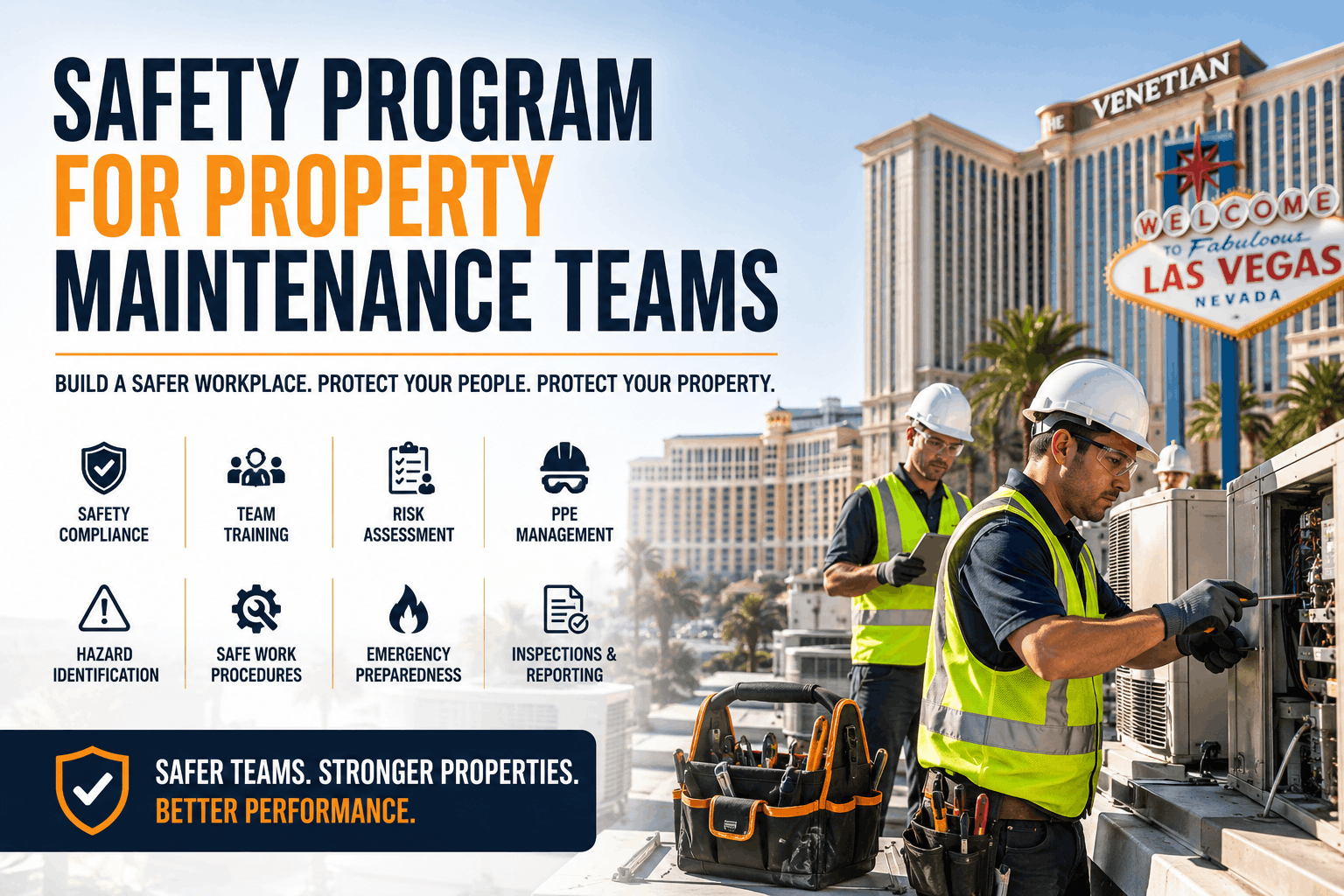
A single serious injury in your maintenance department costs far more than all preventive safety investments combined. When a technician falls from a ladder and fractures their spine, your facility faces immediate costs (emergency medical care, workers compensation claims typically $50,000-$300,000 depending on injury severity), long-term costs (ongoing medical treatment, permanent disability payments, retraining if the technician cannot return to their original role), indirect costs (legal liability if the incident was preventable through adequate safety procedures, insurance premium increases typically 10-25% annually following a serious claim), and operational costs (lost productivity while the technician recovers, temporary staff to cover the vacancy, customer relationships damaged by service disruptions). Beyond the financial impact, a serious injury affects team morale profoundly—other technicians become risk-aware and may slow their pace excessively, experienced staff leave because they perceive the work environment as unsafe, and recruitment becomes harder because word spreads in the local market that your facility is unsafe. Conversely, facilities implementing comprehensive safety programs consistently report measurable benefits: incident rates drop by 60-75%, workers compensation claims decline significantly with corresponding insurance premium reductions of 15-30%, staff retention improves because experienced technicians believe you value their safety and wellbeing, safety culture becomes self-reinforcing as team members hold each other accountable for following procedures. This comprehensive guide walks facility managers through building a safety program that covers OSHA compliance fundamentals, establishes safety accountability throughout the organization, trains technicians on hazard recognition and mitigation, and creates a culture where safety is non-negotiable.
Build Your Safety Program with Digital Compliance Tracking
OxMaint's safety module tracks incident reports, near-miss reporting, safety inspections, and PPE compliance—creating a documented safety culture with the records required for OSHA compliance audits and workers compensation claims.
Understanding OSHA Requirements and Regulatory Compliance Basics
OSHA (Occupational Safety and Health Administration) sets baseline safety requirements for all facilities and industries in the United States, with specific regulations particularly relevant to maintenance work. The foundational OSHA requirements that every property maintenance program must address include: hazard communication requirements specifying that technicians must have access to safety data sheets for any chemical or hazardous material they work with (solvents, refrigerants, cleaning products, pesticides), understanding what hazards the material presents, and knowing what personal protective equipment is required; fall protection requirements mandating that any work at heights above six feet requires fall arrest systems, which means technicians working on ladders above six feet need harnesses and anchor points, and technicians working on roofs need proper railings or fall protection; electrical safety requirements specifying proper grounding and bonding procedures, prohibition of work on energized circuits without proper training and equipment, and lockout-tagout procedures ensuring equipment cannot unexpectedly energize during maintenance work; and personal protective equipment (PPE) requirements specifying what protective equipment is required for specific tasks (safety glasses for any impact risk, gloves for handling sharp or chemical materials, hearing protection in high-noise environments). Beyond these foundational requirements, many properties must comply with industry-specific regulations: EPA requirements for refrigerant handling if HVAC systems are maintained, plumbing code requirements for potable water system work, and building code requirements for structural or load-bearing work.
OSHA compliance is not merely about following rules; it is about establishing documented processes that prove compliance when regulatory agencies conduct inspections or when workplace injuries trigger investigations. OSHA inspection findings are documented in writing, violations are assigned severity levels (minor violations typically result in nominal fines, serious violations with injury potential result in substantial fines $10,000-$150,000 or more), and repeat violations for the same issue draw exponentially higher penalties. Most importantly, OSHA records are discoverable in workers compensation litigation—if a worker is injured and claims the facility failed to provide adequate safety procedures, OSHA violation records become evidence in the lawsuit. Facilities demonstrating comprehensive safety programs with documented procedures, training records, incident tracking, and near-miss reporting have dramatically better outcomes when incidents occur: they prove they took safety seriously and implemented reasonable precautions, which limits liability and damages. The converse is also true: a facility with no documented safety program, no training records, no incident tracking, and no evidence of hazard mitigation is considered reckless in the eyes of regulators and juries. The investment in documenting your safety program is therefore not just about OSHA compliance; it is about protecting the facility from catastrophic liability if an injury occurs.
Hazard Assessment
Systematic evaluation of work environments and tasks to identify safety hazards. Document results in a facility hazard register accessible to all technicians performing those tasks.
Safety Training Program
Initial orientation for new technicians covering all identified hazards and required controls, plus annual refresher training and task-specific training before new assignments.
Incident and Near-Miss Reporting
Formal system for reporting injuries, near-misses (incidents that could have caused injury but did not), and unsafe conditions discovered during work, with analysis to prevent recurrence.
PPE Management
Specification of required personal protective equipment for each task or hazard, provision of equipment, fit testing where required, and inspection/replacement protocols.
Implementing Lockout-Tagout and Energized Equipment Work Protocols
Lockout-tagout (LOTO) is the OSHA procedure that prevents equipment from unexpectedly energizing during maintenance work, which prevents electrocutions and injuries from equipment startup. The principle is simple: before any technician works on equipment with stored energy—whether electrical power, hydraulic pressure, compressed air, or spring tension—that energy must be isolated, locked in the off position with a personal padlock only that technician can remove, and tagged to warn others that the equipment is undergoing maintenance. A technician performing electrical work on a compressor motor must first shut off the main electrical disconnect, verify power is actually off using a test meter, place their personal padlock on the disconnect to prevent anyone else from re-energizing it while they work, attach a tag indicating their name and why the equipment is locked out, and only then remove the motor cover and work on electrical connections. If another technician or supervisor tries to start the equipment while the LOTO padlock is in place, they immediately see the lock and tag, and they cannot start equipment with a personal lock in place (this is the enforcement mechanism). The critical discipline that makes LOTO work is that every technician has their own personal padlock that only they can remove—this prevents supervisors from "just turning on power to test something" while work is underway, because the equipment literally cannot be energized without removing the technician's lock. Facilities where LOTO is enforced rigorously see electrocution and shock incidents drop to near-zero. Facilities where LOTO is treated casually ("we turned off the breaker, that's good enough") see periodic electrocutions when someone energizes equipment unexpectedly.
LOTO procedures must be documented with specific lockout points for each piece of equipment—a chiller has multiple energy sources (main electrical disconnect, thermal isolation for condenser water, compressed refrigerant), and technicians need clear documentation showing where each energy source is located and how to isolate it. A technician beginning work on a chiller compressor motor must know exactly which electrical disconnect controls power to that motor, must verify the correct disconnect is the one providing power (testing at the breaker and at the motor itself to be certain), and must perform LOTO at that disconnect. Many LOTO-related injuries occur because technicians isolated the wrong energy source, believing they had power shut off when actually they had shut off a different circuit. Preventing these incidents requires clear documentation, training, and verification. Facilities using OxMaint can document equipment-specific LOTO procedures directly in the work order template for that equipment, and technicians can reference those procedures on their mobile device at the point of work. When LOTO procedures are embedded in work orders rather than existing in separate documentation, compliance improves dramatically because technicians have the correct procedures right in front of them.
Creating a Near-Miss Reporting Culture and Continuous Safety Improvement
Near-miss reporting is the single most valuable tool for improving safety without waiting for someone to be injured to identify what is wrong. A near-miss is an incident that could have caused injury but did not—a technician stepping off a ladder and nearly falling but catches themselves, a tool falling from height and missing the technician below by inches, a chemical splash that nearly contacted skin but clothing blocked it. Near-misses are instructive because they reveal gaps in procedures, inadequate hazard controls, or behavioral choices that lead toward injury. A technician who nearly falls from a ladder probably revealed an unsafe ladder setup, improper footing technique, or distraction that caused loss of balance. Rather than waiting for the next occurrence to result in an actual fall with injury, investigating the near-miss and identifying the root cause allows corrective action: repositioning the ladder on more level ground, requiring three-point contact when climbing, establishing "no phones while climbing" rules. Facilities that establish strong near-miss reporting cultures see 5-10 near-misses reported monthly per 50 technicians, indicating an engaged workforce actively identifying hazards. Facilities without near-miss reporting see near-zero reports, indicating either unsafe work is not occurring (unlikely) or technicians do not feel safe reporting incidents. Near-miss reporting is opt-in by individual technicians—it requires psychological safety where technicians believe that reporting a near-miss will not result in punishment or blame. Supervisors must actively reinforce that reporting is valued ("I appreciate you bringing this to my attention—this helps us all stay safer"), and incidents are treated as opportunities for improvement rather than indications of incompetence.
Continuous safety improvement processes systematically analyze near-misses and incidents to identify patterns and implement corrective actions. A near-miss report documenting "technician nearly fell from ladder" is just the beginning—the real value comes from investigating why the fall nearly occurred and implementing controls to prevent recurrence. Was the ladder on uneven ground? Implement a pre-use checklist confirming level footing. Did the technician reach beyond arm's length (improper balance)? Implement training on three-point contact and prohibition of over-reaching. Did the technician carry tools in one hand while climbing? Implement tool belt requirements to keep hands free. Did the near-miss occur because the technician was in a hurry? Evaluate workload and scheduling to ensure adequate time for tasks. The most effective safety programs systematically categorize near-misses by root cause—environmental hazard, procedural gap, training gap, behavioral choice, or equipment deficiency—and target corrective actions accordingly. Environmental hazards might require equipment redesign or job site modifications. Procedural gaps require documented procedure updates. Training gaps require additional training. Behavioral choices require coaching or discipline. Equipment deficiencies require repair or replacement. By matching corrective actions to root causes, you increase the effectiveness of safety interventions rather than implementing generic "safety training" that does not address the specific hazard.
| Safety Hazard Category | Common Maintenance Tasks Affected | Required Controls | Training Required |
|---|---|---|---|
| Fall from height | Roof work, ladder work, high-access equipment maintenance | Harnesses, anchors, guardrails, safe ladders, three-point contact | Fall protection certification, annual refresher |
| Electrical shock | Panel work, motor connections, lighting installation, circuit work | Lockout-tagout, test meters, insulated tools, PPE, proper grounding | Electrical safety, LOTO procedure, arc flash awareness |
| Chemical exposure | Refrigerant handling, solvent cleaning, pesticide application, sealant work | SDS access, proper PPE, ventilation, spill containment, first aid | Hazard communication, EPA certification, emergency response |
| Struck by object | Work at height, equipment replacement, roofing, demolition | Hard hats, cleared work zones, tool retention, spotters for blind areas | Site safety orientation, hazard awareness |
| Caught-in/between | Equipment repair, belt/pulley work, confined space entry, machinery maintenance | Lockout-tagout, machine guards, rescue procedures, communication | Confined space entry, rescue training, lockout-tagout |
Why Safety Programs Fail Without Management Commitment
Facilities implement safety programs as compliance checkbox ("we have safety training") without management follow-through. When supervisors cut corners ("just do it quickly"), when LOTO procedures are bypassed to save time, or when near-misses are not investigated seriously, technicians learn that safety is talked about but not actually valued. Within months, the safety program becomes useless theater. Safety programs only work when management demonstrates through consistent action that safety is the non-negotiable priority: stopping work to address unsafe practices even when it delays projects, investigating every incident and near-miss thoroughly, allocating time and budget for safety improvements, and modeling safe behavior personally.
Document Your Safety Program with Audit-Ready Records
OxMaint tracks safety training, incident reports, near-miss investigations, PPE compliance, and OSHA documentation—creating the comprehensive records required for regulatory audits and liability protection.
Frequently Asked Questions About Property Maintenance Safety Programs
How frequently should safety training be conducted to maintain OSHA compliance and team competency?
Initial onboarding safety training before independent work, annual refresher training covering baseline hazards, and task-specific training before new or infrequent assignments. OSHA does not mandate specific frequency, but annual refresher is industry standard.
What is the financial impact of a serious workplace injury on facility operations and insurance costs?
A single serious injury (spinal fracture, amputation, major burn) averages $150,000-$500,000 in direct costs plus indirect costs of $200,000-$1,000,000. Workers compensation insurance premiums increase 10-25% annually per serious incident claim.
How should facilities approach OSHA compliance audits and inspections proactively?
Maintain organized safety documentation (training records, incident reports, equipment inspection logs), conduct annual internal safety audits to identify gaps before OSHA does, and promptly address any violations discovered. Good record-keeping demonstrates due diligence if violations are found.
What percentage improvement in safety metrics is realistic after implementing structured safety programs?
Incident rates typically drop 60-75% within 18 months after implementing comprehensive safety programs. Facilities that actively investigate near-misses see sustained improvements because hazards are identified and corrected before injuries occur.
How can facilities eliminate psychological barriers to near-miss reporting and build a transparent safety culture?
Explicitly praise near-miss reporting, never punish technicians for reporting hazards, investigate root causes rather than blaming individuals, share learnings organization-wide to demonstrate that reports drive improvements, and model safety behavior by supervisors.
What is the role of PPE in a comprehensive safety program versus reliance on administrative controls?
PPE (hard hats, gloves, hearing protection) is the last line of defense after engineering controls and administrative controls. Eliminate hazards at source, then manage them through procedures, and finally provide PPE for residual risk. Over-reliance on PPE while ignoring root hazards fails when PPE is forgotten or ineffective.
How have facilities with strong safety cultures improved technician retention and employee satisfaction?
"After implementing comprehensive safety programs with near-miss reporting and proactive hazard correction, technician satisfaction improved 34%, retention increased from 62% to 83%, and our industry-leading injury rate dropped to zero incidents over 3 years. Technicians want to work for facilities that value their wellbeing, and safety investment shows we care."
What is the realistic cost and ROI of implementing a comprehensive facility safety program with digital tracking?
"Implementing structured safety programs costs approximately $5,000-$15,000 initially plus $200-$400 monthly for system management. A single prevented serious injury saves $200,000-$500,000, making ROI positive within the first incident prevented. Beyond financial ROI, the cultural benefit of an injury-free workplace is invaluable."
"We had the same 'safety is important' posters in every building but no real program—no incident tracking, no near-miss reporting, no OSHA documentation. When a technician fell and broke their leg, and workers compensation investigated, we had no records showing we had implemented basic safety procedures. That incident cost us $320,000 in claims plus $8,000 annual insurance premium increase. We implemented a comprehensive program with OxMaint tracking incidents, near-misses, and training. Three years later with zero injuries, our insurance premiums have dropped $22,000 annually. The program paid for itself many times over, and more importantly, our technicians go home safe." — Robert Martinez, Safety Director, Southwest Property Management, USA