The gap between "tenant reports a problem" and "problem gets fixed" is where tenant satisfaction is won or lost. In most properties, that gap is filled with phone tag, unreturned emails, SMS text chains, and tenants who have no idea whether anyone even saw their maintenance request. Tenants call or email. Get silence. Call again. Frustration builds before a single technician has been assigned to investigate. Meanwhile, property managers are drowning in duplicate requests submitted through different channels: the same leaky faucet reported by phone, email, and text portal creates three separate work orders processed by three different team members, consuming labor tracking the same issue rather than solving it. Tenant satisfaction scores in properties without centralized request intake systems average 2.8/5. Properties implementing tenant portal systems with automatic status updates and ETA notifications see tenant satisfaction climb to 4.1/5 within 90 days. The difference is not more responsive technicians—it is visibility. When tenants can submit requests online, receive immediate confirmation, see technician ETAs, and get real-time closure updates, satisfaction rises dramatically regardless of actual repair speed. This document covers the complete tenant maintenance request system property managers need to implement: request intake portal design, work order auto-conversion, tenant communication automation, emergency request routing, completion tracking, and the satisfaction metrics that validate system effectiveness. The secondary benefit is operational: centralized request intake eliminates duplicate submissions, ensures requests reach the right technician, tracks SLA compliance, and produces data-driven evidence of maintenance responsiveness for ownership groups and lenders. Start free to build your tenant portal, or book a demo to see request intake, work order conversion, and tenant status automation configured for your property portfolio.
Replace Phone Tag With Self-Service Tenant Requests & Automatic Status Updates
OxMaint gives tenants a mobile portal to submit maintenance requests with photos and preferred access times, automatically converts submissions to work orders with AI-driven technician assignment, and sends real-time status updates—reducing calls to the leasing office by 40% and improving tenant satisfaction scores by 30 percent.
Tenant Request System Architecture: From Submission Portal to Work Order Closure
A complete tenant request system consists of five interconnected components: mobile-friendly submission portal, automatic work order creation from portal submissions, intelligent request routing to correct technician or vendor, real-time tenant status notifications, and data export proving SLA compliance and maintenance responsiveness. The submission portal should collect: tenant name and unit, issue category (plumbing, electrical, HVAC, appliances, structural, pest, exterior), issue description, priority level (emergency, urgent, standard), photo or video attachment, preferred access times, and any accessibility notes. The more context captured at submission, the fewer follow-up calls property managers need to make before technicians arrive. Emergency submissions should trigger immediate push notification to on-call technician and property manager, bypassing the normal queue. Urgent requests should be assigned within 4-8 hours. Standard requests assigned within 24-48 hours. These SLA timers should automatically escalate notifications if assignments slip past the target window.
Work order auto-conversion eliminates manual re-entry: when a tenant submits through the portal, a work order is created instantly with all submitted details pre-filled: tenant information, unit, issue category, priority, photos, and access notes. The property manager and assigned technician receive notification simultaneously. No manual re-entry. No forwarded emails. No missed requests getting lost between systems. From the moment a tenant submits, the system tracks the request through assignment, technician dispatch, work start, parts issued, and completion—generating digital proof that every submission was received, acknowledged, assigned within SLA, and resolved. This unbroken tracking is critical for tenant satisfaction measurement and dispute resolution when tenants claim "we called three times and nothing happened"—digital evidence shows exactly when the request was received, who it was assigned to, and when work was completed.
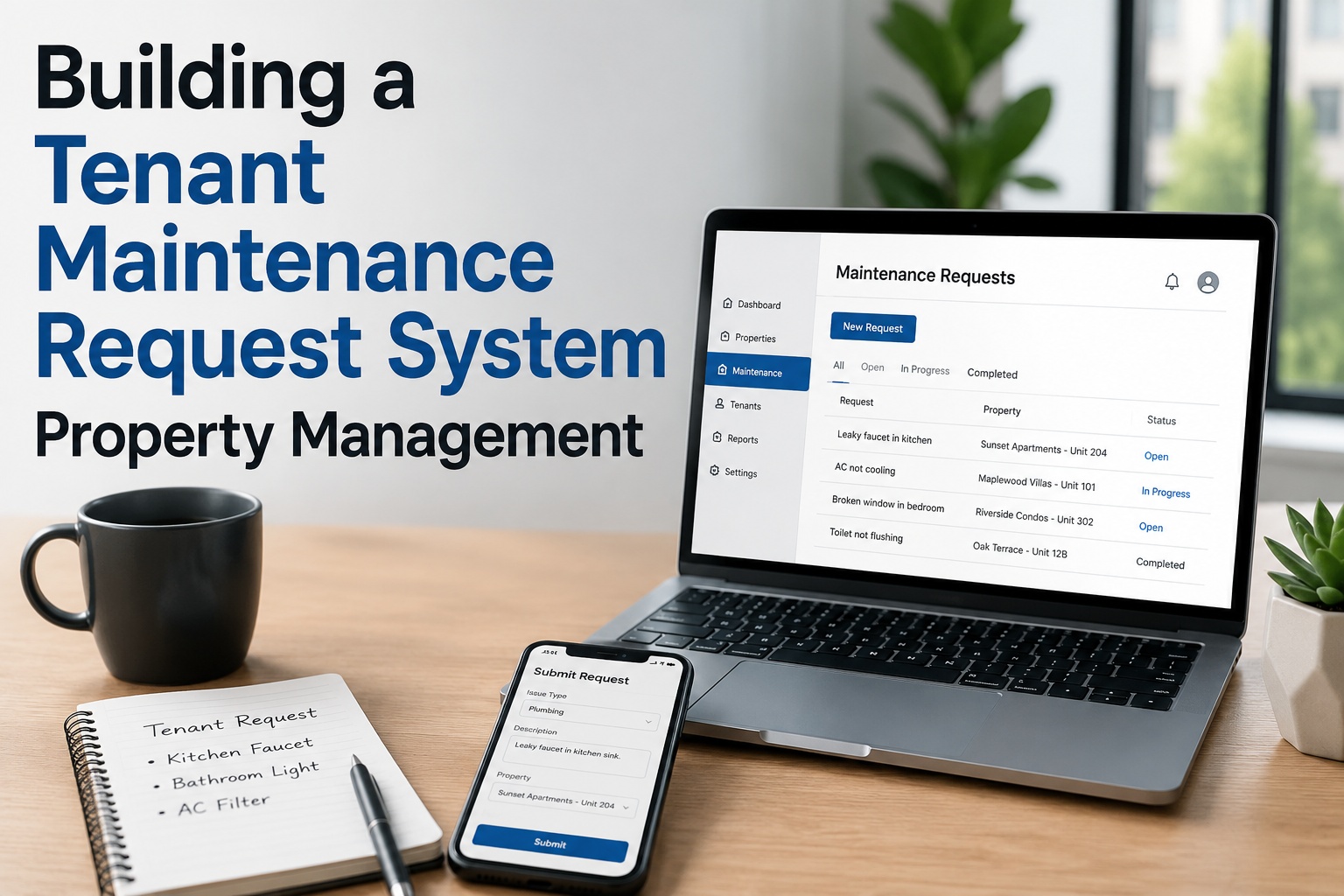
Tenants submit maintenance requests via mobile app or web browser—entering issue details, uploading photos/video, selecting priority level, and specifying access preferences. Form captures all context needed to route request effectively and assign correct technician, reducing follow-up calls before work begins.
Tenants flag requests as emergency (same-day response), urgent (24-48 hr response), or standard (3-7 day response). Emergency submissions trigger immediate on-call dispatch. System tracks SLA compliance: emergency assignments meeting same-day SLA, urgent within 24 hours, standard within 3 days—surfacing violations to property management.
Portal submissions auto-convert to work orders with all tenant-provided details pre-filled. AI-driven routing assigns to correct internal technician or external vendor based on issue type, location, and technician availability. Prevents duplicate submissions and ensures every request reaches the right person.
Tenants receive push notifications when requests are acknowledged, assigned, technician ETA updated, work underway, and completed. Text/app notifications eliminate "I don't know if anyone is coming" uncertainty—reducing repeat calls and escalation complaints.
Emergency submissions (no heat, flooding, structural damage) bypass normal queue and trigger immediate on-call dispatch. System logs emergency response time and escalates automatically if response window misses—ensuring life-safety issues get immediate attention regardless of time of day.
Every request tracked from submission through assignment, work start, completion—with system automatically calculating SLA compliance by request type. Property managers see which categories are missing SLAs (emergency assignments not same-day, urgent not 24-hour) and redirect resources to fix bottlenecks.
Tenant Request System Implementation: Five Core Sections
Tenant adoption of request portals depends on accessibility and immediate confirmation. Design the portal for mobile-first use: minimal form fields on initial submission, clear visual feedback confirming request received, and estimated response time displayed immediately. Include QR code linking to portal in common areas and lease welcome packets. Redirect phone-requested maintenance to portal on first 30 days: "I can log this for you—or you can submit through the portal where you'll get real-time status updates." Adoption driven by three factors: accessibility, immediate confirmation, and visible progress. Properties see 60-70% portal adoption rate after 60 days of consistent phone redirection.
When a tenant submits a request, the system creates a work order instantly with all tenant-provided details pre-filled: tenant contact information, unit, issue description, category, priority, photos, and access preferences. The property manager and assigned technician receive notifications simultaneously—no manual re-entry, no forwarded emails, no human touchpoint where the submission can be lost. This eliminates the biggest source of tenant frustration: requests disappearing into communication gaps. From submission through closure, the system tracks every step: creation timestamp, assignment, dispatch time, work start time, parts issued, completion timestamp, and technician sign-off. This unbroken audit trail proves when requests were received and resolved—providing dispute resolution evidence and tenant satisfaction justification data.
Correctly routing requests to the right technician or vendor prevents wasted trips and repeat visits. A plumbing request assigned to an HVAC technician wastes a site visit and creates work order reassignment delays. AI-driven routing analyzes issue category (plumbing, electrical, appliance, structural, pest), technician specialization, current workload, location proximity, and historical performance to assign each request optimally. Emergency requests (no heat, flooding, structural damage) should route to on-call technician immediately with push notification, bypassing normal queue. Urgent requests should assign within 4-8 hours. Standard requests within 24 hours. The system should show property managers which request categories are experiencing assignment delays and provide the data to add technician capacity where bottlenecks form.
Tenant satisfaction rises dramatically when tenants can see request progress in real time. Automatic push notifications at each stage—request acknowledged, technician assigned, ETA updated, work started, work completed—eliminate the anxiety of "I don't know if anyone is coming." Research shows properties implementing real-time status notifications achieve 4.1/5 tenant satisfaction; properties without portal communication achieve 2.8/5. The communication is automatic: when technician accepts assignment, tenant gets notification. When technician marks work started, tenant gets notification. When technician closes the work order, tenant gets closure notification and option to rate technician satisfaction. Text/app-based notifications reach tenants immediately—even if they're not home to receive physical technician arrival.
Without centralized request tracking, property managers cannot answer basic questions: What percentage of maintenance requests are being acknowledged within SLA? How long does the average request sit unassigned? Which issue categories are experiencing response delays? SLA compliance tracking answers these questions: emergency requests should respond same-day; urgent within 24 hours; standard within 3-7 days. The system tracks compliance automatically—calculating what percentage of requests met their SLA target. Properties exceeding 95% SLA compliance typically see tenant satisfaction above 4.2/5. Properties below 75% compliance typically see satisfaction below 3.2/5. The correlation is direct: faster response and status visibility improve satisfaction independent of actual repair speed. Tenant satisfaction surveys should track overall satisfaction, likelihood to renew lease, and specific satisfaction with maintenance responsiveness. Use this data to justify maintenance investments and demonstrate responsiveness to ownership groups and lenders.
Tenant request data reveals which unit types, systems, and components are consuming disproportionate maintenance attention. Analytics showing that plumbing requests are 3x the portfolio average suggests design defects or maintenance discipline gaps in water supply systems. A spike in appliance requests during winter months combined with extended response times might indicate seasonal staffing shortfall. Request volume trending helps property managers anticipate staffing needs, schedule preventive work during low-request periods, and identify equipment failures before they escalate to emergency status. The secondary benefit is tenant relationship data: which tenants are frequent reporters (potentially chronic complainers or genuinely in problem units), how quickly complaints escalate from initial submission through escalation/closure, and whether repeat requests on same issue suggest technician quality problems or design defects. OxMaint tracks request volume by category, unit, system, and tenant—generating dashboards that surface these insights to property management teams for action.
Tenant Request System Success Metrics Tracking
| Metric | Measurement Period | Target | Poor Performance Indicator | Action Required |
|---|---|---|---|---|
| Portal Adoption Rate | Monthly | 60%+ of requests through portal | Below 40% indicates low awareness or usability issue | Increase QR code visibility; phone redirect campaign |
| Emergency Response Time | Per-incident | Same-day assignment within 4 hours | Emergency requests sitting unassigned 8+ hours | Review on-call dispatch process; increase on-call coverage |
| Request Assignment SLA | Weekly | 95%+ emergency, 90%+ urgent, 85%+ standard SLA | Below 75% suggests routing or capacity issues | Analyze bottleneck request types; add technician capacity |
| Tenant Satisfaction Score | Quarterly | 4.0+ overall maintenance satisfaction | Below 3.2 indicates response time or communication problems | Implement real-time status updates; improve assignment speed |
| Request-to-Closure Time | Monthly | Average 2-3 days for standard requests | Above 5 days suggests delayed assignment or work performance | Review technician productivity; improve parts availability |
Frequently Asked Questions: Tenant Maintenance Request System Implementation
How much does tenant satisfaction improve with a request portal versus phone-based intake?
Properties with centralized request portals and automatic status updates achieve 4.1/5 tenant satisfaction; phone-based properties achieve 2.8/5. The difference is visibility—tenants satisfied when they can see request progress in real time, not faster repairs.
What percentage of tenants will actually use a maintenance portal instead of calling?
Properties see 60-70% portal adoption rate within 60 days with consistent phone redirection and clear QR code visibility. Adoption driven by accessibility, immediate confirmation, and visible progress—not marketing pressure.
How does emergency request routing prevent critical maintenance from sitting in queue?
Emergency submissions should trigger immediate push notification to on-call technician and property manager, bypassing normal queue. System automatically escalates if response window misses—ensuring life-safety issues get attention regardless of time of day.
What is the correlation between SLA compliance and tenant satisfaction?
Direct correlation: properties with 95%+ SLA compliance see 4.2/5 satisfaction; 75% compliance sees 3.2/5. The difference is whether tenants feel heard and responded-to, not whether repairs completed faster.
Can request analytics identify maintenance quality problems at individual properties?
Yes. Analytics showing plumbing requests 3x portfolio average suggest design defects or maintenance gaps. Repeat requests on same issue indicate technician quality problems. Seasonal request spikes show staffing needs during peak periods.
How do real-time notifications reduce repeat maintenance calls?
When tenants receive push notifications for request acknowledgment, technician assignment, ETA, work start, and completion, they stop calling to ask "is anyone coming?" Notifications eliminate the anxiety driving repeat calls by 35-40 percent.
What happens to operational efficiency when requests auto-convert to work orders?
Auto-conversion eliminates manual re-entry, duplicate submissions, and human touchpoints where requests can be lost. Properties see 25-30% reduction in administrative labor and zero lost requests because everything routes through the system.
Can tenants still call for emergency issues if they can't access the portal?
Yes. Every property should maintain phone intake for elderly, technology-illiterate, or true emergency scenarios. Portal should handle 60-70% of routine requests; phone backup ensures accessibility for all tenant populations.
Cut Maintenance Calls by 40% With Tenant Self-Service Portal & Automatic Updates
OxMaint powers tenant request intake, automatic work order conversion, AI-driven technician routing, and real-time status notifications—transforming tenant satisfaction from reactive firefighting to proactive communication.