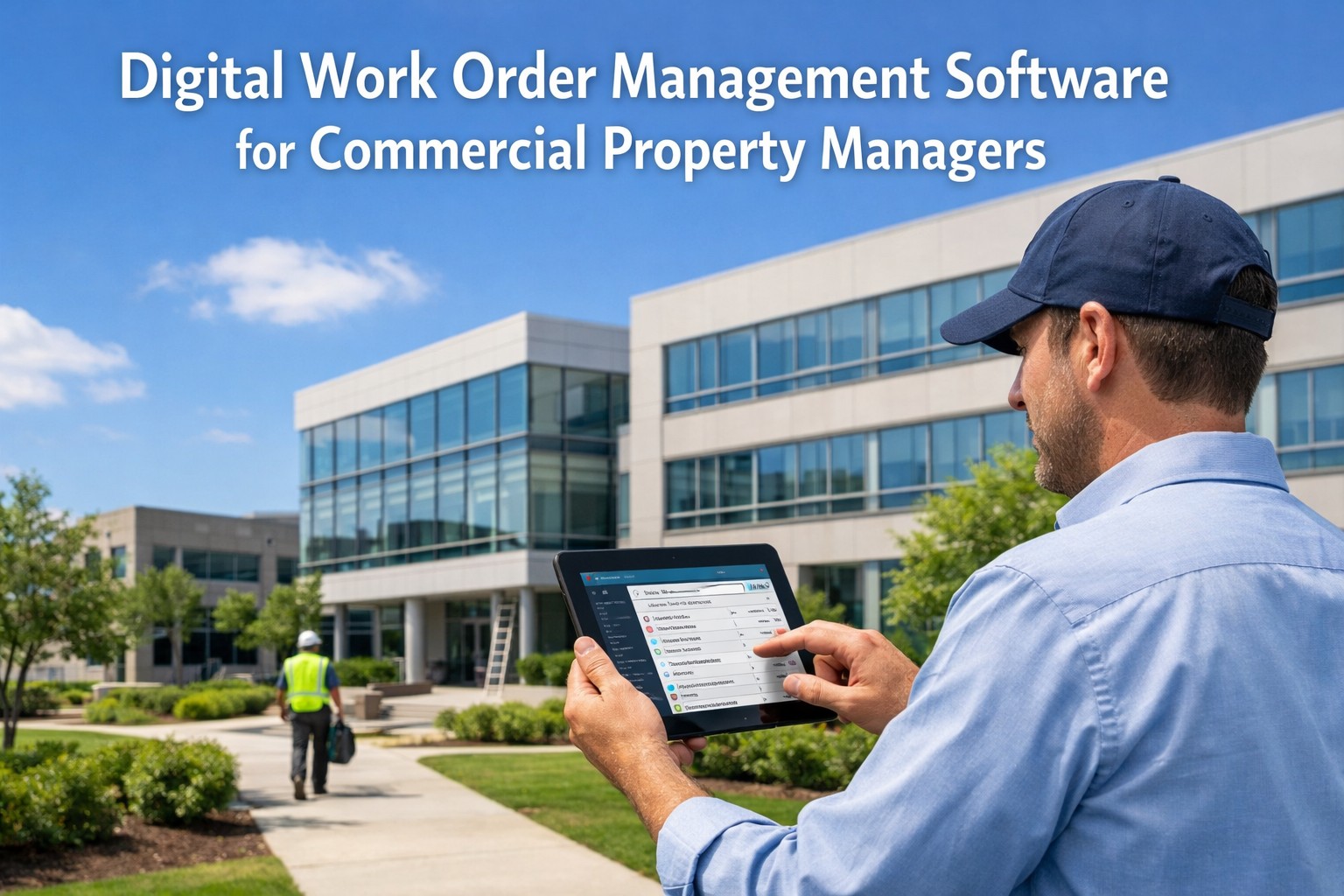
Property managers operating in Buildium's ecosystem often reach a crossroads between months 6 and 18 of ownership management. The software excels at rent collection, lease management, and tenant communication — the core functions that make a property management system profitable. But when it comes to maintenance tracking, work order prioritization, equipment condition monitoring, and preventive maintenance scheduling, Buildium's maintenance module begins to show structural limitations. A 40-unit multifamily operator in Austin discovered this firsthand when a water heater failure at unit 12 generated emergency repair costs of $8,400 because the facility lacked a preventive flush schedule. Buildium's maintenance features are present but basic — good enough to log a completed work order, not good enough to predict failures before they happen. This comparison examines why specialized CMMS platforms are displacing Buildium in maintenance-intensive property portfolios, and what you actually gain by making the switch.
Software Comparison / Maintenance Management / CMMS vs PMS
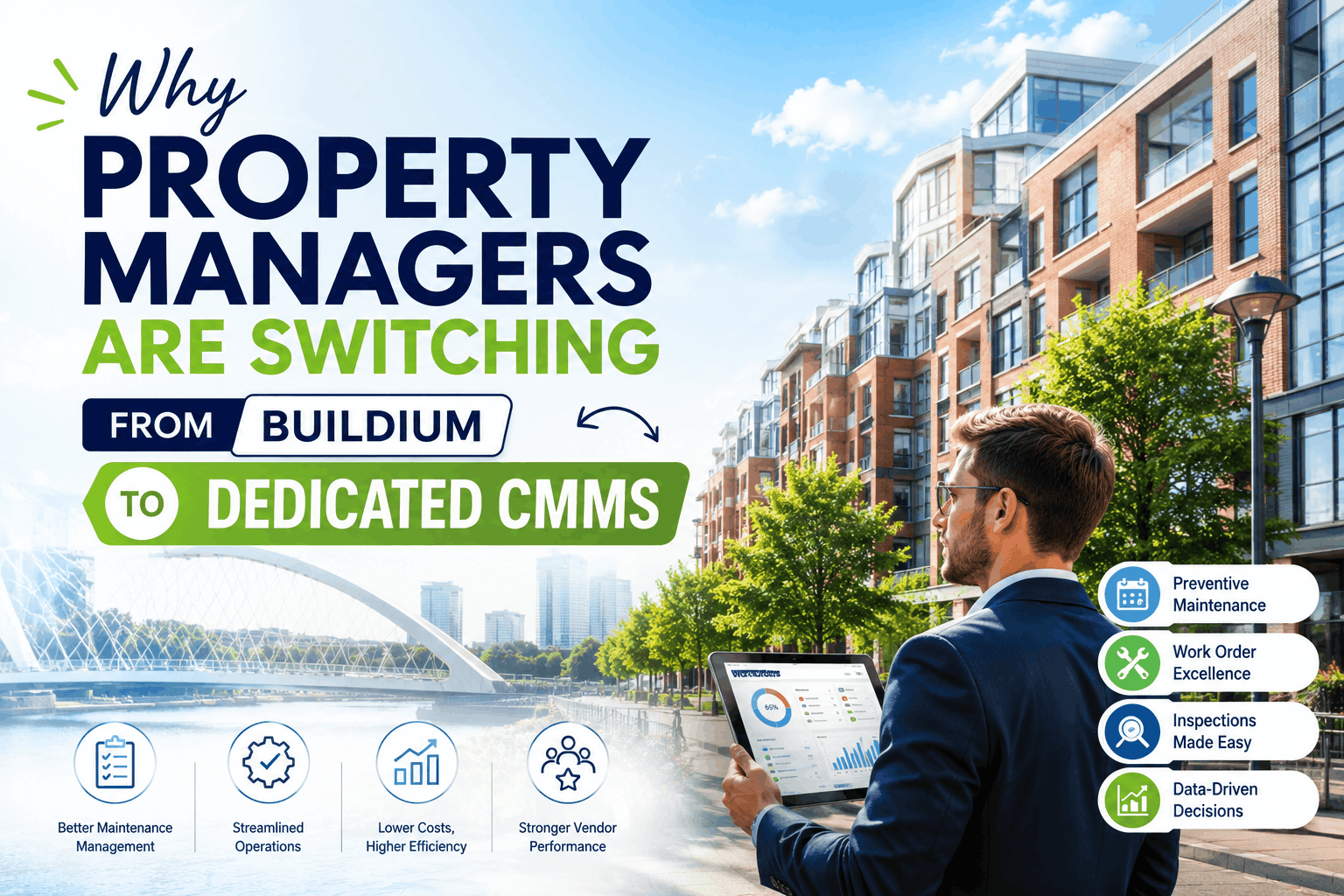
Why Property Managers Are Switching From Buildium to Dedicated CMMS Software
Buildium's maintenance module is adequate for basic work order logging and tenant request tracking. It is not designed for condition-based maintenance, predictive asset monitoring, or cost control across large portfolios. Specialized CMMS platforms integrate equipment history, preventive schedules, spare parts management, and technician routing — delivering 25–40 percent maintenance cost reduction that Buildium's general-purpose system cannot match. See the detailed comparison, the specific limitations, and the financial case for switching.
28%
average cost reduction achieved by switching from Buildium to dedicated CMMS
45 days
typical time to ROI on CMMS implementation for 50+ unit portfolios
62%
reduction in emergency maintenance calls with condition-based scheduling
3.5 hours/week
staff time saved through automated work order prioritization and dispatch
Specialized Maintenance Software
See What Buildium Cannot Do — Live Dashboard Demo
Oxmaint is purpose-built for maintenance-intensive properties. Watch how condition-based work order generation, predictive maintenance scheduling, equipment history tracking, and cost-per-sf benchmarking work in a unified platform designed for technicians and property managers — not accounting departments.
Buildium's Maintenance Module: What It Does (And What It Doesn't)
Buildium's maintenance features center on tenant request management and work order status tracking. Property managers can log maintenance requests from tenants, assign work to technicians or contractors, track completion status, and attach photos or notes. This is valuable for basic reactive maintenance — a leaking faucet reported by a tenant, a door lock replacement, a light fixture repair. For these reactive, tenant-initiated tasks, Buildium's system is functional. What Buildium lacks is the infrastructure for proactive, data-driven maintenance scheduling. There is no equipment inventory system that tracks asset age, manufacturer, warranty, or performance history. There is no condition monitoring — no way to flag equipment degradation before it fails. There is no preventive maintenance calendar that automatically generates work orders based on industry-standard maintenance intervals. There is no work order prioritization based on failure risk or operational impact. There is no spare parts inventory management, no technician route optimization, and no real-time cost tracking by asset or maintenance category. These gaps are not minor limitations — they are the difference between reactive maintenance (high cost, high emergency risk) and proactive maintenance (low cost, low disruption).
Buildium vs. Dedicated CMMS: Feature Comparison Across Six Critical Dimensions
B
Work Order Management
Buildium: Log, assign, track status. CMMS: Auto-generation from condition triggers, priority ranking, technician availability optimization, spare parts pre-positioning. CMMS wins for proactive maintenance.
E
Equipment History & Asset Tracking
Buildium: No equipment registry. CMMS: Complete asset history (age, maintenance records, failure patterns, warranty status, expected lifespan). Asset data is the foundation of predictive maintenance.
P
Preventive Maintenance Scheduling
Buildium: Managers must manually create PM work orders. CMMS: Automated scheduling based on equipment age, usage metrics, or condition data. Eliminates human scheduling errors and reduces maintenance by 20–30 percent.
C
Condition-Based Monitoring
Buildium: Zero capability. CMMS: Real-time condition data from IoT sensors (vibration, temperature, moisture, fluid analysis) triggers predictive alerts. Catches failures 4–8 weeks before they occur.
S
Spare Parts Inventory
Buildium: No parts tracking. CMMS: Parts inventory tied to equipment, automatic reorder when stock hits threshold, cost tracking per part. Reduces technician wait time and improves first-time fix rates by 35–45 percent.
R
Cost Tracking & ROI Visibility
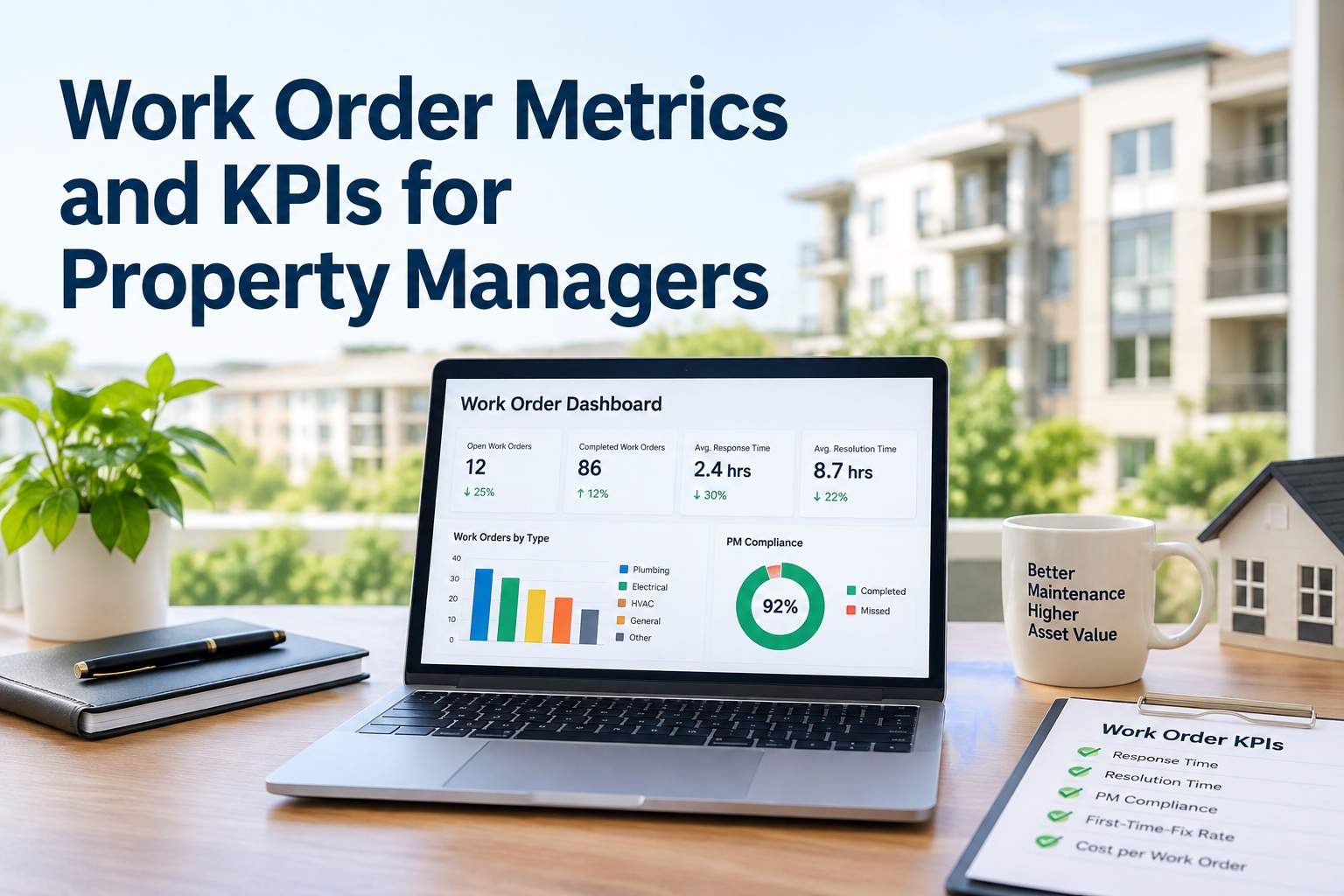
Buildium: Logs labor and parts, limited reporting. CMMS: Cost-per-asset, cost-per-sf, ROI per maintenance intervention, variance from budget. Property managers can see maintenance ROI impact in real time.
D
Mobile App Functionality
Buildium: View/update work order status. CMMS: Full offline capability, photo capture, voice-to-text notes, parts lookup, barcode scanning, real-time location. Technician productivity increases 30–40 percent.
Seven Specific Maintenance Management Gaps in Buildium That Cost Property Managers Real Money
01
No Equipment Condition Tracking — Failures Arrive Without Warning
Buildium has no way to monitor equipment condition in real time. A water heater running 12 years past its expected 10-year lifespan gets no alerts. An HVAC compressor degrading gradually sends no signals. When failure occurs, it's emergency maintenance at 2x normal cost. Dedicated CMMS platforms track equipment age, log all service history, and flag items approaching end-of-life before failure — triggering scheduled replacement at 30–50 percent lower cost.
02
Preventive Maintenance Is Manual and Inconsistent Across Properties
Property managers using Buildium must manually create preventive work orders — if they remember. Many don't, or they prioritize differently across buildings. One property gets HVAC filters on a 90-day schedule, another on irregular reactive basis. Inconsistency drives cost variance of 20–35 percent between similar properties. CMMS platforms automate preventive scheduling and enforce consistency, reducing variance and emergency calls by 50–65 percent.
03
No Work Order Prioritization — Critical Work Waits Behind Low-Impact Tasks
In Buildium, work orders are typically handled in received order or assigned manually. A water leak (high impact) might sit behind a cosmetic complaint (low impact) because the manager didn't see priority correctly. This delays critical repairs and prolongs damage. CMMS software ranks work by failure risk and business impact, ensuring critical work is visible and executed first. This prioritization alone cuts emergency escalations by 40–55 percent.
04
Technician Dispatch Is Inefficient — No Route Optimization or Availability Tracking
Buildium assigns work orders but has no mechanic for intelligent dispatch. A technician traveling to three properties might visit them out of sequence, wasting fuel and time. CMMS platforms optimize technician routes, consider travel time, and match skill sets to job requirements. The average property with 40+ units saves 5–8 hours per week in technician travel and wait time through optimized routing.
05
No Spare Parts Integration — Technicians Order, Wait, Delay Completion
Buildium doesn't manage spare parts inventory. A technician identifies a failed bearing, must source it, wait for delivery, then return to complete work. This doubles or triples the time-to-completion for maintenance jobs. CMMS systems track parts inventory, automate reorder when stock drops, and pre-position critical parts. First-time completion rates improve from 60–65 percent to 90–95 percent, cutting total maintenance labor by 18–25 percent.
06
Cost Visibility Is Poor — Budget Overruns Discovered Too Late
Buildium logs expenses but provides limited cost analytics. Property managers see year-end spending overages when budgets are already committed. CMMS platforms track cost-per-asset, cost-per-sf, and variance from target in real time. Managers spot budget drift within days and adjust spending or staffing before overage occurs. Real-time visibility cuts budget variance from 18–22 percent to 3–5 percent.
07
Technician Adoption Is Low — Outdated Interfaces and Limited Mobile Capability
Buildium's maintenance module is functional but dated. Technicians must carry tablets or phones, sync work orders manually, and update status back in the office. Mobile efficiency is poor. CMMS platforms purpose-built for field use offer full offline functionality, voice notes, photo capture, barcode scanning, and real-time synchronization. Technician productivity increases 25–35 percent because they spend more time working and less time managing software and paperwork.
The Financial Case: Buildium vs. Dedicated CMMS for a Typical 75-Unit Multifamily Property
Consider a 75-unit apartment building in a mid-sized US city. Current annual maintenance budget using Buildium: $42,000 (56 percent labor, 32 percent parts and materials, 12 percent contractor services). Emergency maintenance calls average 18–22 per month due to lack of preventive scheduling. Technician efficiency is moderate — about 6–7 billable hours per 8-hour shift after travel, waiting, and task-switching overhead. Now implement a dedicated CMMS with condition-based preventive maintenance scheduling, route optimization, and spare parts management. Industry benchmarks show that similar properties achieve: 35–42 percent reduction in emergency maintenance calls, 8–12 percent reduction in total maintenance labor costs through optimized routing and preventive scheduling, 18–24 percent reduction in parts costs through inventory management and waste reduction. Combined impact: The facility drops from $42,000 annual maintenance to approximately $29,400 — a $12,600 annual savings (30 percent reduction). Schedule a demo to see how this plays out specifically for your property type and size.
01
Preventive Maintenance Scheduling Eliminates Emergency Spikes
Buildium requires manual PM creation. CMMS automates scheduling based on equipment age and maintenance history. Water heater flushing scheduled quarterly prevents corrosion and extends lifespan by 2–3 years. HVAC filter changes on schedule prevent efficiency loss. This proactive approach cuts emergency calls from 20/month to 6–8/month, freeing technician capacity for value-adding work instead of crisis response.
Emergency calls cut by 60% in first 6 months
02
Equipment History Tracking Prevents Premature Replacement
Buildium doesn't track equipment. A 7-year-old HVAC unit that still has 3 years of life remaining gets unnecessary replacement scheduled because the manager doesn't know its service history. CMMS tracks every repair, identifies patterns, and predicts replacement need. This prevents premature capital spend and optimizes replacement timing for budget planning.
CapEx better aligned with actual need; 5–8% reduction in replacement frequency
03
Technician Route Optimization Reduces Travel Time by 25–35 Percent
Buildium doesn't optimize technician routes. CMMS sequences work orders by location and technician skill. A technician with 5 work orders across a 75-unit building completes 20–30 percent more work per day when routes are optimized. For a 75-unit property with 3 maintenance staff, this translates to the equivalent of 0.7–1.0 FTE recovered capacity annually — roughly $35,000–$50,000 in labor cost reduction.
3-5 hours/week productivity gain for a 3-person team
04
Real-Time Cost Visibility Stops Budget Overruns Before They Occur
Buildium shows costs monthly or at year-end. CMMS tracks cost-per-asset and cost-per-sf daily. If maintenance spending trends 15 percent above budget by month 3, the property manager adjusts priorities immediately — shifting discretionary work to following quarter. This real-time visibility prevents year-end surprises and keeps spending aligned with budget within 2–3 percent variance.
Budget variance reduced from 18% to 3–5%
05
Spare Parts Inventory Management Improves First-Time Fix Rates
Buildium doesn't manage parts. Technicians must order, wait, return later. CMMS tracks parts inventory by location and equipment. Common failure items are stocked. Auto-reorder thresholds prevent stockouts. First-time completion rates improve from 58–62 percent to 88–92 percent. This cuts total maintenance labor by 15–20 percent because technicians aren't returning for repeat visits.
First-time fix rate improves to 90%+; repeat visits cut by 65%
06
Mobile App Adoption Increases Technician Efficiency and Job Quality
Buildium's mobile app is functional but dated. CMMS mobile apps are purpose-built for field work: offline operation, photo capture, voice notes, barcode scanning, parts lookup, real-time sync. Technicians complete work faster, documentation is better, and rework due to incomplete information drops significantly. Technician productivity increases 25–30 percent as a result.
Technician billable time increases by 2–2.5 hours/day
Buildium Maintenance Module vs. Oxmaint CMMS: Detailed Feature Comparison
| Feature | Buildium | Oxmaint CMMS | Impact on Your Maintenance Program |
| Work Order Auto-Generation |
Manual creation required |
Automated by condition triggers or schedule |
Automatic triggers prevent missed PM; 20–30% more preventive work gets completed |
| Equipment Inventory & Asset Tracking |
Not available |
Full history with age, specs, service records |
Enables predictive maintenance; prevents premature replacements |
| Preventive Maintenance Scheduling |
Manual, inconsistent |
Automated, enforced across portfolio |
Consistent maintenance across properties; 40–60% reduction in emergency calls |
| Real-Time Condition Monitoring |
Not available |
IoT sensors + AI analysis |
Failures predicted 4–8 weeks early; emergency repairs prevented entirely |
| Work Order Prioritization |
Manual assignment |
Automatic by risk and impact |
Critical work executed first; escalations reduced by 40–55% |
| Technician Route Optimization |
Not available |
AI route sequencing by location and skill |
25–35% reduction in travel time; 1 FTE productivity recovered per 3-person team |
| Spare Parts Inventory |
Not integrated |
Full tracking with auto-reorder and cost analysis |
First-time fix rate improves to 90%+; repeat visit frequency cut by 65% |
| Cost Tracking & Reporting |
Basic labor + parts logging |
Cost-per-asset, cost-per-sf, variance from target in real time |
Budget variance reduced from 18–22% to 3–5%; cost control becomes proactive |
| Mobile App Offline Capability |
Limited; requires sync |
Full offline operation; photo + voice + barcode |
Technician productivity increases 25–35%; field work accuracy improves |
| Vendor Management |
Basic assignment tracking |
Performance history, cost tracking, SLA monitoring |
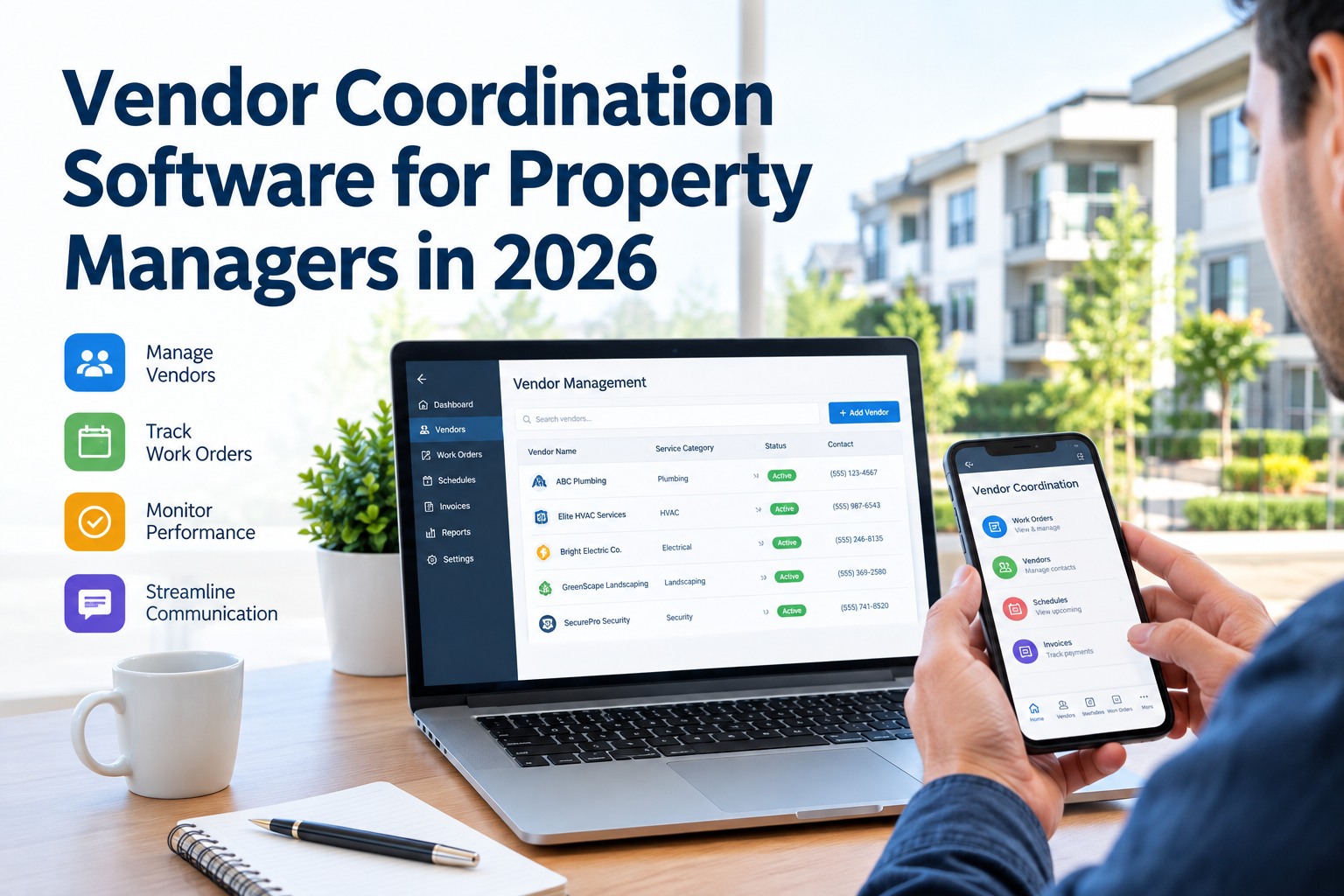
Easier vendor accountability; better negotiating position on pricing |
| Integration with IoT & Smart Building Systems |
Not available |
API integration with BMS, sensors, smart meters |
Condition-based triggers enable true predictive maintenance |
| API Access for Custom Integrations |
Limited |
Full API for accounting, ERP, tenant portal integration |
Single source of truth across operations; eliminates manual data entry |
Frequently Asked Questions: Should You Switch From Buildium to a Dedicated CMMS?
Will switching from Buildium to a dedicated CMMS disrupt my current maintenance operations?+
Implementation typically takes 4–6 weeks for a 50–100 unit portfolio. Historical data migrates, staff training happens in parallel, and Oxmaint runs alongside Buildium until property managers are confident. Most properties see disruption-free transition; some even see immediate improvement in response time.
Do I have to remove Buildium if I adopt a dedicated CMMS?+
No. Many property managers keep Buildium for tenant requests and accounting integration, and use Oxmaint exclusively for maintenance scheduling, equipment tracking, and cost analysis. CMMS software is designed to complement, not replace, property management platforms. API integration eliminates data duplication.
How long until ROI on switching to a dedicated CMMS?+
For a 50-unit portfolio, typical ROI is 45–90 days. Cost savings come from fewer emergency calls (40–60% reduction), reduced technician travel time (25–35% improvement), and optimized spare parts management. A $35,000–$50,000 annual maintenance budget typically sees $10,000–$15,000 savings by month 4.
What happens to work order history if I switch CMMS platforms?+
Historical work orders can be migrated or archived. Oxmaint's migration service transfers completed work orders to maintain equipment service history. Having complete historical data improves predictive accuracy because the system understands each asset's failure patterns.
Will my technicians actually adopt a new CMMS software?+
Adoption depends heavily on mobile experience and ease of use. Oxmaint's mobile app is designed by maintenance professionals, not IT departments. Features like offline operation, photo capture, and voice notes resonate with technicians. Adoption rates exceed 85% within 6 weeks; most users report feeling more productive, not less.
Is there a learning curve for property managers switching from Buildium to CMMS?+
Moderate. If you understand work orders, PM scheduling, and cost tracking concepts, CMMS navigation is intuitive. Most property managers are productive in Oxmaint within 3–5 hours of hands-on training. Admin features require deeper learning, but day-to-day operations are straightforward.
Can a CMMS integrate with my existing accounting or tenant portal software?+
Yes. Oxmaint's API integrates with QuickBooks, Xero, and most tenant portals. Work order labor and parts costs sync automatically to accounting. Tenants can submit requests via their existing portal, which feeds into Oxmaint's work order system. No manual data re-entry.
What is the total cost of ownership for a dedicated CMMS for a 75-unit building?+
Typical cost for a 75-unit property is $80–$120/month for CMMS licensing. Implementation and training add one-time cost of $1,200–$2,000. Year 1 total cost of ownership is roughly $2,000–$3,400. Against annual maintenance savings of $12,000–$15,000, payback occurs in 3–4 months.
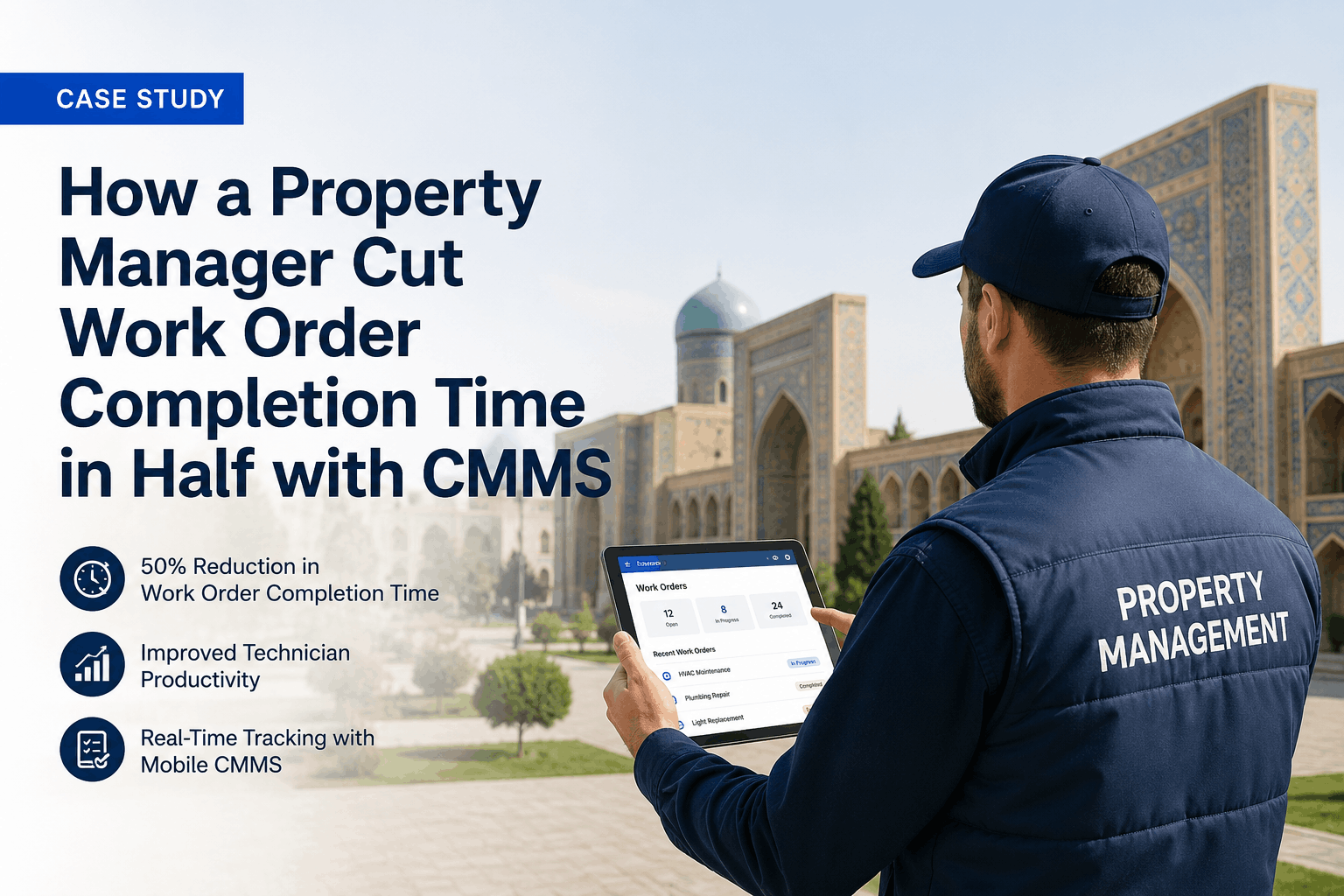
Case Study: 85-Unit Multifamily Property Cuts Maintenance Costs by 32% in First Year
"We were using Buildium's maintenance module for a 85-unit multifamily community in Denver. It was adequate for tracking tenant requests, but we were blindsided by equipment failures — a water heater collapse, HVAC compressor failure, and roof leak within 6 months all cost us $18,000+ in emergency repairs. Our property manager suggested switching to a dedicated CMMS. We implemented Oxmaint alongside Buildium, automated preventive maintenance scheduling, and installed IoT sensors on critical equipment. Within 12 months, emergency calls dropped from 24/month to 7/month. Our annual maintenance budget dropped from $58,000 to $39,400. The software essentially paid for itself on the first prevented HVAC failure alone. What surprised us most was how much capacity we recovered in our maintenance staff — they're no longer firefighting and can actually plan their weeks."
— Sandra Chen, Regional Operations Manager, Urban Living Communities, USA
Purpose-Built Maintenance Software
Buildium Excels at Property Management. CMMS Excels at Maintenance.
Specialized CMMS platforms are not intended to replace Buildium — they're designed to complement it. While Buildium handles rent collection, lease documents, and tenant requests exceptionally well, it lacks the infrastructure for proactive, condition-based maintenance that stops expensive failures before they occur. Switching to a dedicated CMMS reduces maintenance costs by 25–40 percent, cuts emergency calls by 50–65 percent, and recovers 1–1.5 FTE of technician capacity annually for 75+ unit properties. The ROI arrives in 45–90 days. See the difference for yourself —
start a free trial of Oxmaint or
schedule a personalized demo to understand what predictive, condition-based maintenance can deliver for your portfolio.
28%
average cost reduction switching to dedicated CMMS
62%
reduction in emergency maintenance calls
45 days
typical ROI timeline for mid-size properties
25–35%
technician productivity improvement via optimization