How to Reduce EAF Electrode Consumption: 7 Proven Techniques
By Alex Jordan on June 30, 2026
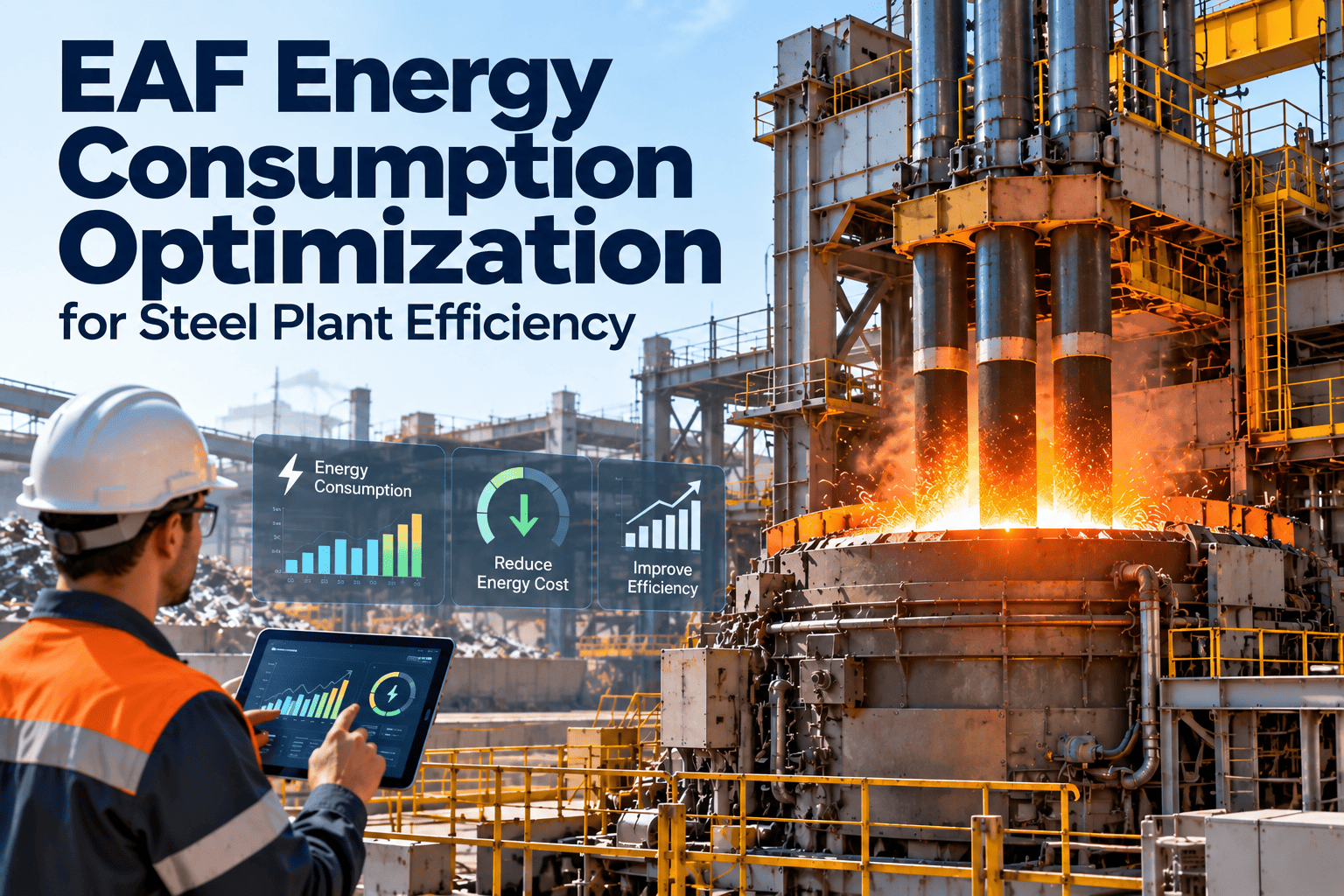
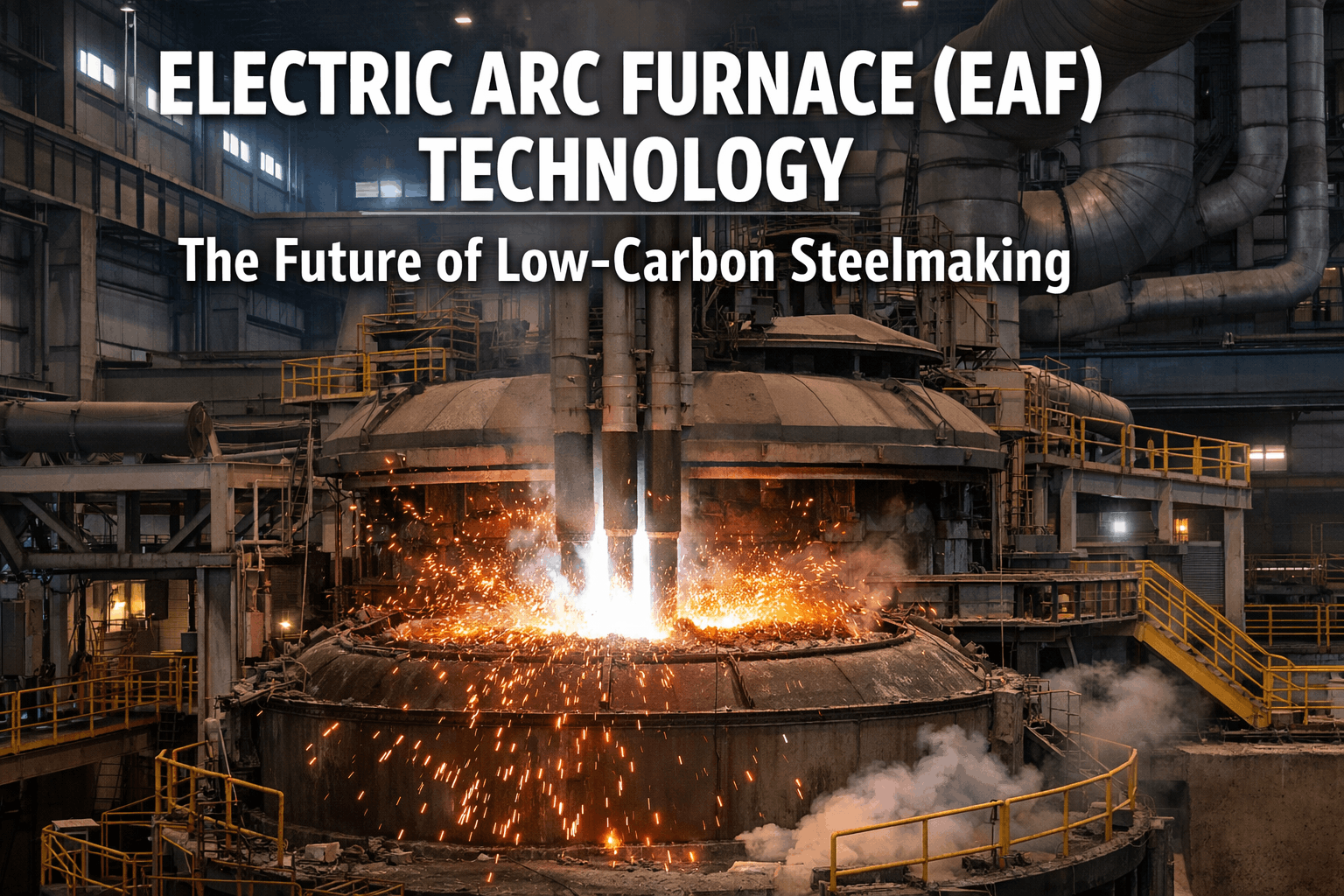
Electric arc furnace (EAF) electrode consumption is one of the most volatile operating costs in North American scrap-based steelmaking. Graphite electrode prices fluctuate wildly ($500–1,500 per metric ton depending on grade and supply), yet most mill operators manage electrode consumption reactively: they run the furnace until electrodes break or are consumed, then order replacements without understanding root cause. A single poor operating campaign can spike electrode cost by 30–50% above baseline, transforming what should be a $40–60/ton steelmaking cost center into a $80–110/ton nightmare. Worse, excessive electrode consumption correlates directly with poor scrap quality, improper arc control, and thermal shock damage that shortens furnace refractory life. Oxmaint's EAF energy optimization module integrates real-time arc voltage, current, and electrode position monitoring to reveal the hidden drivers of electrode waste: tap-to-tap times stretched to 45+ minutes (when 35–38 minutes is optimal), excessive arc breakage caused by scrap bridging, and uncontrolled oxidation loss during standby periods. This article reveals 7 proven techniques that elite mills use to cut electrode consumption by 20–35%, directly improving EBITDA by $1.5–3M annually.
Tap-to-tap time optimization, arc stability monitoring, oxidation loss tracking, and predictive electrode life forecasting—all integrated into one CMMS platform for North American EAF operators.
The True Cost of Electrode Consumption: Beyond Material Price
Most mills track electrode cost only as a per-ton material expense: "We used $3.2M worth of electrodes this month." This mindset is dangerously incomplete. Electrode consumption is a direct proxy for arc efficiency, scrap melt rate, and furnace refractory health. When electrode consumption spikes 30% above baseline, it signals that your tap-to-tap time has drifted from 36 to 42 minutes, your arc is destabilizing due to scrap bridging, or your electrodes are oxidizing during the 15-minute cool-down period between heats. Each of these failure modes carries hidden costs: longer tap-to-tap times reduce your furnace throughput (fewer heats per day), destabilized arcs cause refractory thermal shock that shortens campaign life by 18–24 months, and oxidation loss is pure waste—material you paid for but literally evaporated. Oxmaint's EAF module decomposes electrode consumption into controllable variables, showing you exactly where waste occurs so you can target specific operational improvements.
$1.5–3M
Annual savings from optimizing electrode consumption across 200+ heats/month
20–35%
Reduction in electrode consumption through arc optimization and tap-to-tap timing
12–18 Months
Extended EAF refractory campaign life from reduced thermal shock
38–42%
Faster arc startup and scrap melt acceleration with optimized electrode positioning
7 Proven Techniques to Reduce EAF Electrode Consumption
Elite EAF operators manage electrode consumption through seven integrated strategies, each targeting a specific source of waste. Technique 1 is tap-to-tap time optimization (target 35–38 minutes; every minute above this baseline costs ~$800–1,200 in extra electrode oxidation and inefficient arc time). Technique 2 is arc stability monitoring—preventing arc collapse and re-strike cycles that cause electrode breakage. Technique 3 is scrap charge quality control (removing bridging-prone materials that force arc instability). Technique 4 is optimized electrode positioning (maintaining 1.5–2.0m operating distance to prevent thermal shock and enable smooth melt progression). Technique 5 is controlled cool-down periods (5–8 minute standby instead of 15-minute waits that allow oxidation loss). Technique 6 is predictive electrode breakage detection (flagging electrodes nearing end-of-life before catastrophic fractures). Technique 7 is power curve optimization during melt-down (matching arc power to scrap charge characteristics rather than running constant power). Oxmaint integrates all seven techniques into a single platform, with real-time dashboards showing which mines the biggest losses.
Monitor melt time trends; flag if exceeding 38 minutes. Each extra minute costs ~$1,200 in oxidation loss. Oxmaint correlates melt time with scrap grade, power settings, and electrode consumption to identify drift.
2
Arc Stability & Break Prevention
Real-time arc voltage ripple and current harmonics analysis. Excessive ripple (>10% variation) indicates arc collapse risk. Alert operators to adjust electrode height and power before breakage occurs.
3
Scrap Charge Quality Management
Correlate electrode consumption with scrap grade received. High-consumption batches indicate bridging-prone scrap. Oxmaint flags incoming material and suggests pre-shredding to prevent arc instability.
4
Electrode Position Optimization
Track electrode height and arc distance via laser or capacitive sensors. Optimal distance is 1.5–2.0m. Too close causes thermal shock; too far reduces arc power. Oxmaint maintains precision within ±0.1m.
5
Cool-Down & Oxidation Loss Control
Minimize standby time between heats. Target 5–8 minute cool-down; longer waits allow electrode oxidation (loss of ~50–100 kg per 15-minute delay). Oxmaint tracks standby duration and calculates oxidation waste per heat.
6
Predictive Electrode Life & Breakage Alert
Monitor remaining electrode length via laser caliper; correlate with consumption rate to forecast life. Alert operators 2–3 heats before breakage; flag electrodes for replacement during planned change-outs.
7
Power Curve Optimization During Melt
Adjust arc power profile based on real-time scrap melt characteristics. Cold, dense scrap requires lower initial power; rapid ramp causes excessive electrode consumption. Oxmaint calculates optimal power curve per charge.
Electrode Consumption Root Cause Analysis: Data-Driven Optimization
Oxmaint's electrode analytics dashboard decompose total consumption into five granular metrics: melt efficiency (kWh per ton of melted steel), arc breakage loss (electrode weight lost per arc failure), oxidation loss (weight oxidized during cool-down periods), thermal shock loss (electrode fractures from rapid thermal cycling), and normal consumption rate (wear during optimal operation). Most mills discover that 40–50% of their electrode waste comes from just two sources: tap-to-tap time creep (39–42 minutes instead of 36–38) and excessive cool-down oxidation. Fixing these two factors alone reduces consumption by 18–22%. Once you've plugged these low-hanging fruit, the next layer of optimization targets arc stability and scrap charge quality. Oxmaint tracks all four metrics across 100–300 heats per month, identifying month-to-month trends and correlating them with operational changes (new operators, different scrap suppliers, power supply adjustments). This data-driven approach replaces operator guesswork with measurable targets.
ELECTRODE CONSUMPTION BREAKDOWN — OXMAINT ROOT CAUSE ANALYSIS
High Consumption (45+ kg/heat)
Issue 1
Extended Melt Time
Tap-to-tap time drifting 40+ minutes; consuming 2.0+ kg extra per heat from arc oxidation alone.
Issue 2
Arc Instability & Breakage
Arc voltage ripple exceeding 12%; frequent re-strikes causing electrode fractures and thermal shock loss.
Issue 3
Oxidation During Cool-Down
15+ minute standby periods between heats; electrodes oxidizing 50–100 kg per delay, wasted material.
Optimized Consumption (32–36 kg/heat)
✓ 1
Controlled Tap-to-Tap Time
Melt time held steady 35–38 minutes via power curve optimization; electrode oxidation minimized.
✓ 2
Stable Arc Operation
Arc voltage ripple <8%; consistent height control; no breakage events reducing consumption by 3–5 kg/heat.
✓ 3
Minimal Cool-Down Waste
5–8 minute standby; oxidation loss capped at 10–15 kg per delay. Optimized scrap charging reduces idle time.
"EAF electrode cost was our single largest variable expense—running $3.8M/month with wild swings. Oxmaint showed us that our tap-to-tap time had crept to 41 minutes and cool-down oxidation was costing $380K per month in wasted material. Within 3 months of adjustments, we cut electrode consumption from 44 kg/heat to 31 kg/heat. That's a $1.2M monthly improvement. The payback on Oxmaint's CMMS was less than 2 weeks."
Q1 What is considered normal electrode consumption for a 150-ton EAF?
Normal consumption is 28–36 kg/heat (approximately 3.8–4.5 kg/ton of steel melted). High-consumption mills run 40–50 kg/heat. Oxmaint helps you identify the gap between your baseline and optimized performance.
Q2 How much electrode waste does a 15-minute cool-down cause between heats?
A 15-minute standby at 1,800°C+ causes 50–100 kg of electrode oxidation loss (pure waste). Reducing standby to 5–8 minutes saves ~40 kg/heat, or $20–32K per month at typical electrode prices.
Q3 Can Oxmaint detect arc instability before electrode breakage occurs?
Yes. Real-time arc voltage ripple monitoring detects instability patterns 2–3 heats before breakage. Oxmaint alerts operators to adjust electrode height and power, preventing fractures that waste 5–8 kg per event.
Q4 How does electrode consumption correlate with scrap charge quality?
Poor scrap quality (density, shape inconsistencies) causes bridging that destabilizes the arc. Oxmaint correlates consumption spikes with incoming scrap grade, helping you identify suppliers or pre-treatment needs.
Q5 What is the optimal tap-to-tap time, and what does excessive time cost?
Optimal tap-to-tap time is 35–38 minutes. Every minute beyond 38 costs ~$1,200 in extra electrode oxidation and inefficient arc time. Running 42 minutes instead of 37 costs $6,000/heat or $1.2M+/month.
Q6 How can optimizing electrode position reduce consumption?
Proper arc distance (1.5–2.0m) maximizes melt efficiency. Too close causes thermal shock and electrode fractures; too far reduces power. Oxmaint maintains precision height control ±0.1m, saving 2–4 kg/heat.
Q7 Can Oxmaint forecast remaining electrode life and prevent mid-heat breakage?
Yes. Oxmaint tracks electrode length via laser caliper and consumption rate to forecast life within ±2 heats. This allows proactive electrode changes during planned intervals, eliminating emergency mid-heat replacements.
Q8 What ROI should I expect from implementing Oxmaint electrode optimization?
Most mills report 15–25% electrode consumption reduction within 3 months, translating to $1.2–2.8M annual savings. Oxmaint typically pays for itself within 6–12 weeks from efficiency gains alone.
Cut Electrode Costs. Optimize Every Heat.
Arc stability monitoring, tap-to-tap optimization, oxidation tracking, and predictive electrode life—all integrated into one CMMS platform for North American EAF steelmakers.